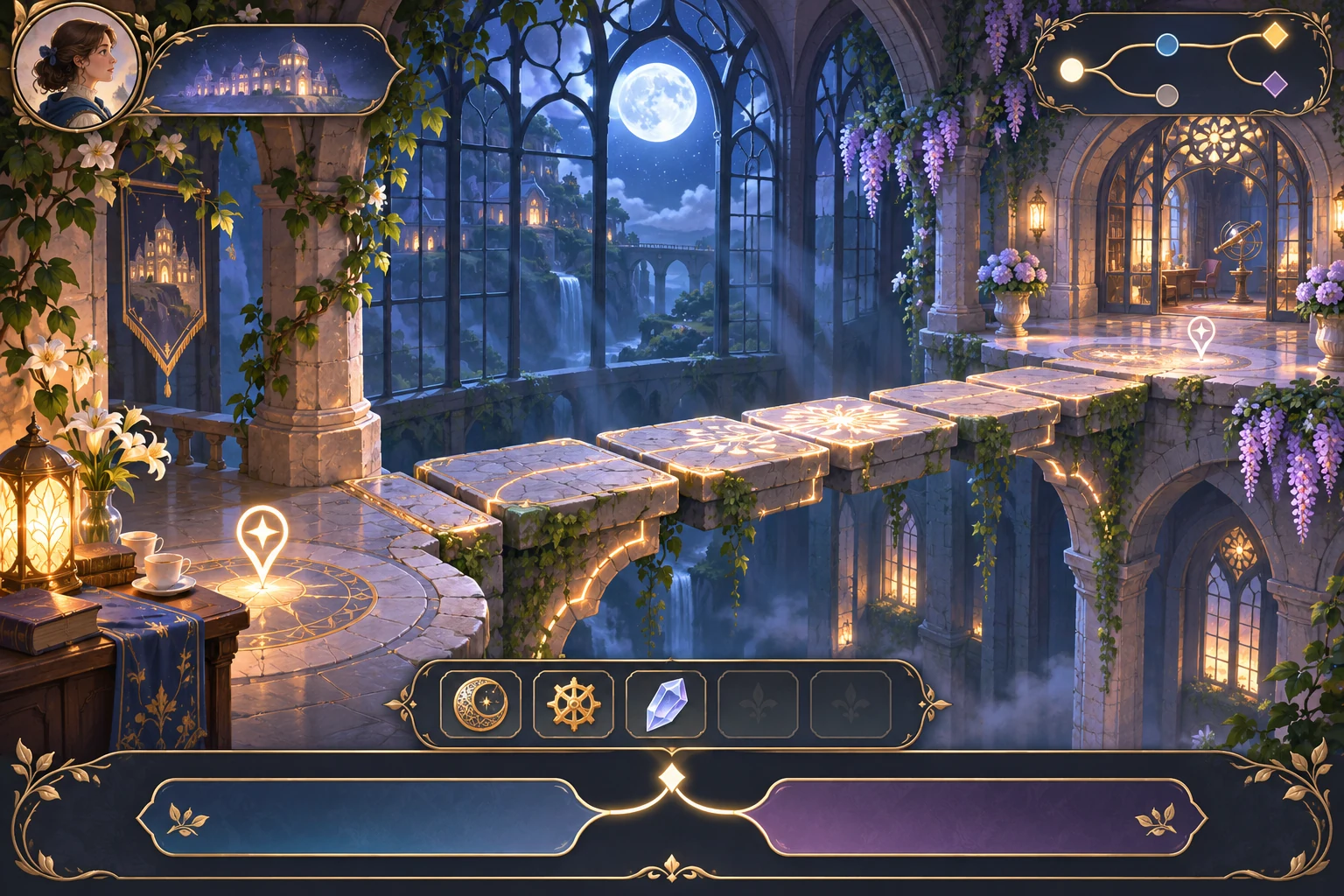
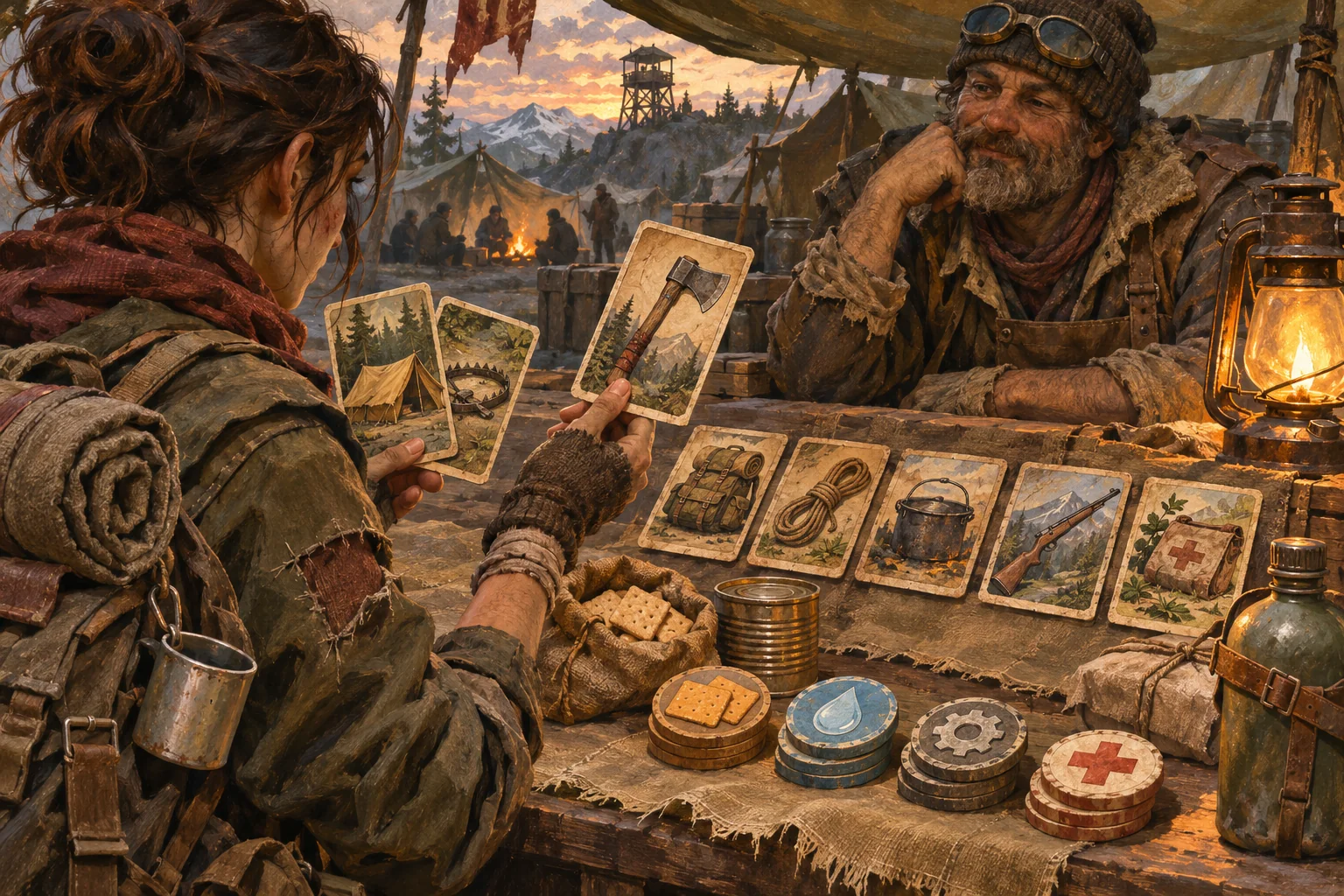
A card-based narrative game can make its campaign respond to the people who request work. A customer contract arrives as a card with an objective, deadline and consequence. Accepting it can redirect the next scene; refusing it preserves the original route but changes the customer relationship.
Start with one customer, one contract and one campaign scene. Hold the scene state fixed while comparing acceptance with refusal. A deterministic state check can confirm the selected branch and its ending flag; it cannot establish whether the story feels compelling or the choice feels fair.

Turn each customer request into a campaign branch
Define every contract with an offer, an objective and a consequence. A museum client might request recovery of a stolen portrait before the next chapter. The card can include a reward and a relationship change, while the scene records whether the team accepted, completed or declined the request.
Keep contract state separate from card draw and combat resolution. When the party accepts, set an active objective and add a scene-specific choice. Completion can unlock a new chapter card; failure or refusal can route to a different conversation without silently deleting the main campaign.
Test one contract at a time with the same opening scene. Compare the accept and refuse branches while holding character cards, scene flags and dialogue choices fixed. Add overlapping clients only after the campaign can show which request changed a scene and why.

Accept the portrait contract and compare the scene flag
The chapter begins with a neutral gallery scene and the museum client offers a portrait-recovery contract. If the party declines, the scene keeps its original objective and the contract state is marked refused. Keep the dialogue, character deck and starting relationship fixed.
If the party accepts, the active objective becomes recover the portrait before the next chapter. Completing it sets the portraitReturned flag and unlocks a grateful-client ending card. The same scene now has a changed objective and a distinct follow-up, while every unrelated starting condition stays fixed.
This deterministic branch check verifies contract state, objective and ending-card selection. It does not measure whether the dialogue is persuasive, deadlines are enjoyable or players understand the consequences. Playtest both choices with several character decks before expanding the contract network.

Ask AI to prototype a contract-driven campaign
Show the client request, accept or refuse choice, active objective and resulting story flag.
Change only the contract decision; keep the scene, deck and starting relationship fixed.
Create a card-based narrative campaign with a museum client offering a portrait-recovery contract. Compare refusing it, which preserves the original scene objective, with accepting it, which sets the recovery objective and unlocks a grateful-client ending card after completion. Keep dialogue, character deck and starting relationship fixed. Show contract state and branch flags. Treat this as deterministic narrative-state verification, not proof of story quality.
Make customer choices visible in the campaign state
Customer contracts can give a card narrative campaign a clear cause and effect when each request changes an objective, relationship or follow-up scene. Show the decision and its consequence on the contract card, verify one fixed branch, then playtest whether the choices feel meaningful across different characters.
Prototype a card narrative game with SEELE's AI game maker
Frequently asked questions
How can customer contracts drive a narrative campaign?
Give each request an objective, deadline and story consequence. Accepting, completing or refusing it should set visible campaign state that changes a later scene or ending card. Start with one contract so players can trace the branch. Show the later scene change clearly.
How do I compare contract choices fairly?
Keep the opening scene, character deck and starting relationship fixed. Change only the accept or refuse decision, then check the resulting objective and follow-up flag. This isolates which story branch the contract creates. Keep all unrelated state unchanged. Inspect the resulting scene flag.
Does a branch-state check prove a story is engaging?
No. It confirms that the contract sets the intended objective and ending state. It cannot evaluate dialogue, pacing or emotional impact. Playtest both branches with different characters before adding more client requests. Observe player reactions directly. Include both narrative branches.