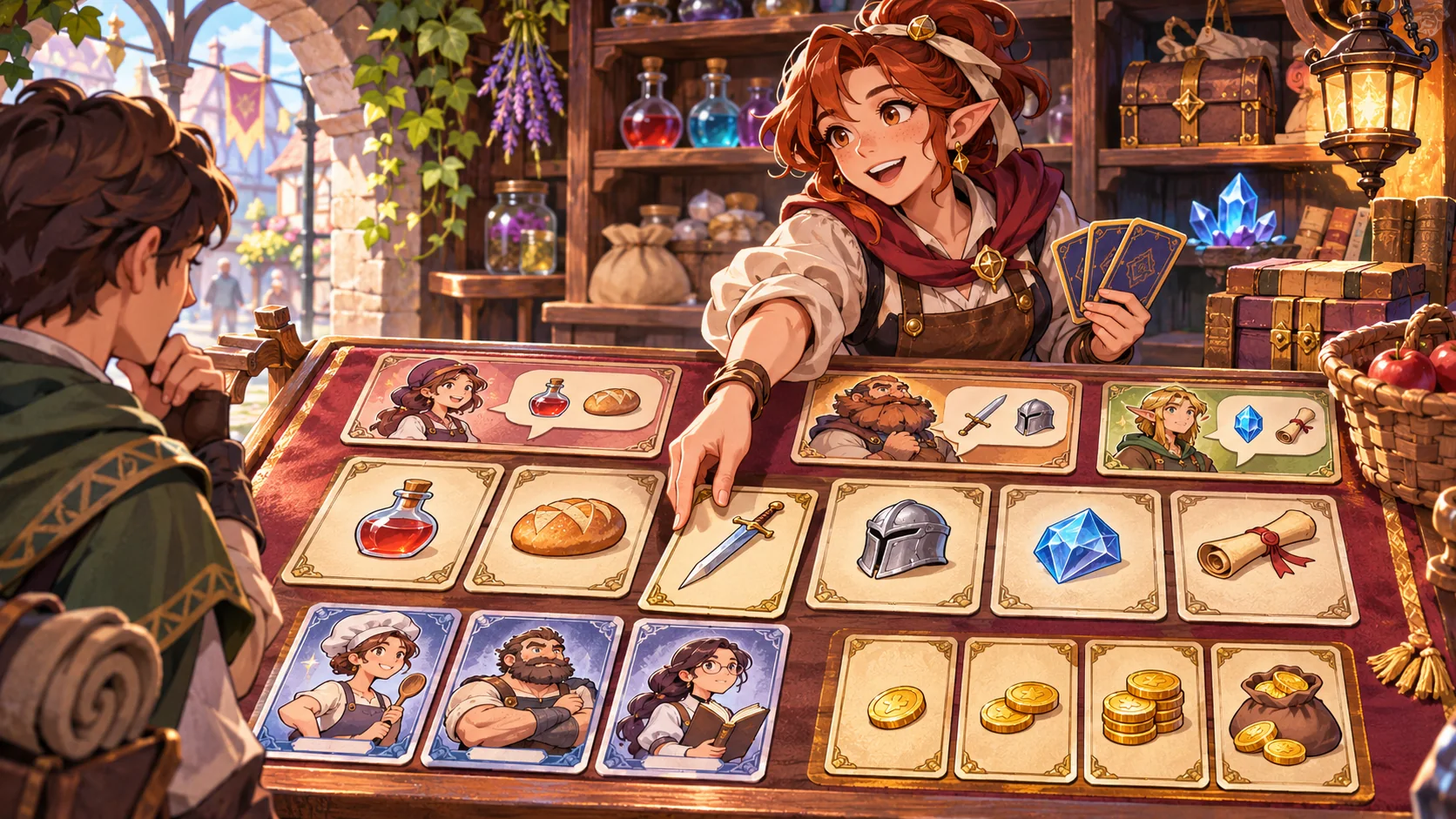
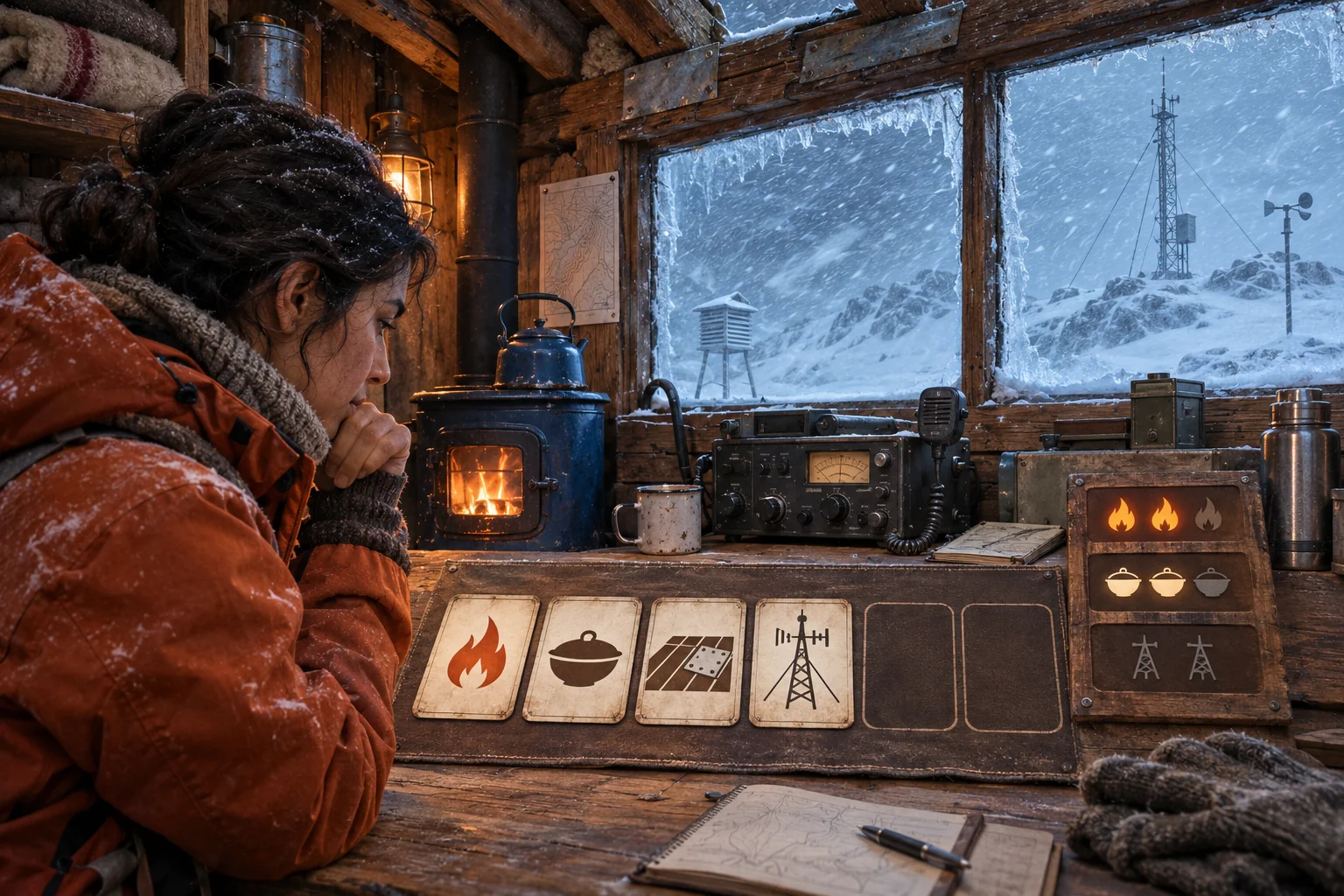
A card-based survival game can turn shopping into the same hand-management loop as crafting and defense. Players browse stock with a Scout card, reserve an item with a Buy card and spend Supply cards to pay. The shop has no separate menu; each transaction is a sequence of cards and visible state changes.
Start with one merchant, one ration and a fixed hand. Keep stock and price constant while comparing a purchase with declining it. A deterministic transaction check can verify inventory and currency changes; it cannot establish whether the hand feels constrained or the economy is balanced.
Use cards for every step of a shop transaction
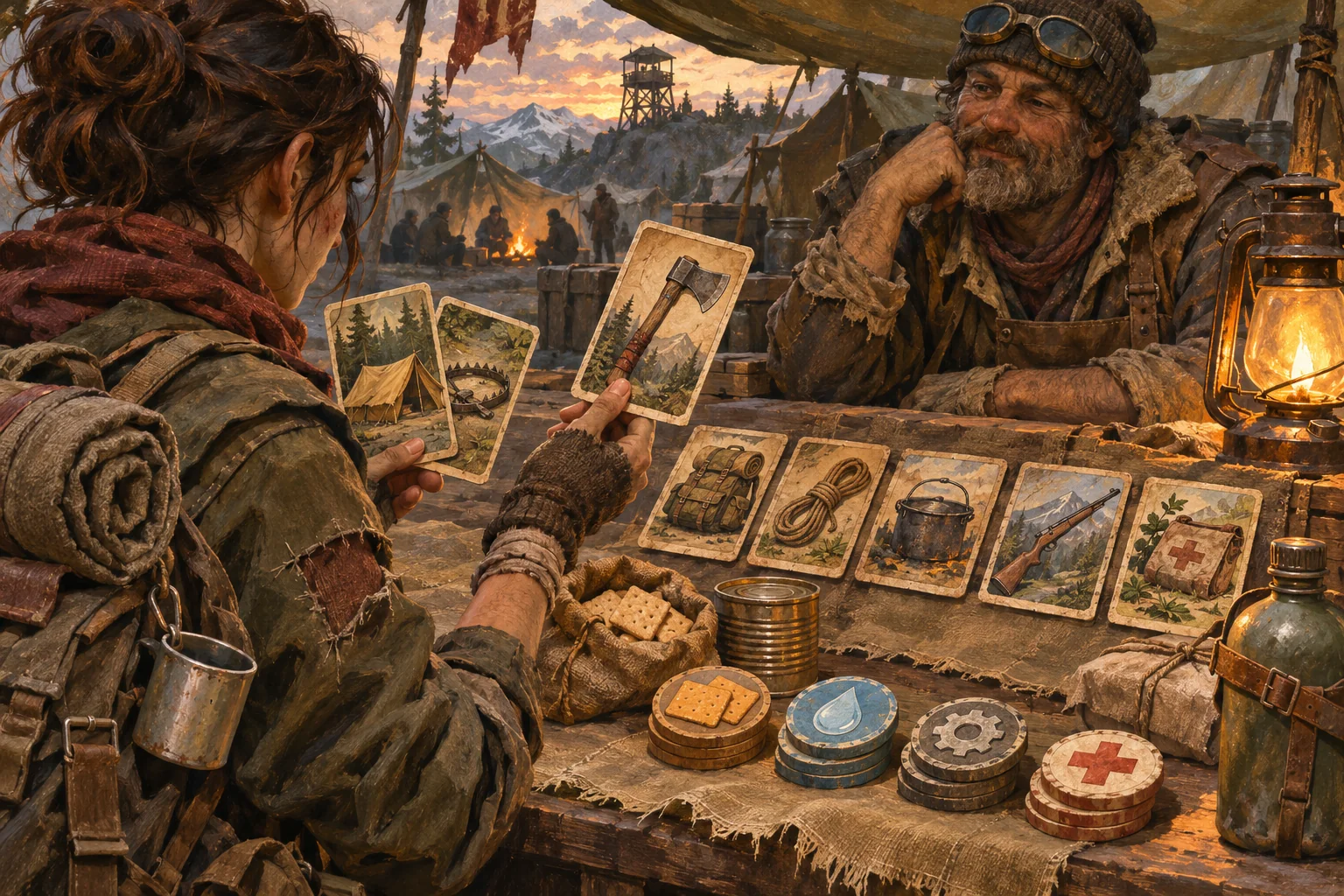
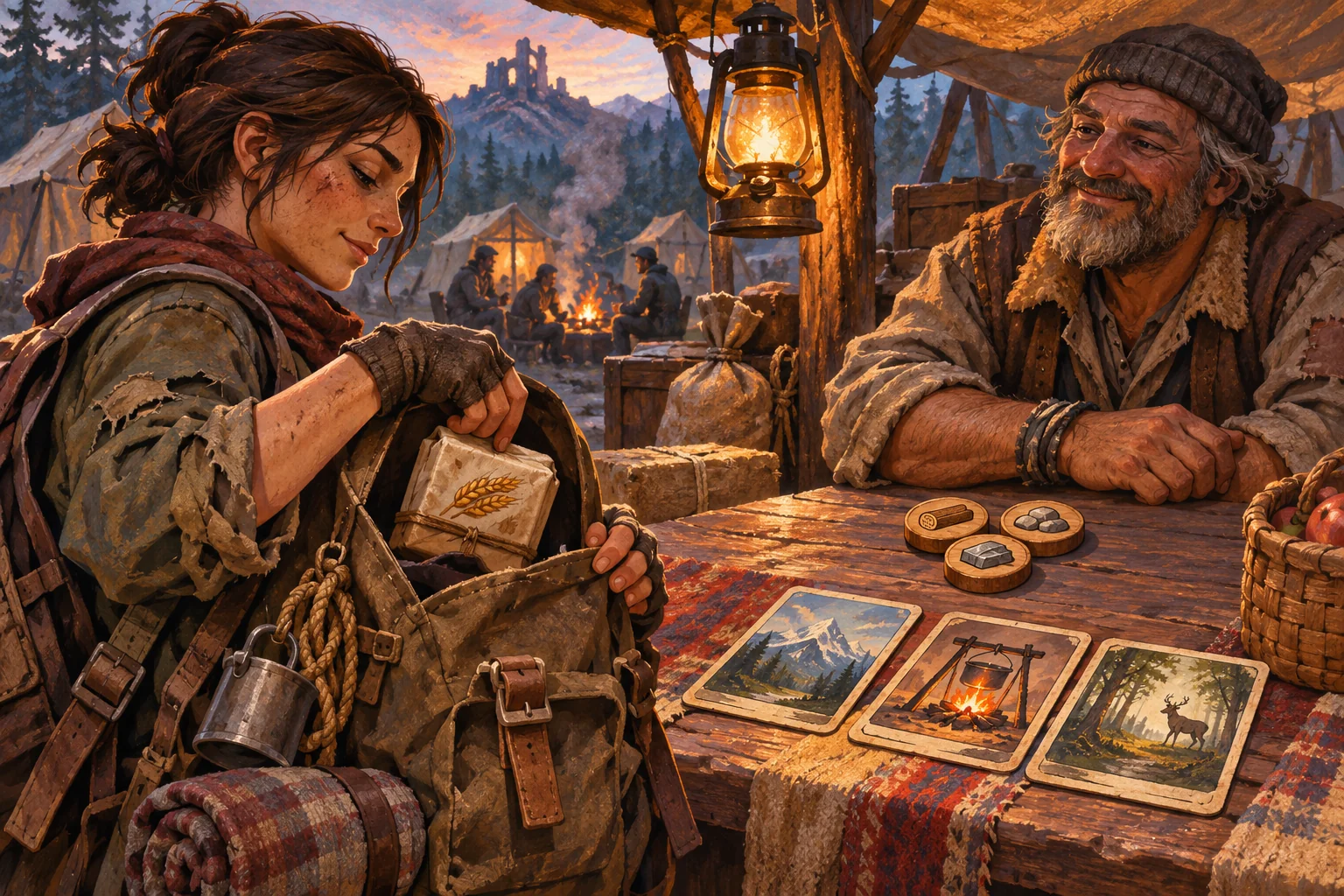
Give each shop action a distinct card. Scout reveals stock, Buy selects an item, and Supply spends currency. Show the merchant stock, selected good and remaining coins as cards resolve so players can follow the trade without a conventional shop screen.
Keep payment and inventory atomic. If the player lacks enough Supply cards, the purchase should fail cleanly and leave stock unchanged. Show a reservation before payment and release it if the player cancels. A short transaction log clarifies what changed.
Test one item and fixed price. Hold the starting hand, stock and currency constant while comparing Buy plus payment with a decline. Add bargaining or merchant reactions after the base card sequence resolves consistently.
Play a purchase sequence and verify the stock change
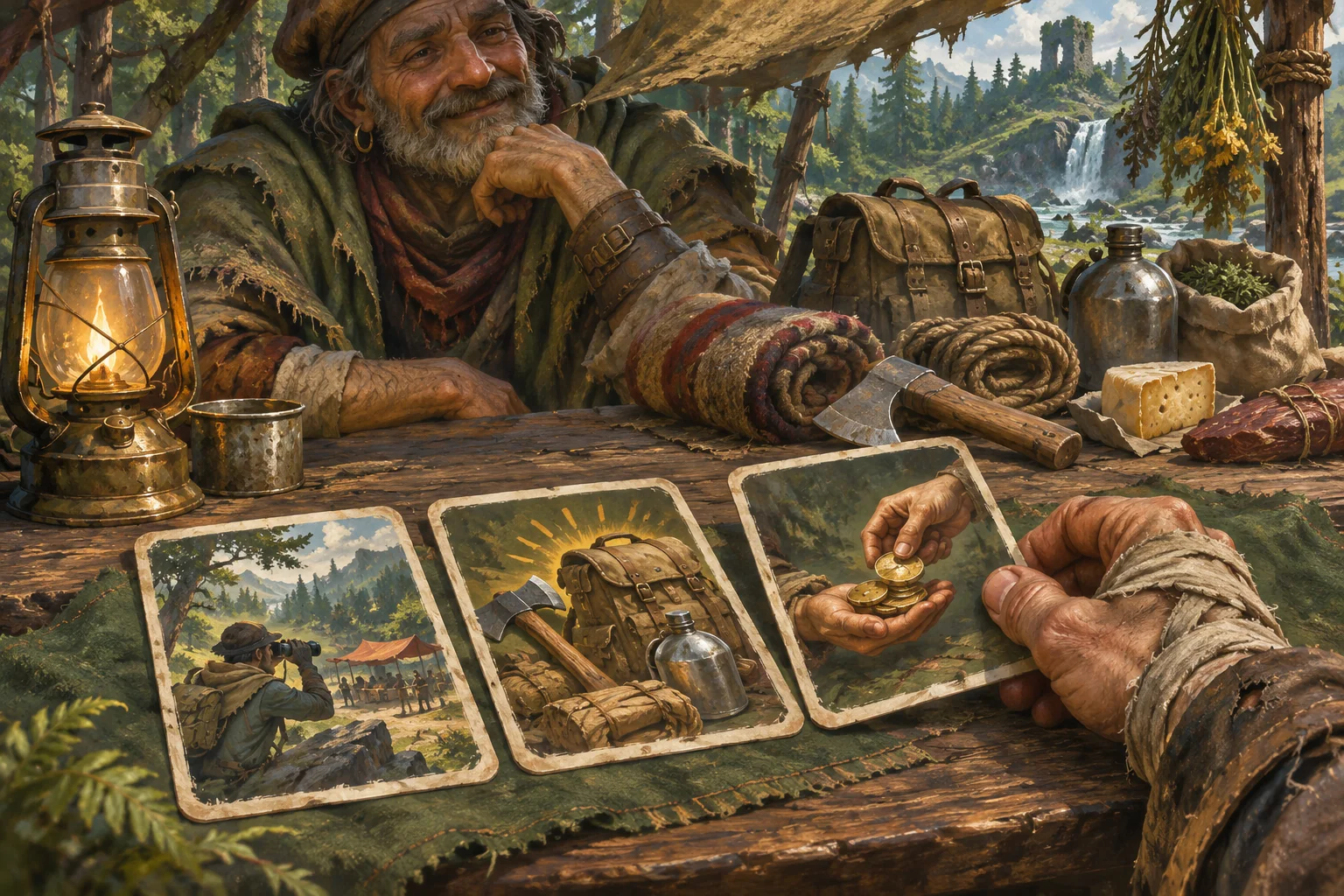
The merchant offers one ration for two supply tokens. The fixed hand contains Scout, Buy and two Supply cards, with three tokens available. Scout reveals the ration; Buy selects it and Supply covers the price. Keep values fixed.
After resolution, the ration moves to party inventory and currency drops from three to one. If the player declines, stock remains with the merchant and currency stays at three. Both paths use the same card-driven interface.
This deterministic transaction check confirms stock transfer and payment arithmetic. It does not measure whether payment draws frustrate players, prices feel fair or survival pressure is appropriate. Playtest different hand sizes before expanding the merchant deck.
Ask AI to prototype a card-only merchant
Show the client request, accept or refuse choice, active objective and resulting story flag.
Change only the contract decision; keep the scene, deck and starting relationship fixed.
Create a survival game shop with no separate menu. Stock has one ration priced at 2 supply tokens. Player starts with 3 tokens and cards Scout, Buy and two Supply. Scout reveals stock, Buy selects the ration, Supply cards pay. Compare buying with declining while keeping stock, price, hand and encounter fixed. Show transaction states and final inventory and currency. Treat this as arithmetic verification, not proof of economy balance.
Make each trade resolve through readable cards
A card-only shop fits survival play when browsing, selecting and paying all use clear card actions. Show stock and currency after each step, then verify one fixed transaction before adding price changes or scarce goods. Playtest hand pressure and survival costs separately; correct arithmetic does not guarantee a satisfying economy.
Prototype a card-based survival game with SEELE's AI game maker
Frequently asked questions
How can a shop run entirely through cards?
Use separate cards to reveal stock, select an item and pay its price. Keep inventory and currency visible while each action resolves so players can track the purchase without a separate menu. Keep each card effect visible. before spending tokens.
What should happen if a player cannot pay?
Do not transfer the item or reduce stock. Show which payment is missing, then let the player cancel or choose another card. Clear failure prevents inventory and currency from drifting out of sync. Confirm that stock stays unchanged. before the purchase resolves.
Does a transaction model prove a survival shop is balanced?
No. It verifies stock transfer and payment arithmetic under fixed values. It cannot show whether players draw enough payment cards or prices create fair survival pressure. Playtest multiple hand sizes before tuning. Test it across several runs. with varied starting hands.