To make a card-based survival game with AI, make every play compete between keeping a need above zero and moving toward rescue. A fixed hand, two actions each day, two persistent needs, and one rescue track can create a complete first loop without a shop or random draw. The key is to state exactly when cards resolve, when needs fall, and when a run ends.
Whiteout at Relay Nine is an original paper design about a weather observer sheltering in an alpine signal hut. Its rules and images are teaching examples, not a built game or a playtest. Use the state route as a design simulation, then compare a real prototype with the same checks before describing behavior as tested.
Make card choices carry the survival loop
A card-based survival game needs more than resource icons on a hand. Each card should change a need, protect it from a known cost, or advance an escape goal. The player then has to decide what to address now and what risk to accept until the next turn.
In Relay Nine, a slide blocks the mountain pass. Noor has three days before a search team reaches the station, but the hut still needs heat and food. The player sees the same four action cards each morning and chooses exactly two different cards. There is no shuffle, hidden weather modifier, shop, or extra resource in the first slice. That makes it possible to trace a decision from card to state change to outcome.
Start with only three tracks: Warmth, Rations, and Signal. The first two are needs that can reach zero; Signal is progress toward rescue. Keep each visible at all times. The player should be able to see both the immediate effect of a selected card and the risk that remains at dusk.
Define cards, caps, upkeep, and endings
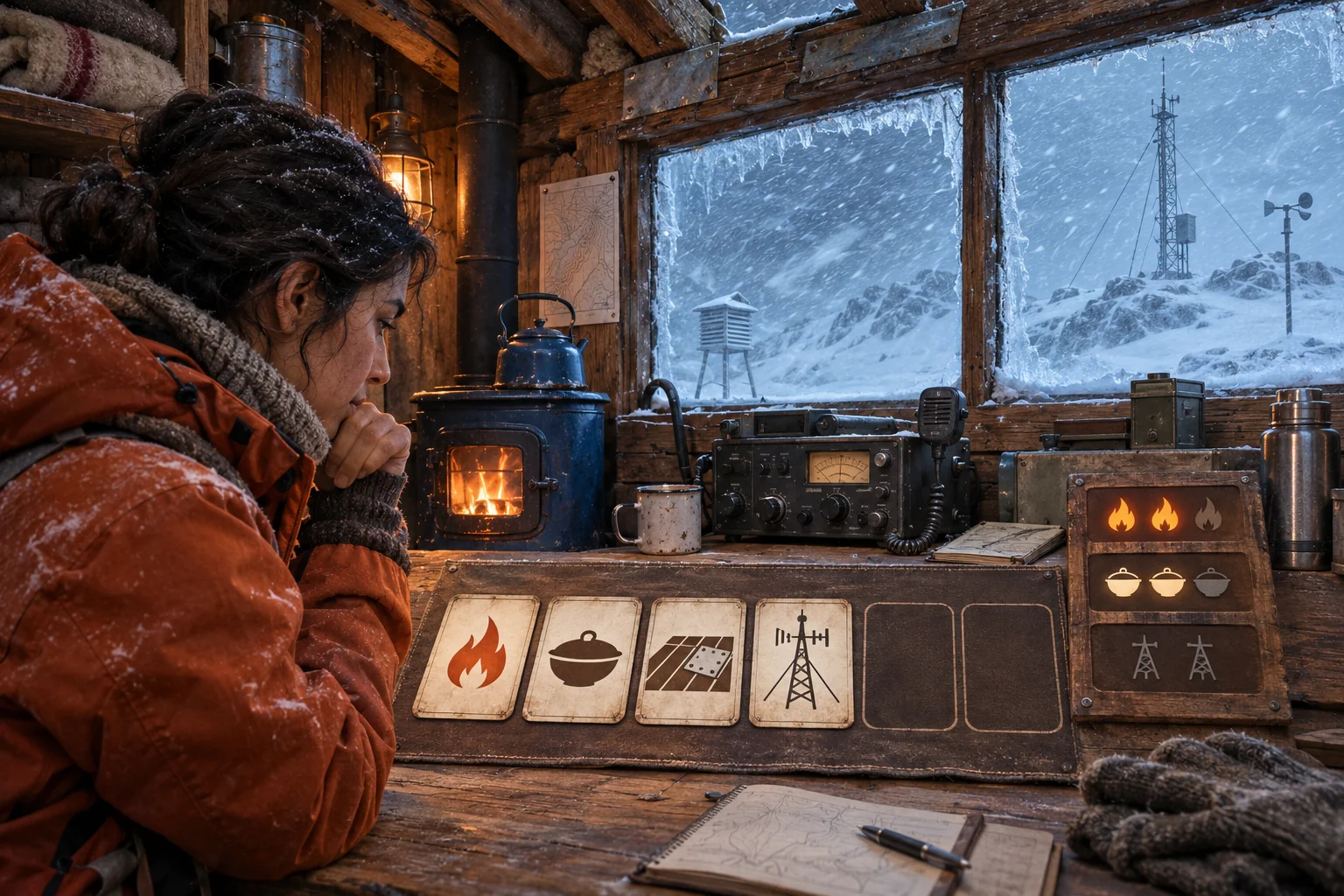
Write the action contract before adding a deck. Each card is a daily action and can be used once before dawn restores the hand. A card occupies one of two action slots. Apply card effects first; then resolve dusk. Need tracks cap at 3 and clamp at 0.
| Card | Effect before dusk | Cost or limit | Decision it creates |
|---|---|---|---|
| Tend Stove | Add 2 Warmth, up to 3. | Uses one action slot. | Protect heat now, but leave less room for food or signal progress. |
| Cook Rations | Add 2 Rations, up to 3. | Uses one action slot. | Restore food before nightly upkeep. |
| Patch Roof | Block the next 1-point Warmth loss at dusk. | Shield resets after that dusk. | Save an action from Tend Stove when a cold night would otherwise break the run. |
| Repair Signal | Add 1 Signal, up to 2. | Uses one action slot. | Move rescue closer while accepting a need cost. |
At dawn, restore all four cards and keep the three tracks. At dusk, subtract 1 Warmth unless Patch Roof is active, reset that shield, and subtract 1 Ration. Clamp both needs at zero. If either is zero after upkeep, show failure before another dawn. After the third dusk, rescue arrives only when Signal is 2 and both needs remain above zero; otherwise Noor is still stranded.
| Resolution order | Rule | Visible feedback |
|---|---|---|
| 1. Resolve two cards | Apply the selected card effects, respecting caps and one-use limits. | Show each track and slot update before dusk. |
| 2. Apply Warmth upkeep | Lose 1 Warmth unless the roof shield is active; then clear the shield. | Show the flame track change or the shield absorbing the loss. |
| 3. Apply Rations upkeep | Lose 1 Ration and clamp needs at zero. | Show the bowl track change. |
| 4. Check the run | Zero in either need ends the run. On Day 3, Signal 2 plus two positive needs means rescue. | Use a clear failure, rescue, or still-stranded result. |
The order matters. If the game checks rescue before dusk, a player might win with a need that falls to zero moments later. If it applies upkeep before the two card effects, the same run may fail even though both cards should have resolved first. Keep this sequence visible in the prompt and acceptance test.
Prompt one small playable slice
Give a game maker a precise starting state, input, state transition, and observable result. Do not ask it to “make survival feel tense” and leave the action rules open. These prompts are reusable design templates; they have not been run through SEELE and do not prove that a particular tool implements the requested mechanics.
Prompt 1: close the rules model
Design a deterministic card-based survival game called Whiteout at Relay Nine.
The player is Noor, sheltering in an alpine signal hut for three days.
Persistent state: Warmth 2/3, Rations 2/3, Signal 0/2; roofShield=false.
Show exactly four cards each dawn: Tend Stove, Cook Rations, Patch Roof,
Repair Signal. The player selects exactly two different cards per day.
Cards may each be used once per day and return at the next dawn.

Tend Stove adds 2 Warmth; Cook Rations adds 2 Rations; both need tracks
cap at 3. Patch Roof blocks the next 1-point Warmth loss at dusk, then clears.
Repair Signal adds 1 Signal, capped at 2. Resolve cards before dusk upkeep.
At dusk lose 1 Warmth unless shielded, then lose 1 Ration; clamp at zero.
If either need is zero, fail before the next dawn. After Day 3 dusk, rescue
requires Signal=2 and both needs above zero. Otherwise Noor remains stranded.

Return a rule table, one screen layout, the exact end-of-day order, and
acceptance cases. Add no draw pile, shop, event, hidden modifier, or resource.
If any rule conflicts, list the conflict instead of inventing a new rule.
Read the returned rule table before asking for more content. Check that there are two slots, the correct caps, the same upkeep order, and both end conditions. If an answer introduces extra weather, health, or a shop, remove that scope before requesting an interaction.
Prompt 2: build the first action screen
Build a focused first slice from the approved Relay Nine rules.
Show Noor at the hut workbench, the four action cards, two empty daily slots,
Warmth, Rations, Signal, the day number, and an End Day control.
Make the two selected cards resolve before upkeep. Disable a second use of the
same card in one day. Show card effects, then dusk losses, then the end check.
Keep needs at 0–3 and Signal at 0–2. On a zero need, show a failure result.
After Day 3, show rescue only if Signal is 2 and both needs are positive.
Add a reset that restores Day 1 and the starting values. Do not add other
resources, random draws, upgrades, or mechanics not listed in the contract.
The prompt names the player action, screen state, expected feedback, exclusions, and end conditions. If the target cannot implement this sequence, ask for a design handoff rather than accepting an interaction that merely resembles the concept.
Prompt 3: compare a build with the expected route
Audit this prototype against the Relay Nine state contract.
Do not claim a rule passed unless the supplied observation shows it.
Check this route from a clean reset:
Day 1: Tend Stove + Repair Signal.
Day 2: Cook Rations + Repair Signal.
Day 3: Tend Stove + Cook Rations.
For every action, record the starting state, card effect, dusk upkeep,
and ending state. Confirm the expected sequence is W2/R1/S1, then W1/R2/S2,
then W2/R2/S2 with rescue after Day 3. Also check that Patch Roof blocks
only one Warmth loss and that restart clears it.
If no playable observations are supplied, return the expected checklist and
label all implementation results unobserved.
Keep expectation and observation in separate columns. A prompt describes what you want; it does not establish what a generated version did. When you do test, repeat the same route from reset so a mismatch has one likely cause to inspect.
Balance daily needs against rescue progress
With two card slots, every Repair Signal play displaces an action that could protect Warmth or Rations. The sample route uses one signal action on each of the first two days, then spends both Day 3 actions on survival. Each state below is calculated from the rules, not measured from a game.
| Day | Morning | Two cards | Before dusk | After dusk |
|---|---|---|---|---|
| 1 | W2 / R2 / S0 | Tend Stove + Repair Signal | W3 / R2 / S1 | W2 / R1 / S1 |
| 2 | W2 / R1 / S1 | Cook Rations + Repair Signal | W2 / R3 / S2 | W1 / R2 / S2 |
| 3 | W1 / R2 / S2 | Tend Stove + Cook Rations | W3 / R3 / S2 | W2 / R2 / S2 — rescue |
The Day 2 choice is the tightest point: Warmth will fall to 1, so the player must use Day 3 to restore it before dusk. Signal reaches its cap at 2, so another repair would waste a slot. A different legal route can use Patch Roof to block a Warmth loss, but its shield must be consumed at the next dusk and cannot protect the hut twice.
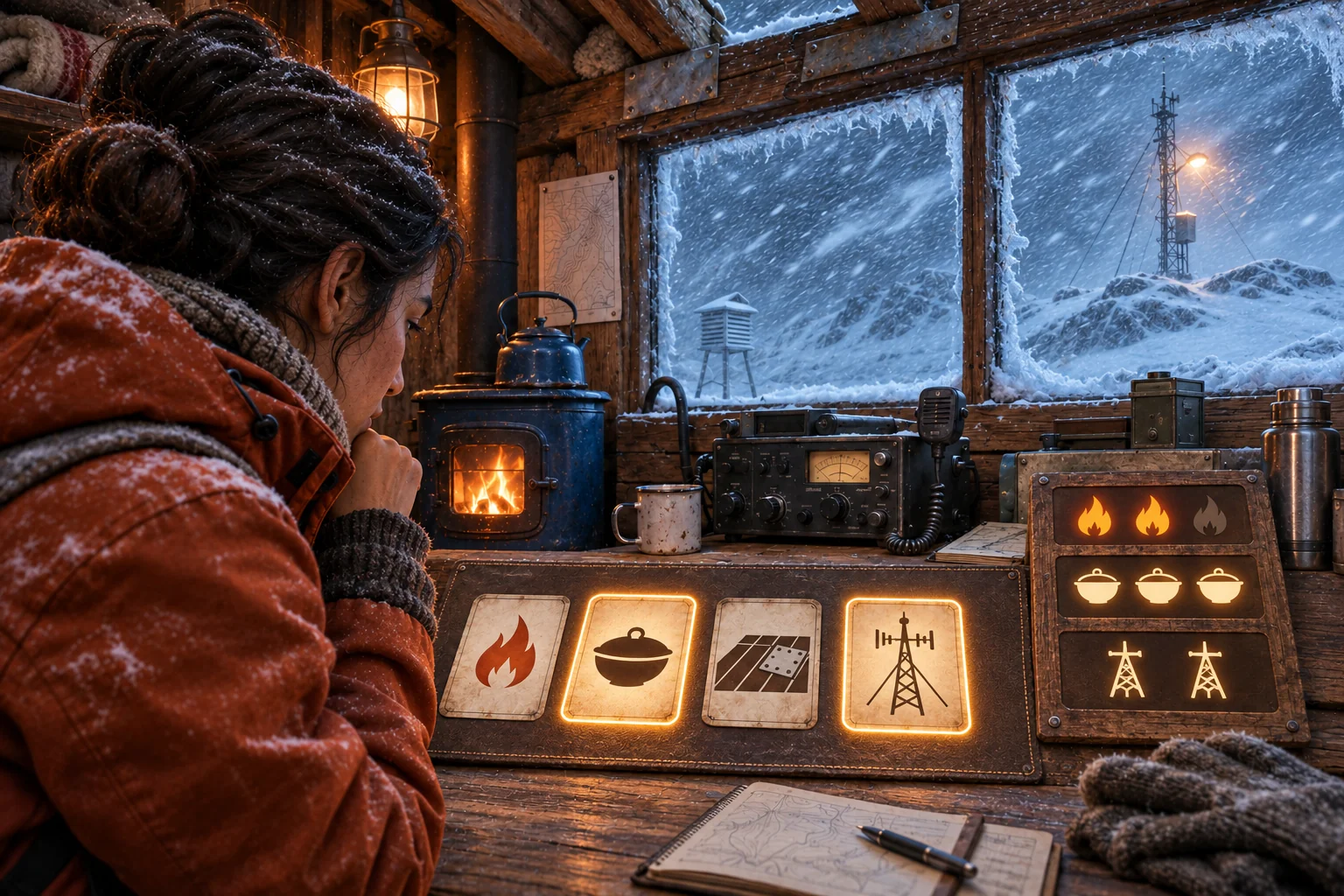
The visual should agree with the table: Cook Rations and Repair Signal occupy the two slots, all three ration pips are lit, and the Warmth track still shows a risk. If your prototype shows an extra ration pip, uses the signal card twice, or resolves upkeep early, check the state transition before changing the balance values.
Use a paper balance pass when no test evidence exists
Without a playable build or recorded observation, the comparison below is a paper exercise based on the written rules. It shows whether this proposed route is internally reachable; it does not show how a generated game behaves or how a player responds to it.
Start with a baseline that permits only one card action per day and keep the same starting state and dusk rules. A signal-first route plays Repair Signal on Days 1 and 2. After Day 1, the state is W1/R1/S1. After the Day 2 signal, the state reaches W0/R0/S2 at dusk and the run ends before rescue can arrive. Prioritizing a need instead leaves too little action capacity to complete the two-point signal goal while keeping both needs positive.
| Version | Action limit | Paper result | What the revision changes |
|---|---|---|---|
| Baseline | One card per day | Signal-first route reaches S2 but both needs hit zero at the second dusk. | One slot cannot cover the two independent needs and rescue progress. |
| Revision | Two different cards per day | The three-day route above ends at W2/R2/S2 and reaches rescue. | Two slots allow one progress action and one upkeep action on early days. |
This calculation checks whether the written route is internally reachable. It does not tell you whether a player understands the controls, whether the generated interaction follows the rule, or whether the game feels tense. A real build still needs a repeatable route check and observations from play.
Diagnose the first run instead of adding more cards
Use the same starting state and test one failure at a time. A card effect that appears to work can still hide an order bug: a track may update after upkeep, a capped signal might overflow, or an old roof shield may carry into the next run. Compare the visible state after each step with the table, not only the final rescue screen.
| Symptom | First rule to inspect | Next check |
|---|---|---|
| A need reaches zero after the card should restore it. | Resolution order. | Confirm both cards resolve before dusk losses. |
| Repair Signal raises Signal above 2. | Track cap. | Clamp at 2 and check whether a capped repair still consumes its action. |
| Patch Roof protects two nights. | Shield reset. | Clear the shield immediately after it blocks one dusk loss. |
| The player sees rescue with a zero need. | End check. | Resolve failure after upkeep before checking the Day 3 rescue condition. |
| Day 2 shows only two ration pips after cooking. | Card effect and cap. | From R1, Cook Rations should reach R3 before dusk; inspect the selected card and update order. |
After a real test, record the starting values, the two cards, every visible change, and the first point where the result differs. Ask for one focused revision and repeat the same route. The paper table is useful because it tells you what to compare; it cannot supply the missing observation.
Take the rules into a first creation pass
The official Free AI Game Maker page describes writing a game idea in plain English, testing a playable 2D or 3D result in the browser, and refining it with follow-up prompts. Its FAQ says SEELE Workspace shows the selected model, available Koin balance, and displayed generation cost before submission. This is general workflow guidance, not a guarantee that SEELE implements the fictional Relay Nine card economy or survival rules.
If the result lacks a visible hand, action slots, dusk sequence, or restart behavior, ask for the missing piece directly. If the target tool cannot represent persistent needs or ordered upkeep, keep the contract as a design handoff for another build step. Do not call a visual card mockup a playable survival loop until you can observe the rules changing state.
Add an event only when the base run is readable
Keep the first run deterministic until you can trace the three-day route and one failure. Then add one weather event or a new card only if it creates a decision the four-card hand cannot express. For example, a forecast might make Patch Roof more valuable on one day, but it should not silently change the existing dusk order.
Once you are ready to shape and review your own idea, open the Free AI game maker and bring the action contract with you. Keep needs, card effects, and end checks visible through each iteration so a new mechanic adds a choice instead of obscuring the survival loop.
Frequently asked questions
Does a card-based survival game need random draws?
No. A fixed hand is a useful first pass when the main design question is how each action affects survival. It lets you repeat the same route and spot a mismatch in card effects or upkeep. Add draw order later if uncertainty is part of the experience, and keep that new rule separate from the base loop.
How many cards should the first prototype use?
Use only enough actions to create a meaningful tradeoff. Relay Nine uses four: two restore or protect needs, and two actions can advance rescue. The player sees all four each day and plays two. If a new card does not change a decision or state, it can wait until the first run is understandable.
Should survival needs appear on cards or separate tracks?
Show persistent needs in separate tracks and show card effects beside the card that changes them. The player then sees both the current risk and the consequence of a selection. If warmth appears only as a card label, it is harder to know whether the value persists after the hand refreshes at dawn.
How do I check the balance before testing?
Write a state route from reset through every dusk, applying card effects and upkeep in the stated order. Check whether a need reaches zero, whether rescue progress is enough, and which card choices become unavailable. This paper check can expose contradictions, but it cannot tell you whether controls are clear or the implemented game follows the rules.
Was Whiteout at Relay Nine tested?
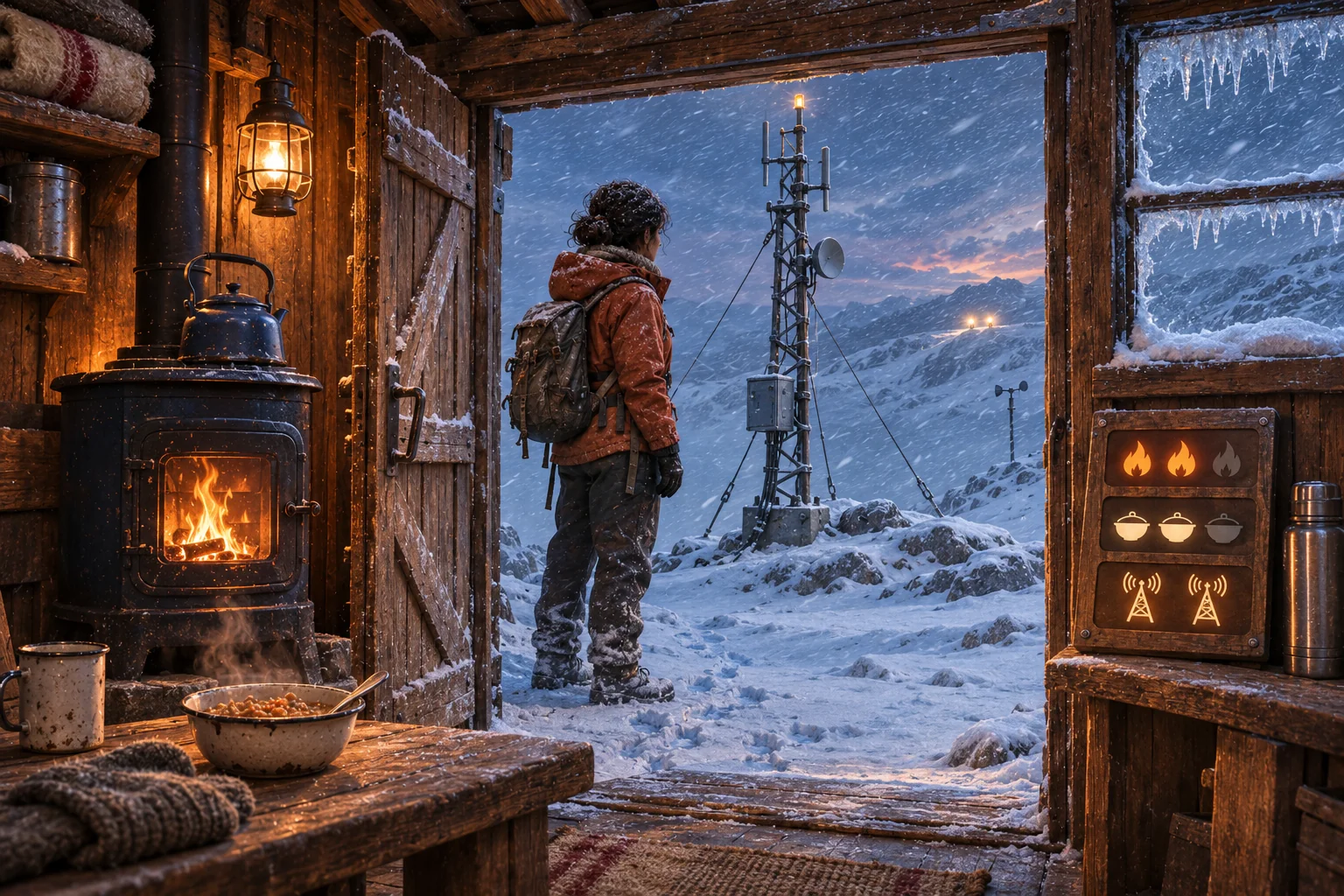
No. It is an original fictional paper design, and the three images are concept illustrations. The Day 1 to Day 3 route is calculated from the written rules; no SEELE generation, playable build, or user observation is claimed. Compare your own prototype with the route and record real observations before calling it tested.