A co-op zombie shooter can give its campaign a strong throughline by bringing one customizable boss back across several chapters. The team learns its attack cues, gathers components and changes the boss configuration before the next encounter. Familiarity creates anticipation while a new component changes how players coordinate.
Start with one arena, one attack pattern and one boss component. Hold the team roles and encounter timing fixed while comparing a standard boss with a version whose armor redirects one attack. A deterministic rule check can verify the pattern state; it cannot show whether co-op play is balanced or exciting.
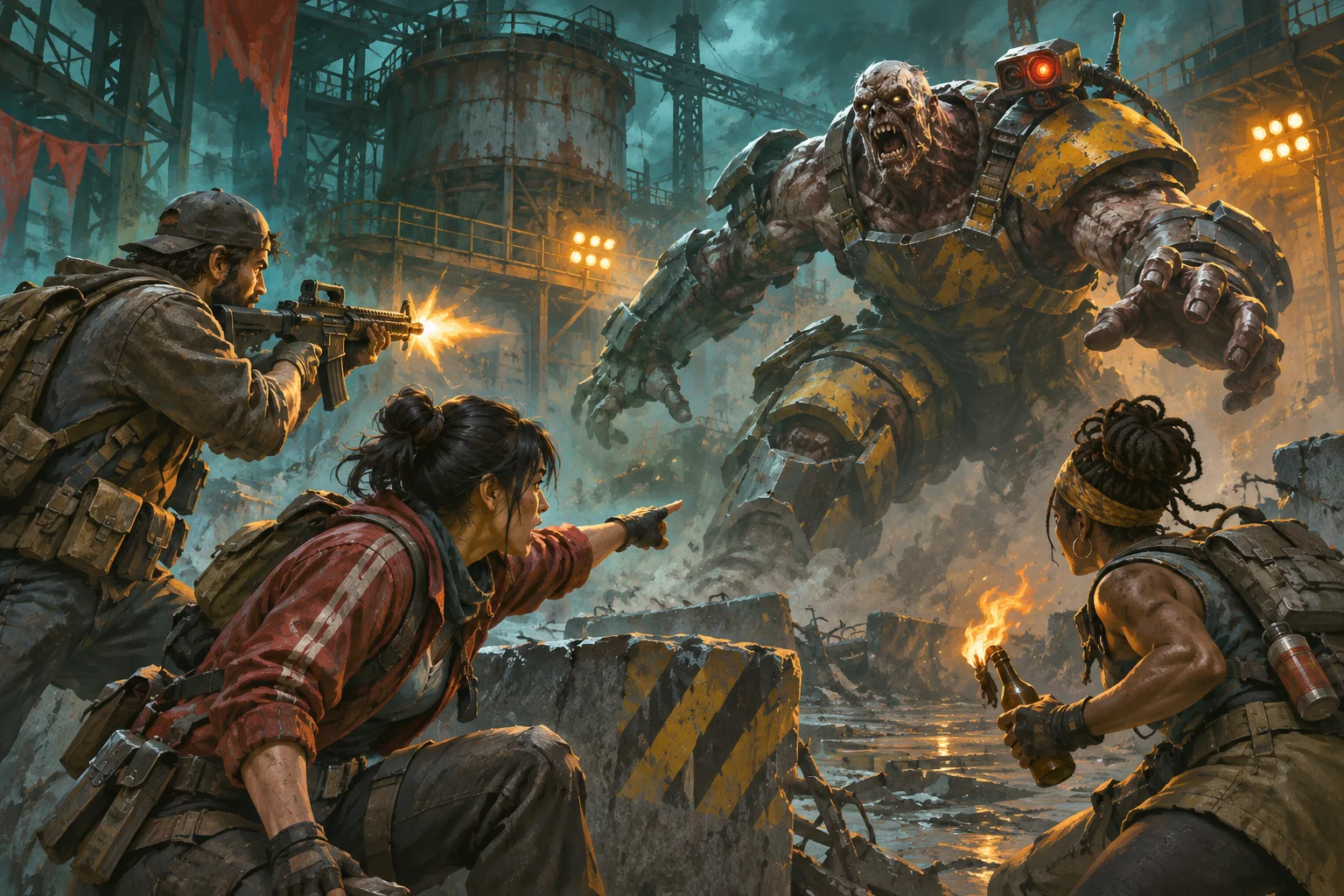
Make each boss component change a readable attack
Treat the boss as a persistent campaign character with swappable components. A plated arm can add a sweeping guard attack; a sensor core can mark one player and trigger a charge. Keep the component visible in the boss silhouette and preview its attack before a chapter begins.
Let the co-op team find or choose a counter between chapters. One player can draw the charge away while another hits an exposed module. Avoid giving every component a hidden immunity: communicate the attack tell, target rule and recovery window so teammates can plan together.
Begin with a single component and fixed arena positions. Compare the same boss timeline with and without the component, changing only its attack rule. Add alternate parts or difficulty scaling after the team can recognize the pattern and explain a counter.
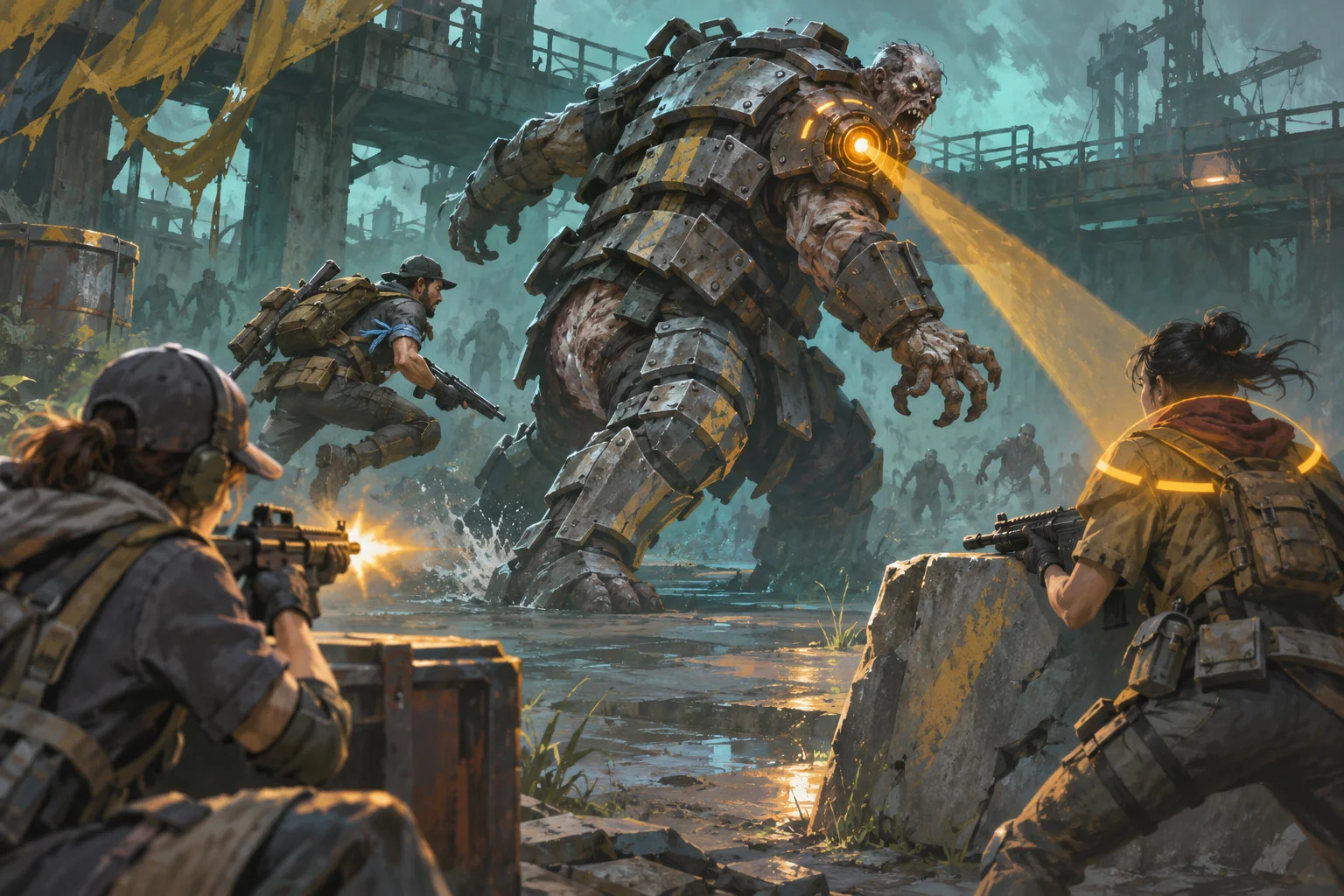
Change one module and coordinate the same encounter
In the baseline, the boss uses a slow frontal swipe. A teammate drawing its attention can leave the second player a safe flank. Keep the arena, player positions and attack timing fixed.
Now equip a shoulder sensor that marks the targeted player before the same swipe. The marked player leads the charge toward an empty lane while a teammate strikes the exposed sensor during recovery. The single module changes the team response, while the campaign encounter and boss health remain fixed.
This deterministic state check verifies that the selected module triggers its tell and alternate response rule. It does not measure readability, team coordination, difficulty or whether the counter feels fair. Playtest with different player roles and chapter upgrades before tuning timing.
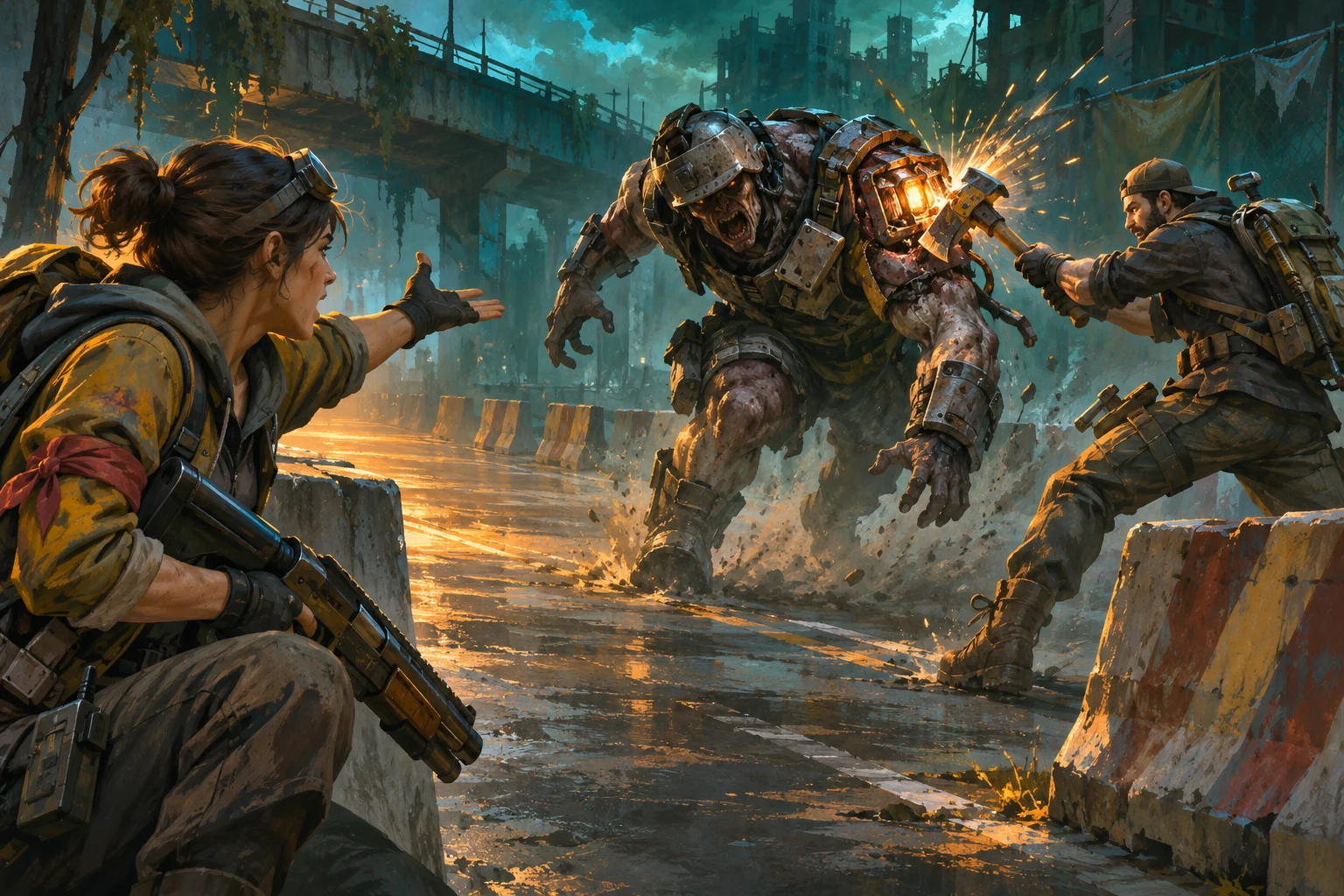
Ask AI to prototype a recurring co-op boss
Show the equipped module, attack tell, marked player and recovery opening.
Change only the module; keep team, arena and encounter timeline fixed.
Create a co-op zombie shooter campaign with one recurring customizable boss. Baseline: a slow frontal swipe that can be dodged by flanking. Variant: add a shoulder sensor that marks one player before the swipe; the player leads the charge to an empty lane while a teammate attacks the exposed sensor during recovery. Keep arena, health, team and timeline fixed. Show the tell and counter window. Treat this as a rule check, not proof of co-op balance.
Let a familiar boss create new team decisions
A recurring customizable boss can connect campaign chapters when each visible component changes a recognizable attack and gives the team a reason to coordinate. Verify one fixed pattern and counter first, then playtest different roles and upgrades; a rule-state model cannot establish co-op balance or excitement.
Prototype a co-op zombie shooter with SEELE's AI game maker
Frequently asked questions
How can one boss support a whole co-op campaign?
Bring the same boss back with visible component changes that alter its attack tells. The team can recognize familiar moves while adapting its roles and counter between chapters. Keep each new part tied to a readable response. Preview the component and counter before each chapter.
How do boss parts encourage teamwork?
Give teammates complementary jobs, such as drawing a charge into an empty lane while another player attacks an exposed module. Signal the target and recovery window so coordination follows from the boss rule. Establish signals and cooldowns for clear coordination.
Does a deterministic boss model prove co-op balance?
No. It verifies that a configured component selects its intended attack state. It cannot measure coordination, difficulty, clarity or fairness across player roles. Playtest the encounter with different teams before tuning it. Observe real team communication during playtests. with different squads.