A dice-building roguelike can make gathered ingredients change what a character is able to roll. Instead of buying a fixed die, players collect materials, craft a face and replace one action in their combat die. The recipe becomes part of the build that travels into the next encounter.
Begin with one die, two recipes and a fixed encounter. Keep the starting faces and roll sequence constant while crafting an herb face or an ore face. A deterministic configuration check can verify which action is available; it cannot tell whether either build is balanced or satisfying in a real run.
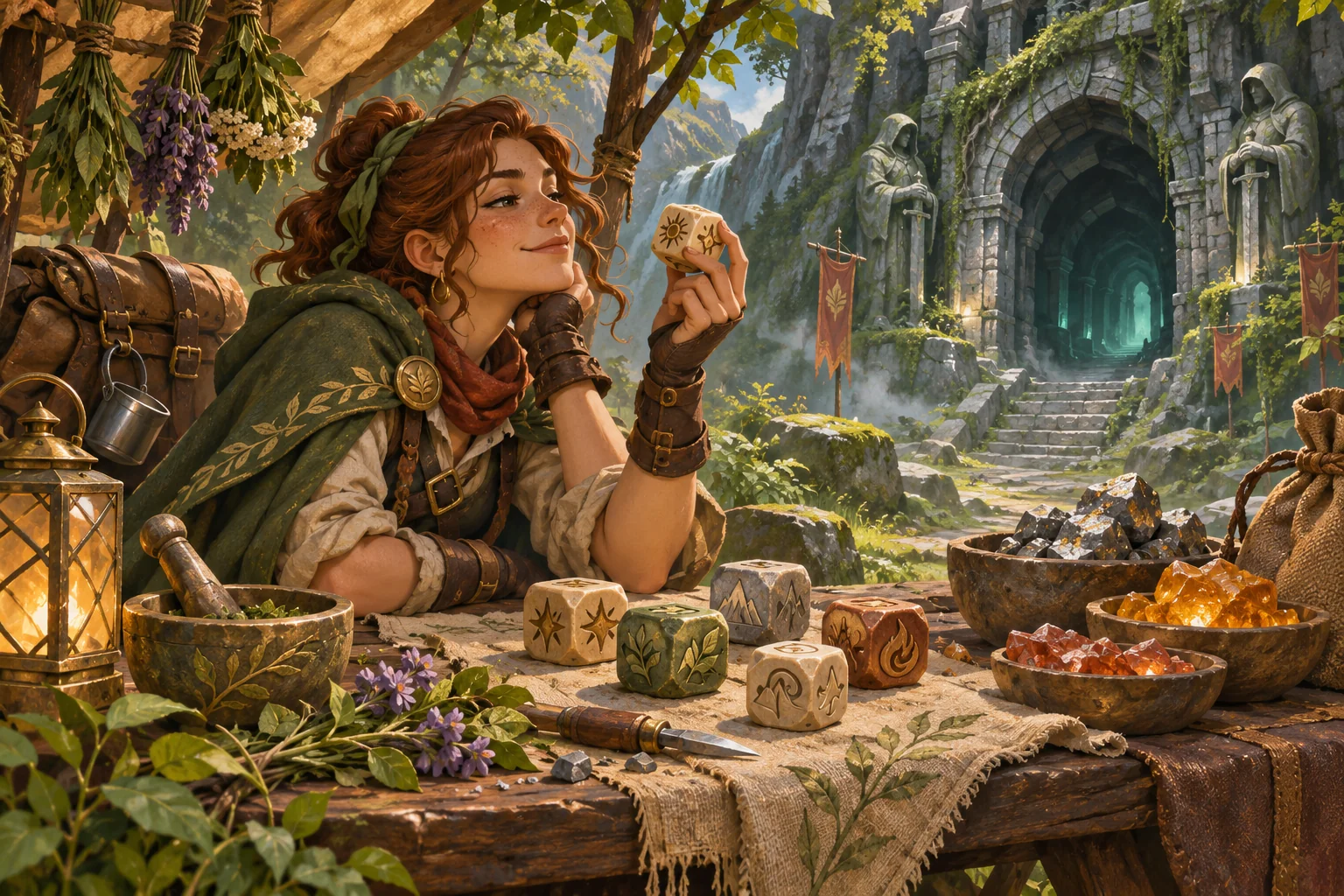
Turn ingredients into a deliberate die face
Give each ingredient recipe a distinct action. One herb plus one scrap can craft Mend, which restores one health; one ore plus one resin can craft Strike, which deals one damage. Replacing a face changes the die's action pool. Show the recipe and resulting face before the player confirms the craft.
Keep a die's face count fixed. A crafted face replaces a selected starter face rather than silently increasing the number of faces. If the die also draws cards, explain whether the face creates a card, modifies one or directly resolves an action. A clear rule keeps crafting connected to the deck instead of becoming a separate inventory system.
Test one recipe change at a time. Preserve the same starting die, encounter and roll order, then compare the available actions after crafting. Add rare ingredients, upgrades or multi-step recipes only when players can predict how a material changes the next roll.
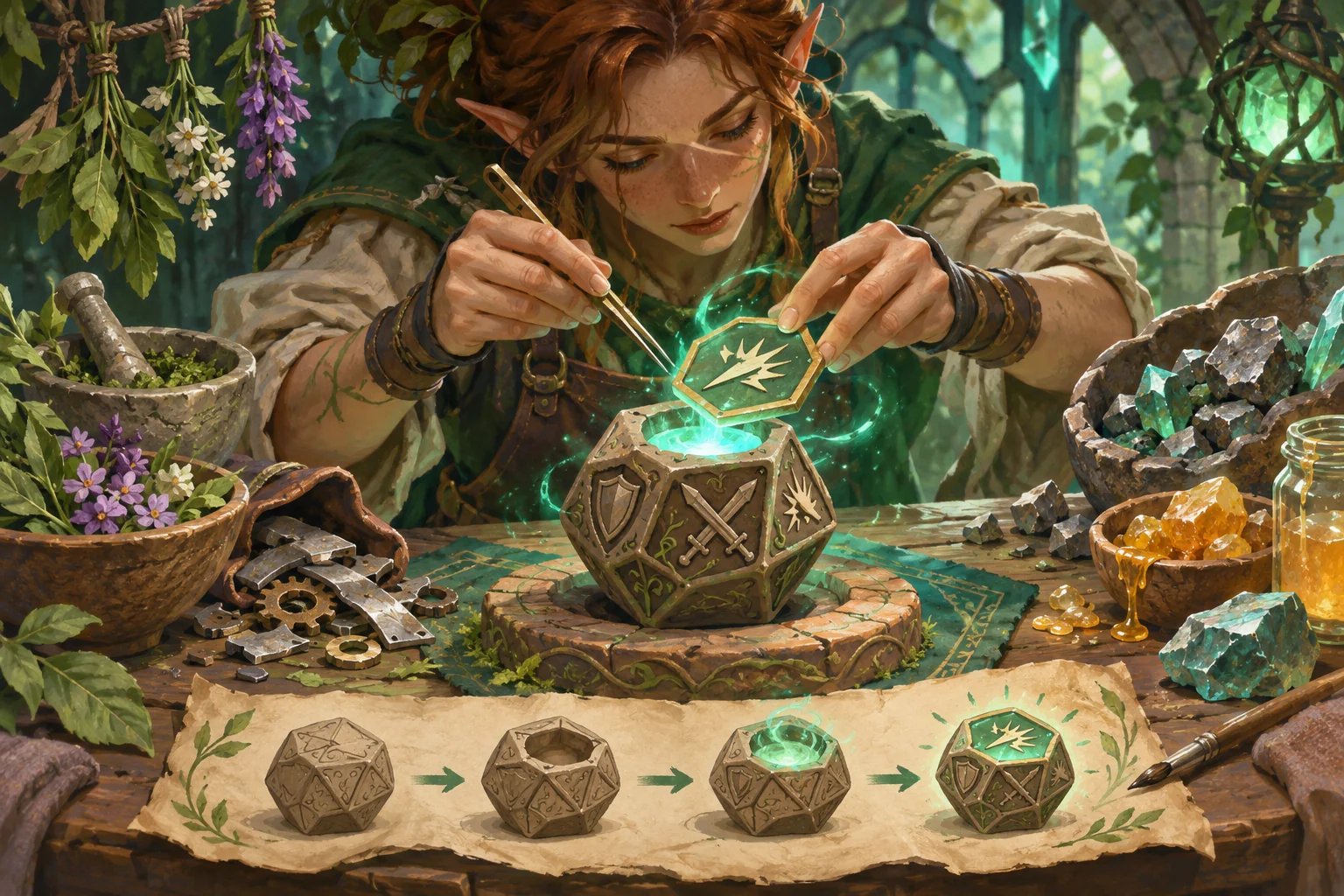
Replace one face and compare the same roll
Start with a four-face die containing Guard, Step, Guard and Step. The fixed roll sequence selects face three. Before crafting, that roll produces Guard. Keep the sequence, encounter and remaining faces unchanged.
Craft Strike from one ore and one resin, replacing face three. The same roll now produces Strike and deals one damage in the deterministic example. Alternatively, a Mend recipe made from herb and scrap would make that face restore one health. The ingredients determine which action the character can access on the next roll.
This model verifies face replacement and action mapping under a fixed sequence. It does not test drop rates, resource scarcity, encounter difficulty or whether a crafted action feels powerful enough. Playtest multiple runs before adjusting ingredient costs or face probabilities.
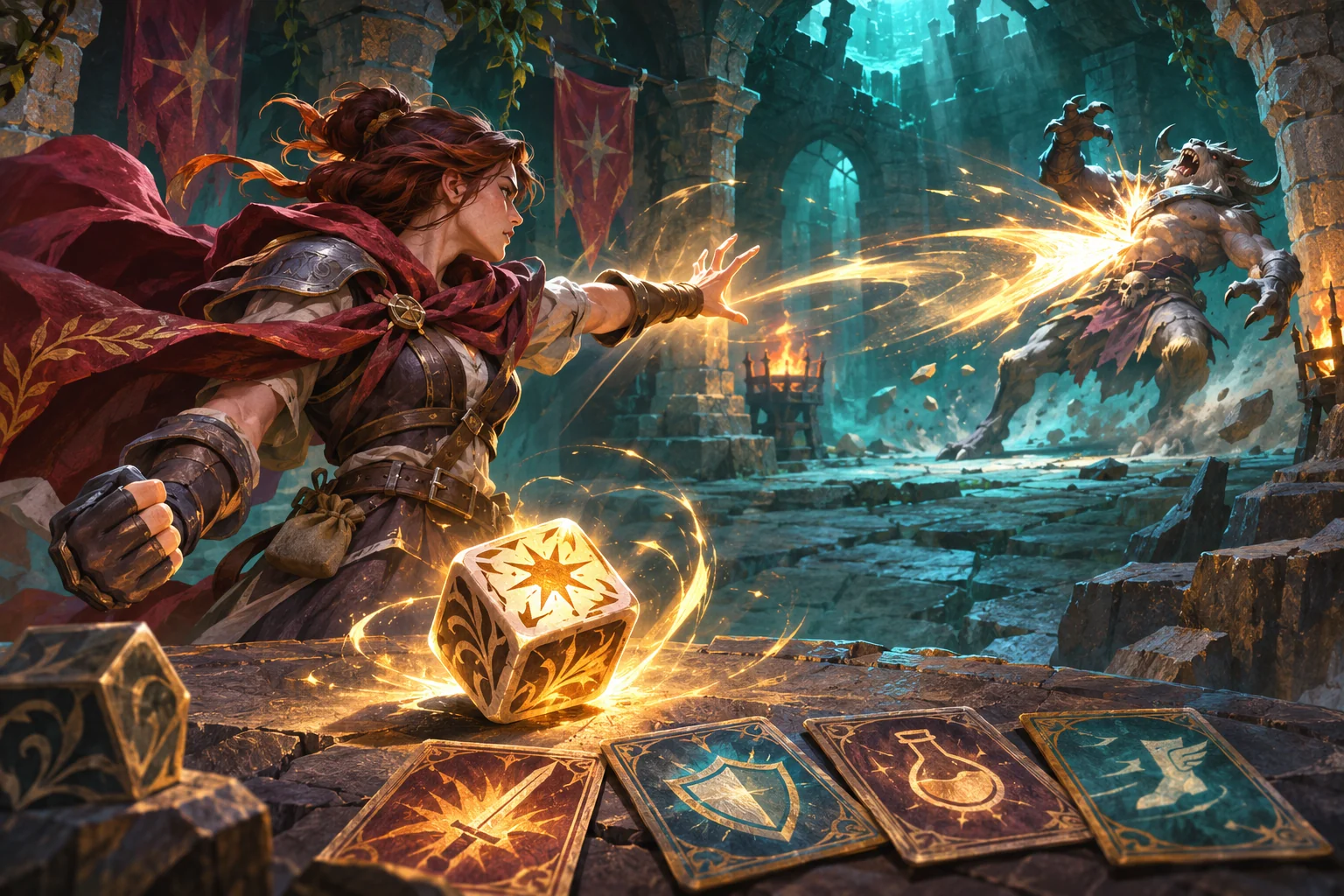
Ask AI to prototype ingredient-crafted dice
Show ingredient costs, selected face, replaced action and resulting die before craft confirmation.
Change only the recipe output; keep the die, encounter and roll sequence fixed.
Create a dice-building roguelike prototype. The starter die has four faces: Guard, Step, Guard, Step. One ore plus one resin crafts Strike and replaces a selected face; one herb plus one scrap crafts Mend instead. Use a fixed encounter and roll sequence selecting face three. Compare the action before crafting with the action after replacing that face. Keep all other faces and inputs fixed. Show costs and output clearly. Treat this as a configuration check, not proof of balance or run quality.
Make each ingredient change the next roll
Ingredient-crafted dice give collected materials a direct role in a run's combat choices. Show the cost, replaced face and new action before confirming a recipe. Verify one fixed roll before adding deeper crafting trees, then playtest drop rates and encounters because a deterministic face check cannot establish roguelike balance.
Prototype a dice-building roguelike with SEELE's AI game maker
Frequently asked questions
How can crafting ingredients shape a dice roguelike?
Let a recipe add a specific action to the die by replacing a chosen face. Herb and scrap might make a healing action, while ore and resin create an attack. Preview the cost and result so materials affect the next combat decision. Preview the recipe.
Why replace a die face instead of adding another one?
Replacing a face keeps the die's size and roll probabilities understandable. Players can see which action they gave up and what the new recipe adds. If die size can grow, show how that changes odds and total actions. before confirming.
Does a fixed roll check prove a recipe is balanced?
No. It verifies that a crafted face maps to the intended action on a known roll. It does not measure material scarcity, encounter difficulty or whether the result feels worthwhile. Test several runs before tuning recipe costs and probabilities. over repeated runs.