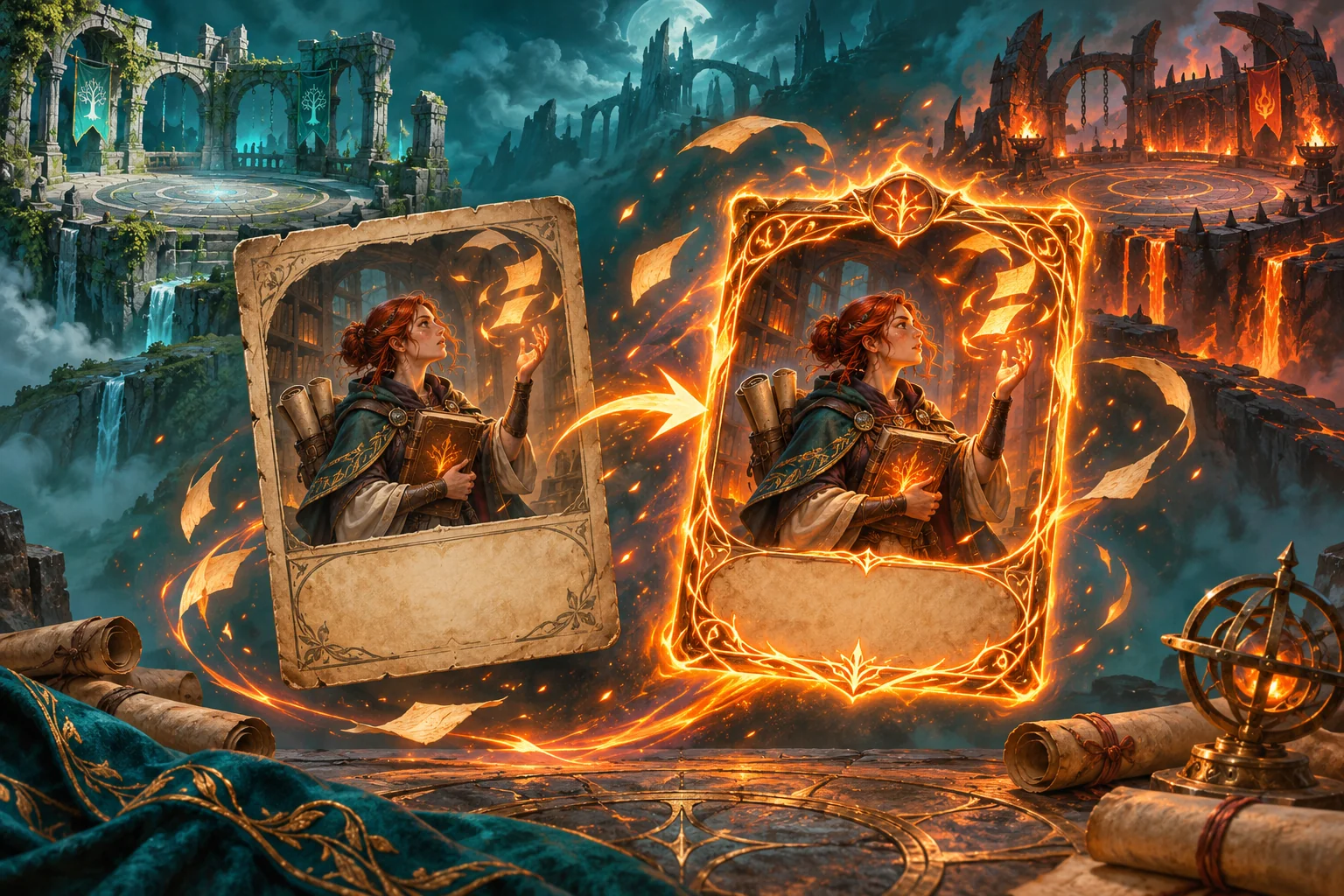
Equipment in a card-battling RPG can shape more than a character's stats. A blade might add direct strikes to the deck, while a spell focus unlocks ranged effects. The player chooses a loadout before combat, then draws from a card pool that reflects the gear they brought.
Start with two mutually exclusive items and a small fixed deck. Keep the encounter and draw order the same while swapping a blade for a spell focus. A deterministic pool check can verify that the eligible cards change; it cannot show whether either build is fair, fun or strategically useful.

Connect each item to a clear card pool
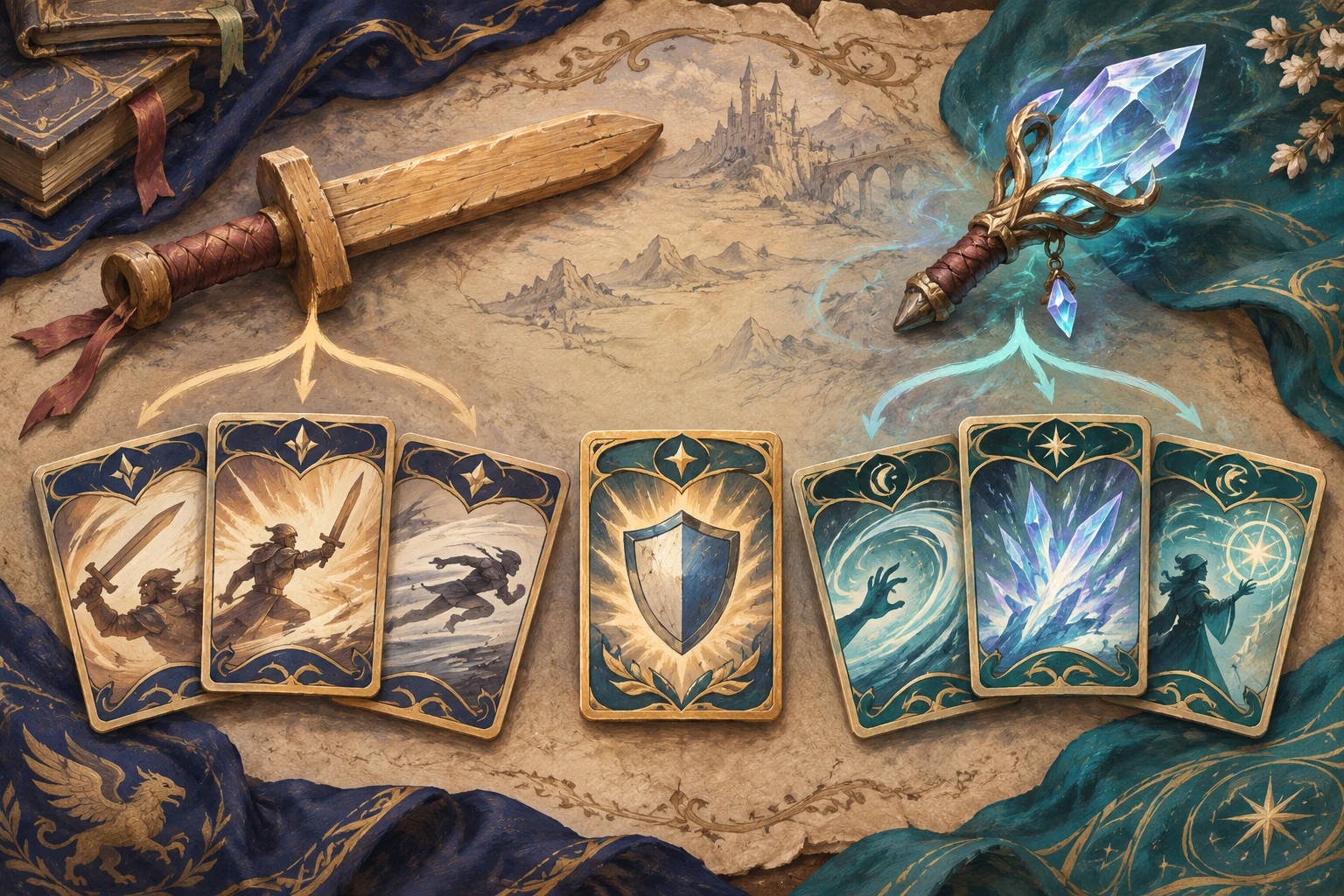
Give every equipment item explicit card grants. A training blade adds two Slash cards; a spell focus adds two Spark cards. Shared defense cards remain available in both builds. Show the granted cards on the equipment screen so a loadout choice previews its effect before the player enters combat.
At battle start, assemble the deck from shared cards plus the equipped item's grants, then shuffle or use a documented draw sequence. Removing or replacing gear should update the pool once, without duplicating cards each time the menu opens. Keep item effects separate from card effects so players can trace what changed.
Test with one fixed encounter and a predetermined draw order. Compare the same opening positions under each loadout. First verify card eligibility and hand composition; only then playtest damage, resource costs and enemy responses. Add rarities or multi-slot synergies after the basic equipment-to-deck link is easy to understand.
Swap one item and compare the opening hand
Use a shared deck containing Guard and Step. Equipping the training blade adds two Slash cards; equipping the spell focus instead adds two Spark cards. Keep the shuffled order seed and encounter fixed. With the blade, the opening hand contains Guard and Slash; with the focus, it contains Guard and Spark.
Only the equipment changes between the two runs. The eligible card differs because the item grants a different card, while shared defense remains available. The player can therefore plan around a loadout's combat options before beginning the encounter.
This deterministic check verifies pool assembly and a repeatable opening hand. It does not establish that Slash and Spark are equally powerful, that the item choice feels meaningful or that players understand the preview. Playtest costs and enemy matchups before tuning item values.
Ask AI to prototype equipment-driven cards
Preview item-granted cards and shared cards before entering the encounter.
Change only the equipped item; preserve draw order, enemy and starting state.
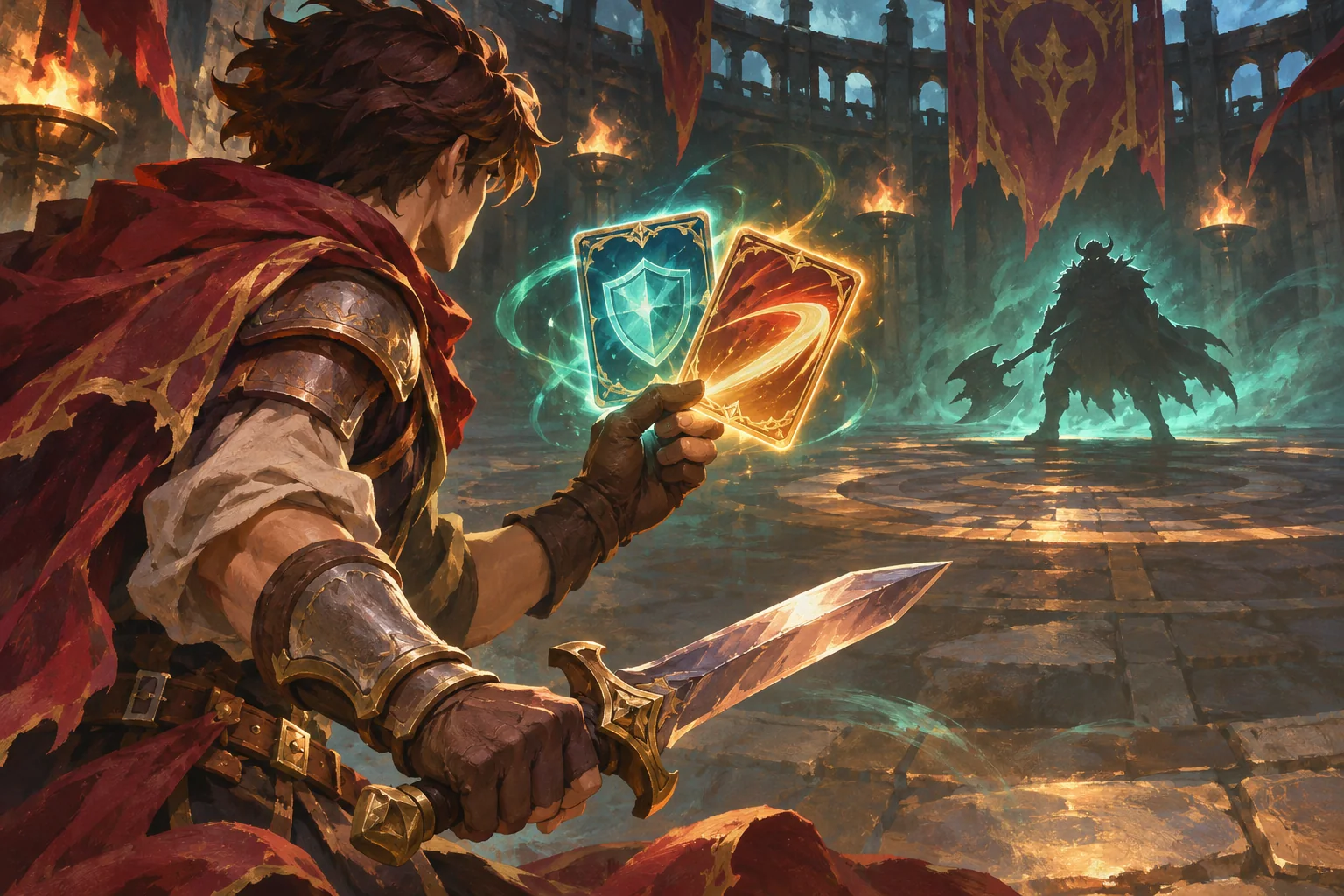
Create a card-battling RPG prototype where equipment changes the available deck. Shared cards are Guard and Step. A training blade adds two Slash cards; a spell focus instead adds two Spark cards. Use the same fixed draw sequence and encounter for both loadouts. Show the eligible pool and opening hand before combat. Confirm that replacing an item updates the pool once without duplicates. Treat this as a deterministic assembly check, not proof of combat balance.
Make the loadout preview explain the deck
Equipment-driven card pools give players a strategic reason to prepare before combat. Show exactly which cards each item adds, keep shared options visible and verify that replacing gear rebuilds the pool cleanly. Then playtest item costs and enemy matchups; card eligibility alone cannot establish balance or choice quality.
Prototype a card-battling RPG with SEELE's AI game maker
Frequently asked questions
How can equipment change a card battler's strategy?
Let an item add or remove specific cards from the character's pool. A blade can provide direct attacks while a spell focus unlocks ranged effects. Preview the resulting deck before combat so the equipment choice has a clear consequence. Preview each loadout.
How do I avoid duplicate cards when gear changes?
Rebuild the eligible pool from shared cards and the currently equipped item's grants. Do not append grants every time the loadout screen opens. A fixed test can confirm that replacing an item swaps its cards once and preserves shared cards. Verify this during loadout replacement. Keep the current pool explicit.
Does a fixed opening hand prove the gear is balanced?
No. It confirms that equipment changes card eligibility under a repeatable draw order. It does not measure damage, costs, enemy matchups or whether the choice feels meaningful. Playtest different encounters before tuning the items. Test choice quality. Test across more encounters.