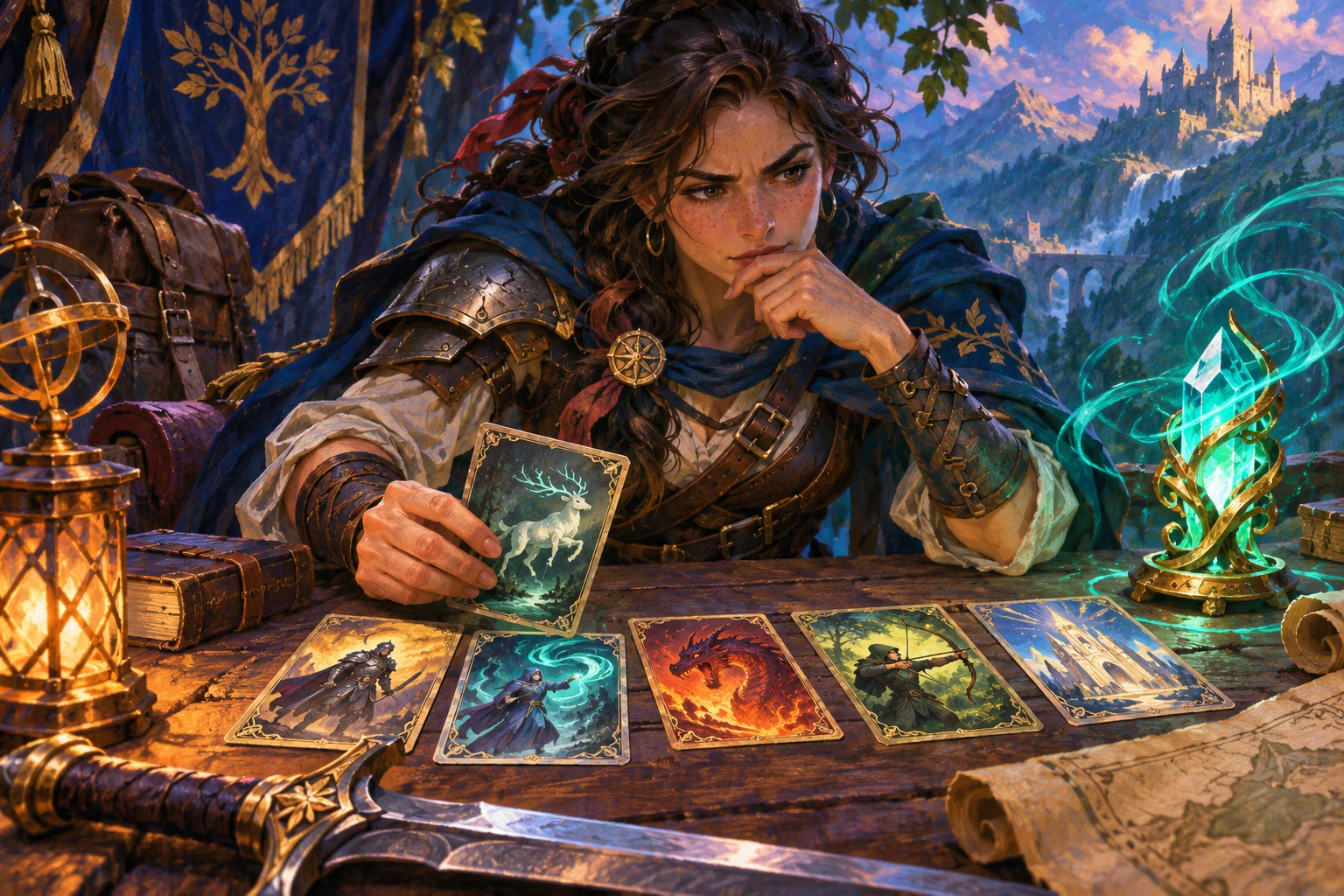
A card that changes between encounters can make a deck feel shaped by its history. A spell might gain power after use but lose one charge; a creature could become scarred and gain a defensive ability. The design challenge is making each transformation understandable before the next fight begins.
Start with a small deck, one encounter result and two visible card states. Keep the transformation rule deterministic and log exactly which event changes the card. This guide checks state transitions with a short sequence of encounters; it does not claim to prove that a card or deck is balanced.
Store card history as explicit state
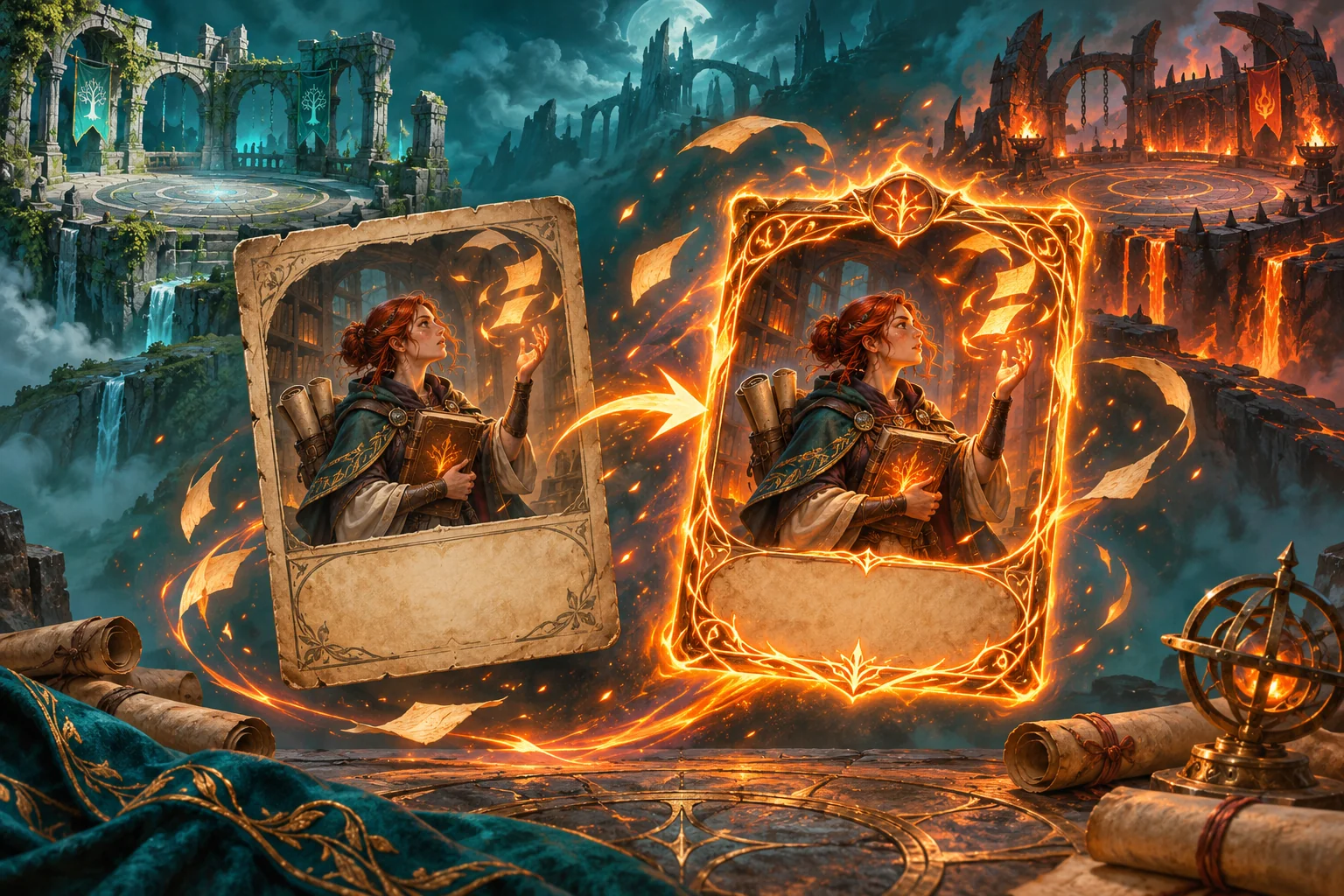
Give each card a stable identity and a small set of state fields such as age, charges and current form. An encounter event can update one field and then select a visible form. Keep base definition separate from the run-specific card state so the transformation does not erase the original card.
Show the before-and-after state between encounters. Explain which event triggered the change, which values moved and whether the transformation persists for the rest of the run. A visible history note helps players connect their previous choice to the card they draw next.
Limit the first prototype to two transformation rules. Hold deck size and encounter rewards fixed while testing one trigger. Add random evolution only after deterministic changes are clear and can be reviewed before the next fight.

Change one encounter result
Create a card with 3 charges and a base power of 2. After an encounter where it is played, it gains 1 power and loses 1 charge. The state after one use is power 3, charges 2; after a second use it is power 4, charges 1.
Change only the first encounter result so the card is not played. It remains at power 2 with 3 charges. Later state changes now depend on the event log rather than an unexplained round counter. Keep all other rewards and draws the same.
This deterministic state model checks transition rules only. It does not test card strength, deck balance, player comprehension or whether a permanent change feels rewarding.

Ask AI to prototype persistent card states
Separate reusable card definitions from per-run card history.
Log each encounter trigger and display the changed state before the next fight.
Create an original collectible card game prototype with a card called Ember Archive. Its base power is 2 with 3 charges. After an encounter where it is played, increase power by 1 and reduce charges by 1. Show its state before and after each encounter and keep an event log. Compare two runs: played in encounter one versus not played. Keep all other cards, rewards and draw rules fixed. Do not add random transformations or deck balance claims yet.
Make card history readable before tuning power
Persistent card changes add meaning when players can trace them to encounter events. Keep base card identity, run-specific state and transformation rules separate, then show the result between fights. Once players can predict why a card changed, expand the set of transformations and test their effect on real decks.
Start a transforming-card prototype with SEELE’s AI game maker
Frequently asked questions
How should I track a card that changes during a run?
Keep a stable card identifier and store changing values in a separate run-state record. Record the event that caused each update and show the new state between encounters. This prevents a temporary run change from silently rewriting the reusable card definition.
When should players see a transformation?
Show it after the triggering encounter and before the next draw or battle. Explain which action caused the update and what values changed. If the effect is delayed, preview the pending change so the player can plan around it rather than discover it unexpectedly.
Does a state-transition model prove card balance?
No. It verifies that the specified events produce the intended values. It does not measure card power, deck interaction, player comprehension or whether permanent changes feel fair. Those questions need playtests across representative decks and encounters. Test across several deck configurations and encounter sequences.