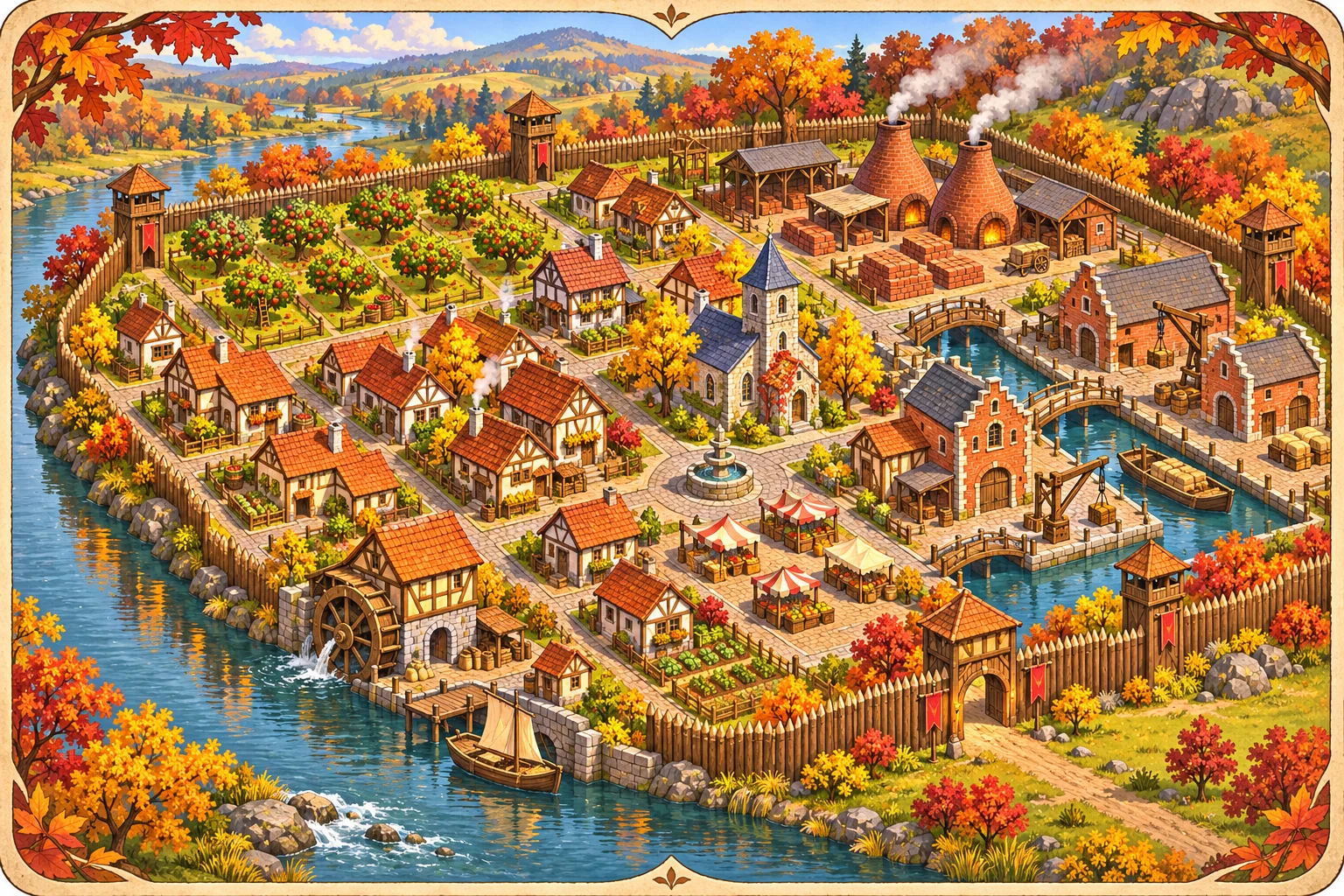
In the fictional Mirebound campaign, each encounter offers three tile cards; draft one and place it next to the settlement. A card ages only after it is played. Sprout Causeway starts at age 0, places a meadow tile, and adds 2 food. After its second use, it transforms into Rooted Causeway. The new face places a bridge connection and adds 1 food. In the fixture, playing it in encounters one and two produces four food and transforms the card for encounter three. Reserving it in encounter two pauses its age and delays the bridge. The local test checks only drafting placement, age steps, and this card effect; Mirebound and all values are fictional.
Define when a drafted card ages
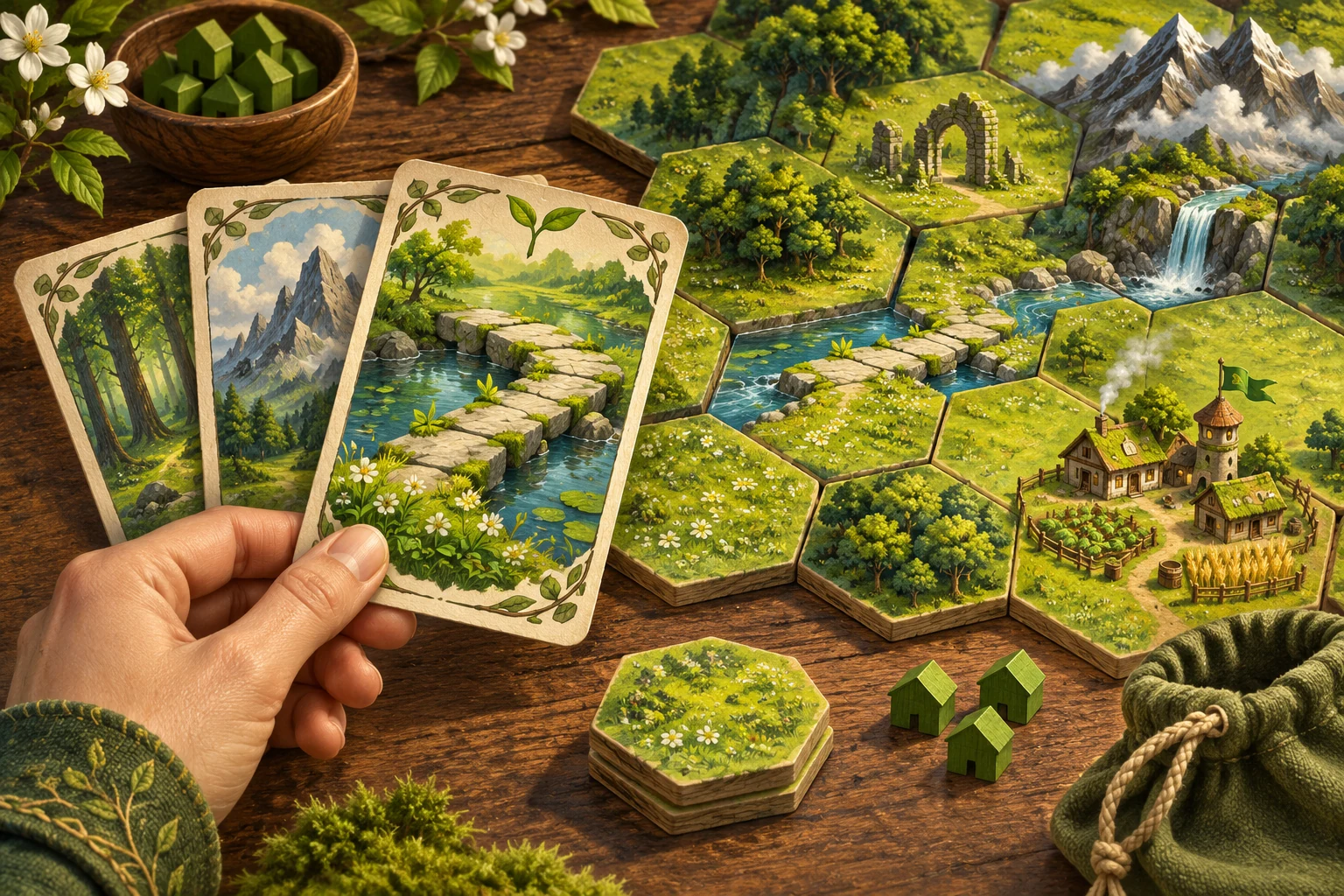
Give each tile card an age, a use count, and a current face. After an encounter, advance the age of cards that were actually played; leave cards in reserve unchanged. In Mirebound, each offer contains three cards, and the player drafts one to place adjacent to the settlement. Sprout Causeway at age 0 places a meadow tile and adds 2 food. Its first use advances it to age 1 but keeps the same face.
Show the card face and age before drafting, then state whether it will age after placement. Keep age tied to completed encounters rather than turns or time spent in a hand. That makes the transformation schedule legible and lets the player choose between using a helpful tile now or holding it for a later map.
Transform the card after its second use
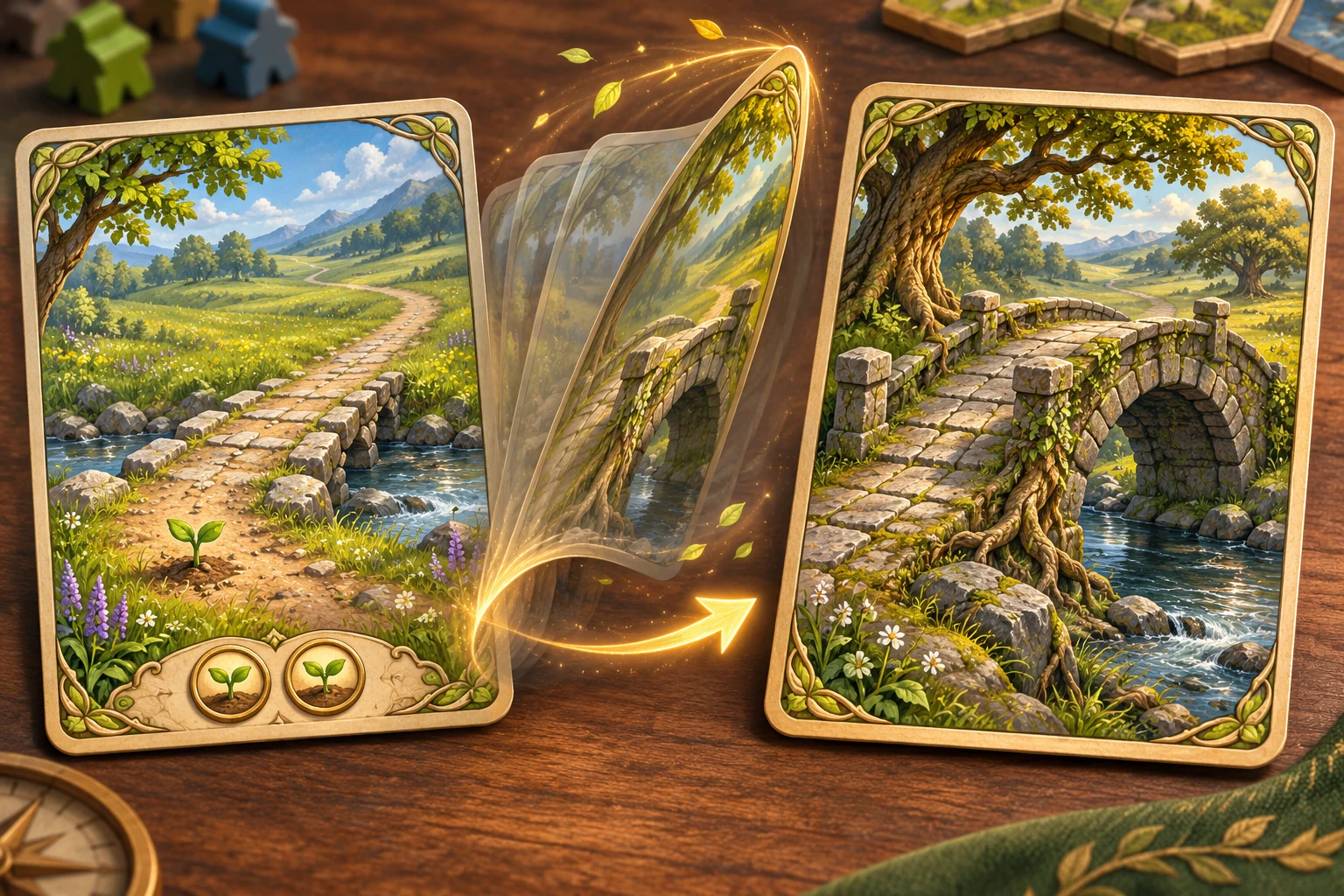
When Sprout Causeway reaches age 2 after its second played encounter, flip it permanently to Rooted Causeway. The new face changes the terrain effect: place a bridge connection and add 1 food instead of placing a meadow for 2. Use the face that existed when the card was played, then apply the age step and transformation after the encounter resolves. This order avoids changing an effect halfway through a map placement.
In the fixture, the first use places meadow and adds 2 food, then the card ages to 1. The second use does the same; afterward it reaches age 2 and transforms. In encounter three, the new face places a bridge and adds 1 food. Display the age track, transformation point, and both faces so the player can see how a repeated draft changes the campaign map.
Compare playing the card with reserving it
Run the main fixture by playing Sprout Causeway in encounters one and two. It adds 2 food each time, transforms after the second use, then provides a bridge and 1 food in encounter three. The bridge can connect map regions that were separated by water. Log placement, food, use count, age, and current face after every encounter.
For the control, reserve the card in encounter two. A reserved card has no map effect and does not age, so it remains at age 1. When played in encounter three, it still places a meadow and adds 2 food instead of creating the bridge. Compare the two maps and resource totals. Mirebound and these outcomes are fictional; the local test checks only the authored card state changes.
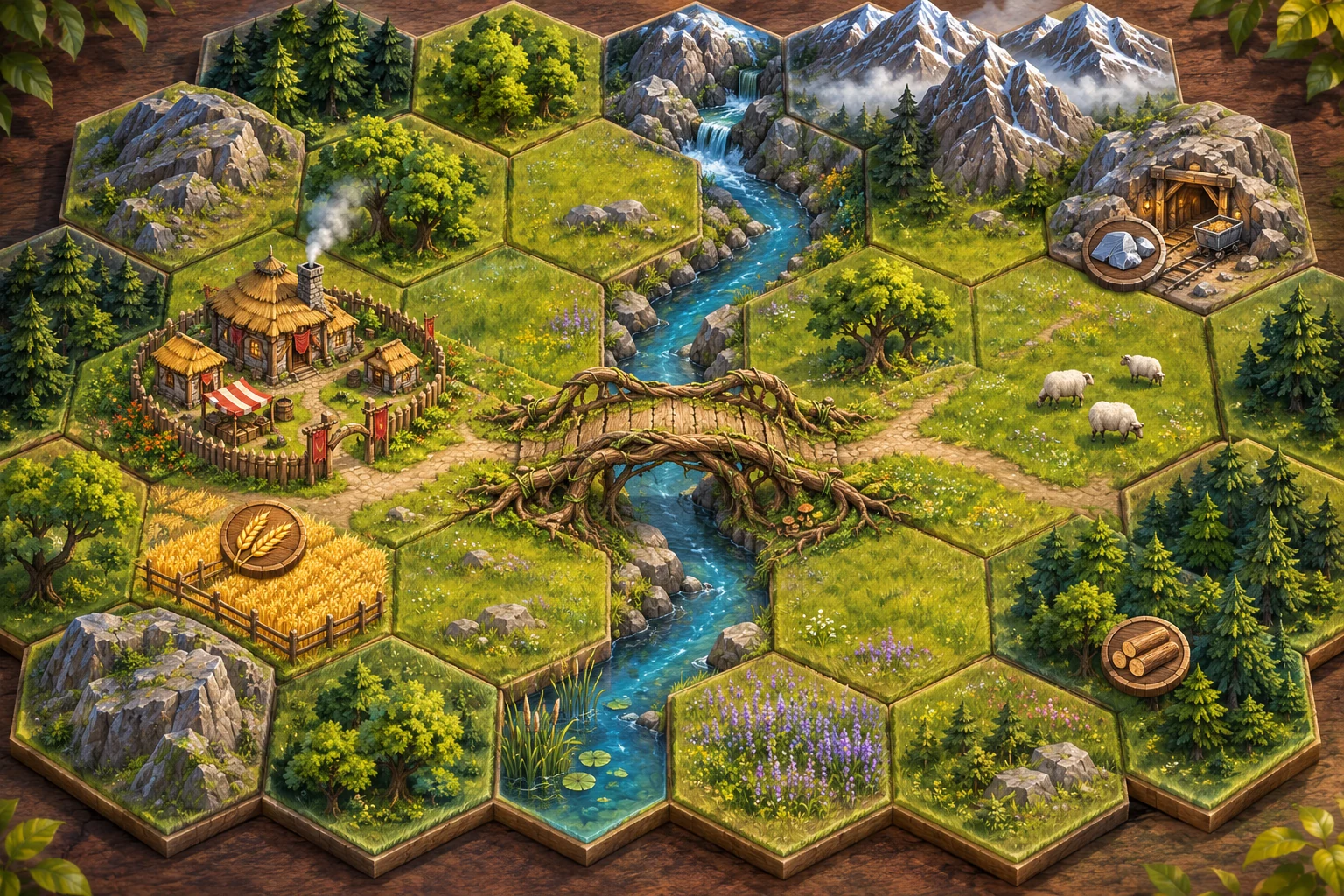
Ask an AI game maker to prototype aging tile cards
Create a tile-drafting strategy game called Mirebound. Each encounter offers three tile cards; draft one and place it adjacent to a settlement. Only played cards age, once after the encounter. Sprout Causeway at age 0 places a meadow tile and gives 2 food. After two uses, permanently transform it into Rooted Causeway, which places a bridge connection and gives 1 food. Play it in encounters one and two, then use the transformed face in encounter three. Compare a control that reserves it in encounter two: it stays age 1 and later places a meadow for 2 food. Show card age, face, placement, and food after every encounter.
Check that only a played tile card ages, and that aging happens after the encounter effect. Sprout Causeway gives 2 food and a meadow on uses one and two, then transforms at age 2. Rooted Causeway gives 1 food and places a bridge on use three. If reserved during encounter two, the old face remains at age 1 and does not create a bridge in encounter three.
FAQ
How do I make cards age between encounters in a strategy game?
Track each card's age and use count, then advance it after an encounter only if the player used it. Show the current face before drafting and resolve its map effect before applying the age step. This makes timing visible and lets players decide whether to use or reserve the card.
When should a tile card transform into a new effect?
Choose a clear threshold, such as the second completed use, and define the new face before the campaign begins. In the example, Sprout Causeway changes into Rooted Causeway at age 2. The new card creates a bridge and gives less food, so transformation changes both the map and the resource tradeoff.
What should I test in a tile-drafting card prototype?
Test placement adjacency, whether reserved cards remain unchanged, when age advances, and which face supplies the effect. Compare a played-card path with a reserved-card control. Record tile placement, resources, age, use count, and transformed face after each encounter in every replay.