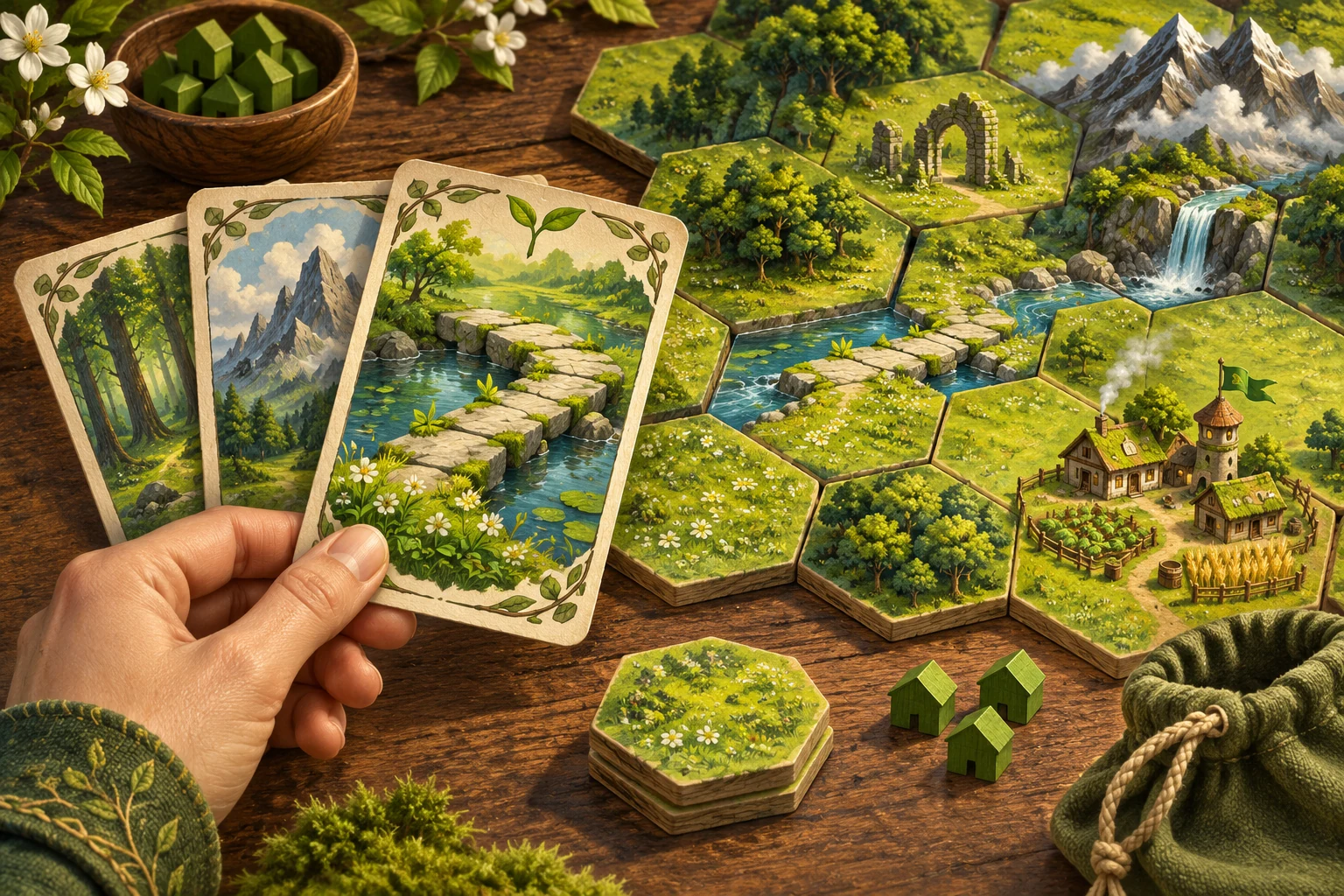
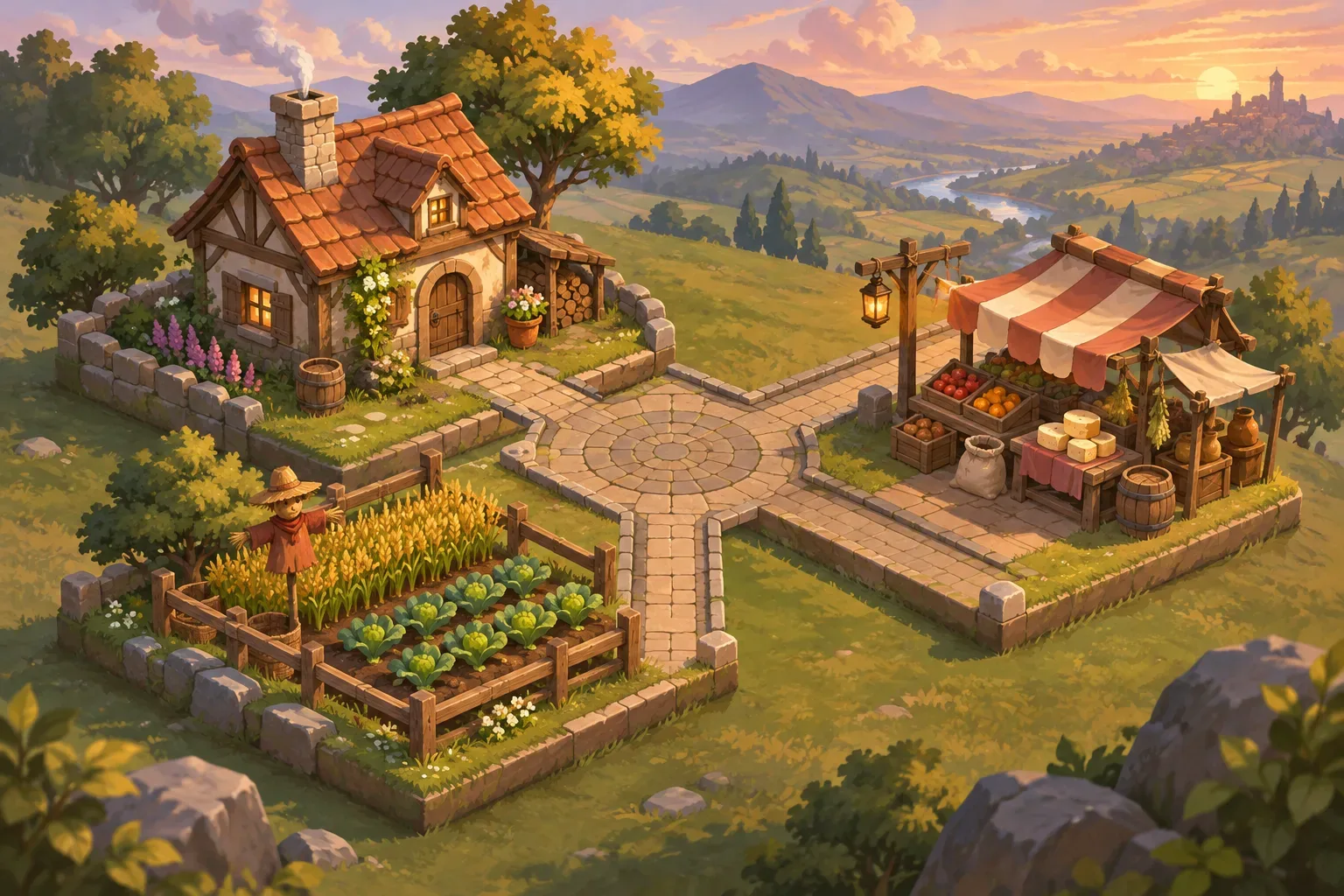
In a small river town, each district begins as a card: Orchard, Kiln or Canal. Place cards to build, then survive a raid. Between encounters, the oldest used card ages into a worn version with less output and a new adjacency effect. That change makes the next city plan matter.
Give each card a useful place in the city
Start with a three-by-three grid, a river edge and three district cards. The Orchard provides two food, the Kiln provides one brick, and the Canal provides one trade token that can be exchanged for one ration. District effects remain active after placement. Put a food store beside the Orchard so its output is visible.
Keep district effects small enough to compare. The first encounter is a raid that removes one food for each exposed home. Mark homes, storage and the raid path on the board before asking the player to commit a layout.
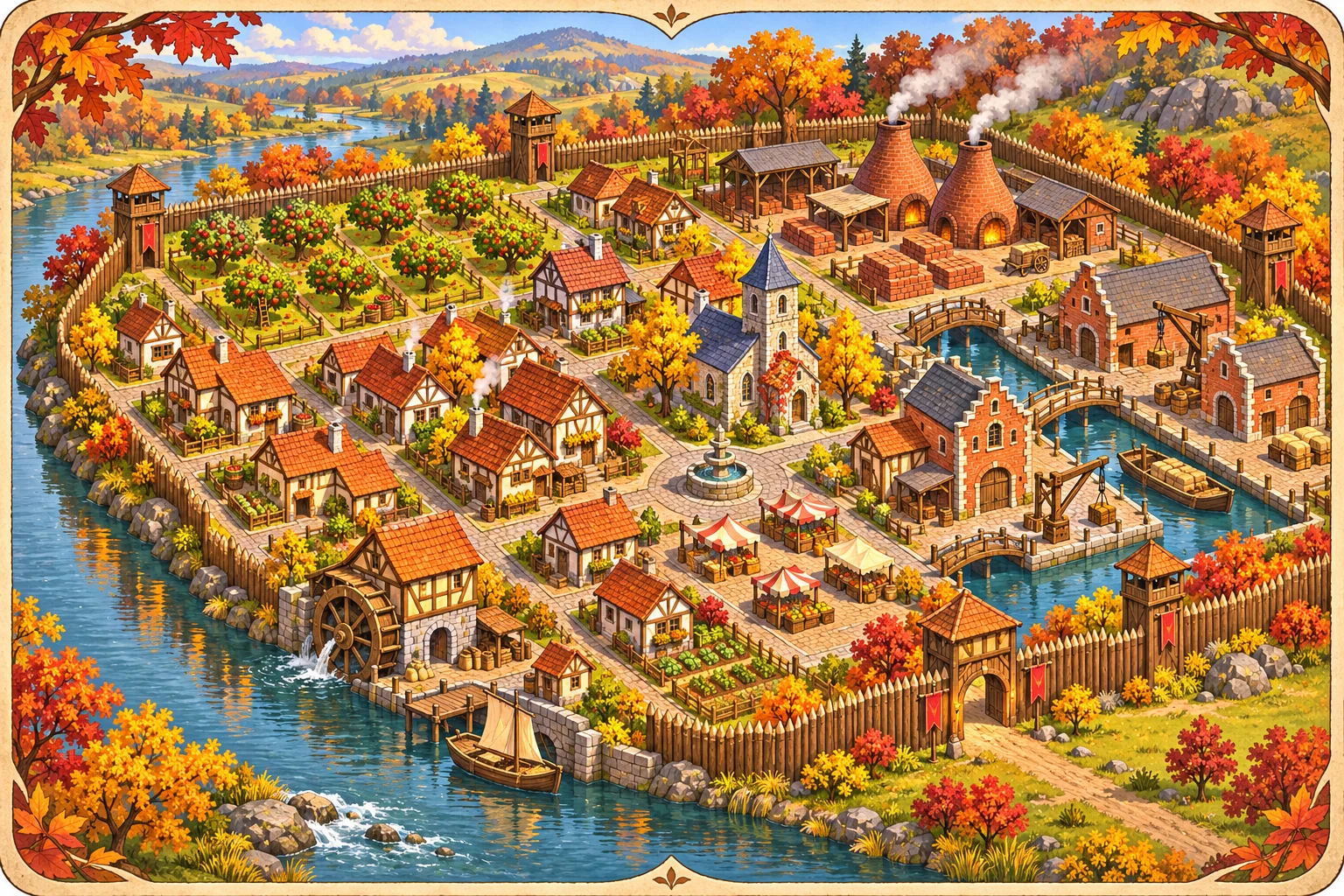
Make use transform the card between encounters
After an encounter, age the oldest card that was used. A fresh Orchard becomes a worn Orchard: it produces one food instead of two, but adds a low wall beside one neighboring home. Show the card's old and new effect before the next build phase, and keep the city tile in place.
Do not age unused cards. A player can rotate the Kiln and Canal into the plan to protect a future Orchard. This gives card order a cost without discarding the district the player already built.

Replay the shortage and rotate the card order
The deterministic replay begins with two homes, one food store and two encounters. A naive plan relies on the Orchard alone: after it ages, its one food leaves one home exposed in the second raid. The revised plan also uses the Canal to exchange one trade token for a ration. Combined with the worn Orchard, that supplies both homes; its new wall protects the adjacent home.
Reset the same raid path, starting cards and home positions to compare the two plans. The replay checks card aging and supply arithmetic. A future player test should check whether the worn-card preview is clear before the player commits.

Prompt AI for one two-encounter city run
Begin with three district cards and two raids. Add more neighborhoods only after players can see what will age, trade Canal tokens for rations and plan around the next encounter.
Create a card-based city builder on a three-by-three river town grid. Add Orchard (two food), Kiln (one brick) and Canal (one trade token exchangeable for one ration), each usable once per build phase. District effects persist after placement. After an encounter, age the oldest used card: the Orchard becomes worn, produces one food and gives one neighboring home a low wall. Run two raids, show the next card state before placement, track exposed homes and food, and add reset.
SEELE's free game maker describes starting from a text prompt and refining a first version with follow-up requests. Use this run to inspect the aging preview and food count before expanding the city.
Start the aging-card city builder in SEELE
Frequently asked questions
Should every card age after an encounter?
Start by aging only the oldest card that was actually used. This makes the timing predictable and gives unused cards strategic value. Once players understand that rule, test a different aging schedule as a separate change so they can see why the city output changed.
Can an old district card still be useful?
Yes. A worn card can produce less of its original resource but gain a new adjacency effect, such as a low wall beside a home. Show both changes on the card before placement. The player should be able to weigh the reduced output against the defensive benefit.
How do I test whether the card order matters?
Replay the same starting cards, city layout and raid path with two different build orders. Compare food, exposed homes and card states after each encounter. Keep the rules fixed so the result shows the effect of the order rather than a random event.