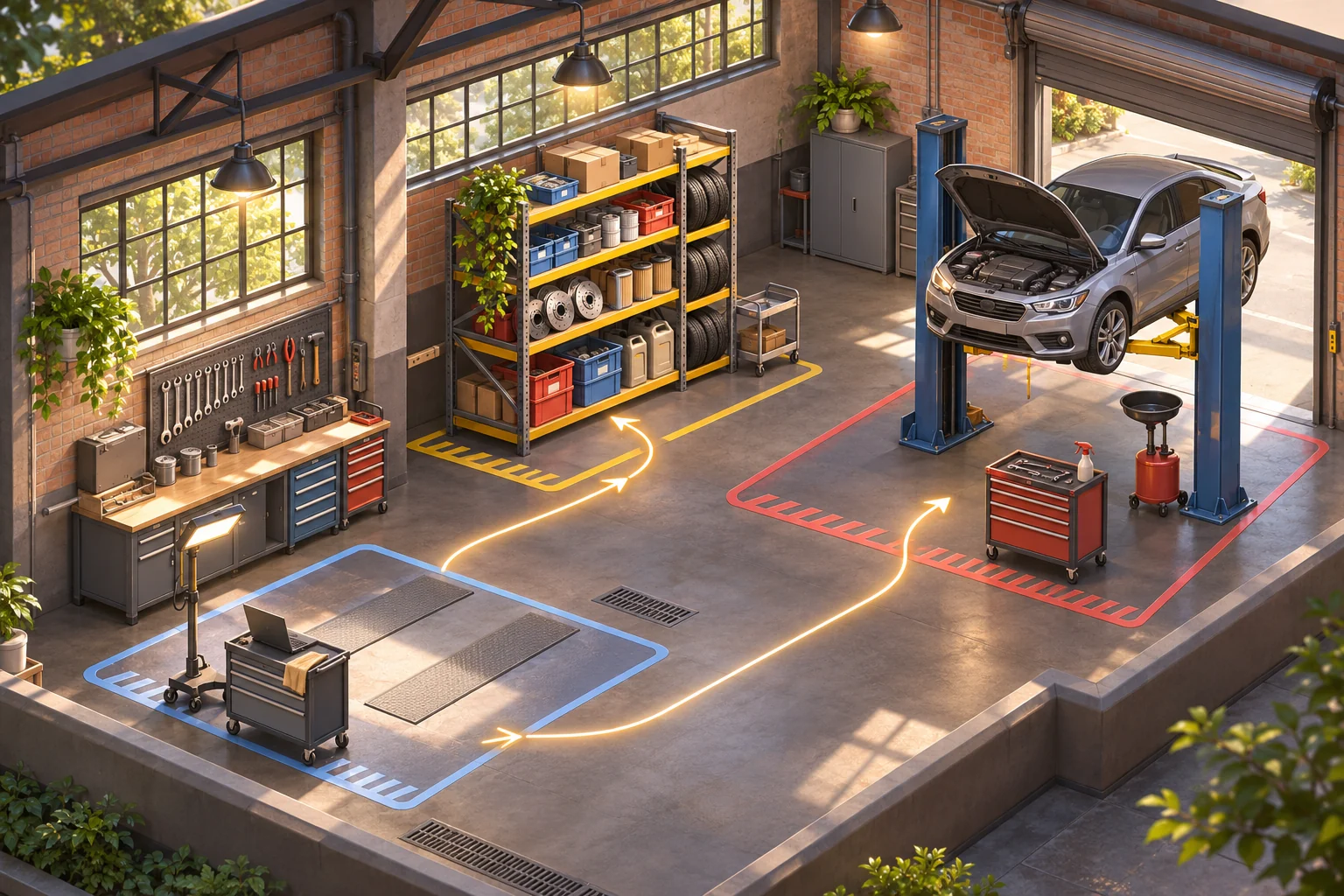
A hotel game is easier to prototype when its defining rule produces a visible state change. Room placement changes employee routes. Build one small scenario where a player can see the inputs, make a choice and inspect what changed.
Start with two comparable states and change only the feature named in the brief. Keep the supporting conditions fixed, record the outcome and state what the check cannot prove. A deterministic model can catch logic errors, but it cannot establish whether a mechanic feels fair, believable or enjoyable.
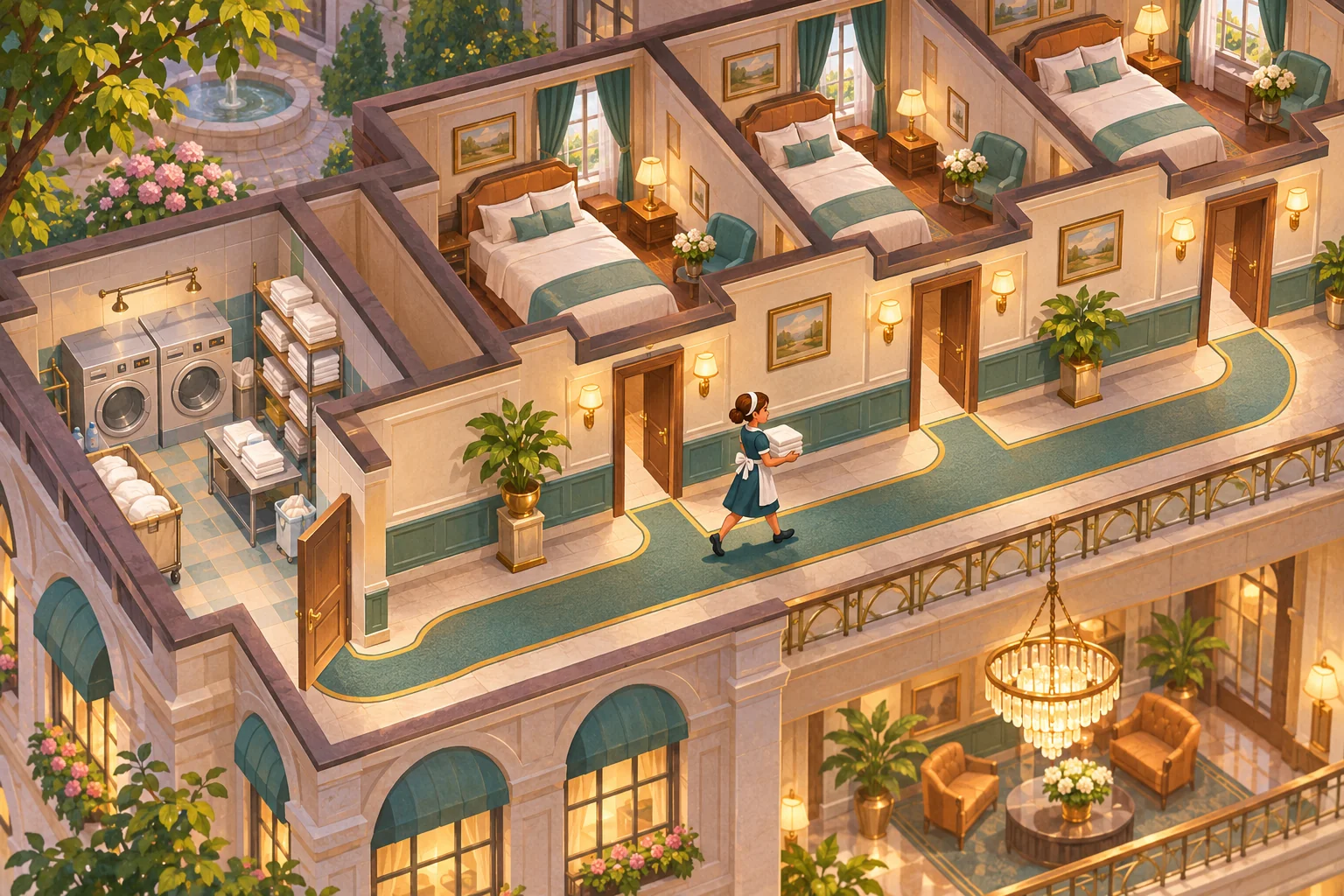
Make room placement change a staff route
Represent the hotel as connected rooms and corridors. Assign each room a service need, then give each employee a start point and work list. Routes must follow walkable links rather than crossing walls.
Begin with one worker who visits the next assigned room, completes a request, then continues. Show the route and remaining queue on the floor plan. Add elevators, shift changes or interruptions only after you can explain why a layout changed the result.
Compare two arrangements with the same rooms, worker and requests. Move the laundry closer in the second layout and measure corridor steps and requests reached before the shift ends. These are simulated indicators; they do not measure guest satisfaction or realistic staffing.
Godot AStarGrid2D documentation describes grid-based pathfinding options.
Compare two versions of the defining mechanic
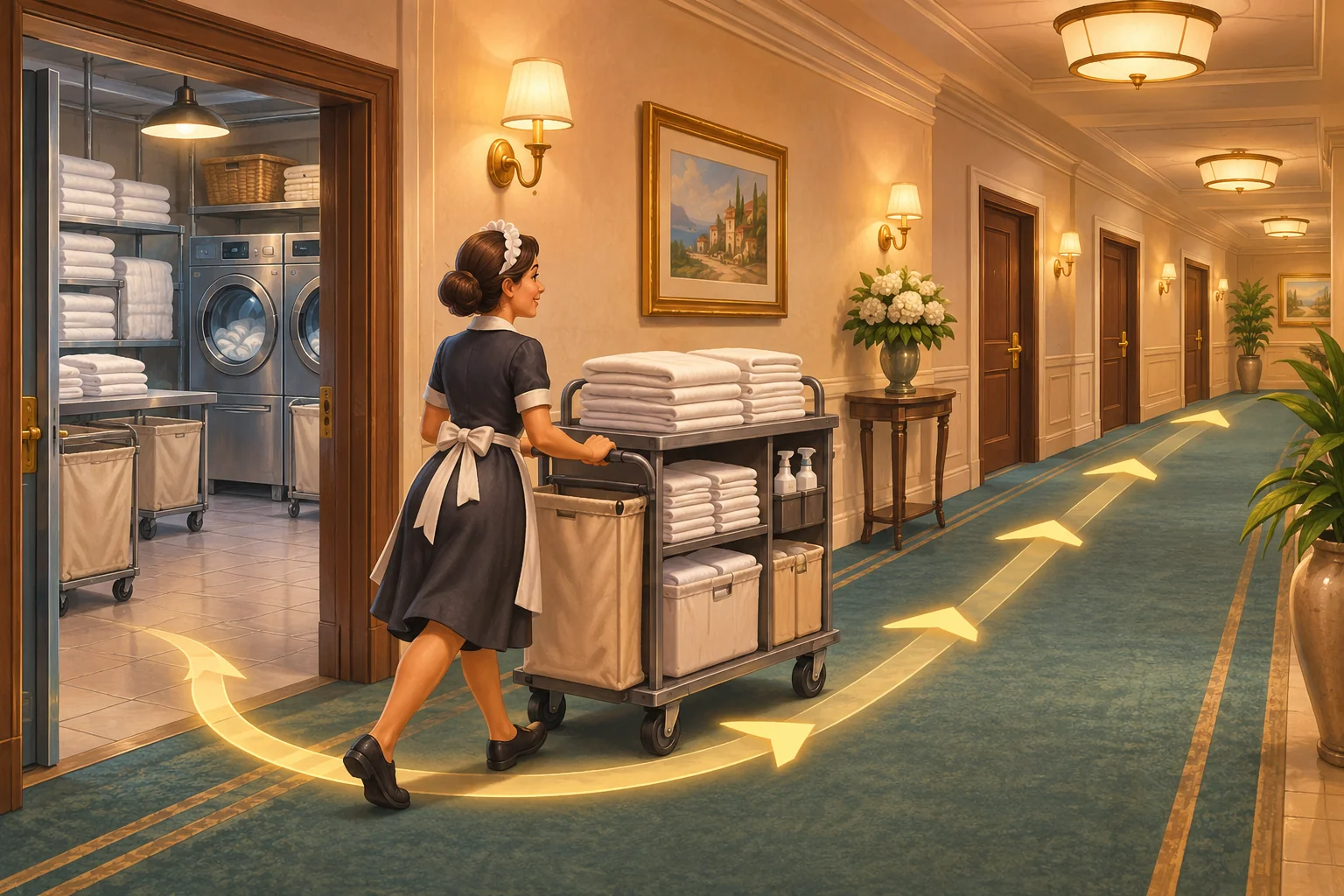
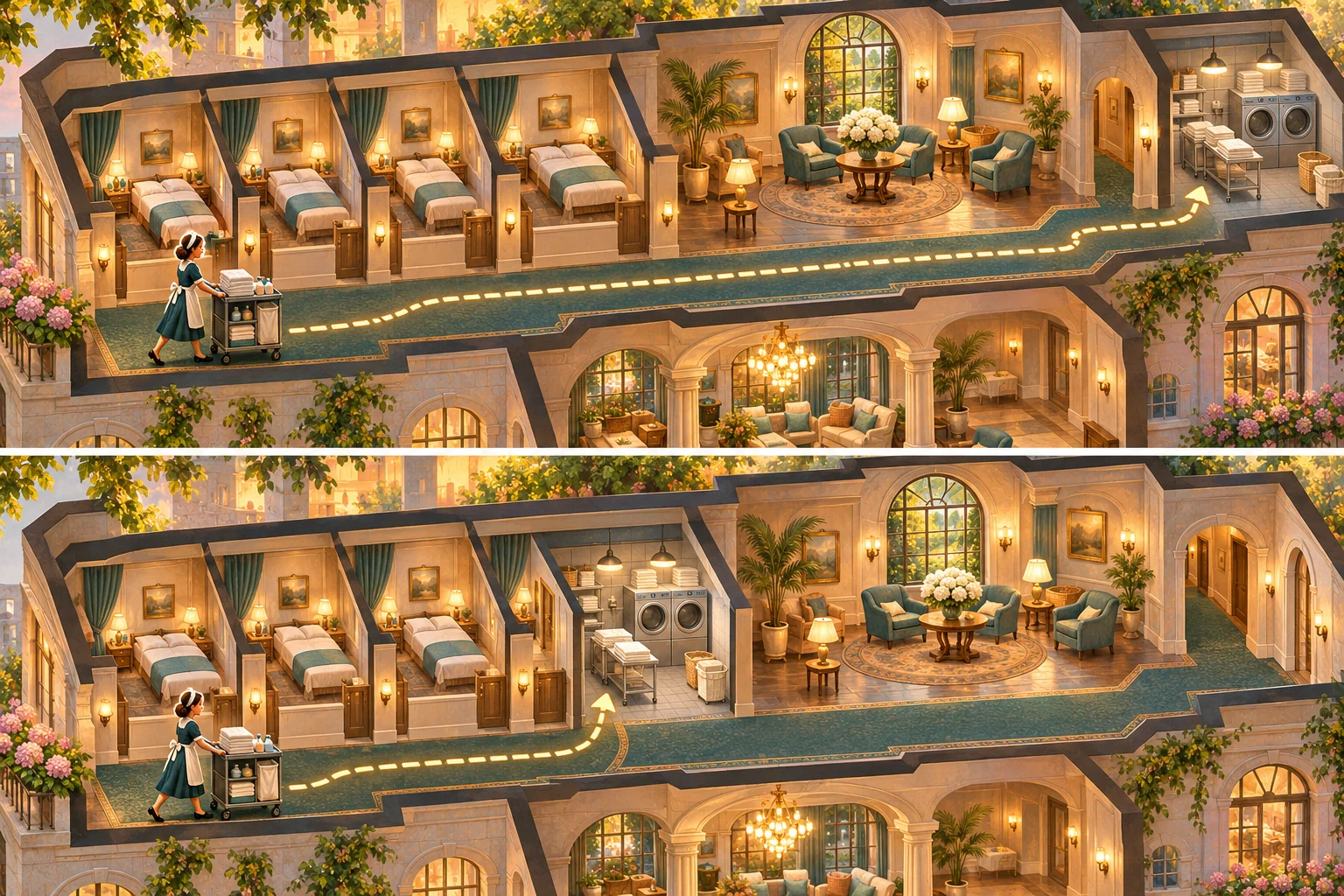
Use a fictional hotel with one laundry, four guest rooms and one housekeeper. In Layout A, laundry sits at the far end of the corridor. The worker starts near reception and walks past three rooms before reaching the linen supply.
In Layout B, move laundry beside the guest-room corridor. Keep the worker start, four towel requests, corridor links and shift budget fixed. The route model records fewer steps, leaving more shift capacity for service requests.
The comparison checks route calculation and shift capacity only. It does not model cleaning duration or guest interruptions. Verify that blocked corridors cannot create paths through walls before adding richer hotel systems.
Ask AI to prototype the core mechanic
Show the initial state, player choice, rule inputs and resulting state.
Change only the defining feature between the two scenarios.
Create a small hotel game prototype. Scenario A: Laundry at the far corridor end creates a long route. Scenario B: Laundry beside guest rooms shortens the same route. Compare corridor steps and service requests reached within one fixed shift. Show the relevant state before and after, plus any unresolved requests or routes. Keep the result scoped to rule verification and do not claim that it proves player enjoyment or real-world accuracy.
Use a controlled check before adding more systems
Room placement changes employee routes. Compare the two cases with supporting conditions held constant and make the state change easy to inspect. The model can verify that the mechanic responds to its intended input. It cannot establish whether the choice is fun or balanced, so playtest the decision before adding more systems.
Prototype a hotel game with SEELE’s AI game maker
Frequently asked questions
How can a hotel layout affect employee workflow?
Rooms and service areas sit along connected routes, so placement changes employee travel between tasks. A laundry room near guest rooms may reduce linen trips, while a distant wing can consume more shift time. Show walkable paths and keep requests fixed when comparing floor plans.
What should a hotel workflow prototype measure first?
Start with corridor steps, route completion and requests reached within one fixed shift. Keep staff, walking speed, room needs and the service queue constant between plans. These measures show whether routing responds to layout before adding cleaning times, elevators or guest interruptions.
Does shorter employee travel prove a better hotel layout?
No. A route model verifies connectivity and compares travel under fixed assumptions, but it cannot measure fatigue, guest satisfaction or whether players enjoy the tradeoff. Playtest layout decisions and add blocked corridors or deadlines after basic paths are clear first.