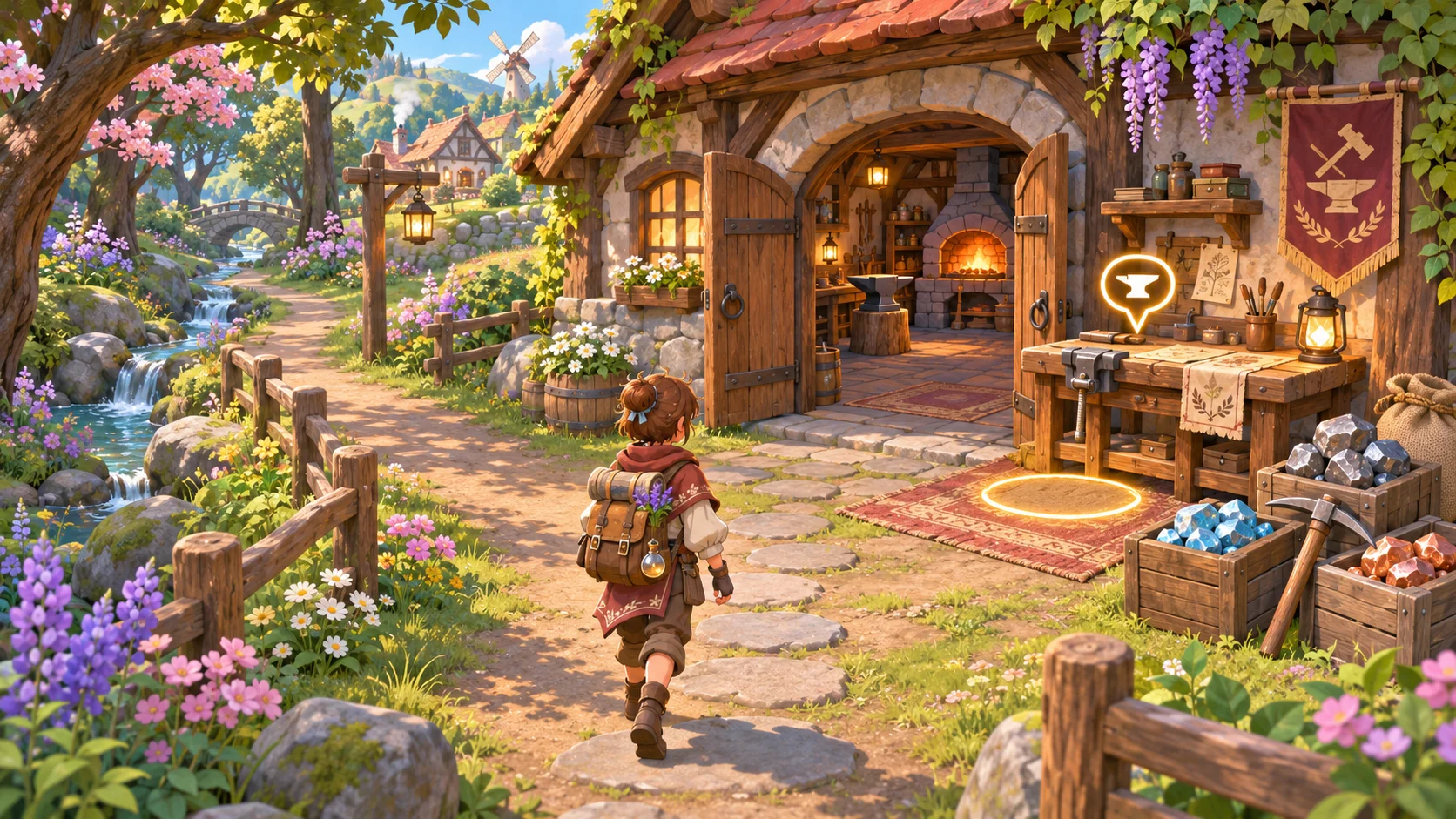
Choose rewards that signal a crafting path
An adventure reward feels useful when the player can connect its source to a future choice. Start from an encounter or location, then decide what material it provides and what small set of recipes can use it. A mineral from a cave guardian might reinforce a protective harness; a rare seed could support a charm that improves travel stamina. Keep these examples original and make the source visible in the journal or item details.

Avoid making every creature drop a generic crafting currency. Materials are easier to remember when their shape, name, and use reinforce where they came from. At the same time, keep the recipe set compact enough that a new reward does not create a long list of unusable ingredients. A material can have one primary recipe and perhaps one optional alternative.
The official Creature Keeper listing describes befriending creatures, fighting alongside them in real time, and powering up a team. That establishes a creature-partner RPG context. It does not define the gear crafting proposed here; the material and recipe path in this article is an original design example. " alt="An original creature trainer and companion prepare for an expedition with a crafted charm and harness." width="1536" height="1024" loading="lazy">
Build a readable recipe and crafting flow
A recipe should answer three questions before confirmation: what will be made, what is consumed, and what happens to the creature afterward? Show each ingredient with its current count and source, and show missing quantities plainly. If crafting consumes an item permanently, say so before the player commits. This prevents a rare adventure reward from disappearing into a surprise action.
Separate recipe discovery from recipe execution. The player may learn a schematic after meeting a creature or finding a workshop, but the crafting screen still needs to explain requirements and result. If a recipe is not yet available, provide a useful clue about where to find it without revealing every hidden discovery. Keep the recipe preview close to the creature equipment screen so the loop feels connected.
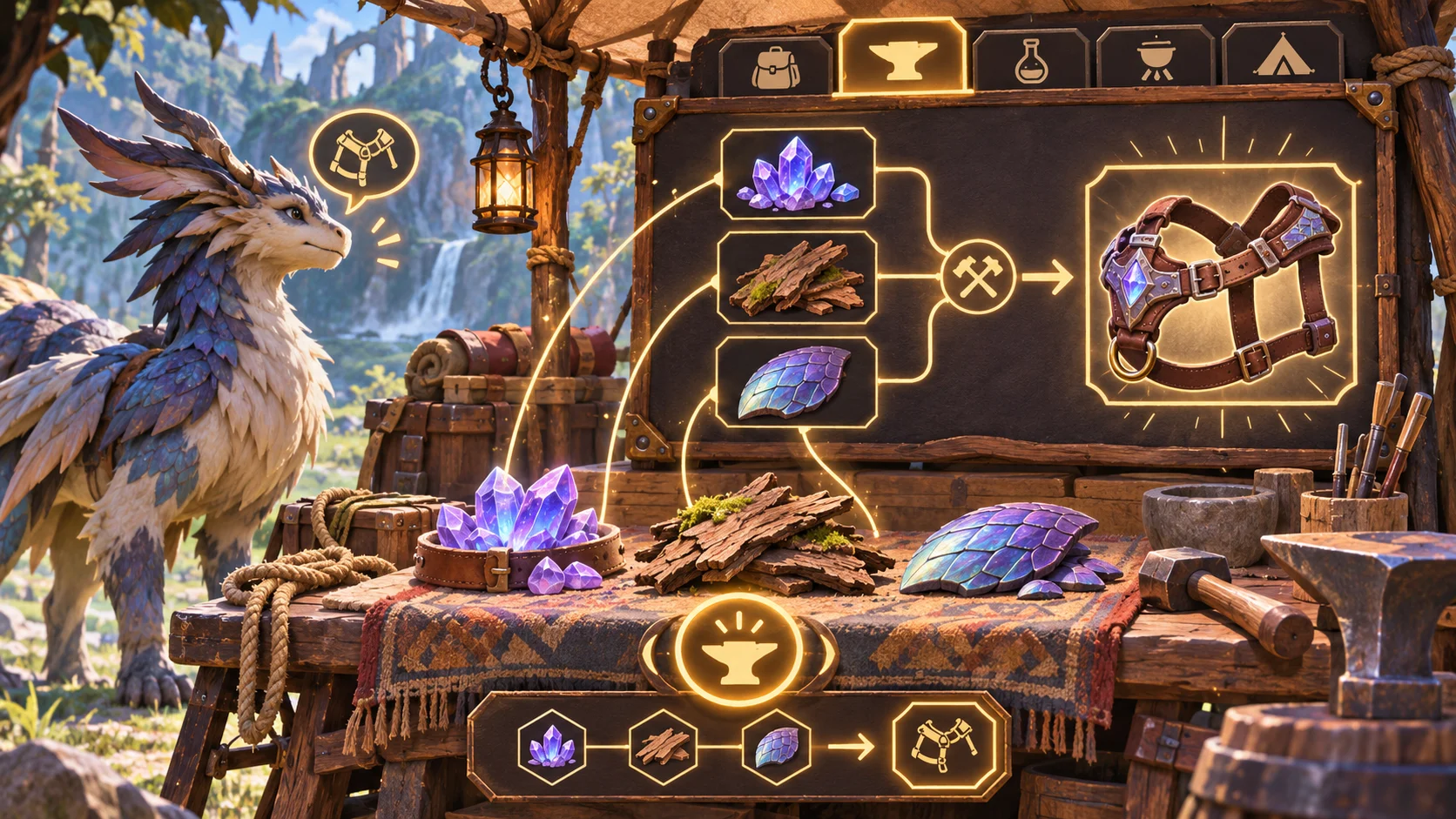
Define what the crafted item changes in practical terms. A harness might reduce damage from one hazard or extend a traversal action by a bounded amount. Present the effect next to the creature’s existing abilities so equipment complements collection and team choices instead of replacing them. Avoid stacking bonuses that make a new item automatically correct for every creature.
Make equipment complement creature roles
Equipment is strongest when it supports a creature’s identity or a route decision. A nimble companion might use light gear that helps it cross unstable ground; a sturdy partner might carry a protective plate that helps in a hazardous cave. Keep the effect understandable and show it both in inventory and during play. If the item changes a hidden statistic, translate that number into a player-facing consequence.
Make compatibility explicit. If only certain body types or roles can use an item, mark that on the recipe and the equipment screen. If any creature can equip it but benefits differ, show the difference before confirmation. Allow players to remove or swap gear when practical, while preserving a cost only if the game clearly teaches it.
Play the next encounter with and without the item. The upgrade should make a situation different without erasing the creature’s role or the player’s tactical choices. If a gear bonus trivializes the obstacle it was meant to help with, reduce its strength or make the effect situational. If nobody equips the reward, its purpose, presentation, or compatibility may be unclear.
Test the adventure-to-upgrade route
Create one acceptance route: explore a location, encounter a creature, receive a material, discover or open a recipe, craft an item, equip a companion, then use the effect in a later challenge. Check inventory after each transition and confirm that the player understands why the reward matters. This full route catches broken links that separate menu tests miss.
Track how many players recognize the material source, open the recipe, complete the craft, and use the item later. Also watch for duplicate drops that exceed storage, recipes with no practical use, and upgrades that only work on one hidden build. Ask players to explain the item effect before and after the route. " alt="Crystals, bark, and a creature scale feed into a clear harness recipe at a camp workbench." width="1672" height="941" loading="lazy">
Use the creature-collection RPG guide to frame the broader team and adventure loop. SEELE AI can help outline an original creature RPG, but encounter rewards, recipe progression, and combat effects need implementation and playtesting.

FAQ
How do you connect adventure rewards to crafting in a creature RPG?
Give an encounter or location a distinctive material, explain the material’s recipe use, show the required ingredients and result before crafting, then let the player use the item on a later route. Test that whole sequence so rewards, inventory, recipes, equipment, and creature abilities feel connected.
What makes a good creature RPG crafting material?
A good material has a recognizable source, a small number of meaningful uses, and a clear connection to a recipe or creature role. Show where it came from and what it can make. Avoid filling inventory with generic drops that rarely change a player decision.
How should equipment affect collected creatures?
Equipment should complement a creature’s abilities or help with a particular encounter, while preserving the reason the player chose that creature. Make compatibility and effects visible before equipping. Test the next challenge with and without the item to confirm it changes decisions without trivializing them.
What should you test in an adventure-linked crafting system?
Replay a route from encounter reward through material storage, recipe discovery, crafting, equipping, and later use. Check ingredient counts, recipe clarity, duplicate drops, and item usefulness. Ask players to explain the effect and its source, then fix gaps in feedback or balance.