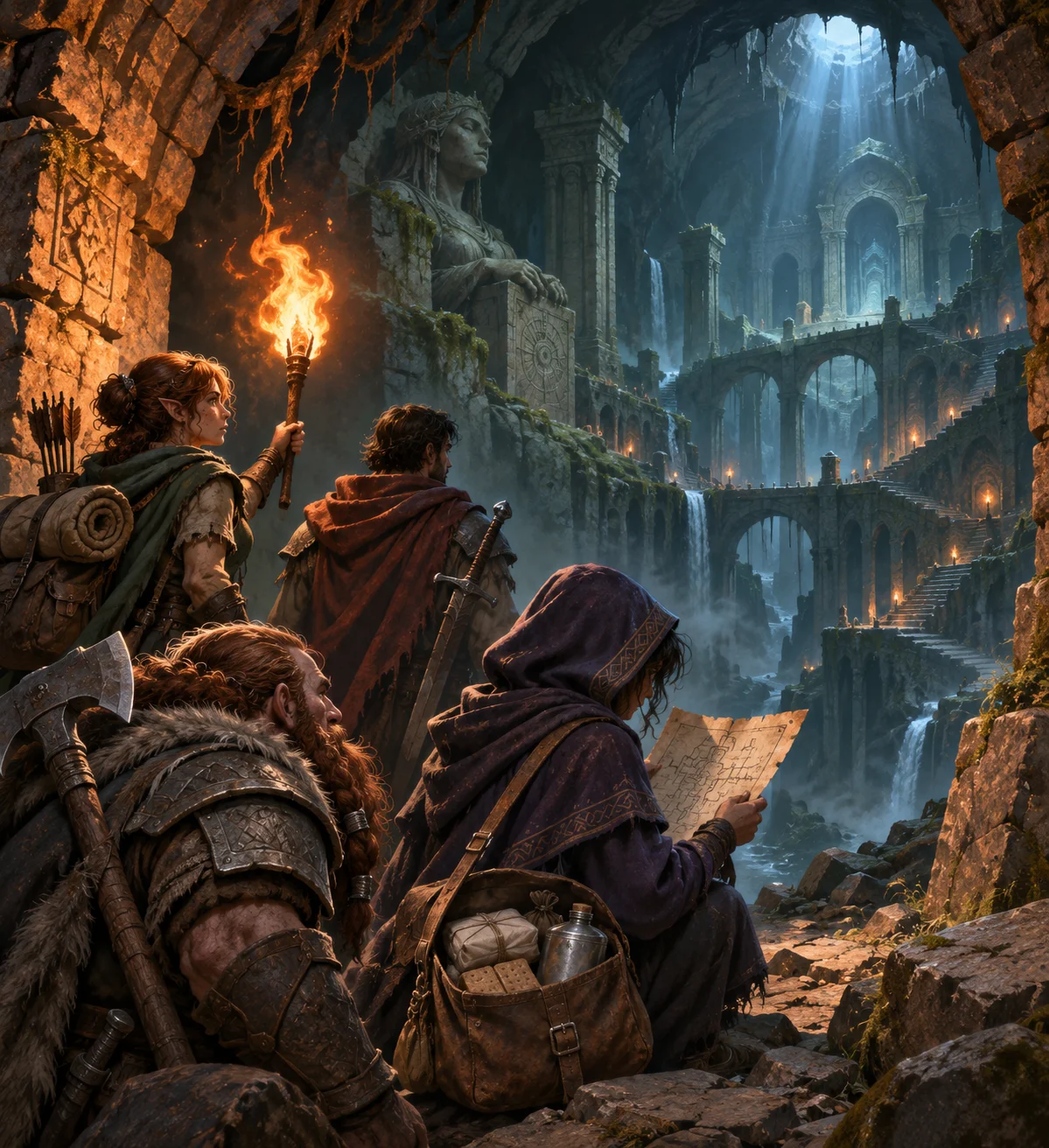
Use one shared resource budget to make travel and combat choices compete, while party roles and recovery keep the run from becoming a single-meter puzzle. Start with one small scenario, make its cause and effect visible, and test whether a player can explain the choice they made. The recommendations below describe original design options; cited game material is limited to genre context.
Map the party resource baseline
List the resources currently spent during travel and combat: food, light, stamina, ammunition, healing items, or a party ability charge. Note when each resource refills and whether party members contribute individually or from a shared pool. The official Baldur’s Gate 3 listing describes a party RPG with exploration, turn-based combat, co-op, and cooperative planning; it does not support the shared-cost model proposed here. See Larian Studios for the limited source context.
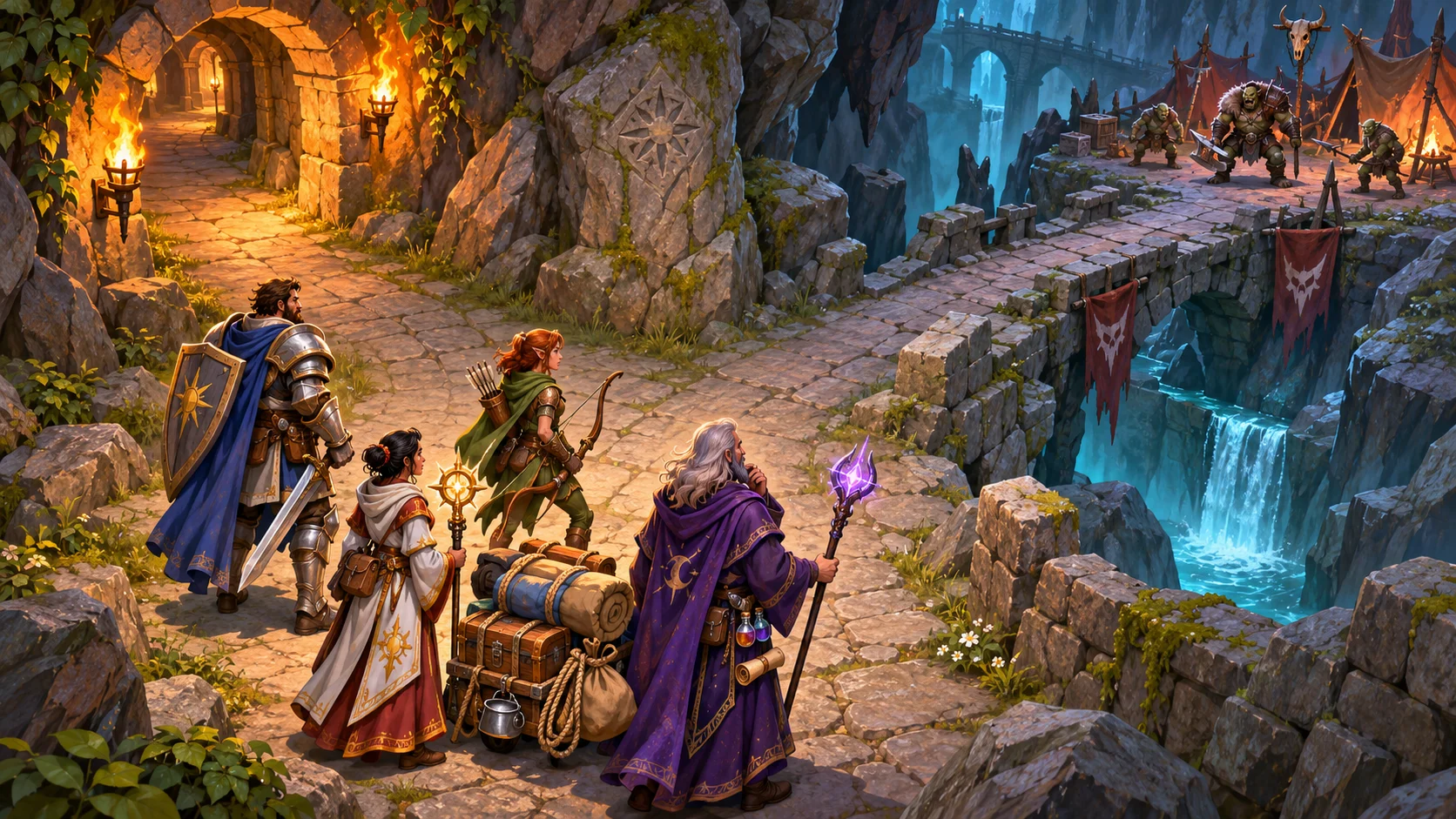
Choose a single budget only when it links decisions that players already care about. For example, provisions may support a longer route, while the same reserve powers a combat preparation. Keep healing and basic movement available so scarcity makes players plan rather than stop playing.
Price exploration and combat actions
Price actions by consequence, not by abstract uniformity. Scouting might spend time but save supplies by revealing a safe route; a strong combat ability might use a team charge that could otherwise help cross an obstacle. Show the cost before commitment and explain how the world or encounter responds.
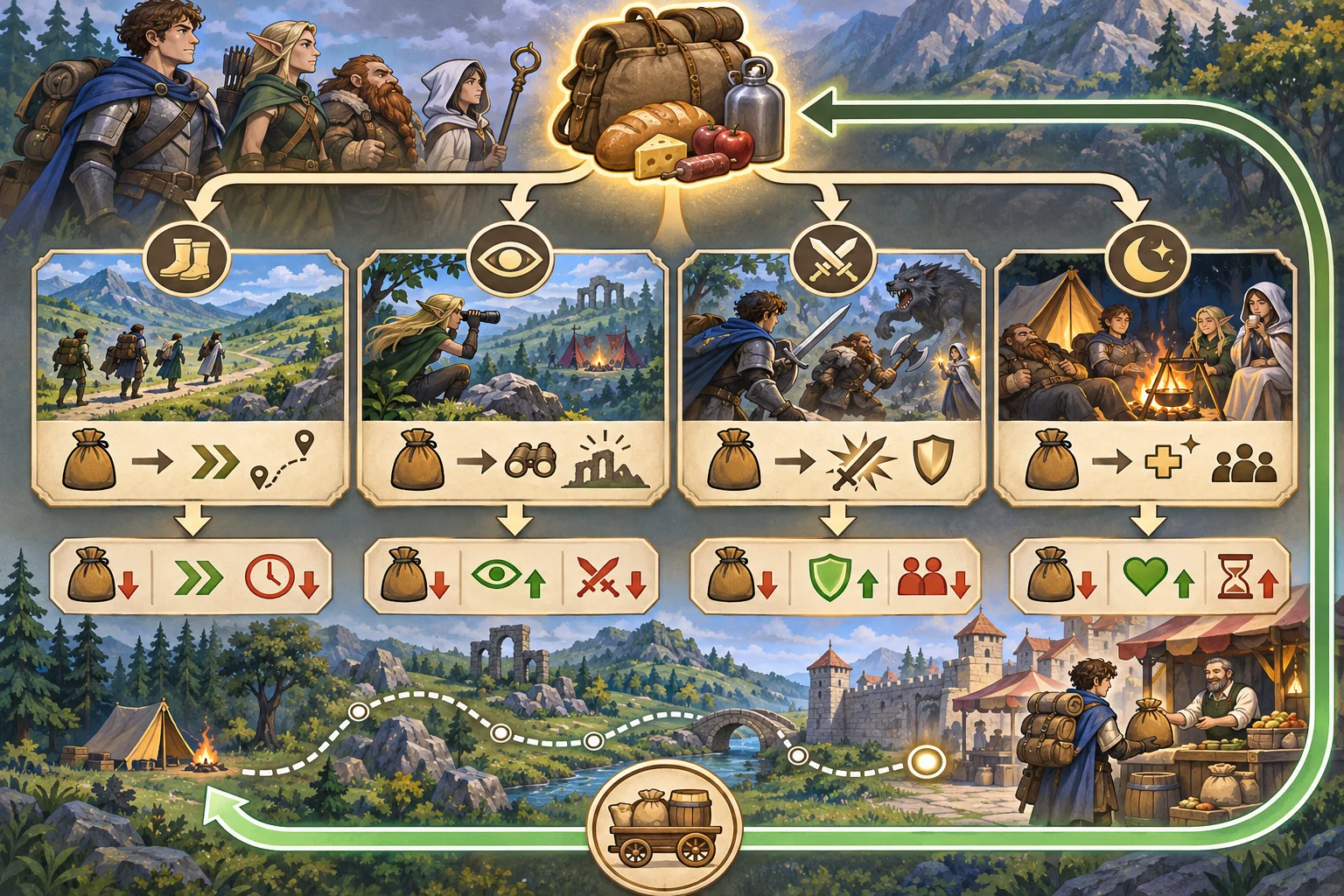
Separate personal and party costs. A shared pool encourages negotiation, while personal charges preserve character identity. A hybrid system can work if players can tell who contributes, whether spending is reversible, and what happens when a player is absent or joins mid-run.
Give party roles meaningful choices
Give different roles useful ways to spend or conserve the shared reserve. A scout could reveal a route, a guardian could reduce a hazard cost, and a healer could restore part of the pool after a safe rest. Avoid making one role the permanent gatekeeper for every major decision.
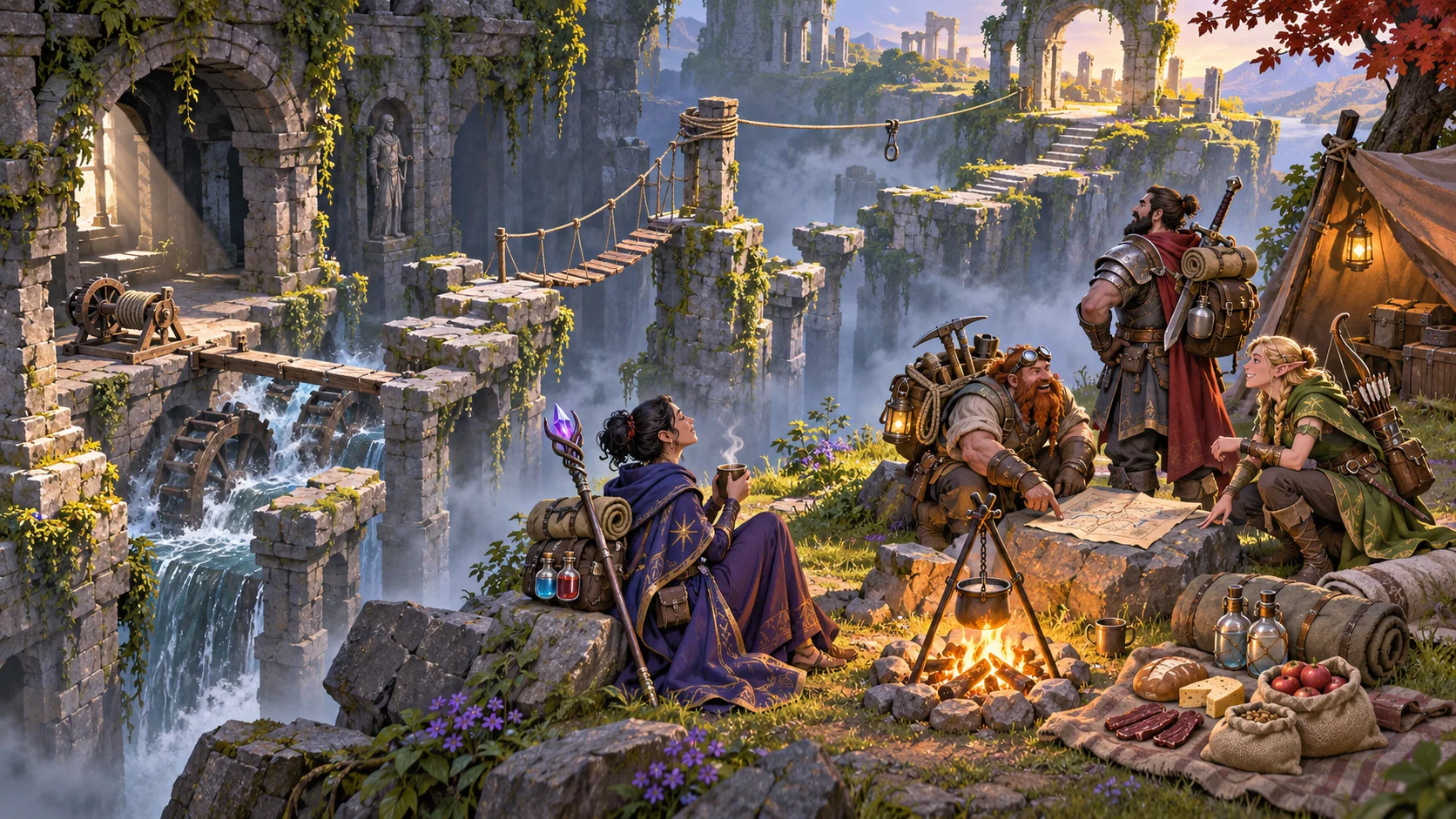
Let recovery create a choice too. A camp may restore the shared pool but cost time or foreclose another route; a rare supply cache can provide a smaller recovery without requiring a full reset. State what persists after retreat or defeat so the cost feels consistent.
Test scarcity, recovery, and routes
Test two routes and at least two encounters with the same party. Record spending, recovery, route changes, and who proposed each choice. Repeat with a different role combination and with a player who makes conservative choices. Adjust costs if one action is always optimal or if players cannot explain what the shared pool enables.
Compare this to a dungeon resource-loop guide for a focused resource loop. Pass when exploration and combat compete for a readable budget while players retain at least two viable responses to scarcity.
FAQ
What resources should a party RPG share?
Share resources that create meaningful coordination, such as a party reserve for scouting, recovery, or a limited group ability. Keep routine movement and basic defense available. Decide whether individual charges remain personal, and explain the source, spending rule, and recovery method for every shared resource.
How can exploration costs affect combat choices?
A travel cost can make players weigh a longer safe route against an early encounter, while a combat cost can compete for the same reserve. Show both costs before commitment and let players change route or formation. Recovery points should connect the choices rather than erase their consequences.
How do party roles use a shared budget fairly?
Give roles complementary ways to conserve, spend, or restore the shared pool. Keep backup options for mixed parties and avoid making one class approve every important action. Test different combinations and let players see who contributed and what the team gives up by spending.
What should you test in a shared-resource RPG?
Run the same route with several role combinations and track spending, recovery, encounter results, and player reasoning. Include a retreat or failure case. Check whether players can explain at least two viable responses to scarcity and whether the resource changes decisions in both travel and combat.