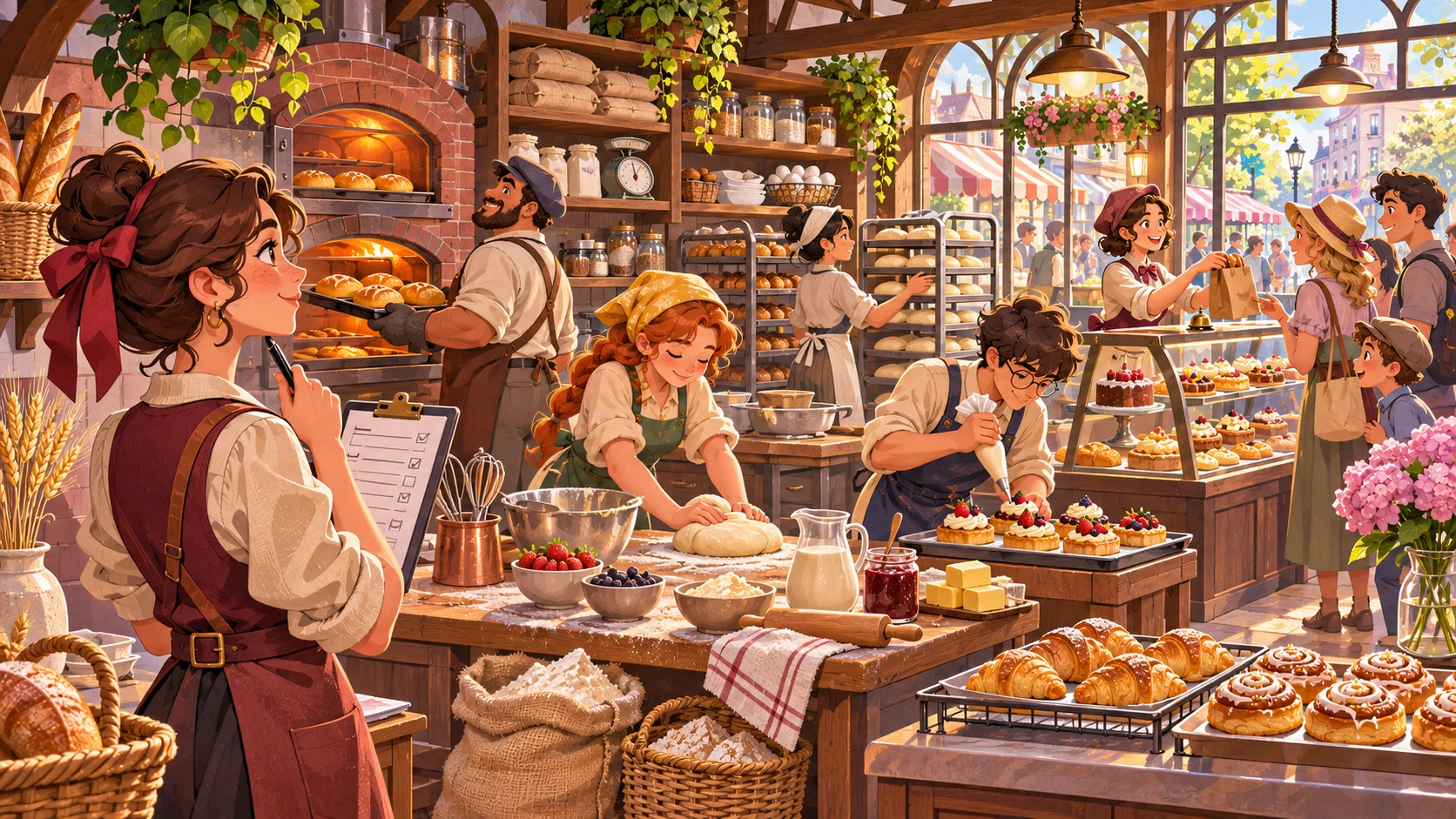
A cooperative bakery game needs decisions that depend on each other. Give one player control of recipes, batches and oven slots, while the other reads customer demand, accepts orders and chooses service priorities. If both roles can make the same decisions independently, cooperation becomes two people managing duplicate menus.
Connect the roles through a shared flour ledger. The baker reserves ingredients for a batch; the counter manager sees what remains before promising loaves to customers. Start with one day, two recipes and fixed demand. This checks whether the rules prevent impossible promises; it does not establish that the role split is fun or well balanced.
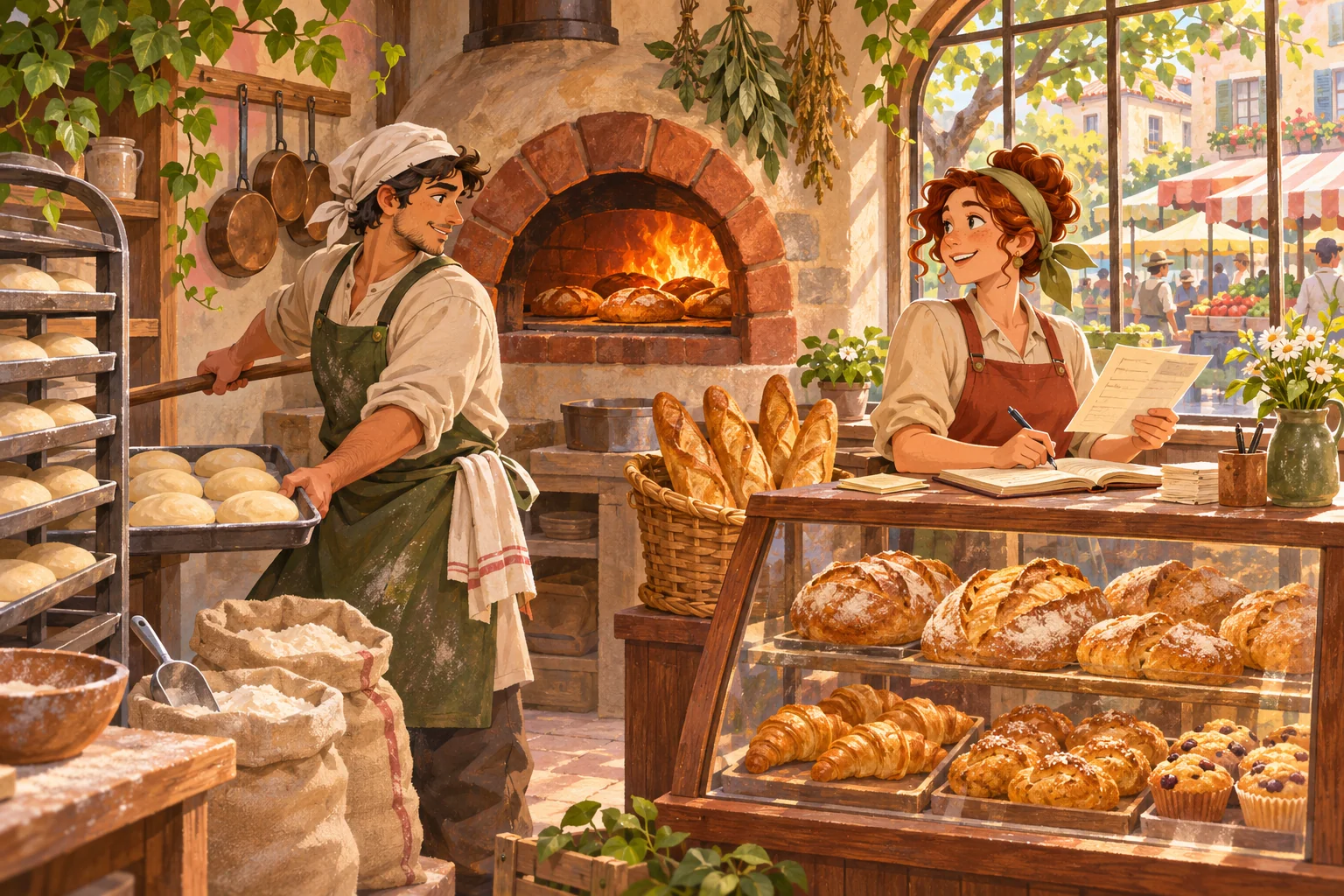
Give each bakery role a different kind of control
The baker selects the recipe, batch size and oven slot. The counter manager sees tomorrow's order board, chooses which requests to accept and sets a service priority. Keep the information shared, but give each role a separate action panel so one person cannot quietly perform the other job.
Use flour as the connecting resource. Each loaf costs one flour unit. When the baker schedules four rye loaves from a six-unit stock, reserve those four immediately. The counter manager then sees two units left and can accept only orders that fit the remaining stock. Both players can discuss the plan, but the ledger resolves what is actually available.
Run the day in clear phases: review demand, reserve ingredients, lock orders, bake, then serve. Show the reservation beside each batch and accepted order. Keep recipes, oven capacity and customer demand stable while tuning this first loop; add delivery, spoilage or upgrades after the shared-resource decision is readable.
See Godot's Resource documentation for reusable recipe, batch and customer-order data definitions.
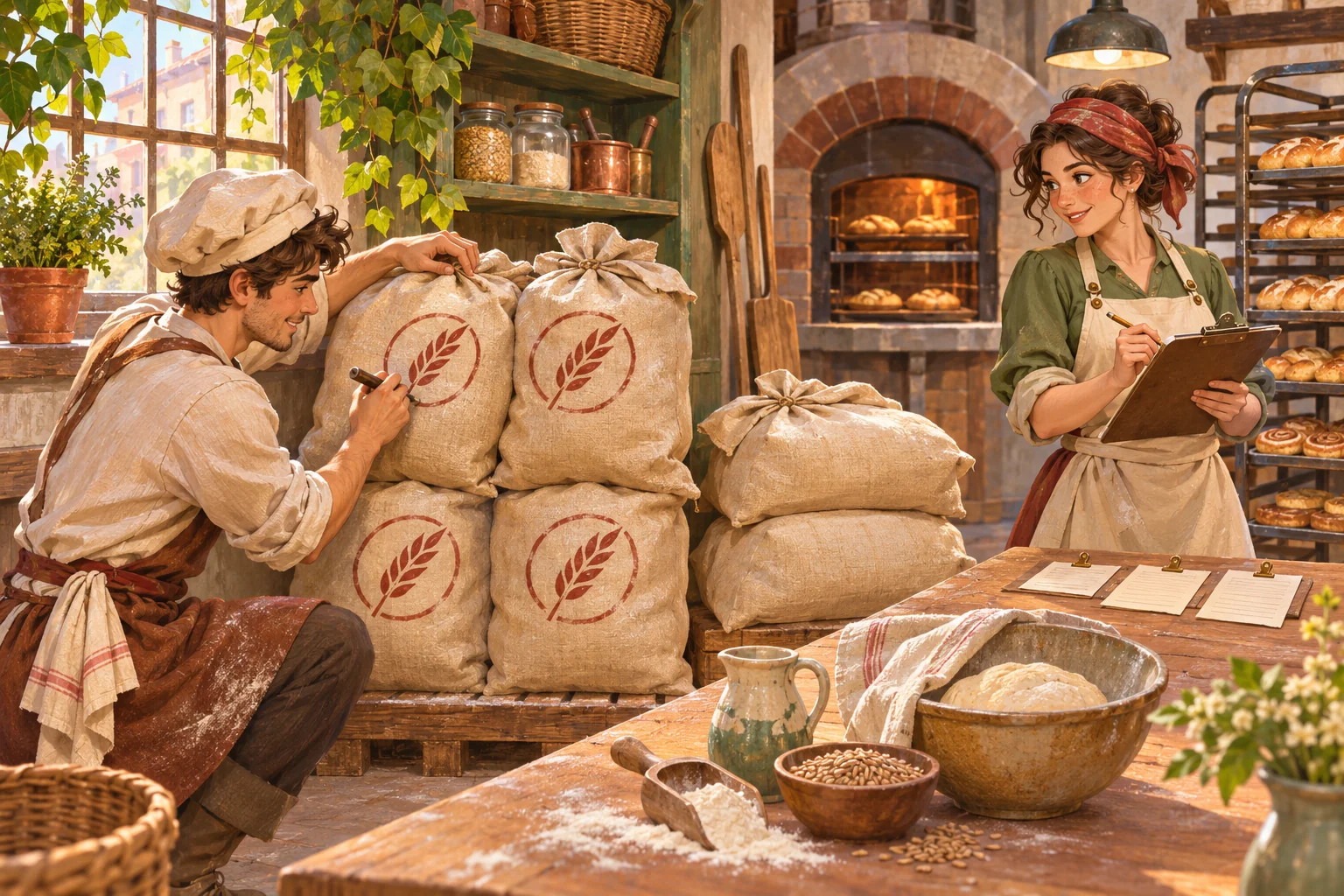
Fix one impossible order plan
Begin with six flour units. The baker reserves four for a rye batch. In the first rules version, the counter manager still plans from the original total and accepts a three-loaf cinnamon order. The plan now needs seven units, so the bakery cannot honor both decisions.
Change only the reservation rule: when the baker commits four flour, the shared ledger immediately shows two remaining. The counter manager can replace the three-loaf promise with a two-loaf roll order, which fits. Keep recipes, prices, demand and oven output unchanged during the comparison.
This deterministic resource check verifies that independent roles cannot overbook the same flour. It does not test communication quality, customer satisfaction, whether either job feels meaningful or whether the economy is balanced. Those questions need cooperative playtests across several in-game days.
Ask AI to prototype the shared bakery workflow
Show the baker's batch reservation and the counter manager's remaining flour before orders are locked.
Change only the reservation rule while keeping demand, recipe costs and oven capacity fixed.
Create an original cooperative bakery-management game prototype for two players. Player one controls recipe selection, batch size and oven slots. Player two controls customer orders and service priority. Begin with 6 flour units; each loaf costs 1. If the baker reserves 4 flour for rye, immediately show only 2 remaining to the counter manager. Prevent acceptance of any order that exceeds the shared remaining flour. Compare the original overbooking case (a 3-loaf cinnamon order) with the corrected feasible 2-loaf roll order. Keep demand, recipes, prices and oven output fixed. Do not claim the model proves co-op fun or economic balance.
Make the shared resource create real coordination
A role split is useful when each player's decision changes the other player's options. Begin with production and customer orders sharing one visible ingredient ledger, then test whether both jobs have meaningful choices over a complete day. Add extra recipes or upgrades only after the basic promise-and-production loop works in cooperative playtests.
Start a cooperative bakery game with SEELE's AI game maker
Frequently asked questions
How do separate roles make a bakery game more cooperative?
Give each role different controls and connect the results. A baker can schedule batches while a counter manager accepts customer orders against the ingredients left over. The counter manager cannot promise flour already reserved for production, so both players need to discuss which recipes and orders fit the day's supply. Neither role simply repeats the other's menu choices.
Should both players see the same inventory?
Usually, yes. Shared information lets players discuss the plan and catch conflicts, while separate action controls preserve role identity. Show which flour units the baker has reserved and how much remains before the counter manager accepts an order. A visible ledger prevents the game from promising the same ingredient to two jobs.
Does a resource model prove the co-op design is balanced?
No. It can verify that recipes and orders fit available stock under fixed rules. It cannot tell whether players communicate well, whether each role is satisfying or whether the bakery economy stays interesting. Test those questions with pairs playing multiple days.