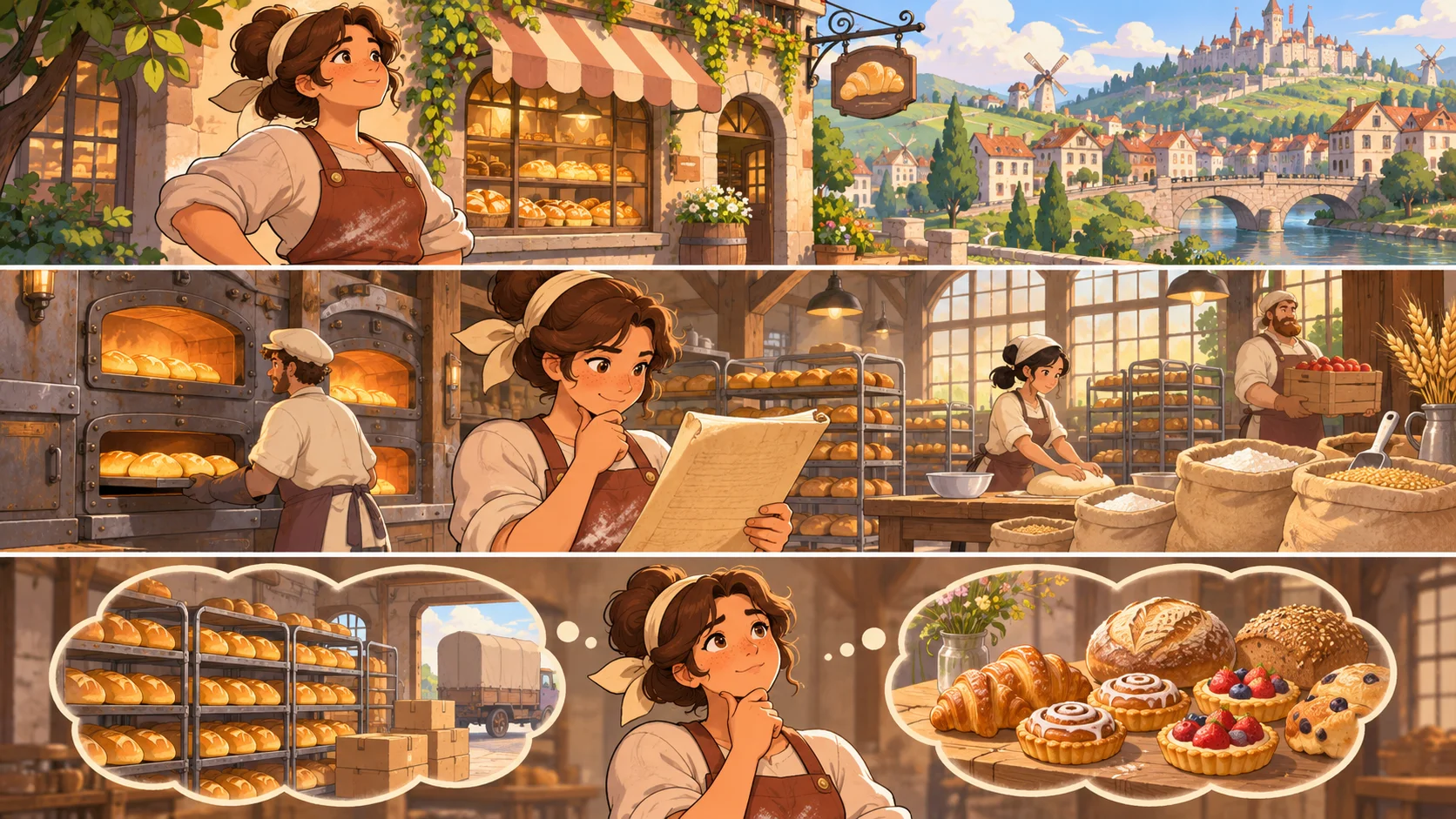
Map the bakery loop before hiring
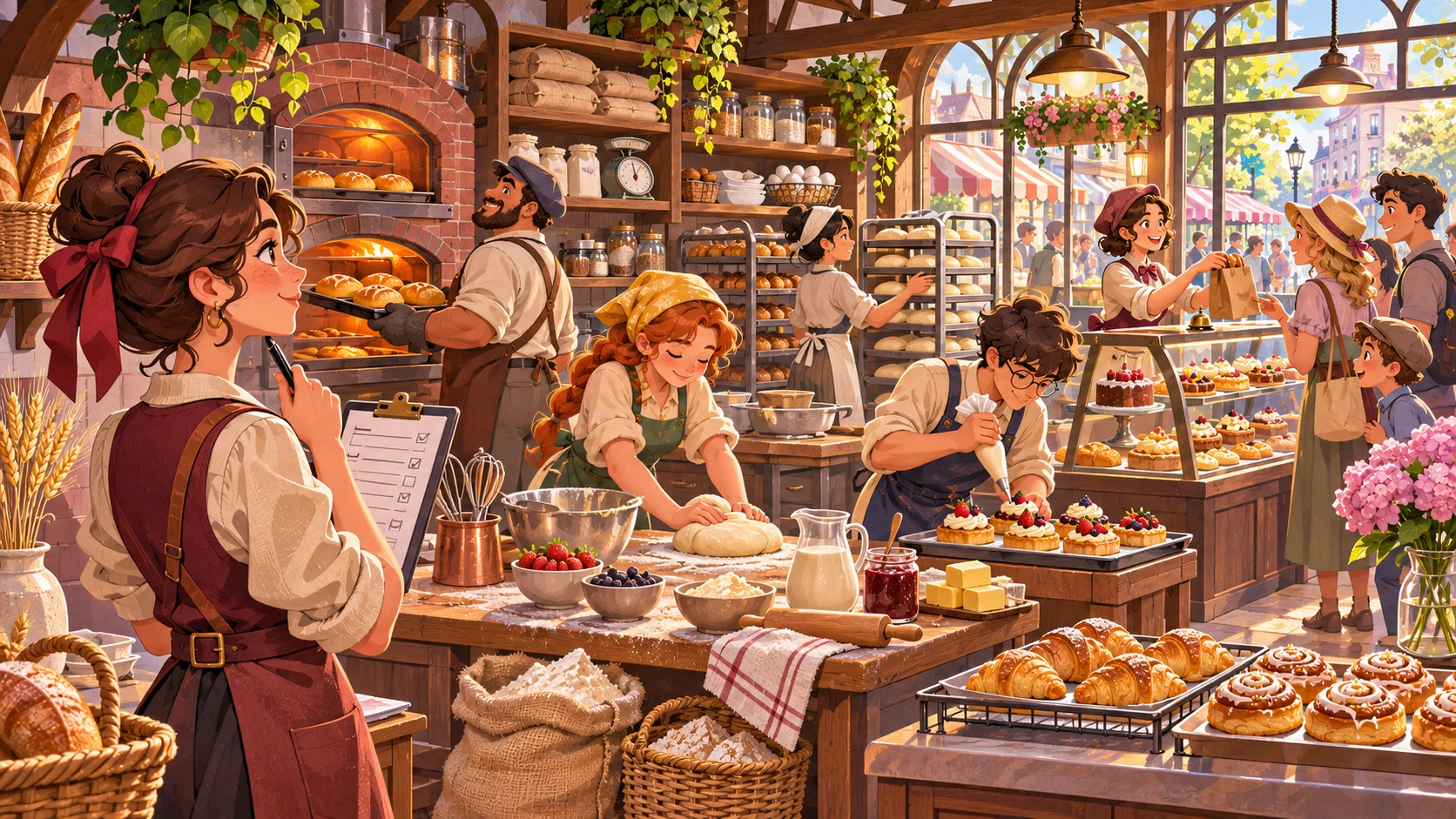
First map the loop that already makes the bakery playable. A customer order should connect to a product, the product to ingredients and equipment, and the finished batch to a display, pickup, or delivery step. Record where the player makes a decision and where the game waits. That baseline tells you what staffing can improve. A role that only adds a percentage bonus may raise throughput without changing any decision.
For a simple prototype, choose one bottleneck such as batch preparation or counter service. If ingredients are stocked but trays wait at the oven, a baker may reduce batch time. If products are ready but orders stack at the counter, a service role may shorten handoff time. These are different problems, so the player should be able to see which one is active before hiring.
Keep the first version small. One production specialist and one service specialist can create meaningful choices if their shifts, cost, and workstations differ. Do not add a dozen job titles before the order loop is understandable. Attach each role to an existing station and display the consequence there: faster preparation, fewer unserved orders, or a changed waste rate.
Define staff roles with clear tradeoffs
A useful role has a strength, a limit, and an assignment. Write those as player-facing facts. For example, a baker can increase one oven’s batch capacity but cannot serve customers; a counter worker reduces the pickup queue but does not make ingredients. The limit protects the decision. If every hire improves every station, players stop comparing staff and simply buy the most expensive worker.
Make qualifications concrete rather than mysterious. A candidate might have a reliable speed bonus for bread, while another can handle several product types at normal pace. Show the player the station, shift, pay, and compatible products before confirmation. A compact comparison card is more useful than a hidden personality score that has no clear effect on the daily plan.
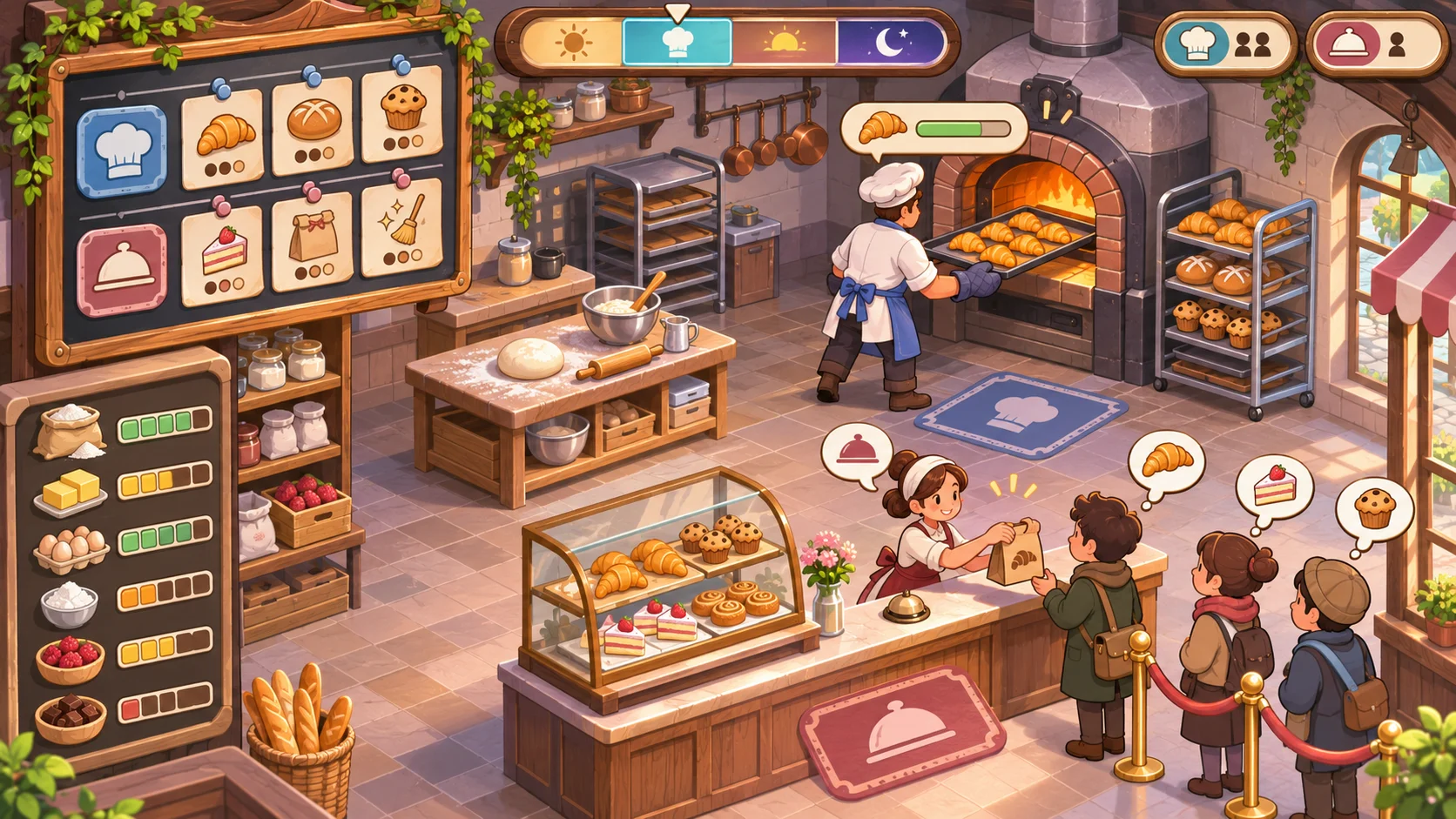
The assignment should also be reversible at a predictable time. Let players move a worker between shifts or stations between business days, and explain when that change takes effect. If the game permits mid-shift reassignment, communicate whether current work is interrupted. This turns staffing into planning rather than a series of opaque corrections.
Connect hiring to schedules and demand
Hiring changes the business loop when staff availability meets demand at a particular time. Create a short day with a quiet opening, a rush, and a slower close. Give the player a forecast or a history chart, then let them choose who works each segment. A skilled baker on an idle shift may waste payroll; the same person before a rush may prevent an empty display.
Show labor cost next to expected workload. A schedule screen can place staff rows against time blocks and show the likely station capacity under each arrangement. Keep the forecast uncertain enough to preserve a decision, but do not conceal basic inputs such as known events, opening hours, or current stock. Let the player compare an extra shift with preparing a smaller menu.
A repeatable scenario makes the integration testable: start with the same stock, customer sequence, and cash balance; run one morning with a generalist and another with a production-focused hire. Confirm that order fulfillment, wait time, waste, and wages respond for understandable reasons. If the only visible difference is a score, expose the intermediate station queues so players can diagnose the result.
Validate the loop with a rush-day scenario
Test before expanding the roster. Give a new player a small team, a predictable set of orders, and one staffing choice. Ask what they expect the hire to change before the shift begins. Afterward, compare that prediction with the displayed outcome. If the player cannot connect the role to the result, improve the assignment feedback or the work queue before adding more traits.
Track fulfilled orders, customer waiting, ingredient waste, worker idle time, and remaining cash. These measures reveal different failure modes: a worker may be productive but too expensive, or the bakery may fulfill orders while wasting expensive ingredients. Look at the whole day instead of optimizing only the busiest minute. A good staffing decision should create a readable compromise.
Then test edge cases: an absent worker, an ingredient shortage, a rush outside the scheduled shift, and a player who changes assignments after opening. The game should explain what happens to queued work and wages. The official Bakery Simulator listing describes baking, ingredient stock and orders, preparing customer orders, and deliveries; those details establish the genre context, while the role design here is an original proposal.

FAQ
How do you add staff roles to a bakery management game?
Start from an existing order-to-production-to-service loop and identify one bottleneck. Add a small role set that acts on different stations, then show the job’s strength, limitation, shift, and wage before hiring. Replay the same demand scenario with different teams and compare fulfilled orders, queues, waste, idle time, and payroll.
What should bakery staff roles do?
Roles should change a visible work decision, such as batch capacity, ingredient preparation, counter service, or delivery handoff. Give each job a focused strength and a limit so players compare assignments. Keep role effects attached to stations and explain them in the schedule and during the shift.
How should hiring affect the business loop?
Hiring should connect labor cost and availability to expected demand. Let players schedule workers around quiet and busy periods, then show how those assignments affect production capacity and customer waits. A hire should solve a recognizable constraint while introducing a cost or opportunity tradeoff.
What should you test in a bakery staffing system?
Use a repeatable day with the same stock and customer orders. Compare different staffing plans and track fulfilled orders, wait time, waste, idle worker time, and wages. Also test absences, ingredient shortages, and shift changes so players can understand what happens to queued work.