Add negotiation that changes contract profitability to your bakery management game with AI. Make the decision and its consequence visible, then validate it in a short repeatable scenario. Prototype a single buyer and a small set of negotiable terms before adding a marketplace of contracts.
Track the costs that shape each contract
Build a contract view from the costs that determine whether an order is feasible: ingredients, production time, labor, packaging, delivery distance, and spoilage risk. Compare the requested quantity and deadline with current stock and oven capacity. A high price is not profitable if it forces overtime, rush purchasing, or late delivery penalties that exceed the margin.

The official Bakery Simulator listing from Live Motion Games describes selecting store orders, managing ingredients, baking, and delivering goods on time. It supports the bakery production and delivery context only; contract negotiation rules here are original. Show the estimated margin before the player makes a commitment.
Make negotiation change contract terms
Give the player a few terms to negotiate, such as unit price, quantity, delivery window, deposit, and penalty. Each counteroffer should change the projected margin and production burden. A smaller order at a lower price may fit spare capacity, while a rush order may justify a higher price or a partial delivery arrangement.
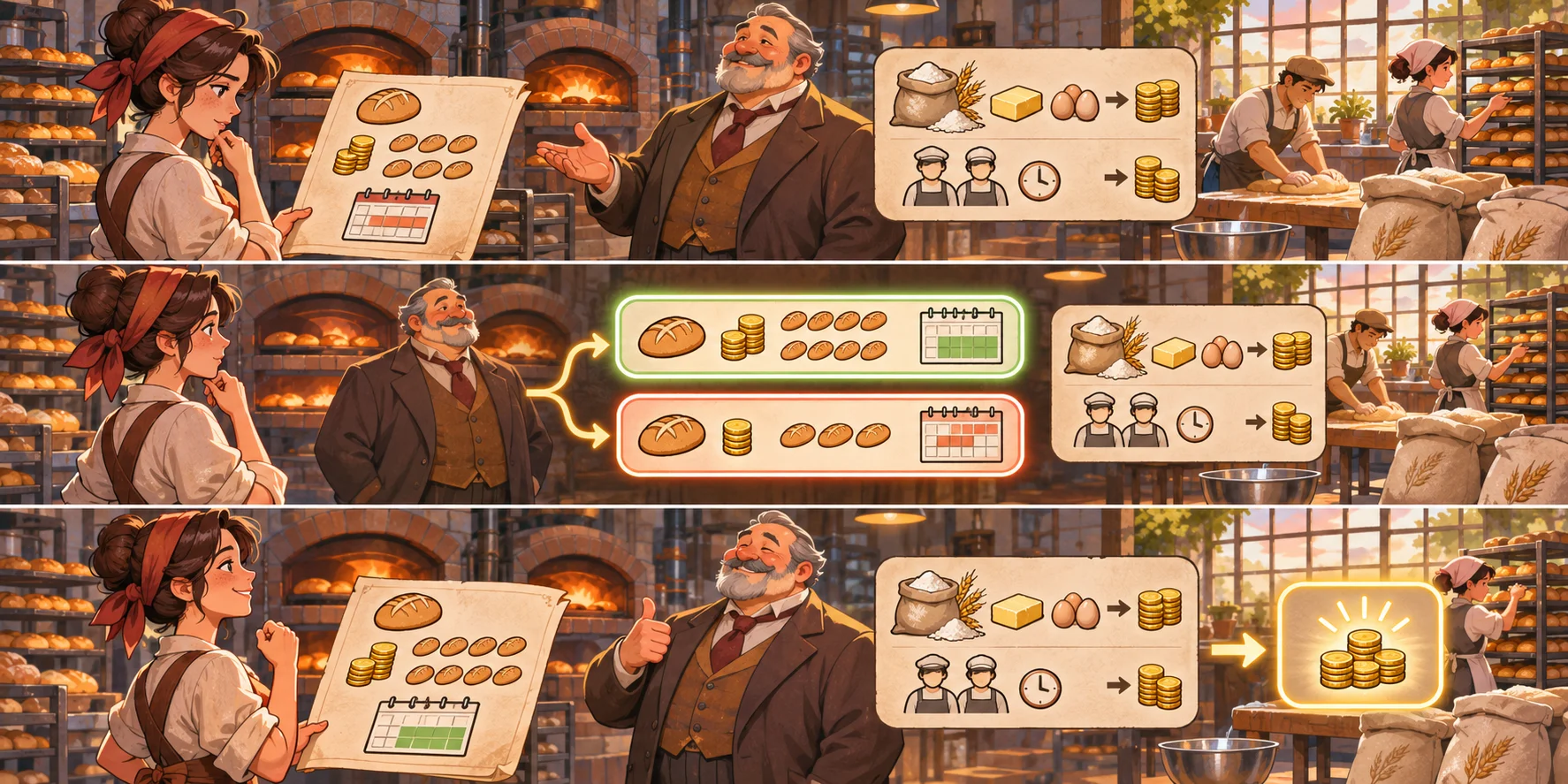
Keep the counterpart’s priorities legible. A store may value reliable timing more than a small discount, while a seasonal customer may accept a later date for a larger batch. Use a limited number of negotiation steps, and let players decline without losing access to all future orders. The goal is to weigh terms, not find one hidden dialogue option.
Show margin and production trade-offs
Update the margin forecast whenever a term changes. Separate revenue, ingredient cost, labor, delivery cost, and risk buffer so players can see which part drives the estimate. If the bakery is already committed to another batch, show the schedule conflict and the products that would be delayed before the player signs.
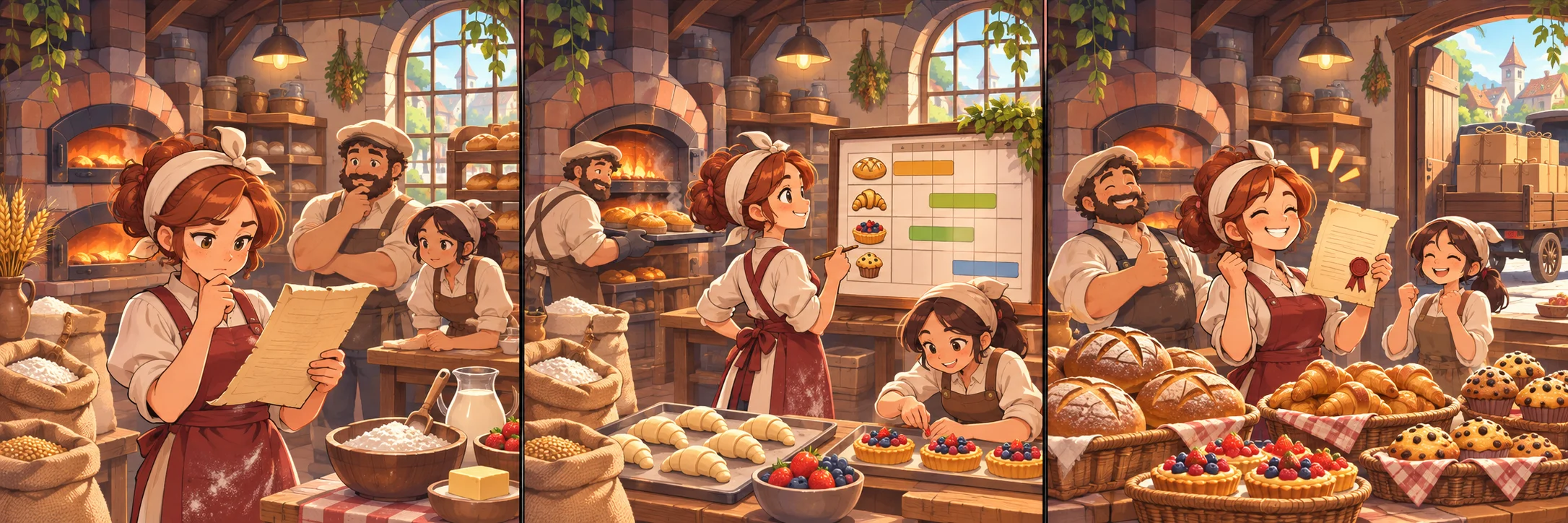
Once accepted, add the contract to the production calendar and track progress against its terms. If demand changes or an ingredient runs short, allow a partial delivery or renegotiation when appropriate. Make the resulting customer trust and cash flow visible after completion so the player can learn which trade-offs produced reliable profit.
Test contract outcomes across demand patterns
Test a low-volume contract, a high-margin rush order, and an order that conflicts with existing production. Record projected versus actual profit, delivery timing, wasted ingredients, and whether players understood the risk before accepting. Repeat with different stock levels so the same terms do not appear profitable only when the pantry is full.
For related production planning, see a guide to visible production bottlenecks and a guide to resource use and planning. Pass when players can estimate the margin, identify the main risk, and explain why they accept or counter an offer.
FAQ
What should bakery contract negotiation change?
Let a negotiation change a few concrete terms such as unit price, quantity, delivery window, deposit, or penalty. Recalculate margin and production demand after each counteroffer. Players should see how the change affects capacity and risk, and be able to decline an order without losing access to every future contract.
How can players estimate contract profitability?
Show revenue beside ingredient, labor, packaging, delivery, and spoilage costs. Compare the order with available stock, production time, and oven capacity, then include a visible risk buffer for delays. Update the estimate whenever a term changes so players can identify which cost or condition makes the contract profitable or risky.
How should negotiation affect production plans?
Once accepted, place the contract into the production calendar and show conflicts with other batches, staffing, and delivery routes. If capacity is short, offer a clear counter such as a smaller quantity or later window. Track actual timing and profit so the player can connect a negotiation choice to its operational result.
What should you test in contract negotiation?
Test a low-volume order, a rush order, and one that conflicts with existing work. Compare projected and actual profit, delivery timing, ingredient waste, and whether players understood the main risk before signing. Repeat at different stock levels to catch estimates that look viable only when the bakery has abundant ingredients.