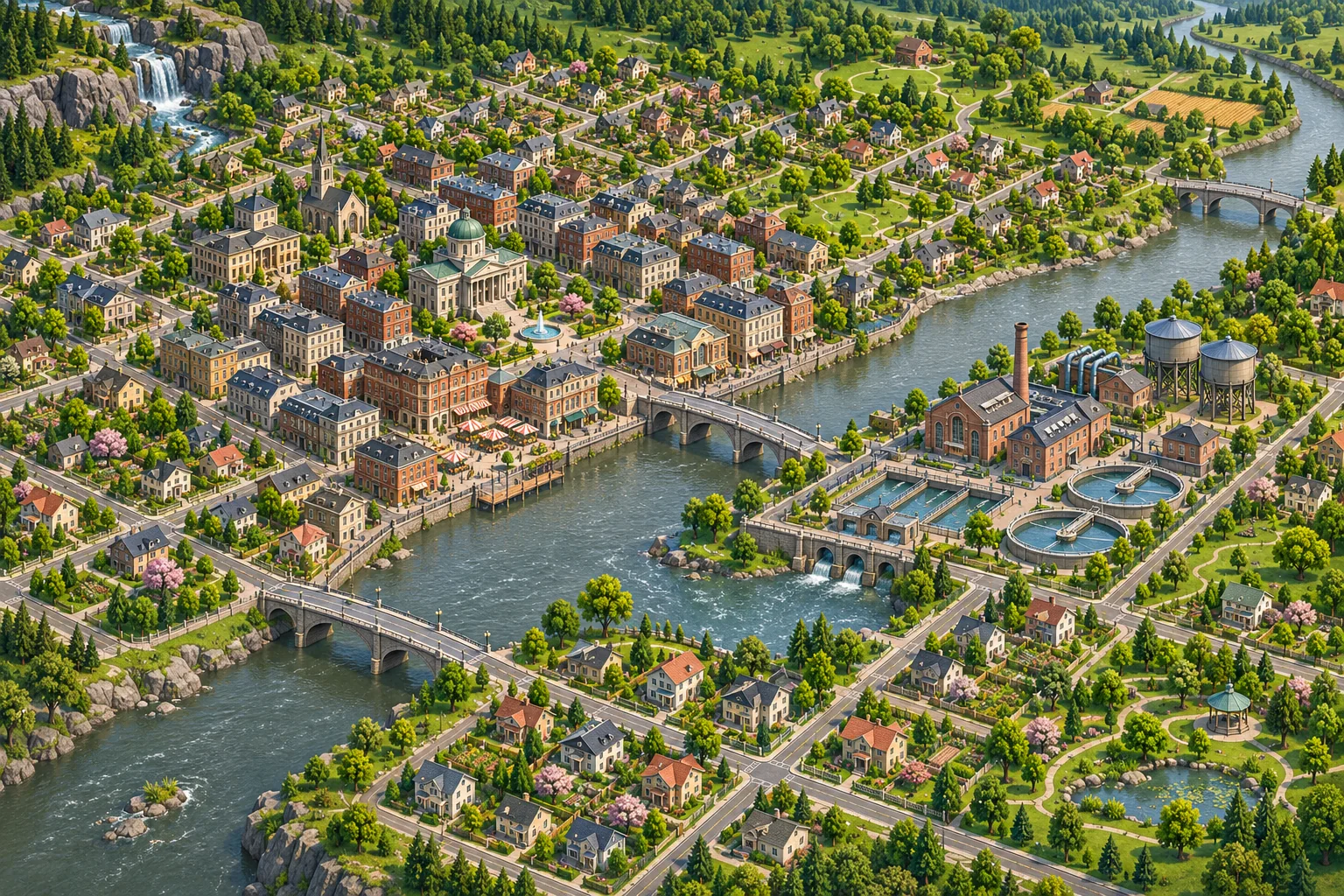
Make resource use produce observable world changes with clear causes, thresholds, and recovery choices. Let players compare short-term output with long-term consequences and avoid hidden penalties that invalidate planning. The official The official listing describes planning and managing a city with services, infrastructure, and city systems supports genre context only; the system guidance below is original.
Map resource inputs and world-state effects
Choose one resource and draw the chain from extraction to visible world state: what the player removes, where it moves, which district depends on it, and which environmental signal changes. Keep the first prototype local, such as a river corridor and nearby homes, so players can connect their action to an observable result. Add a time delay only when the delay itself creates a useful planning decision.

The official Cities: Skylines listing from Colossal Order supports the city-planning and management context only; resource-triggered world responses here are original. Show the affected area in the city view through a changing shoreline, vegetation, or water quality cue. The player should be able to trace the change back to extraction and see which buildings depend on the affected resource.
Choose visible thresholds for change
Set a few thresholds that produce gradual, understandable feedback rather than one hidden failure point. For example, extraction may first lower a reservoir, then shrink a green riverbank, and eventually reduce water available to homes. Give each threshold a clear signal and enough time for the player to notice it before the most serious effect begins.
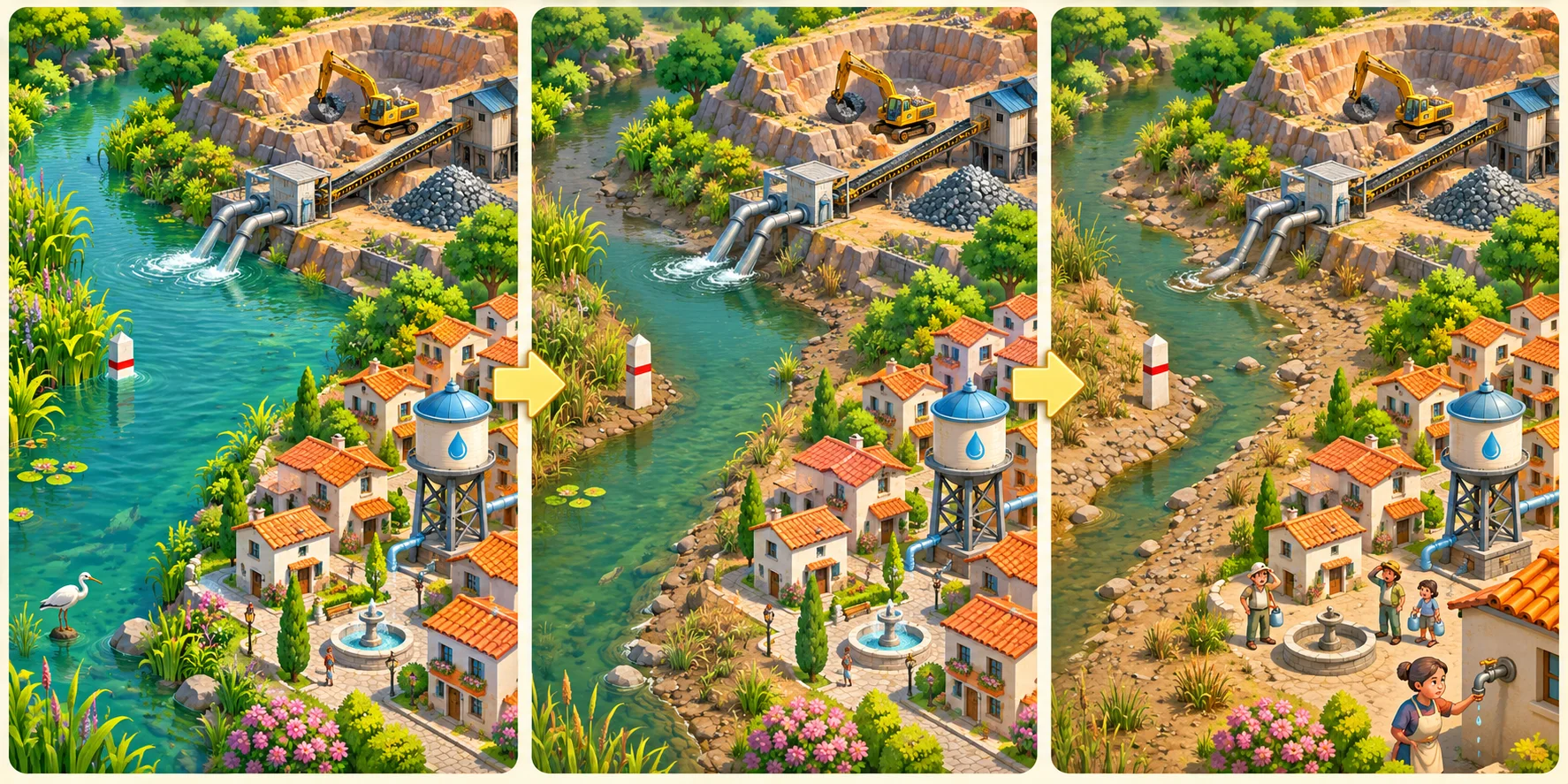
Preview the next threshold in an inspection panel or map overlay and show current consumption beside regeneration. Avoid false precision: if the simulation uses broad bands, label the bands clearly instead of showing decimal numbers. Test whether a player can predict what happens after one more period of extraction and identify the action that would slow or reverse the change.
Connect consumption to planning trade-offs
Make resource use support a real city need, such as housing, transport, or industry, so conservation has an opportunity cost. The player might pause a mine to restore a river buffer, redirect water to homes, or invest in a more efficient route. Show the output lost and the world state gained together; otherwise the choice appears as a hidden penalty rather than a planning trade-off.
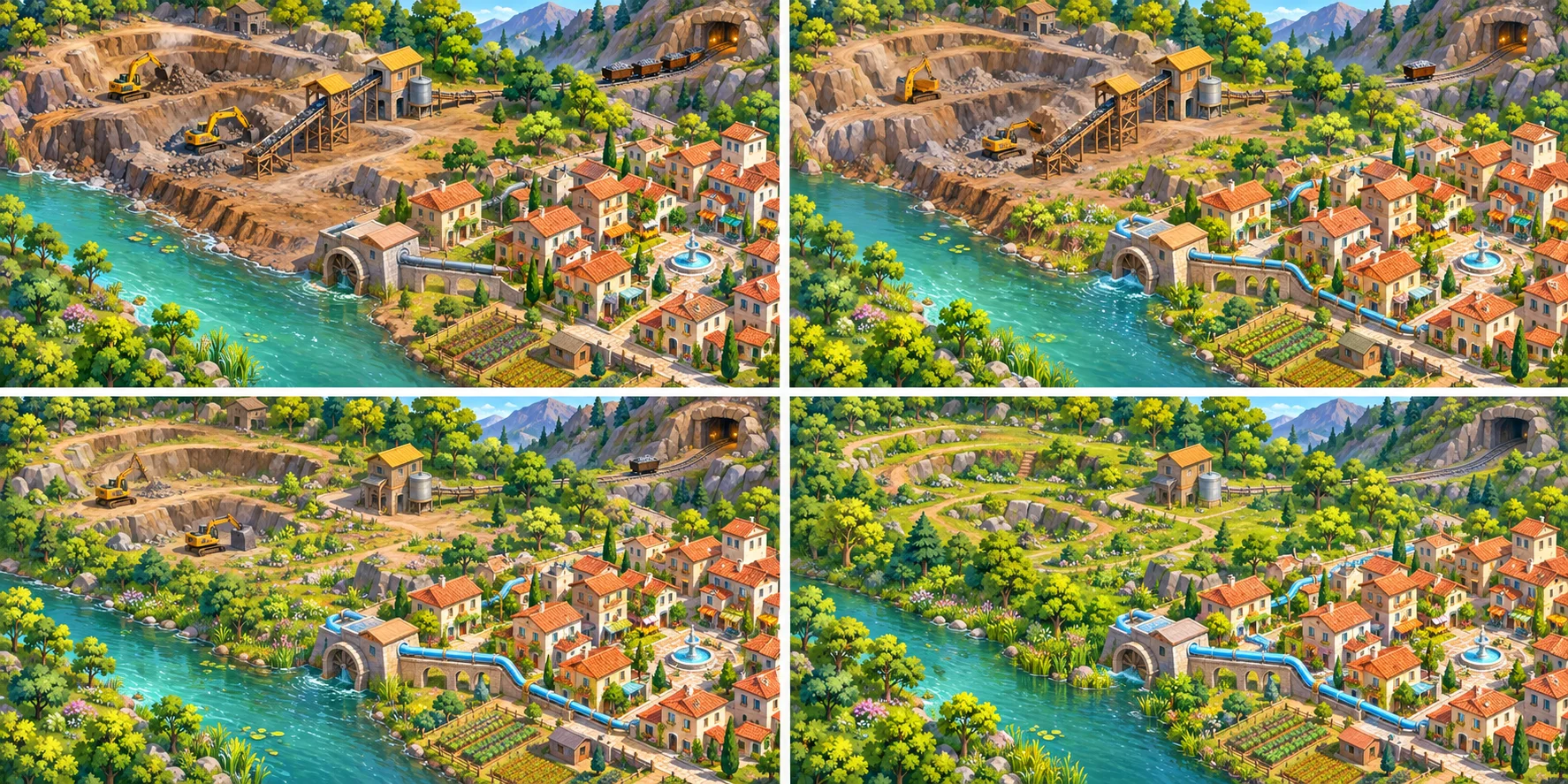
Keep feedback consistent across the map and simulation. If extraction affects water after several turns, show the lag and distinguish current stock from future risk. Let players compare a short-term production goal with the longer-term cost, and provide more than one recovery measure. The system should reward informed adjustment without requiring a single correct build order.
Test recovery and long-term feedback
Run a short scenario with a stable baseline, a period of heavy extraction, and a deliberate recovery action. Track when players notice the first change, whether they connect it to the resource decision, and how long recovery takes. Then repeat with a different district layout so the result does not depend on one visual landmark or one optimal placement.
Test both an early correction and a late correction. A late choice should have a cost, but recovery should remain possible through reduced demand, rerouted supply, or restoration investment. For a related system pattern, see a related guide to worlds responding to resource use. Pass when players can explain the cause, threshold, and recovery option without guessing at hidden rules.
FAQ
How should a city react to resource consumption?
Connect a player-controlled resource decision to a visible local world change and a city service that depends on it. Start with one resource chain, such as extraction, a reservoir, and nearby homes. Show the cause and effect in the map so players can see why the environment changed and which planning choice can influence it.
How can players see environmental consequences?
Use gradual world cues such as a changing shoreline, vegetation, or water availability, and tie each cue to a clear threshold. Show current consumption beside regeneration and preview the next meaningful change. Players should have time to notice a warning and adjust before the most serious consequence affects the city.
How do you balance extraction and recovery?
Make extraction support a real city need and show its output alongside the environmental cost. Offer recovery choices such as reducing demand, rerouting supply, or investing in restoration. A late correction can take longer or require resources, but preserve at least one playable recovery path so a single mistake does not lock the city into failure.
What should you test in a resource-reactive world?
Run a baseline, a period of heavy extraction, and a recovery action. Record when players notice the first world change, whether they connect it to the resource choice, and how long recovery takes. Repeat on a different map layout and compare early versus late corrections to expose unclear thresholds or overly hidden rules.