Classify resources by recovery
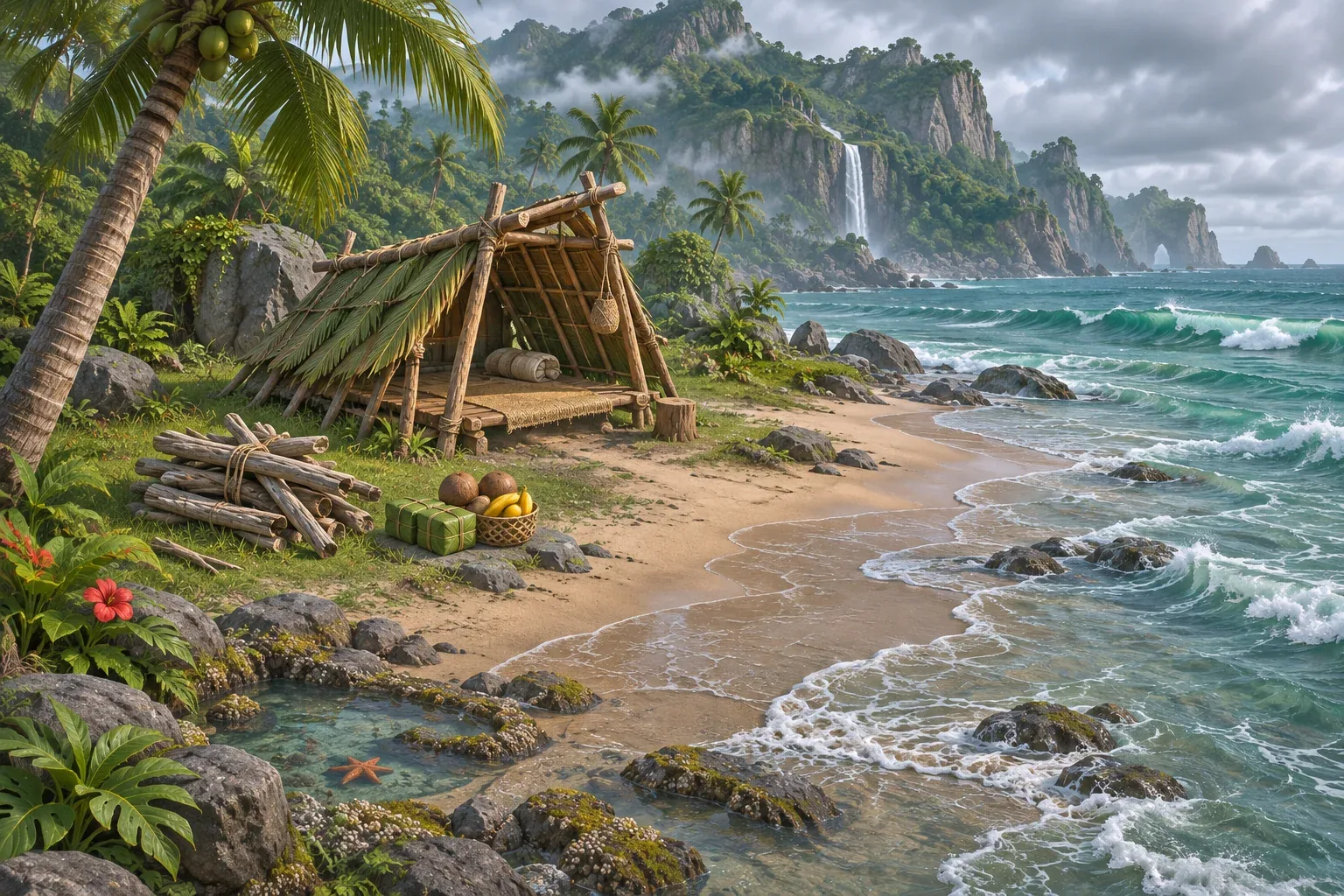
List the island’s resources and classify each as renewable, slowly replenishing, finite, or dependent on another system. Fruit may return if a tree remains healthy; driftwood may depend on storms; ore may be limited to a deposit. This determines what a player should expect after harvesting.
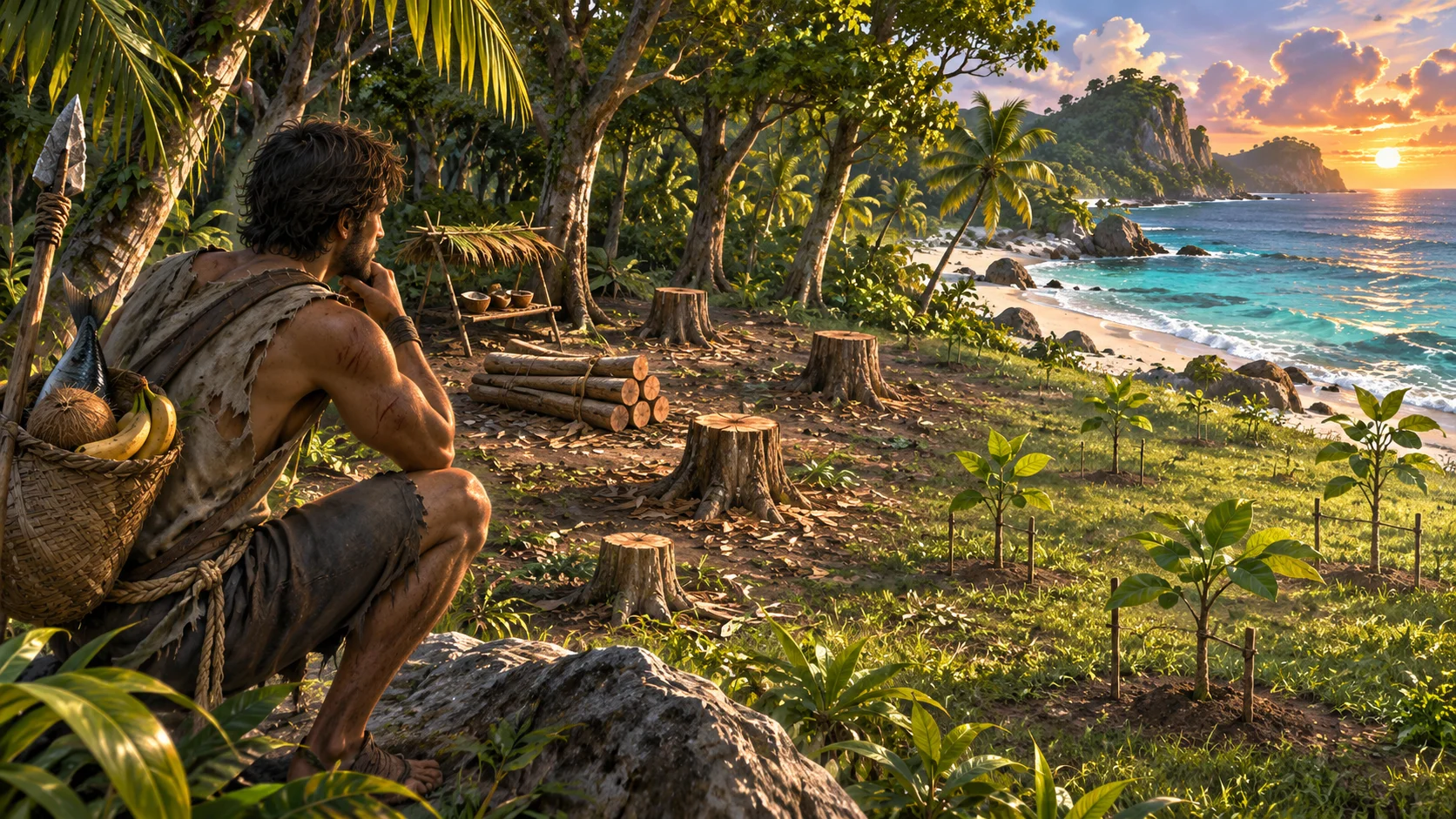
Show resource state in the environment. A full tree, a recently picked tree, and a damaged stump should look different enough to read at a glance. Use subtle world cues before a shortage becomes urgent, such as fewer fruit clusters or smaller animal tracks near a heavily used area.
The Isle’s official development blog notes that consuming a fruit tree reduces later food availability because the tree is needed for fruit to regrow. This is one specific example of consumption affecting future supply; the island-survival ecology proposed here is original. official source.
Connect consumption to world feedback
Apply consequences at a scale players can understand. Removing one tree might reduce nearby fruit for a short period; clearing a grove could affect shade, wildlife, or travel cover. Avoid instant island-wide penalties for a small action unless the fiction clearly explains that relationship.
Provide feedback when the player gathers a resource and again when the world changes. A short journal note, map mark, or habitat animation can explain that regrowth takes time or that an area is depleted. This helps players learn the system through normal play instead of a separate tutorial wall.
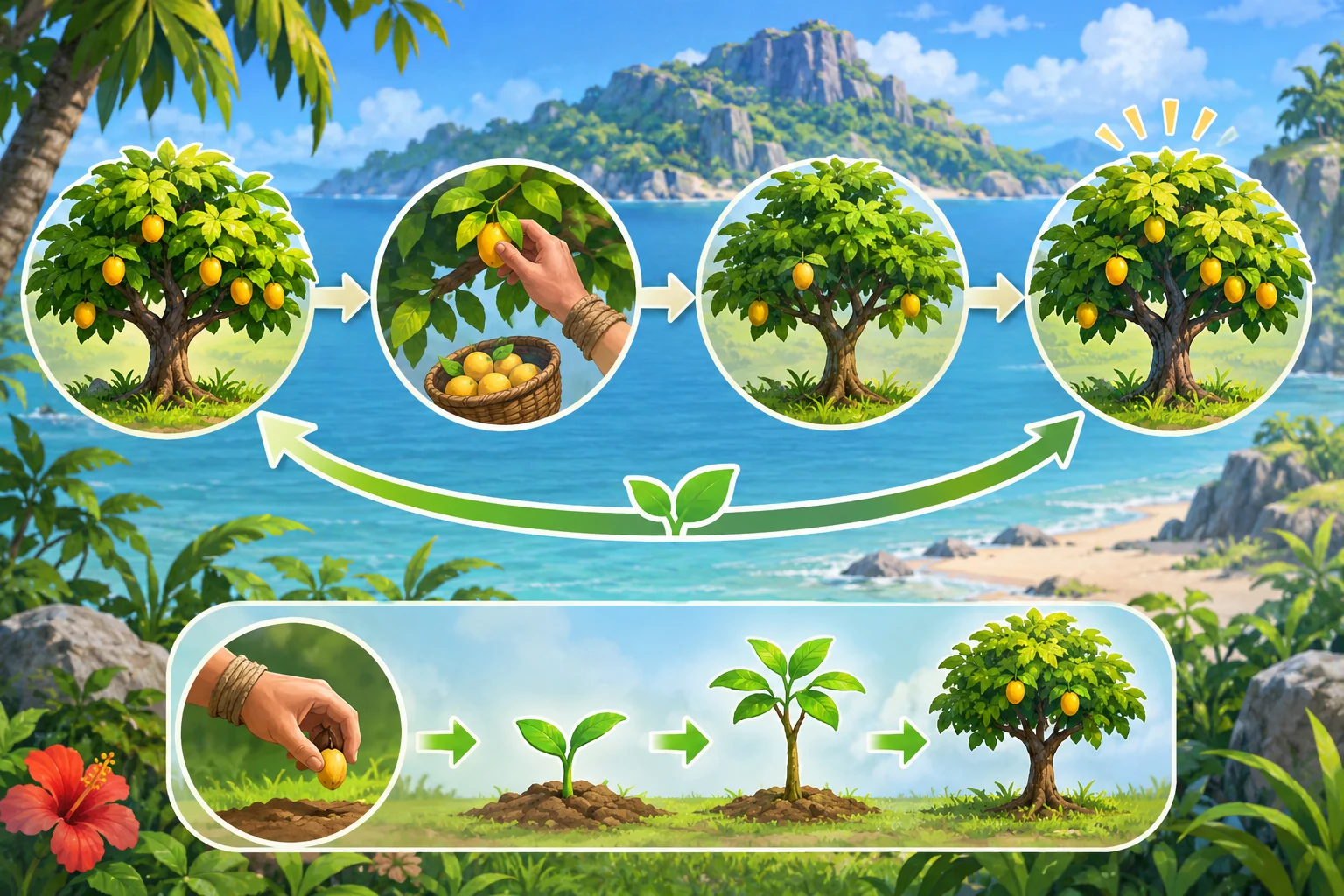
Keep the world state consistent across reloads and locations. If a player returns after several days, show whether growth advanced and what conditions mattered. A visible recovery timer or changing vegetation can make waiting and moving to another area a legible choice.
Offer sustainable and recovery choices
Give players options between immediate supply and future abundance. They could harvest part of a grove, replant seeds, protect a food source, or travel farther for a larger short-term yield. Make the cost of each choice clear without forcing one morally correct route.
When players overuse a resource, let them respond. A depleted area might recover slowly, accept replanting, or become a reason to relocate camp. Recovery should take time or effort so it does not erase the consequence, but it should not trap a new player in a permanent soft lock.
Connect recovery actions to survival priorities. Watering a sapling, protecting a nesting area, or storing seed stock may compete with shelter repairs. This turns restoration into a choice within the survival loop and creates a reason to plan beyond the next meal.
Test scarcity and ecosystem recovery
Replay the same island with players who harvest cautiously and players who consume aggressively. Track time to shortage, travel distance, food availability, recovery actions, and whether players understand what caused the change. Observe the world cues they notice before asking them to explain the system.
Test edge cases such as harvesting a final seed source, leaving an area and returning much later, or changing seasons during regrowth. Ensure essential survival supplies have alternate sources or an explicit recovery route so a single early mistake cannot quietly end the run.
Accept the system when resource use changes future plans, environmental feedback is readable, and recovery feels earned but possible. For another survival systems perspective, see the guide on visible co-op resource constraints. AI can help brainstorm resource categories; ecological pacing and survival balance need playtests.
FAQ
How do you make an island world respond to resource consumption?
Give resources clear recovery rules, show their state in the environment, and connect harvesting to a consequence players can observe later. Test cautious and aggressive play so feedback changes decisions without making a small early mistake permanently block survival or exploration.
How should survival resources recover after harvesting?
Choose a recovery rule that fits the resource: regrowth over time, replenishment after weather, replanting, or recovery when an area is protected. Communicate the rule through the world and provide enough alternative supply for players to keep moving while an area recovers.
How can overuse affect later resource availability?
Let concentrated harvesting reduce local supply, lengthen travel, or remove a resource needed for regrowth. Make the consequence proportional and visible, then offer a costly recovery or relocation option so players can adapt instead of silently reaching a permanent dead end.
What should you test in a resource-reactive island world?
Compare cautious and aggressive harvesting, then track shortages, travel, food, and recovery actions. Test depleted seed sources, long absences, and season changes. Players should recognize what caused a shortage and have a viable, understandable way to recover. This makes the cause of change easier to understand and gives players a clear next step.