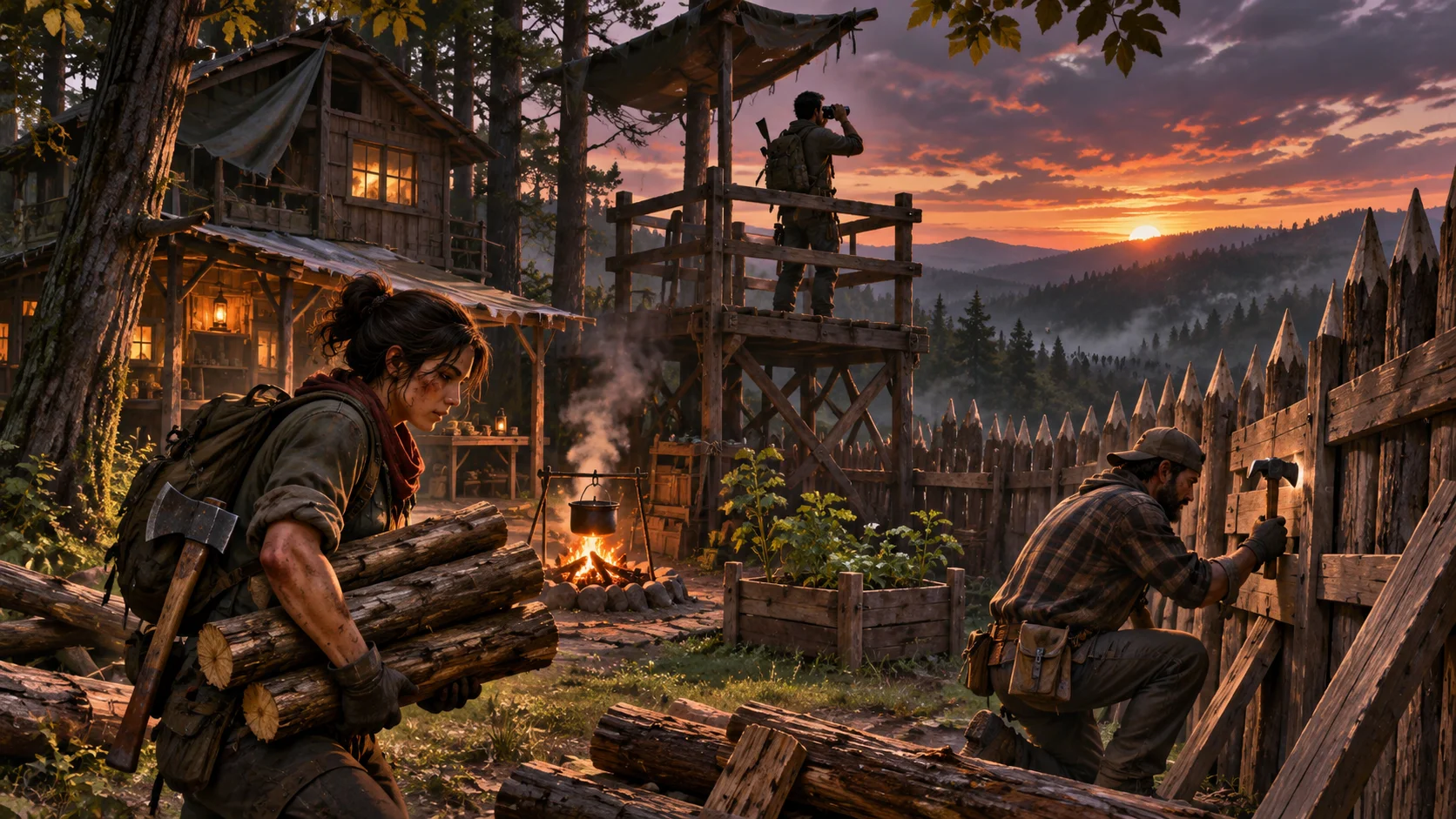
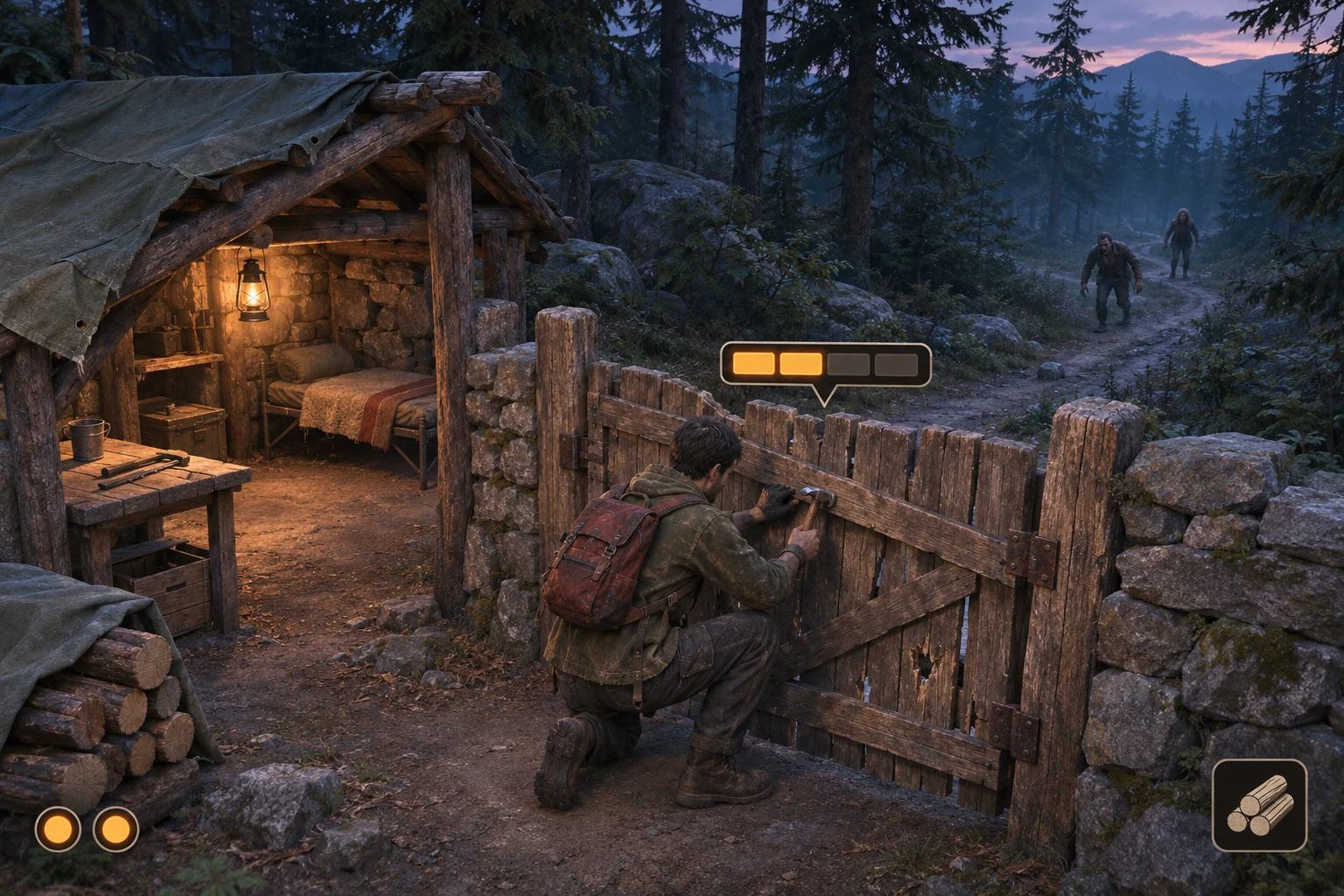
Represent each resource path as visible production, storage, transport, and demand. Let players find and relieve bottlenecks before a defensive failure, while keeping trade-offs between expansion and immediate survival legible. The official The official listing describes a real-time strategy game about building and defending colonies against infected hordes supports genre context only; the system guidance below is original.
Map sources, routes, buffers, and consumers
Draw one resource path from extraction to the object that needs it. Record the source rate, transport capacity, storage limit, and consumer demand as separate values; a mine can produce enough material while a narrow belt still starves a turret. Start with one material and a small outpost so a player can trace every unit and see where it waits.
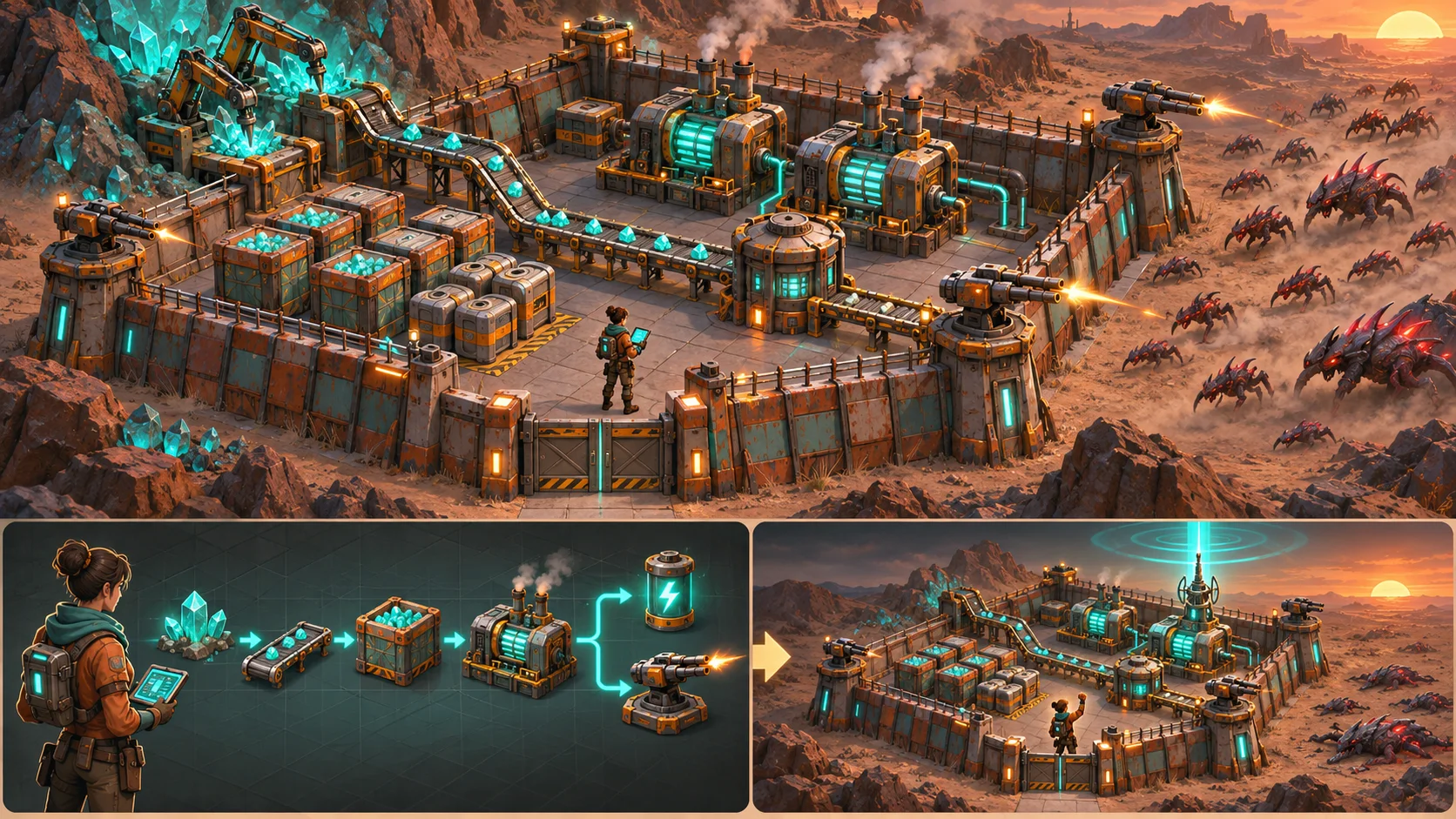
The official They Are Billions listing from Numantian Games describes building and defending colonies against infected hordes; it supports this base-defense context only. The network model here is original. Show links in the world with belts, pipes, roads, or carriers, and let a player inspect a source, buffer, and consumer without leaving the play space.
Show where production is constrained
A bottleneck is the first link whose capacity falls below downstream demand. Surface it with a changing buffer, stopped carrier, or idle machine, then show both the current rate and the next dependent object in a compact inspection view. Avoid marking every building as a warning: players should be able to tell whether the constraint comes from low extraction, a blocked route, a full store, or competing consumers.
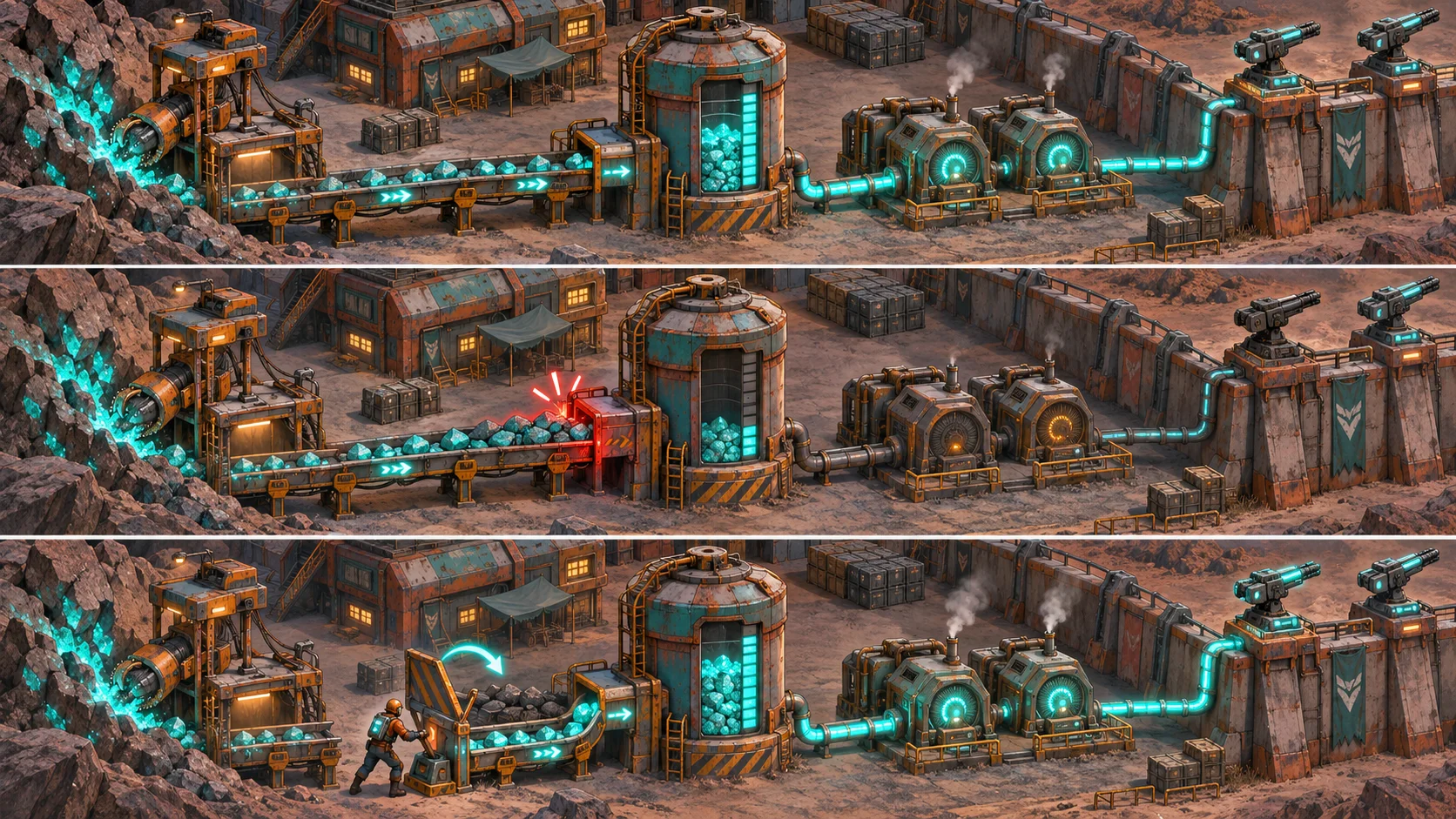
Give the player a testable intervention. They might add a parallel belt, clear a jam, increase a worker shift, or move storage closer to a consumer. Predict the effect before the change: the buffer should refill, the generator should run, and a turret should resume. Use a short simulation speed or step control while debugging, and keep the same measurements visible before and after.
Make defense compete for shared supplies
Let expansion and defense draw from a shared, visible supply so the player weighs a new production line against repairing a wall or replenishing ammunition. A defense request should not silently take materials reserved for a different plan. Show the queue, priority, and amount committed, and let the player redirect or cancel a request before it completes.
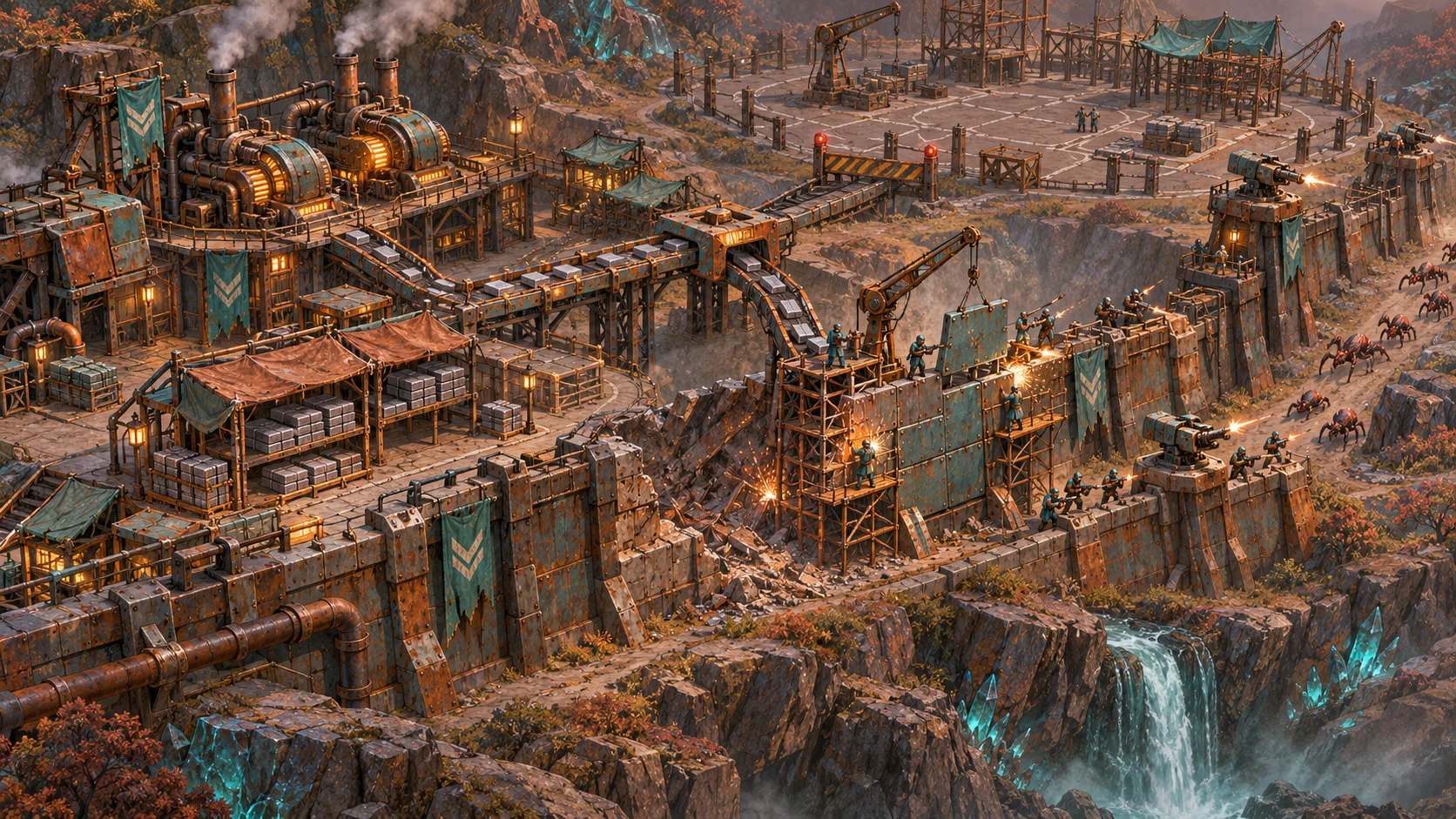
Build a scenario with one predictable shortage: an incoming wave arrives while a damaged turret and a new district request the same metal. Offer at least two viable responses, such as rerouting stock or delaying expansion. The result should be legible in the map and in the next attack. If a shortage produces only a hidden damage penalty, expose its cause and the time available to respond.
Test shortages and recovery choices
Play through a normal supply cycle, then inject one failure: jam a route, pause a source, or raise one consumer’s demand. Record how long it takes a new player to locate the limiting link, which feedback they used, and whether the chosen fix reached the intended consumer. Repeat with a second demand pattern to catch a network that works only for one layout.
Preserve a recovery path after a mistake. A player might hand-carry a small reserve, temporarily lower turret output, or dismantle a noncritical segment for materials. Test that the fallback buys time without erasing the value of planning. For a related design pattern, see a related guide to visible resource networks. Pass when players can trace a shortage and predict what their intervention will change.
FAQ
How should a base-defense resource network work?
Connect visible sources to storage, transport, and consumers, and show the rate and capacity at every step. Keep the first prototype small enough to trace from extraction to defense. The player should see whether a shortage comes from production, a blocked route, a full buffer, or competing demand before choosing a fix.
How can players see a production bottleneck?
Show the constrained link with a changing buffer, stopped carrier, or idle consumer, then expose its current capacity and downstream demand. Let the player inspect the next dependent machine and compare the network before and after a change. Avoid vague alerts that do not identify the source of a problem or the time available to respond.
How should resources compete with defense needs?
Use a shared visible stock and show each construction or repair request, its priority, and committed amount. Create a scenario where expansion and defense need the same material, then provide more than one viable response. Players should be able to redirect or delay a request before resources are spent, and understand the effect on the next attack.
What should you test in a resource network?
Test normal operation and at least one injected failure, such as a jammed route or paused source. Record how quickly players find the constraint, which cues they trust, and whether a fix reaches the intended consumer. Also test a recovery path so one mistake creates pressure without making the rest of the run impossible.