Map the shared survival loop
List what a group does from the start of a day through the next defense. Gathering, scouting, cooking, repairing, building, and responding to threats may all compete for player time. Mark which tasks require proximity, materials, or a specific tool. Roles should help players coordinate around this loop rather than divide it into isolated chores.
Klei’s official Don’t Starve Together listing describes cooperative wilderness survival, resource gathering, crafting, and building. Use that only as genre context; the persistent role system here is a proposed design. Map the shared base state, including supplies, repairs, exposed approaches, and what the next night’s pressure is expected to test.
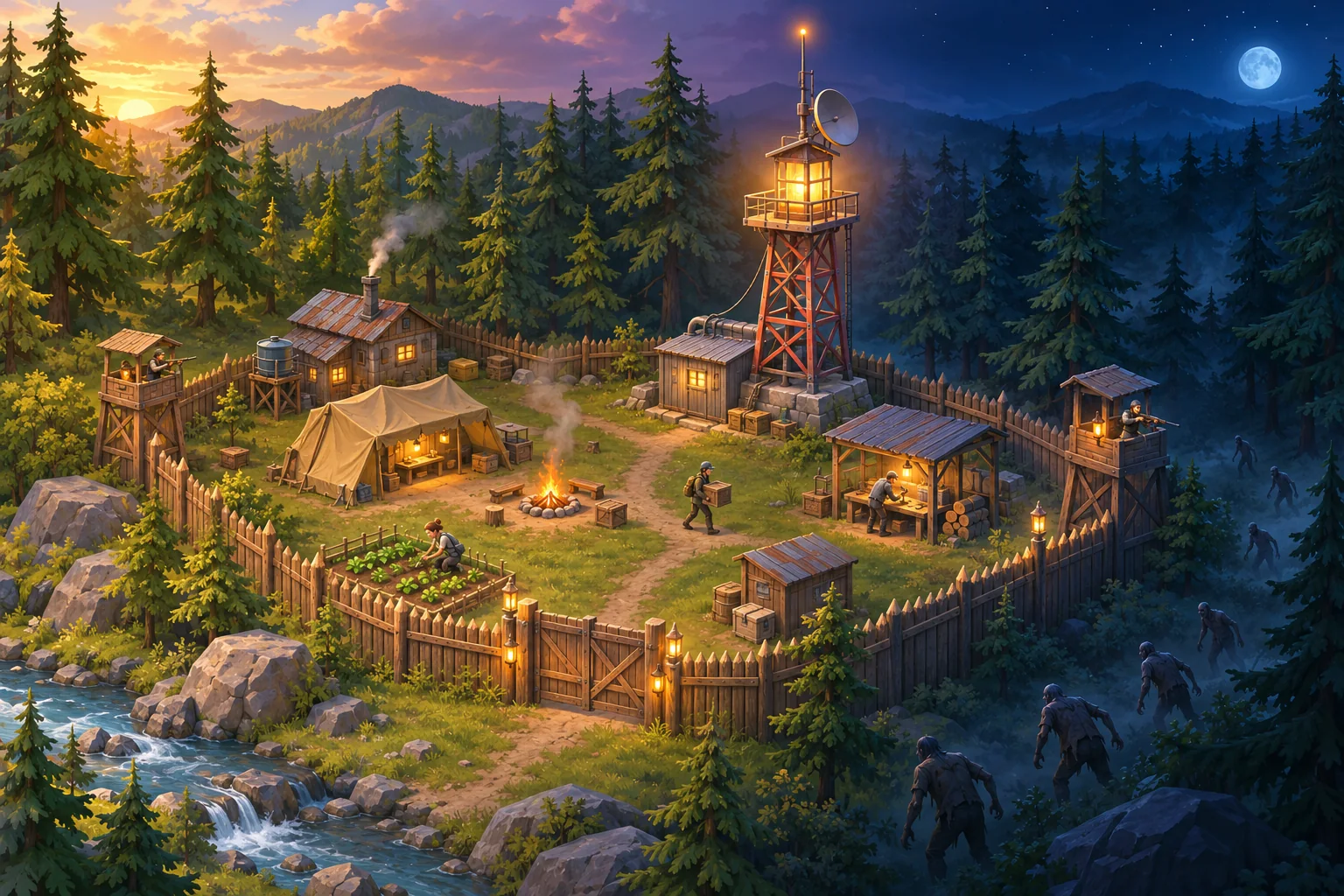
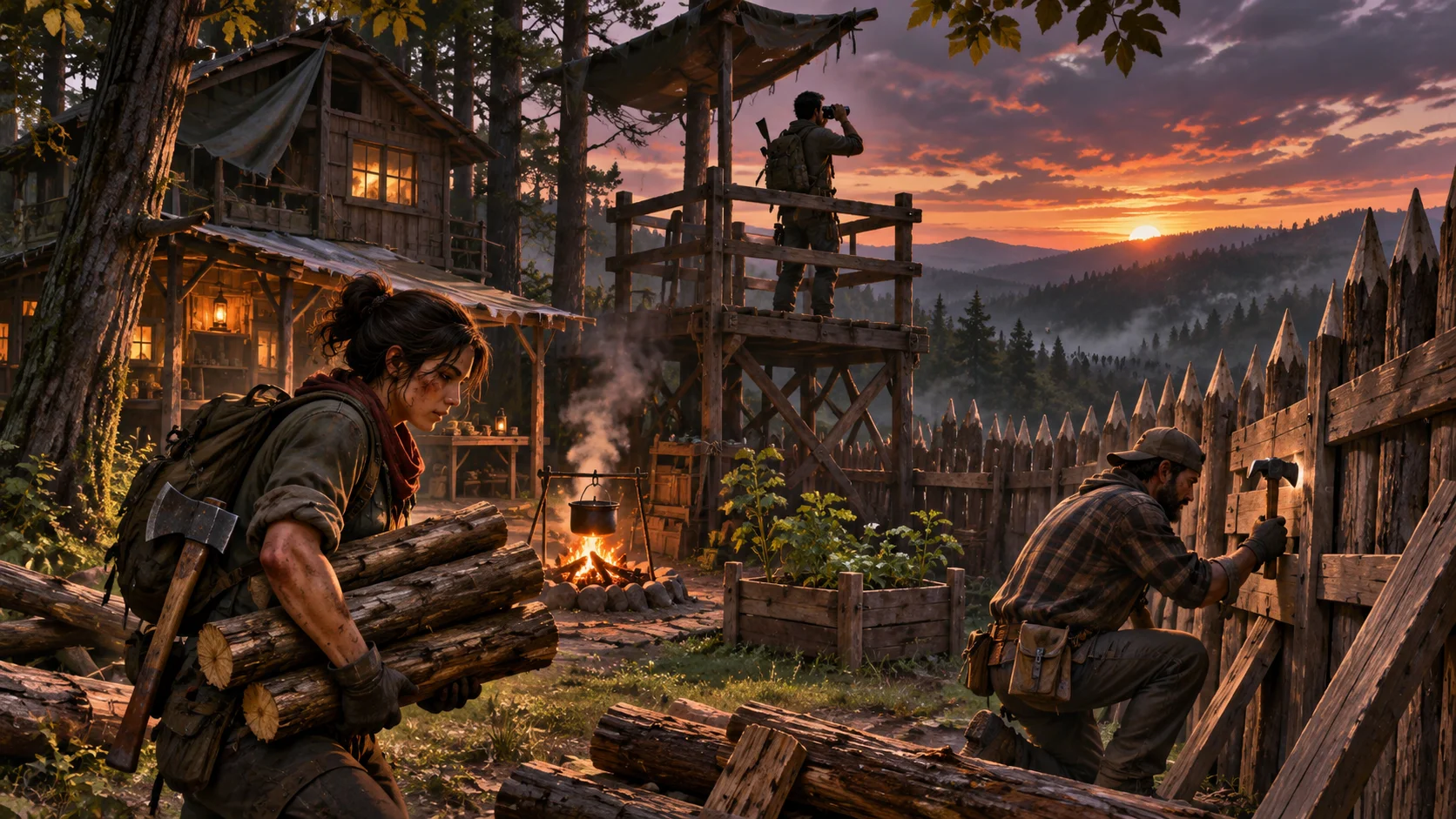
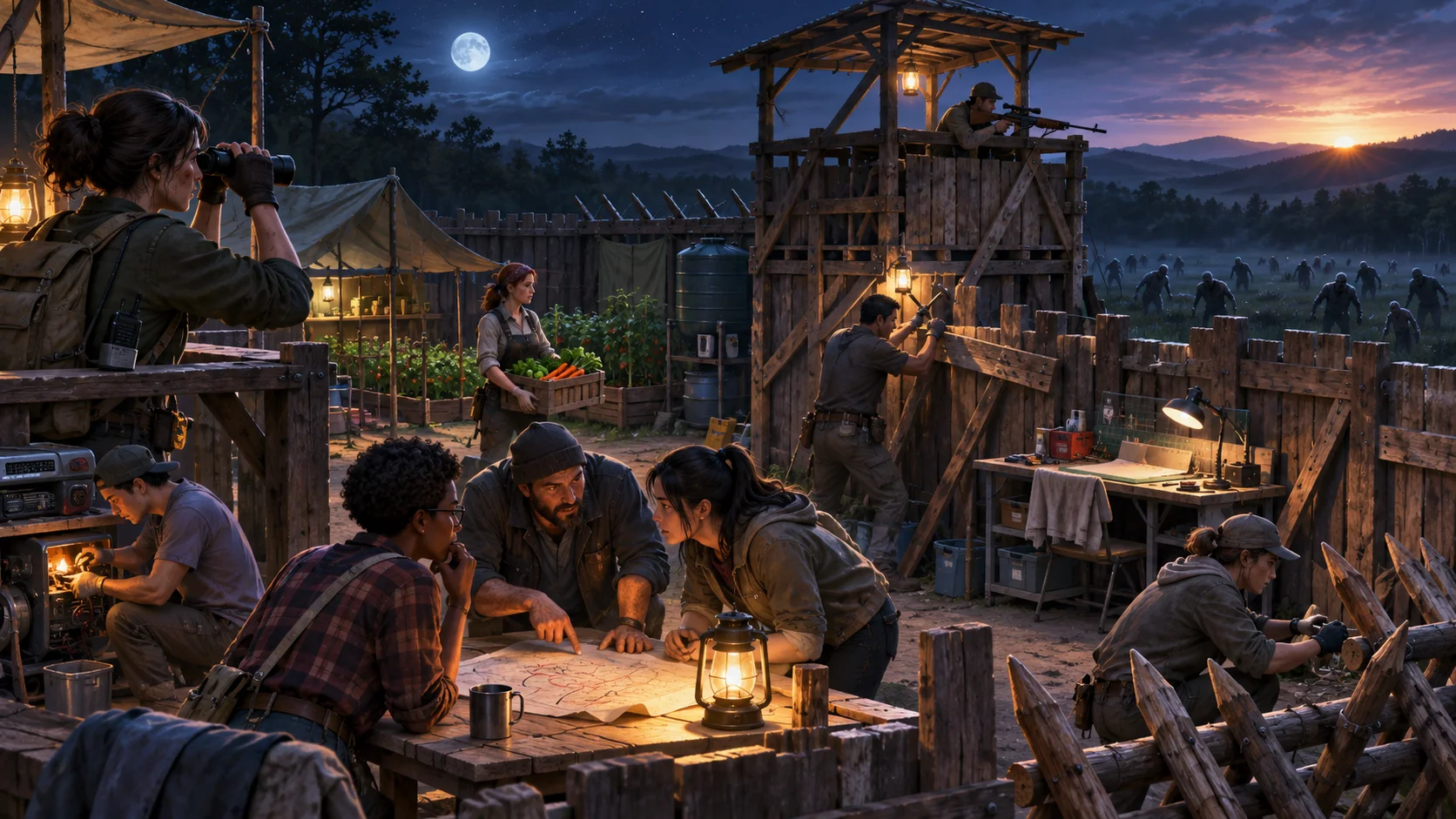
Choose a small set of team needs before defining characters or classes. For each need, ask whether a role improves it, whether another player can help, and what happens when the specialist is offline. The cover scene emphasizes gathering, repair, and watchfulness as simultaneous contributions.
Give roles complementary tools and overlap
A role feels useful when it offers a distinct way to contribute, not when it owns an essential task. A scout might reveal routes or threats, a builder could repair more efficiently, and a gatherer may improve yields. Each benefit should support the group while leaving basic survival actions available to everyone.
Create overlap for small groups and solo fallback. If a builder is absent, teammates should still repair a wall at a slower pace or use a shared supply station. If the scout is away, the team should have another way to learn about approaching threats. This keeps a role choice expressive without turning attendance into a hard prerequisite.
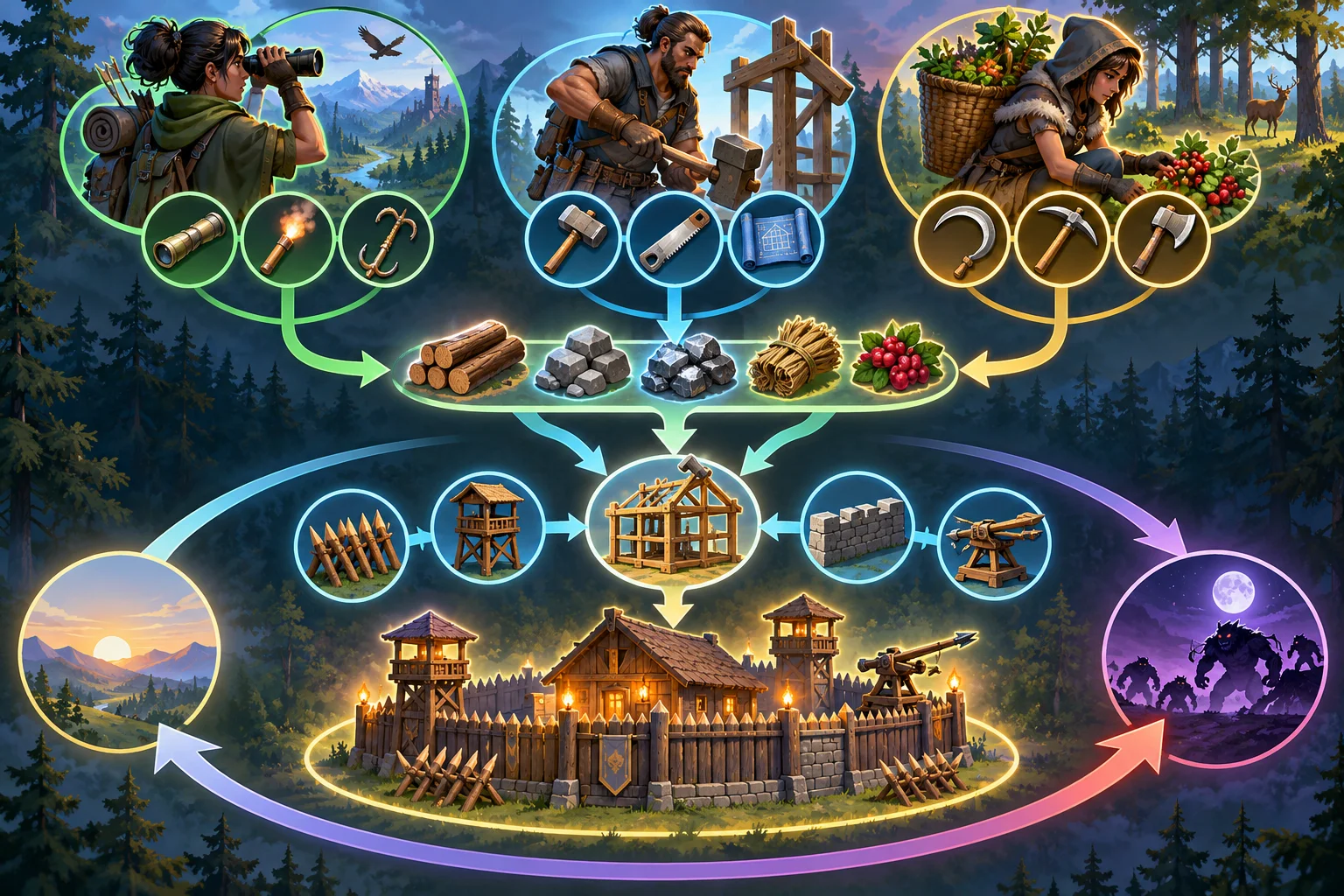
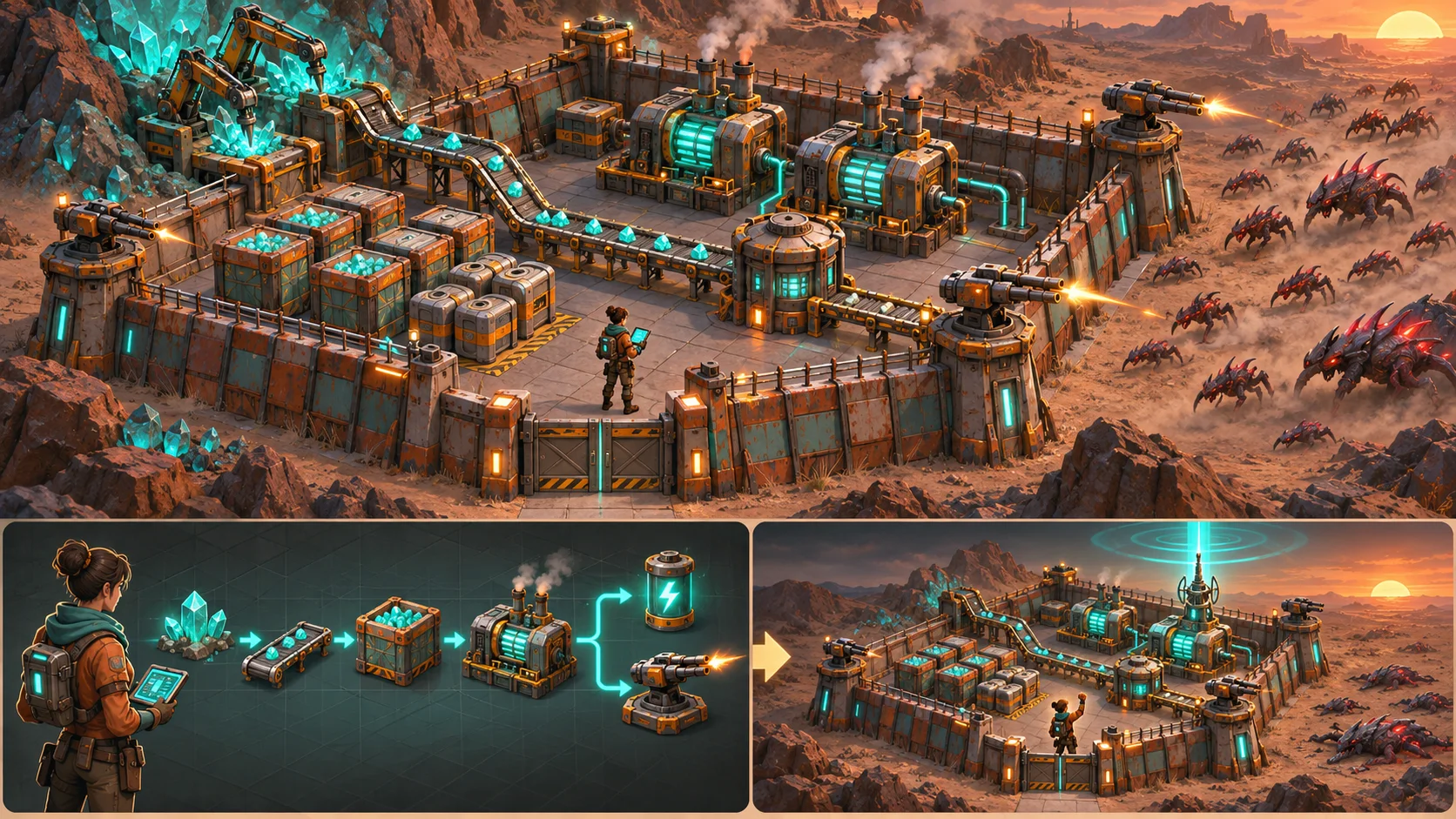
Show contributions through the shared world. A repaired barricade, marked approach, or stocked store gives immediate evidence that a teammate’s work mattered. Shared resources should have clear deposit and use rules, and players should be able to understand what a structure needs before committing scarce materials. The diagram links role tools to common base needs.
Make persistent contributions understandable
A persistent world remembers actions across sessions, so players need a reliable view of what changed. Keep a concise log or hub summary for new structures, repairs, stocked materials, and unresolved threats. Use timestamps or contributor cues only when they help the group coordinate rather than assign blame.
Consider the player who returns after several days away. Explain the base’s current condition and immediate goals without requiring them to read an exhaustive event history. A short list of missing materials, damaged defenses, and active projects lets them choose where to help and prevents the world from feeling owned by a single specialist.
Design decay and failure with recovery in mind. If unattended structures deteriorate, communicate that rule and give a returning group a repair path. Avoid deleting essential progress or making the entire shared world depend on one person’s schedule. Persistence should create continuity and a reason to cooperate, not a penalty for taking a break.
Test changing attendance and group size
Play the day-night loop with different team sizes, role pairings, and one player missing. Measure resource bottlenecks, repair time, defensive coverage, and whether each person can find a meaningful task. If a particular combination is required for survival, either add a fallback or make that requirement clear before the group commits.
Test handoffs between sessions. Have one person leave after depositing materials, then invite another player to inspect the base and continue the project. Confirm that inventory, construction state, and threat information are shared consistently. Test late arrivals too: they need a way to contribute without duplicating a specialist who is already online.
Accept the role system when several compositions can prepare and defend the base, and when absence creates an interesting adjustment rather than an unavoidable failure. See the related guide for persistent consequence foundations. SEELE AI can help compare role concepts, but shared-world state, contribution fairness, and survival balance need implementation and group testing. The outcome scene shows a team adapting around a missing specialist.
FAQ
How do you design co-op roles for a base-defense survival game?
Start from the repeated loop of gathering, building, and defending. Give each role a distinct advantage within that loop, then preserve basic fallback actions for everyone. Test different team sizes and make sure a missing specialist changes priorities without making survival impossible.
What makes survival roles complementary?
Roles complement each other when their tools solve different parts of a shared objective and create useful handoffs. They should overlap enough that players can improvise, but have different strengths that make communication and planning worthwhile. Repeat the check with returning players and with a smaller group.
How can roles work in a persistent shared world?
Record shared structures, supplies, repairs, and active threats in a concise world summary. Let players contribute across sessions, explain how the world changes while they are away, and provide recovery paths for neglected projects instead of tying progress to one person’s schedule.
What should you test when a co-op specialist is offline?
Run the same day-night cycle with and without each specialist. Measure preparation time, defense coverage, resource bottlenecks, and whether the remaining players have viable fallback actions. Also test a returning player’s ability to understand the shared base state. Repeat the check with returning players and with a smaller group.