Map the delivery and staffing baseline
Diagram the flow from order intake to picking, loading, dispatch, delivery, and customer confirmation. Record where work waits and what limits capacity. Without this baseline, hiring can become a generic income bonus that does not change how the business operates.

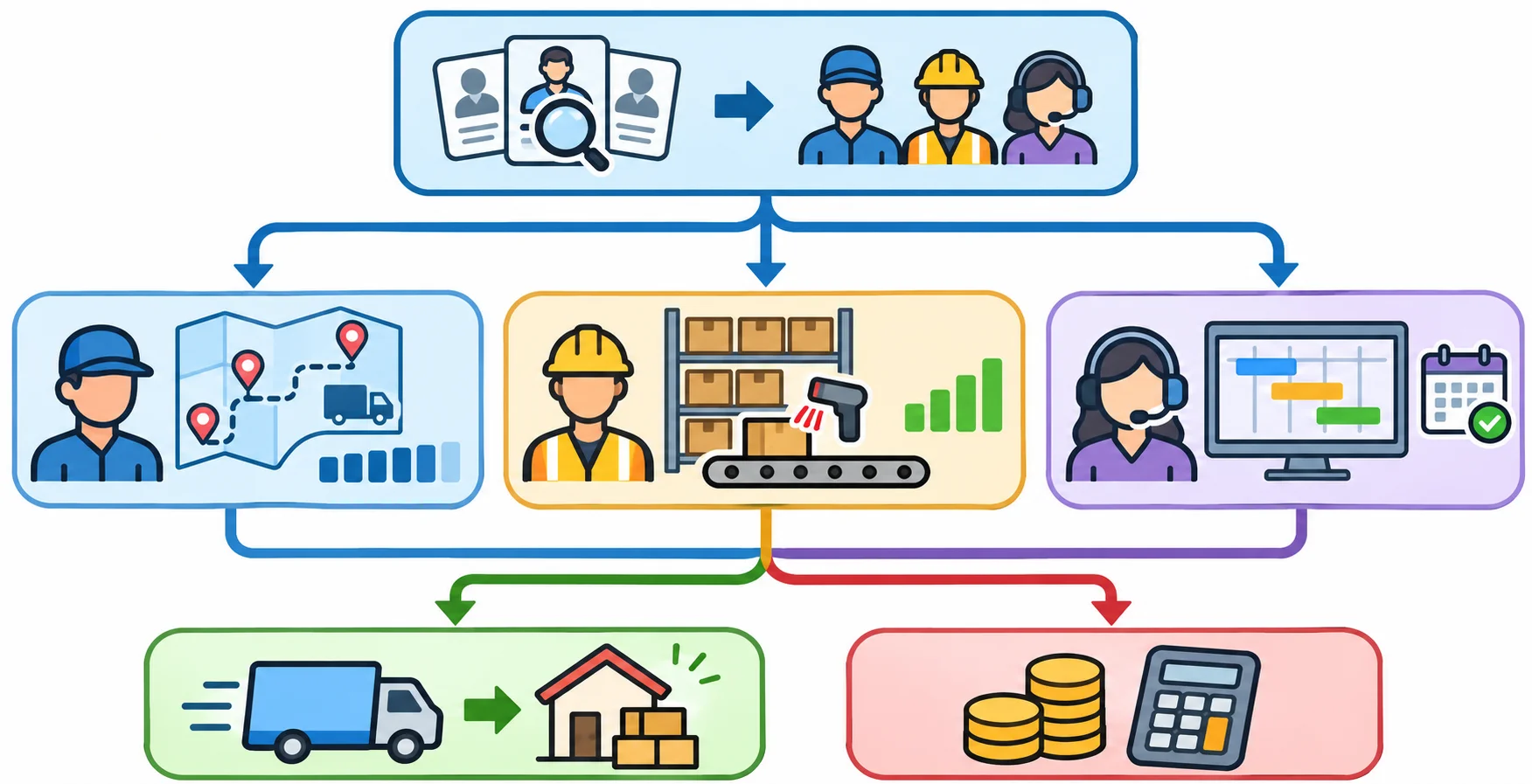
List roles as responsibilities instead of labels. A driver covers a route and vehicle; a warehouse worker picks or loads orders; a dispatcher coordinates time windows and vehicle capacity. Keep each role’s limits visible so players can understand why one extra hire may not solve every delay.
The official Coldchain: Depot Management Steam listing describes recruiting drivers, warehouse employees, and management staff alongside route planning and workload considerations. It is listed as upcoming, so this is feature context rather than a claim about released gameplay. See the official listing for genre context.
Define staff roles as operational choices
Give each worker a cost, availability, skill, and workload range. A trained driver may handle a difficult route; an experienced picker may reduce errors; a dispatcher may coordinate tight delivery windows. Make the benefit and payroll impact visible before the player commits.
Let players assign people to shifts, areas, or route groups with clear feedback about conflicts. If a worker is already assigned, show which job will lose coverage when reassigned. Avoid adding a detailed HR spreadsheet unless the rest of the business loop supports that level of management.
Consider reliability and fatigue without turning every shift into micromanagement. Use a few strong signals such as workload, absence risk, or skill fit. Offer sensible defaults so players can focus on capacity and planning when they do not want to tune every employee.
Connect hiring to delivery tradeoffs
Tie staffing changes to measurable outcomes: orders per shift, late deliveries, vehicle use, picking errors, customer demand, and operating cost. More staff should create choices about growth, service quality, or efficiency rather than raising every outcome at once.
Let roles complement one another. Additional drivers do little when the warehouse cannot load vehicles; more pickers may not help if dispatch timing is poor. Show the bottleneck and estimated impact of a hire so players can address the limiting step.
Provide a path for correcting a bad staffing plan. Players could reassign shifts, hire for a different skill, reduce a service promise, or reschedule deliveries. Explain penalties for layoffs or contract changes before confirmation, especially when they affect a long-running route.
Test workload and business growth
Compare staffing plans over the same order volume and route set. Track completion, idle time, late deliveries, errors, vehicle capacity, fatigue, and wage cost. Ask players which constraint they expected the hire to solve and whether the outcome matched that expectation.
Test absences, demand spikes, a vehicle breakdown, warehouse congestion, and a new delivery zone. Ensure that the business can recover through rescheduling, temporary capacity, or reassignment. A single missing worker should create pressure rather than silently halt the entire operation.
Accept the feature when hiring changes planning decisions and each role has a readable effect. See the resource network guide for capacity and bottleneck mapping. AI can brainstorm staff profiles; workload simulation and economy need playtests.

FAQ
How should hiring change a logistics management game loop?
Connect hires to specific steps such as picking, loading, dispatch, or delivery, and show how capacity and payroll change. A new worker should alter a planning choice. Test whether players can identify the bottleneck and predict which role will address it.
Which staff roles are useful in a logistics simulation?
Start with a few distinct responsibilities such as driver, warehouse picker, loader, or dispatcher. Give each role visible skills, availability, and limits. Add more specialties only when they create decisions that fit the rest of the business loop. This keeps the consequence clear and helps players plan their next step.
How do you balance staff skills and wages?
Show wage cost beside expected effects on orders, delays, errors, or route coverage. Compare plans at the same demand level and avoid giving a hire a bonus in every category. Players should weigh a useful improvement against ongoing payroll. This keeps the consequence clear and helps players plan their next step.
What should you test in a hiring system?
Compare staffing plans across the same routes and order volume. Measure completion, idle time, late deliveries, errors, fatigue, and cost. Test absences, demand spikes, and breakdowns, then confirm that players can recover through reassignment or rescheduling. This keeps the consequence clear and helps players plan their next step.