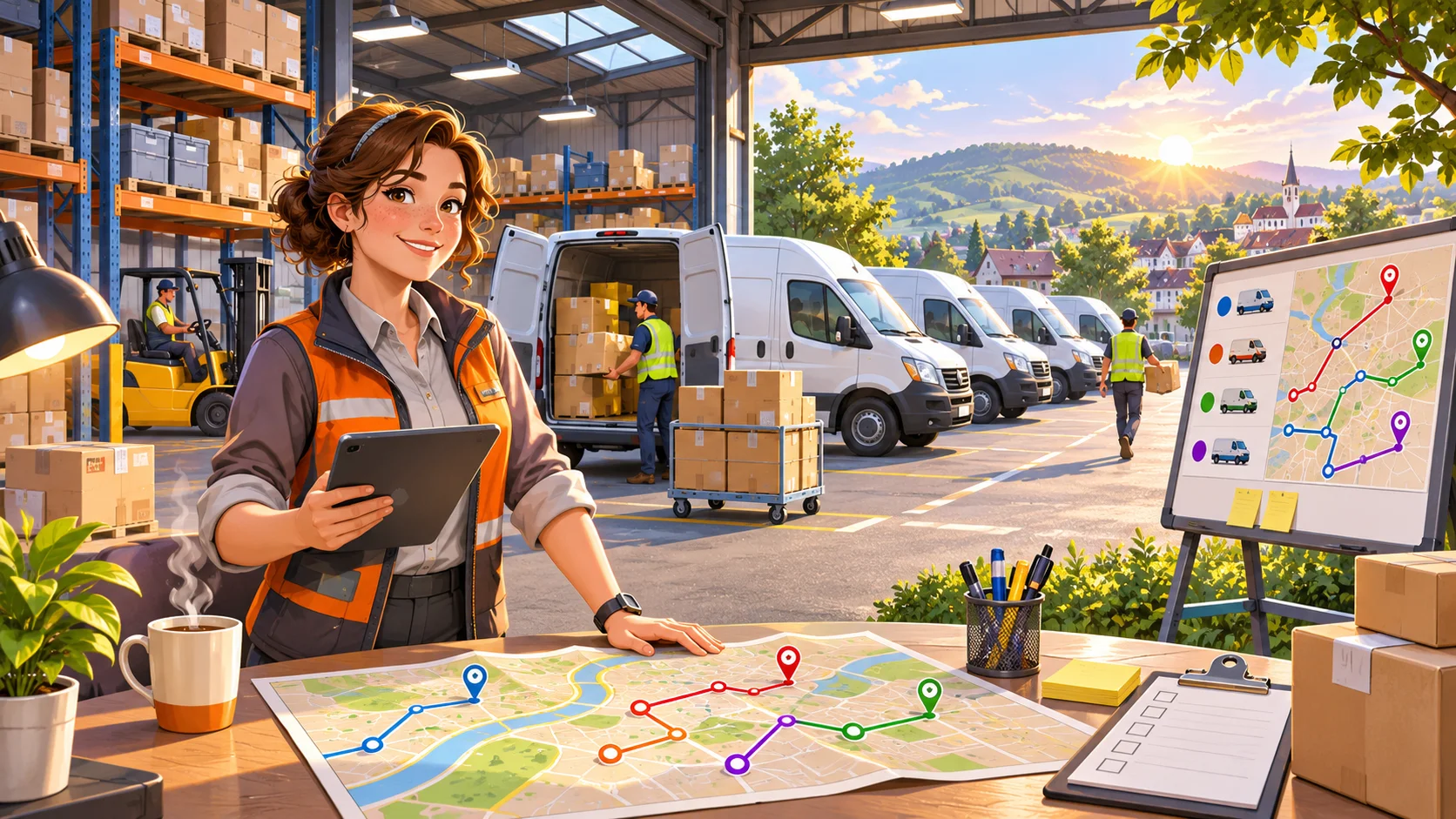
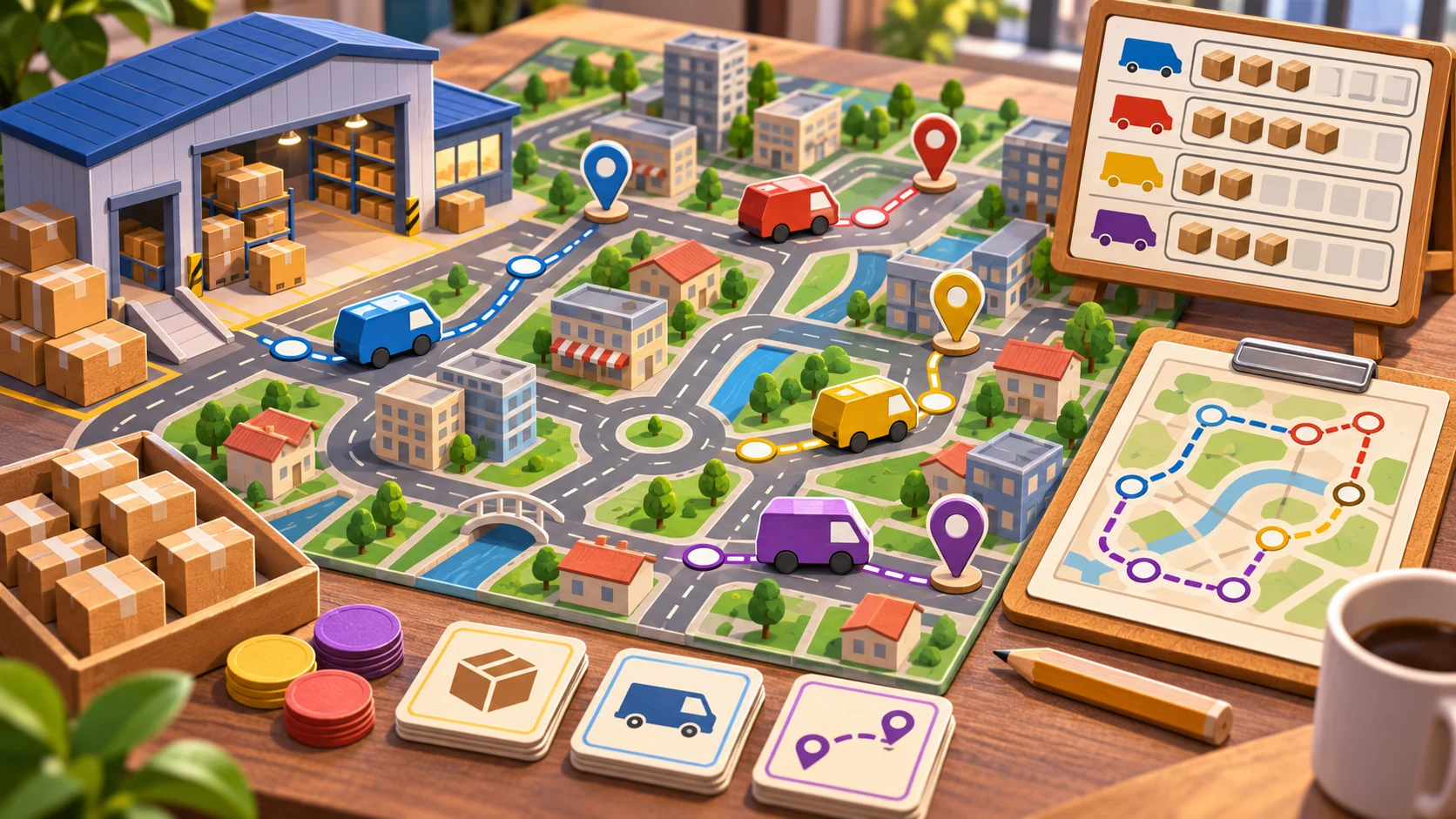
A logistics-management game feels connected when a finished product has to pass through several decisions before it earns money. The player sources materials, schedules a batch, moves goods along a route, meets a buyer's demand, then uses the payment to plan the next cycle. If the game adds cash at production time, transport and sales stop mattering.
This guide follows one fictional product from material stock to a buyer. Its facilities, prices, capacities, and outcomes are design calculations, not a playtest, financial forecast, or result produced by SEELE.
Define the complete loop
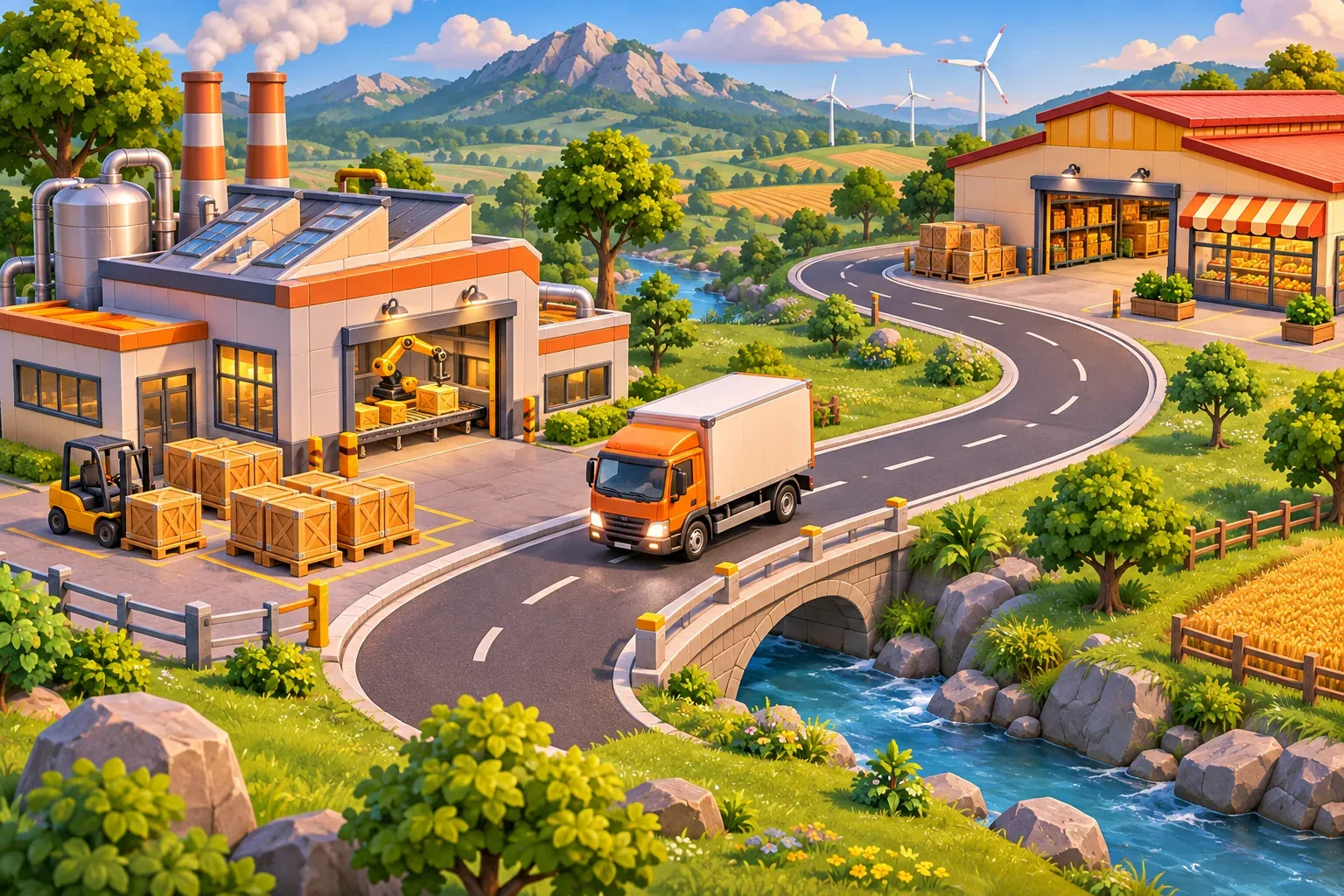
Write down each step before building a large map: receive materials, produce a batch, store finished units, dispatch an order, travel, accept the delivery, pay the seller, and update the ledger. Decide which step runs when the day advances. A fixed order prevents a same-day shipment from earning revenue before it reaches the buyer.
Keep the business objective visible. The factory may want to keep stock for another customer; the carrier may have limited capacity; the buyer may accept only a set amount. A route should help the player move goods toward demand, not simply turn a production number into cash.
Use distinct inventory states. Raw material belongs in a supplier or factory input store. Finished products sit at the factory until dispatched. A shipment is in transit and cannot be sold twice. Delivered units move into the buyer's stock or directly into a sale event, depending on your game rules. Payment happens only when the declared sale condition is met.
Separate capacity and inventory states
Production rate, storage, route throughput, travel time, and buyer demand are separate constraints. If a factory can make six units but storage holds four, two units need a clear outcome. If the route can carry three but the buyer wants two, dispatching three creates excess inventory at the destination unless the buyer can store it.
| System | Example rule | Question it answers |
|---|---|---|
| Input stock | Two material units per product | Can the next batch start? |
| Production | At most three products per batch | How many finished units will appear? |
| Factory storage | Capacity for six finished units | Can output wait for dispatch? |
| Route | Three units per day; one-day travel | How much can leave, and when does it arrive? |
| Buyer | Accepts two units per day | How many delivered products become sales? |
Give every system its own limit. A route upgrade should not secretly increase buyer demand. A larger warehouse should not create extra production. This makes an upgrade's value easier to compare and exposes the actual bottleneck.
Trace a two-day order
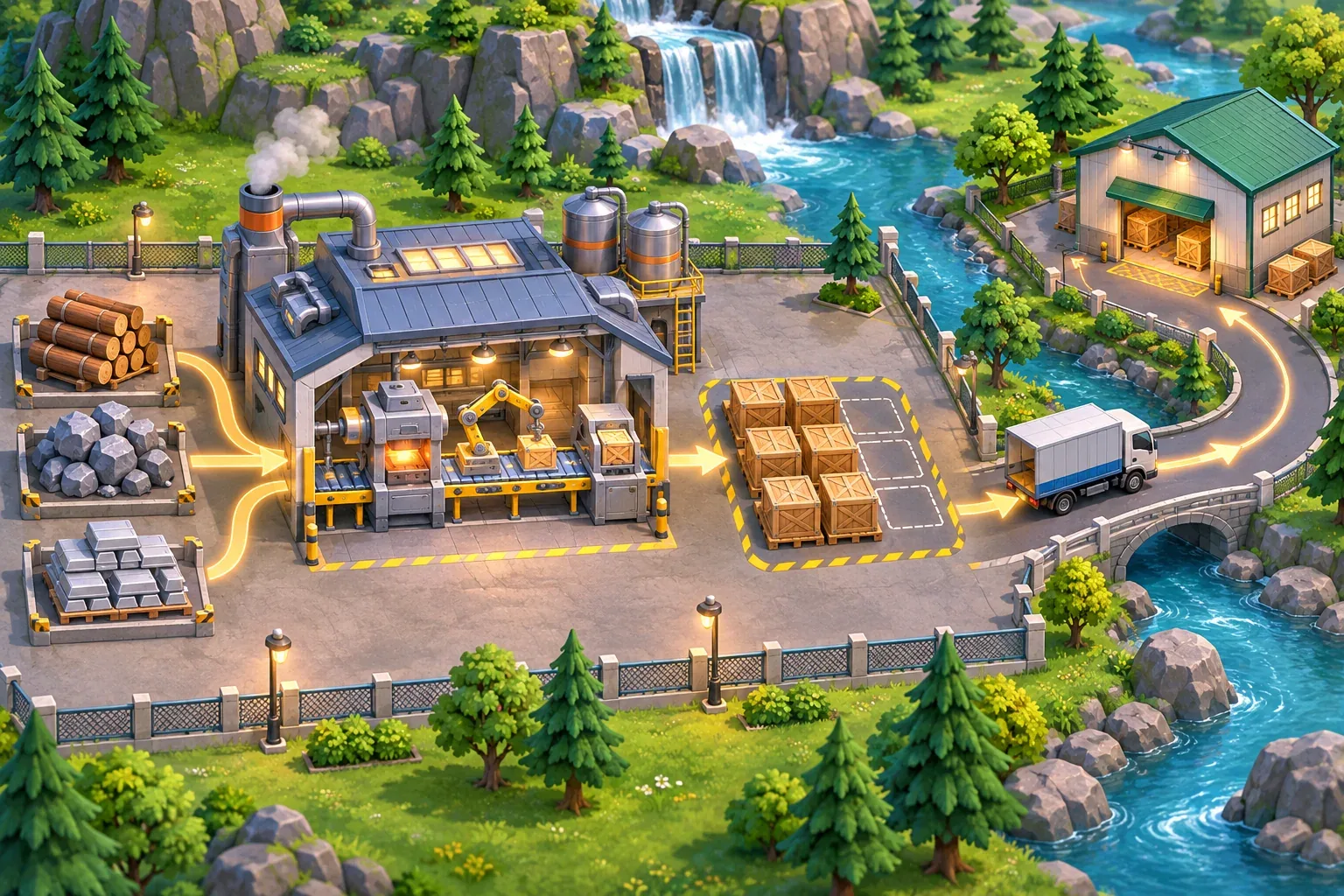
Use one fictional product and fixed values. Each unit needs two material units, the batch limit is three, and the factory starts with eight materials. Producing three units consumes six materials and leaves two. The route can carry three units per day, while the buyer wants two. Travel takes one day.
On Day 1, dispatch two units. One finished unit stays at the factory; two move into a shipment and are unavailable to either location while in transit. On Day 2, the shipment arrives and the buyer accepts two. If the fictional price is five coins each, revenue is ten coins. At a fictional two-coin input cost plus one-coin shipping cost per unit, contribution is four coins before wages or overhead.
| Event | Factory raw stock | Factory finished stock | In transit | Buyer sale and cash |
|---|---|---|---|---|
| Start | 8 materials | 0 units | 0 | 0 |
| Day 1 production | 2 materials | 3 units | 0 | 0 |
| Day 1 dispatch | 2 materials | 1 unit | 2 units | 0 |
| Day 2 arrival and sale | 2 materials | 1 unit | 0 | 2 units sold; 10 revenue |
Do not call the ten-coin sale amount profit. Under the stated fictional cost assumptions, the two sold units use four coins of input and two coins of shipping, leaving four before other costs. The remaining unit is inventory, not revenue. Label the ledger so the player can tell cash, cost, unsold stock, and in-transit stock apart.
These numbers are a paper calculation. A playable implementation should use the same event order and show the stock movement at each step. If you change route time, update the arrival date and the cash flow together.
Prompt for a connected logistics prototype
When asking an AI game maker to explore the loop, specify the inventory states and event order. SEELE's official AI Game Maker page describes creating from text and iterating on a playable result. The production, route, and sales system below is a proposed design, not a documented product feature.
Create a compact fictional logistics-management prototype with one factory, one delivery route, and one buyer. Each product uses 2 material units; the factory starts with 8 materials and makes at most 3 products per batch. The route carries 3 units per day and takes one day. The buyer accepts 2 units per day. Resolve events in this order: production, dispatch, travel, arrival, buyer acceptance, payment. Track raw stock, finished stock, in-transit units, delivered units, and cash separately. On Day 1, produce 3 and dispatch 2; on Day 2, deliver and sell 2 while 1 remains at the factory. Show a ledger and never award sale revenue before arrival. Do not add multiple products or dynamic prices yet.After a first version, compare the ledger with the hand calculation. If units disappear, duplicate, or earn cash while in transit, ask for the affected state transition to be fixed before adding more products.
Test delays and bottlenecks
Run the same batch with one change at a time. The point is to see whether the system reports why output or sales are waiting.
- Input check: start with five materials. Only two products can be produced; one material remains and the batch does not create a third unit.
- Route check: close the route after production. Finished stock stays at the factory and no buyer payment occurs.
- Demand check: set buyer demand to one unit. The buyer accepts one; the other delivered unit remains in destination inventory or follows a clearly stated overflow rule.
- Delay check: change travel time from one day to two. Arrival and sale move to Day 3, not Day 2.
- Cash check: apply the fictional unit price and costs only when the sale event occurs. Unsold and in-transit goods do not count as sales.
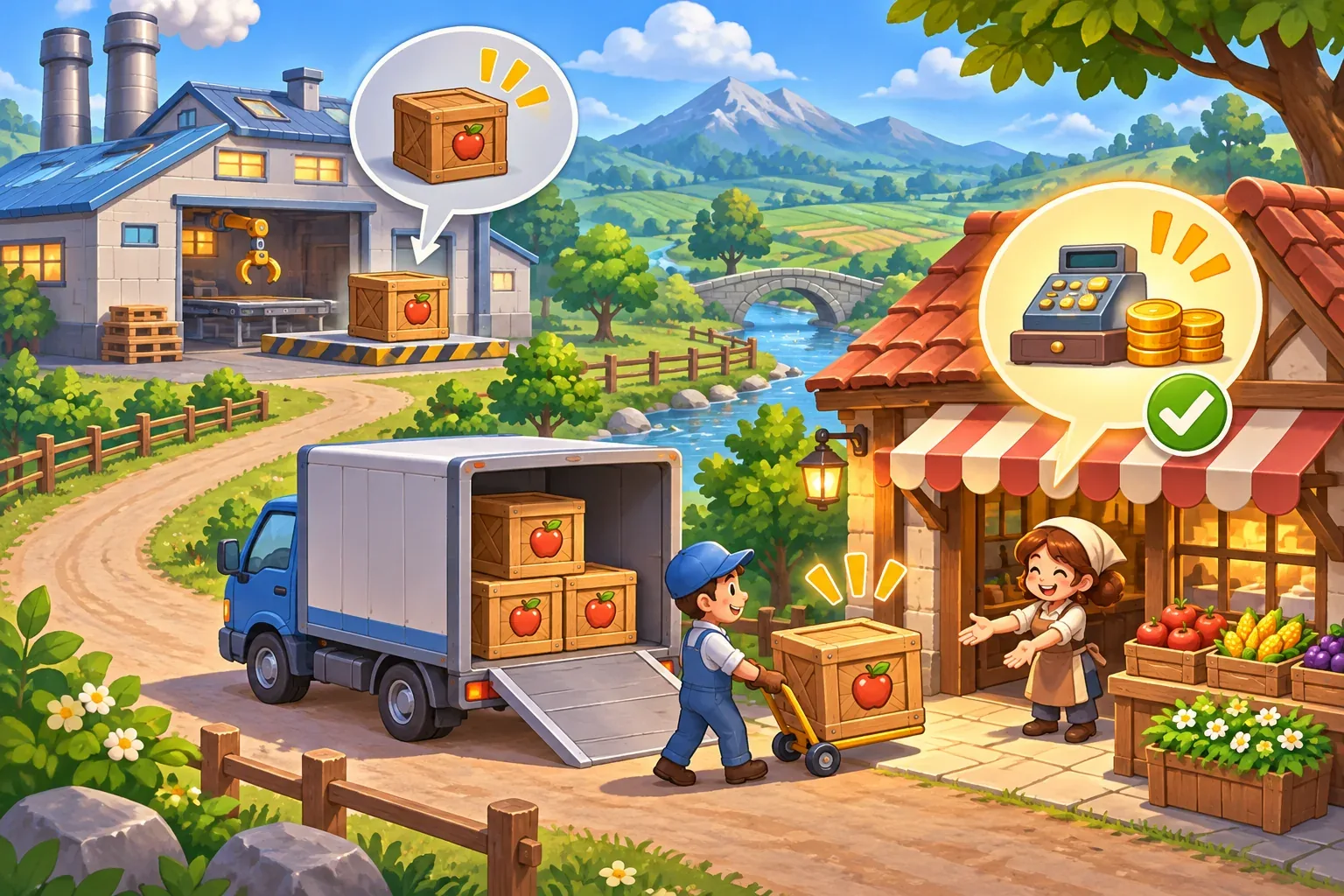
Once the first product moves cleanly through the chain, add another buyer or product only if it creates a choice between routes, capacity, or timing. Keep the ledger visible as the system grows. That gives players a way to understand whether an upgrade is fixing production, transport, or demand.
Logistics production-to-sales FAQs
When should the game award revenue?
Pay when the stated sale condition occurs, such as buyer acceptance after a shipment arrives. Keep production, in-transit goods, and unsold inventory separate from cash.
How many systems should I model first?
Start with one input, one factory batch, one route, and one buyer. That is enough to test production, capacity, travel delay, demand, and payment order.
What if the buyer wants less than the route can carry?
Let the buyer accept its demand and apply a clear rule to extra units, such as destination storage or return shipment. Do not silently delete the excess.
How do I identify a bottleneck?
Track each capacity independently: input supply, production, storage, route, and demand. A ledger shows where stock is waiting and which upgrade could change the constraint.
Should I add dynamic pricing immediately?
No. First make fixed price, costs, inventory, and delivery timing reconcile. Add price changes after the player can trace where the first sale and margin came from.
Make your own logistics management game
Start with one product and a ledger that separates raw inputs, finished goods, shipments, sales, and cash. Then add the next route or buyer that creates a real capacity decision. For a general game-creation starting point, explore the SEELE AI Game Maker and bring this production-to-sales loop into your prototype brief.