Choose a resource shared by both phases
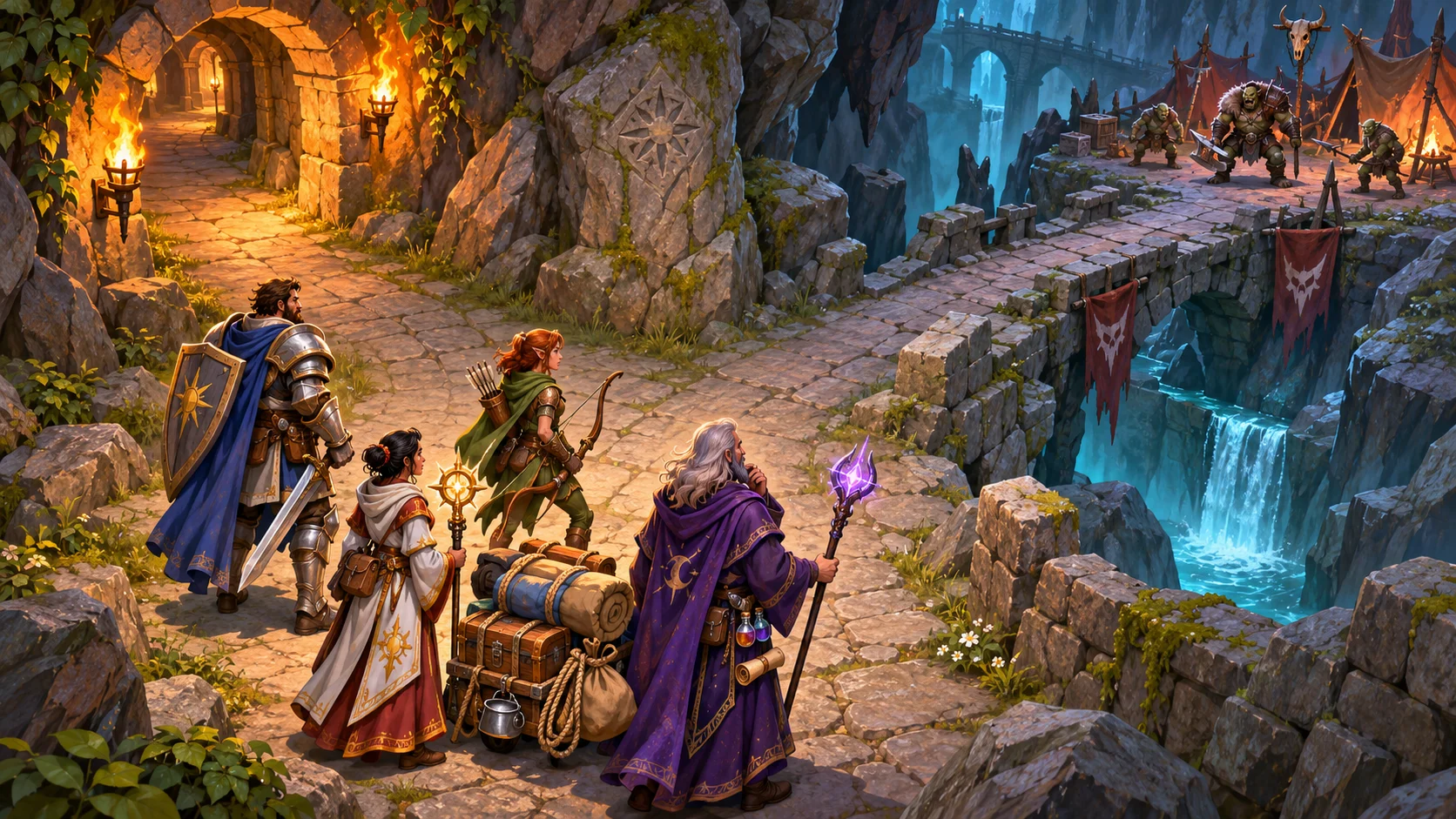
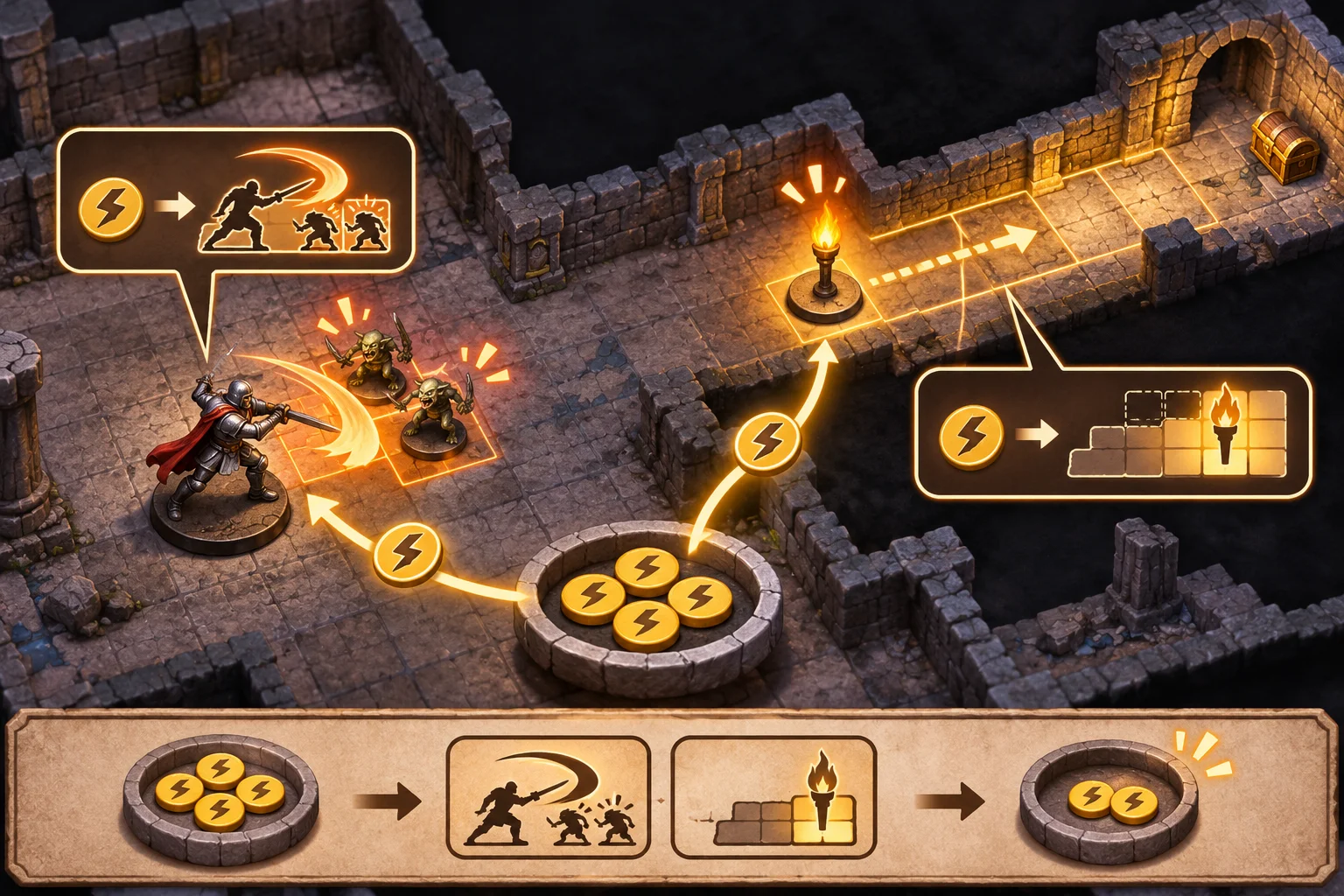
A shared resource creates a connection between actions that players might otherwise treat separately. Start with one pool, such as stamina, light, or expedition supplies, and decide what exploration and combat spend from it. A torch might reveal a corridor and also fuel a combat technique. The player now weighs a tactical advantage against visibility later in the route.
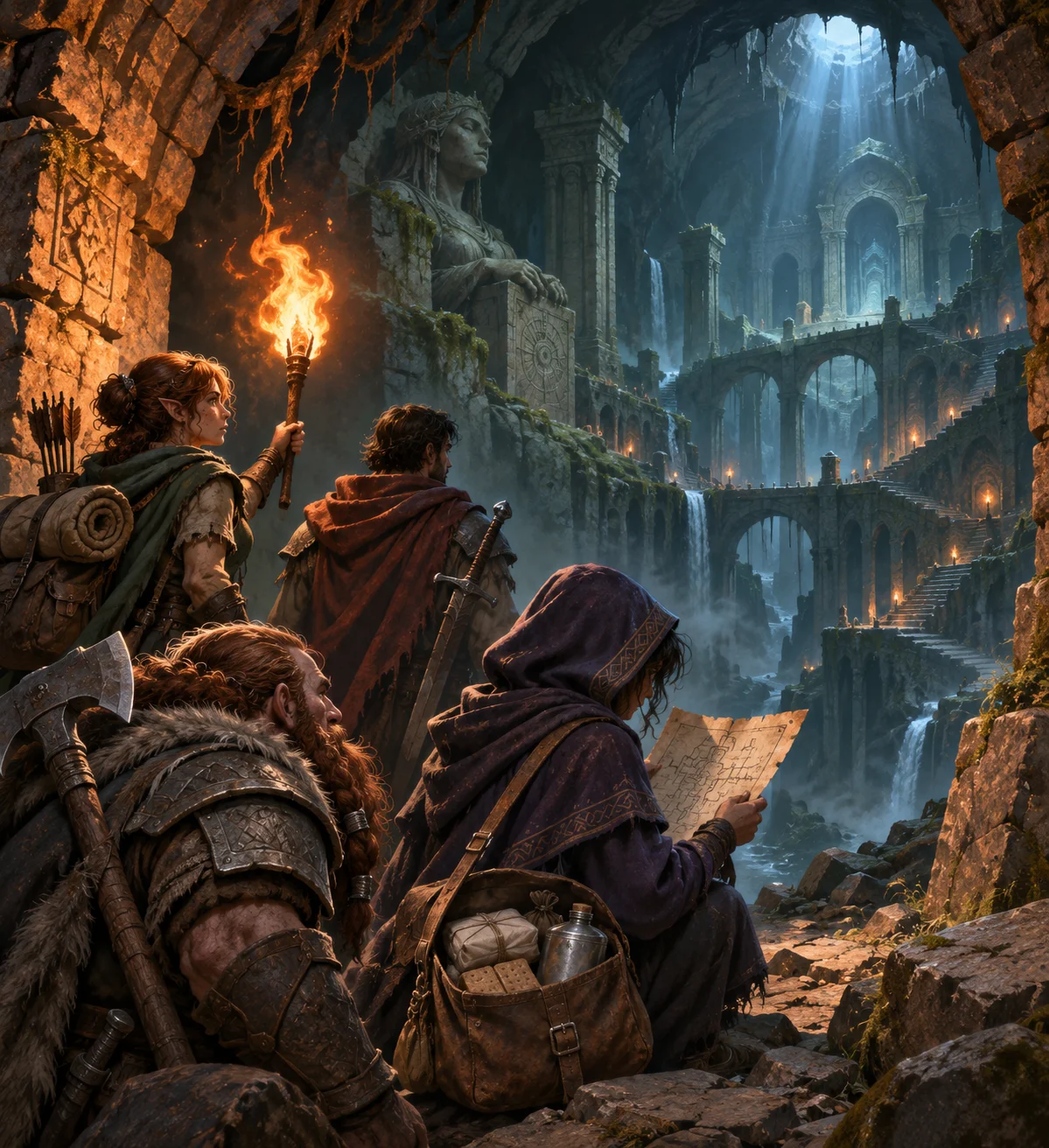
Do not make every action consume every resource. If moving, attacking, inspecting, healing, and opening doors all spend the same token, the player may feel punished for interacting. Choose costs that create a real choice and leave basic navigation usable. A small number of distinct pools is easier to plan around than one universal meter for the whole dungeon.
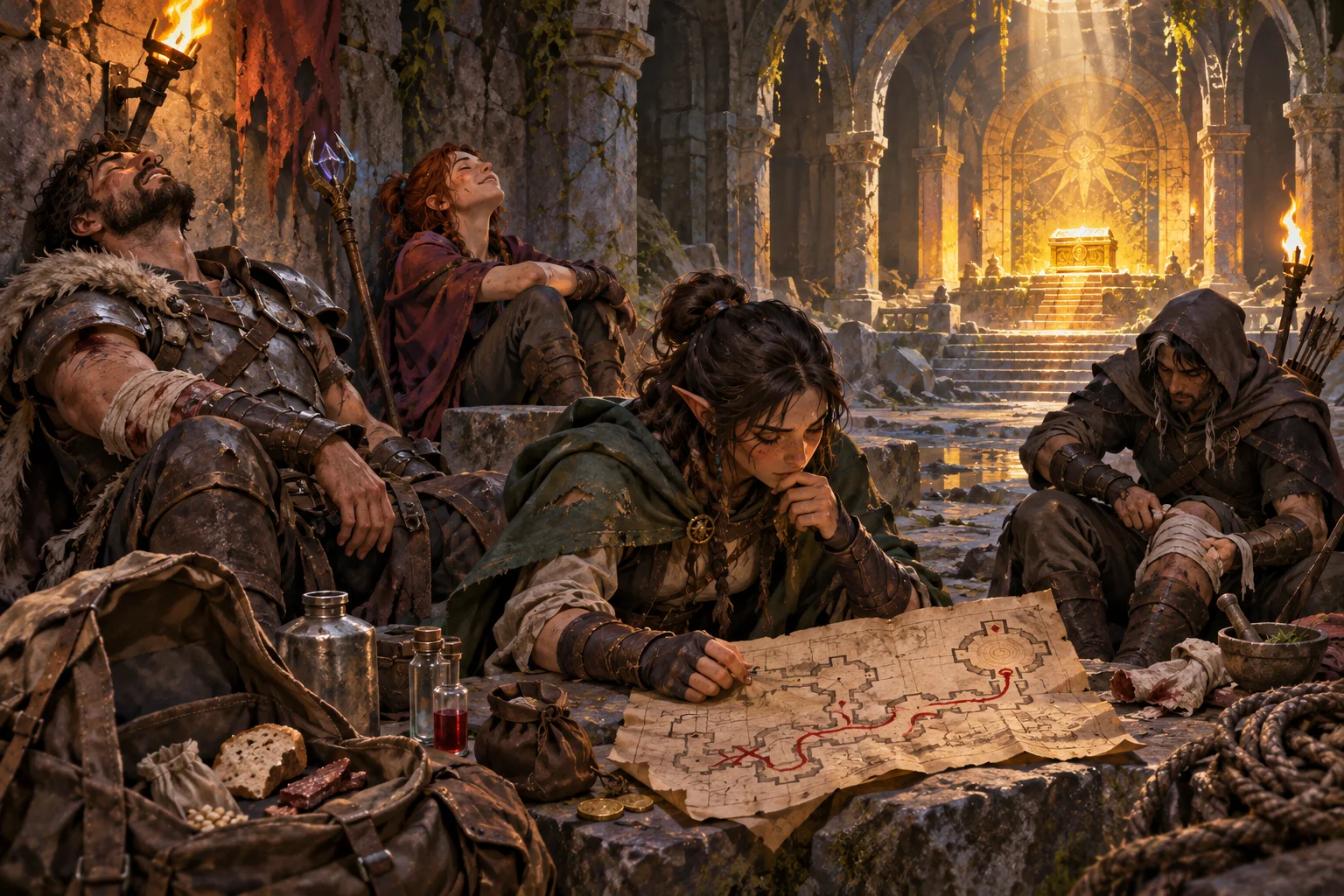
The official Darkest Dungeon listing describes a gothic roguelike expedition in which stress, disease, and darkness pressure adventurers. This supports the broad expedition attrition context only. The shared pool and action costs proposed here are original system design guidance, not a claim about that game’s mechanics. " alt="An original party prepares to enter an ancient dungeon with torches, rations, and a route map." width="1199" height="1536" loading="lazy">
Set exploration costs and recovery rules
Exploration costs should be visible before they happen. The map can show that scouting a sealed room consumes a light charge, while taking a safe detour costs time. Rest may restore stamina but trigger an encounter or increase another pressure. Explain these relationships at the moment of choice and provide a forecast of remaining supplies when the player chooses a path.
Recovery rules matter as much as spending. If every room restores the resource, the shared budget may not affect decisions. If nothing restores it, players may hoard every charge and avoid using the system. Define safe and risky recovery points, show their tradeoffs, and make sure the player can estimate how much runway remains to the next likely rest.
Preserve useful information. If a player must choose between a dark shortcut and a lit long route, make the known differences legible without revealing every surprise. A route marker or resource estimate can communicate likely cost. Surprise is compatible with fair planning when the game teaches the range of possible outcomes rather than hiding the basic rule.
Connect combat choices to expedition runway
Combat should affect what remains after the encounter. A powerful technique might consume stamina needed for climbing; a torch-powered strike may use the same charge that reveals hidden paths. Put the remaining amount beside the ability and show the predicted post-action budget. That lets players compare immediate safety with later flexibility.
Avoid making resource use the only meaningful combat choice. Some low-cost actions can still be effective through positioning, timing, or team roles. This gives the player a way to conserve without turning every fight into a slow wait. If enemies can drain supplies, telegraph the threat and allow counterplay so the loss feels connected to a decision.
After battle, return players to the exploration view with the updated amount and any changed route options. If they spent a resource, describe what changed; if they conserve it, show how it can support the next planned action. This closes the loop between tactical decisions and the expedition rather than hiding the cost in a separate status screen.
Test a complete expedition budget
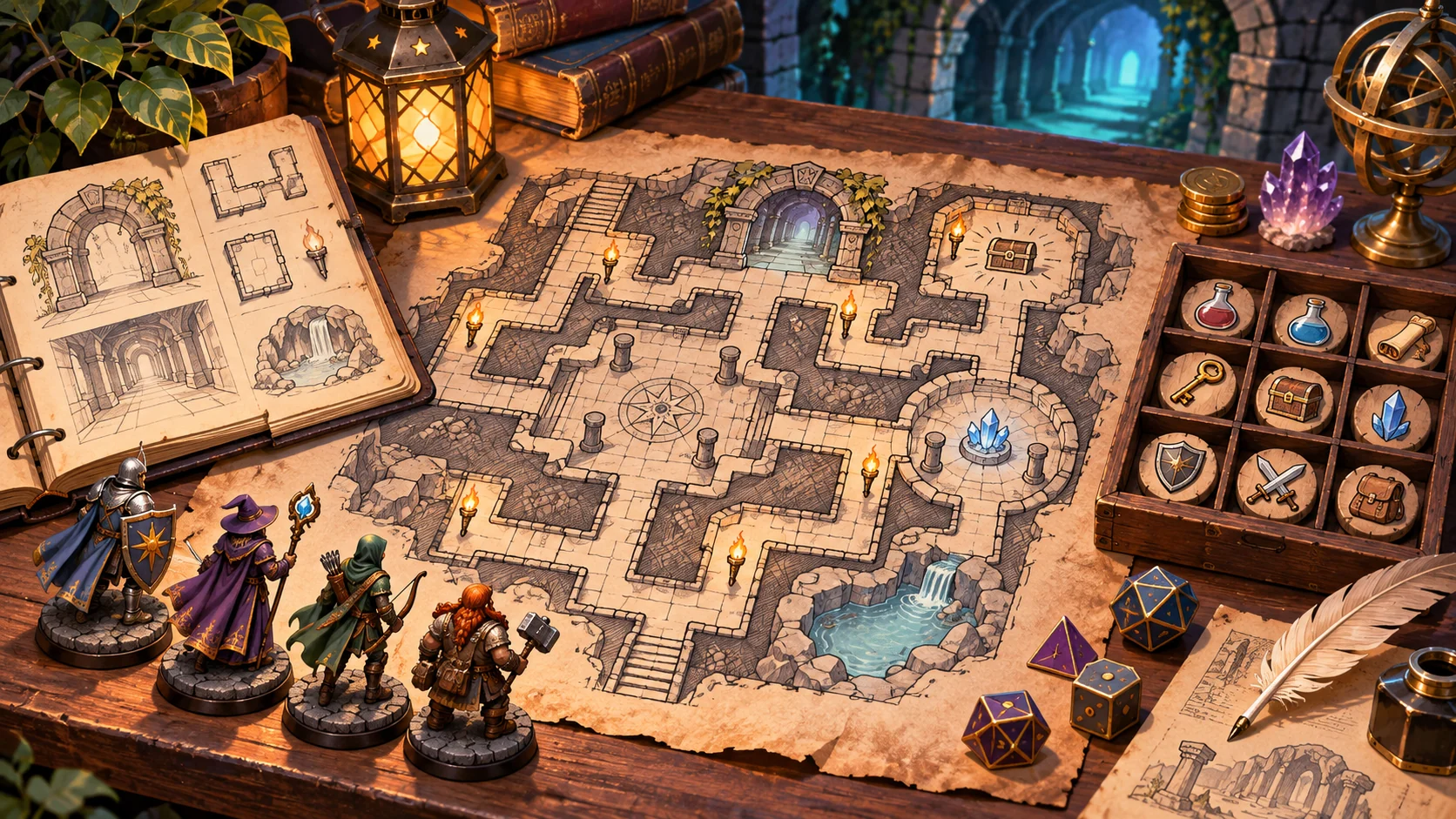
Build a short dungeon with a safe route, an optional fight, a hazardous shortcut, and one recovery point. Give players the same starting supplies and compare a cautious route with an aggressive combat approach. The system works when players can explain why they have the amount remaining and how they could have chosen differently. Do not tune from completion rate alone; ask whether the tradeoff felt fair.
Track resources at each decision, unused abilities, route choices, recovery use, and points where players run out. Look for soft locks where a player cannot continue because an earlier cost was mandatory but no warning existed. Also test a player who conserves so much that the resource never matters. Both cases suggest the budget or feedback needs adjustment.
Use the dungeon crawler guide to establish the broader exploration and encounter loop. SEELE AI can help outline an original crawler, but the cost rules and expedition balance need implementation and playtesting.
FAQ
How do you connect exploration and combat in a dungeon crawler?
Choose a resource that can matter in both phases, define what exploration and combat spend or restore, and show the remaining amount before each decision. Then test a complete route with optional encounters and recovery. Players should be able to connect a battle choice to the options they have later in the expedition.
What resources can be shared between exploration and combat?
Stamina, torchlight, ammunition, or expedition supplies can work if each has a clear purpose in both phases. Choose a small set and avoid charging the same pool for every interaction. A shared resource should create a readable tradeoff, not block basic movement or make players avoid the game’s main actions.
How should a game communicate resource costs?
Show the cost beside the action, forecast the amount remaining afterward, and explain relevant recovery rules. On the map, indicate likely route costs; in combat, keep the same pool visible near abilities. If a cost can cause a later problem, give players enough information to plan around that possibility.
What should you test in a shared dungeon resource system?
Replay the same dungeon with cautious and aggressive approaches. Track spending, recovery, optional fights, unused abilities, player confusion, and any point where progress becomes impossible. Ask players to explain their remaining budget and earlier tradeoffs, then adjust costs or feedback where the system feels arbitrary.