Introduction
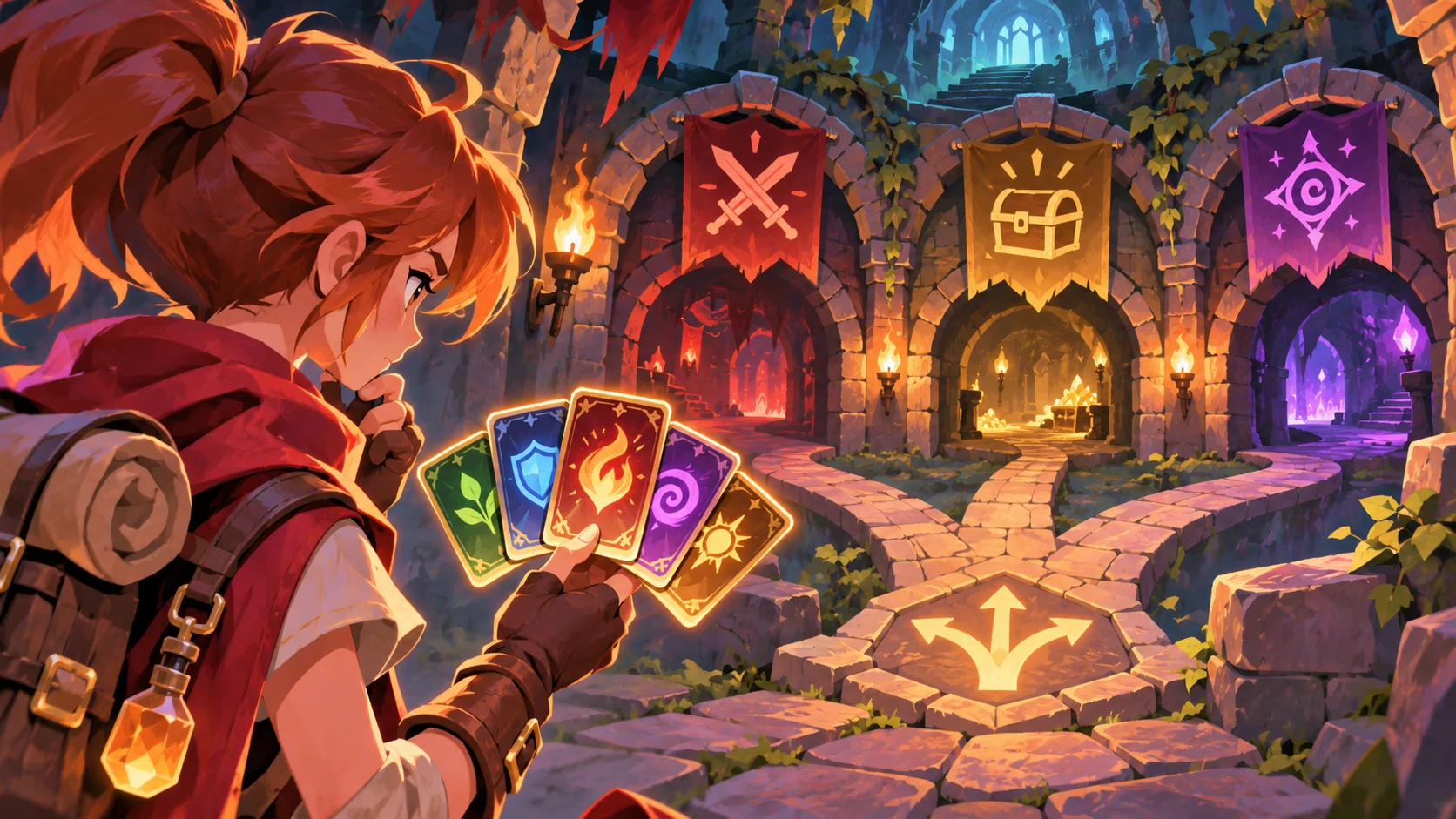
A dungeon crawler prompt should define more than room names and monsters. It needs an exploration loop, encounter rules, resource limits, ways to recover and a safe route back or a clear run ending. Without those details, an AI-generated prototype may look like a dungeon while leaving the important decisions undefined.
This guide uses Lanternwake, a fictional expedition through a small stone ruin to recover a lost observatory lens. Its rooms, opponents, supplies and values are invented and untested. The scenario uses non-graphic encounters and does not claim that a prototype was generated or played.
Define the expedition loop
Start with one short run and the decisions that repeat: choose a route, explore a room, respond to an encounter, spend or preserve supplies, then decide whether to continue or return. State what the player carries between rooms and what happens after a run ends. Keep the first milestone to one connected floor with a clear objective.
Prompt 1 — core expedition brief
Design an original dungeon crawler prototype called Lanternwake. The player explores one compact ruin to recover an observatory lens. Define the run loop, room transitions, one non-graphic encounter, one resource choice and a clear return or completion state. Keep controls and feedback readable. Exclude a large campaign, equipment economy and procedural generation from the first milestone. Mark sample values untested.
A loop is easier to review when each step changes a visible state. “Explore the dungeon” can become “inspect a room, choose one of two exits, then see the map mark the chosen route.” Ask for one connected slice before requesting endless floors or multiple character classes.
Make exploration choices legible
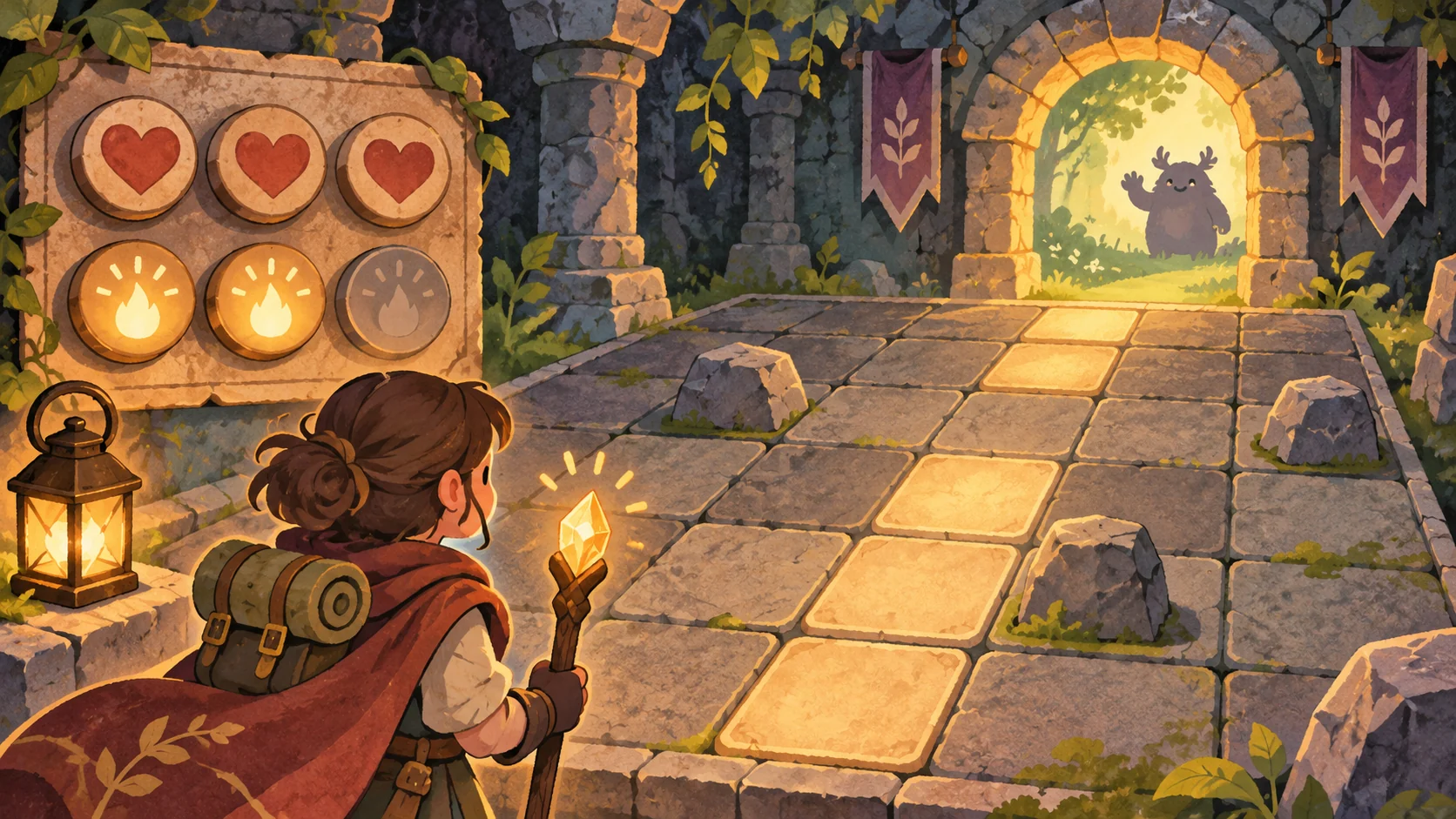
Describe what a room contains, what the player can inspect and what is hidden. If a route branches, show which information is known before the choice and what cost or uncertainty remains. The player should be able to read the map, understand the return path and recognize when a room is complete.
Prompt 2 — room and route map
Create one fictional dungeon floor with [number] connected rooms, one optional side chamber, a visible entrance and an exit toward the observatory lens. For each room, list its purpose, inspectable object, possible encounter and exits. Show discovered and unknown rooms differently. Keep the return route visible, and do not create a one-way trap unless the brief explicitly asks for it.
| Room state | Player sees | State change |
|---|---|---|
| Undiscovered | Room silhouette and connected exits | No details revealed |
| Entered | Room layout and active points of interest | Exploration status updates |
| Resolved | Collected clue or completed objective | Exit becomes available |
| Returning | Previously discovered route | Map records the path to the entrance |
Define encounters and recovery
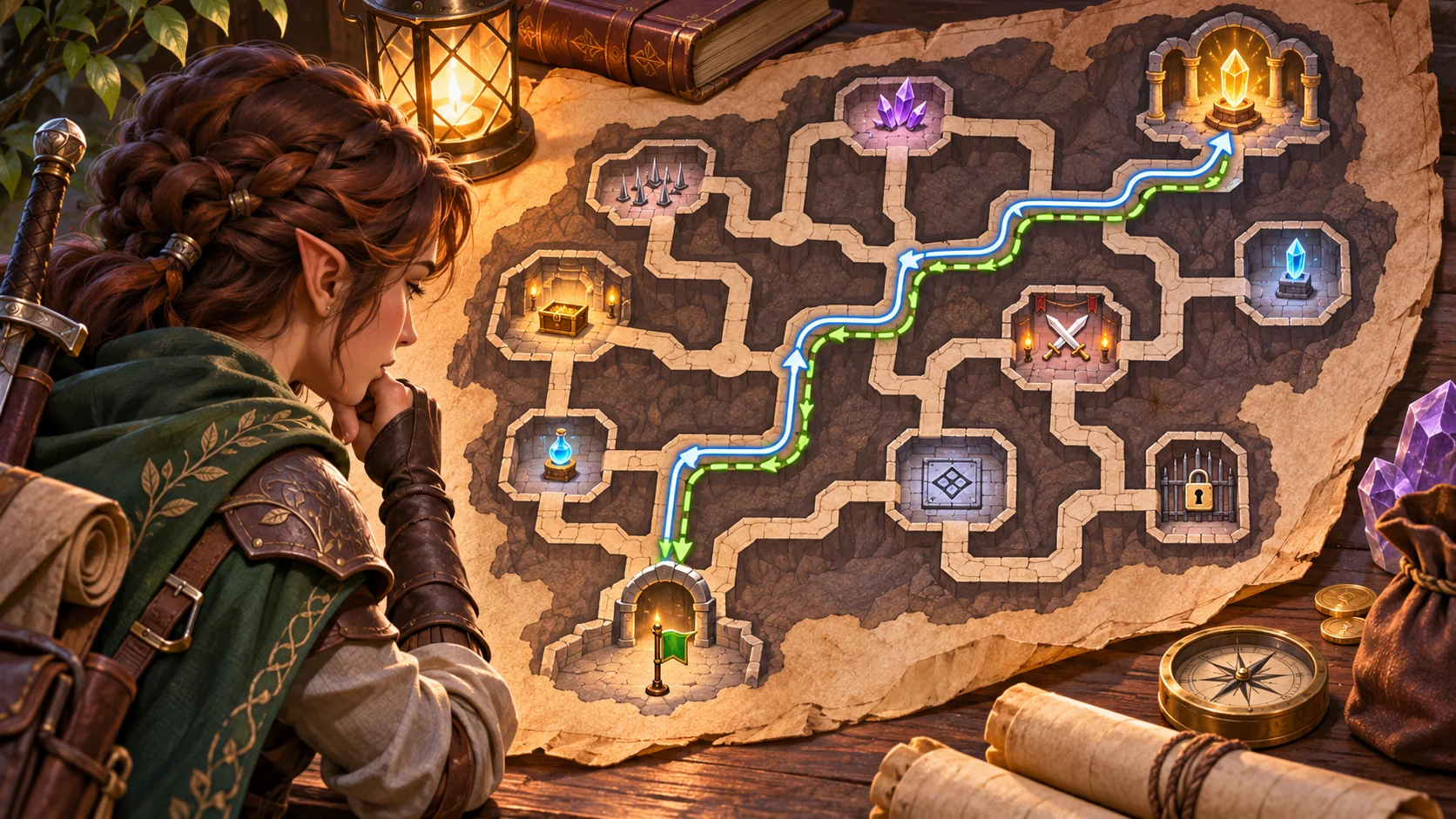
An encounter should have clear start conditions, available actions, feedback and a way to end. If the game uses turn-based combat, state turn order, legal actions and how a threat responds. If it uses non-combat challenges, describe the choice and consequence instead. Specify what happens when the player loses health or resources and how they can pause, retry or retreat.
Prompt 3 — encounter and resource rules
Define one non-graphic Lanternwake encounter. List the player’s visible options, the opponent’s readable response, the condition that resolves the encounter and the resource change after each action. Include a retreat option and state what progress is preserved. Do not add gore or surprise damage with no warning. Treat all numerical costs as placeholders.
Keep the resource set small in the first prototype. A light token, a recovery charge or one inventory slot can create a tradeoff if the player can see the cost before acting. Avoid adding several currencies before one is clearly useful.
Connect supplies to the choice to continue
Resource attrition matters only when the player understands what is running low and what could happen next. Show current supplies, likely upcoming needs and the option to return. The design can create tension without hiding rules or erasing progress unexpectedly.
Prompt 4 — supply and return loop
Design a small supply loop for Lanternwake with [one or two] visible resources. Show the current amount before a room choice, the cost of each option and how the player returns to the entrance. Define what is preserved after retreat and after completing the lens objective. Do not add hidden resource drains. Mark costs as untested prototype values.
A compact expedition summary can list rooms found, resources spent, clues recovered and the chosen exit. That summary is a design requirement; verify that a running build actually updates it before describing it as functional.
Request a focused playable slice
A first build can demonstrate map exploration, one route choice, one encounter, one resource decision and return. Leave out procedural floors, crafting, a large inventory, multiple heroes and a campaign map. Request a reset and visible state so a reviewer can repeat the same sequence.
Prompt 5 — prototype build
Build a first playable Lanternwake slice on one connected dungeon floor. Include room discovery, a visible map and return route, one branch, one non-graphic encounter with retreat, a small visible resource budget, the observatory lens objective, a run summary and reset. Use placeholder visuals and readable controls. At handoff, list working interactions, placeholders and unverified items. Do not call a static mockup playable.
A generated map or combat screen does not prove the loop works. Open the output and verify room transitions, encounter choices, resource changes, retreat, objective completion and reset. No such prototype was run for this article.
Fictional expedition snapshot
The following planning example is hypothetical, not a play result.
| Field | Fictional planning value |
|---|---|
| Working title | Lanternwake |
| Objective | Recover an observatory lens and return to the entrance |
| Floor | Four connected rooms and one optional side chamber |
| Resources | Abstract light tokens and one recovery charge |
| Encounter | One readable, non-graphic room challenge with retreat |
| First milestone | One route branch, encounter, supply choice and run summary |
| Excluded | Procedural floors, crafting, large inventory and campaign progression |
Review the generated output
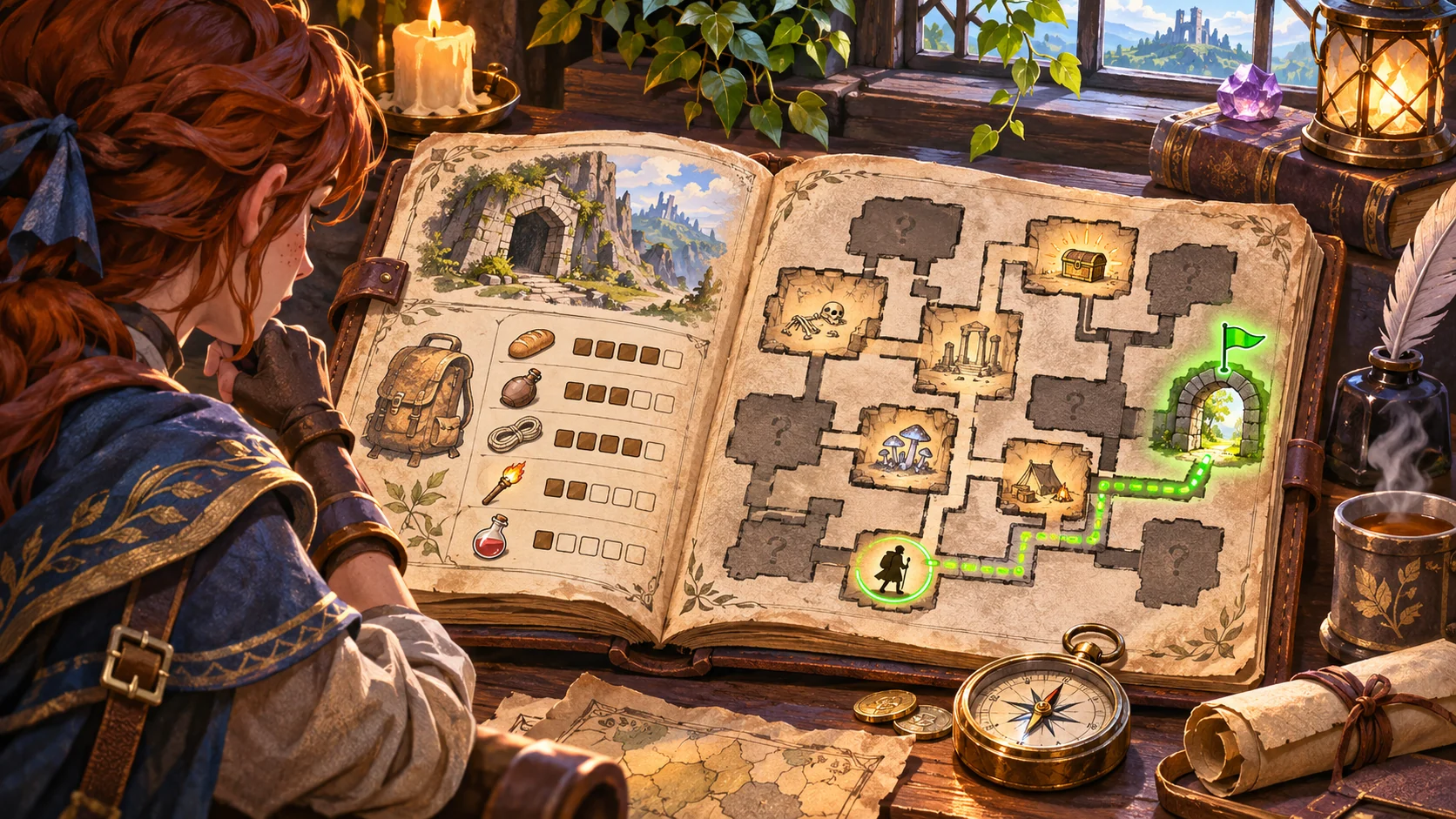
Compare the actual prototype with the GDD. Record what you observed and what remains visual-only. If the map shows an exit but the player cannot use it, mark the return interaction missing. A small, specific review request helps improve one rule without expanding the project.
Prompt 6 — implementation review
Review the running Lanternwake build for room discovery, route choice, visible map, encounter start and resolution, resource updates, retreat, objective completion, run summary and reset. Mark each present, missing or unclear based only on observed interaction. Quote evidence and propose one smallest next fix. Do not claim a playtest or working feature without checking it.
If an edge case is unclear, update the GDD before asking for more content. For instance, specify whether retreat preserves a recovered clue and how the map records an incomplete room. That makes the retry behavior reviewable.
Conclusion
Dungeon crawler prompts should tie exploration, encounters, resource attrition and retreat into one visible loop. Lanternwake illustrates the structure with a fictional ruin, but its rooms, costs and rules are untested. Request a small slice, inspect each state change in the actual output, and label anything that remains a mockup.
You can take a defined concept into the Free AI game maker, then use the checklist above to review the output.
FAQ
What should AI prompts for a dungeon crawler specify?
Define the run loop, room states, route choices, encounter actions, resource costs, retreat behavior, objective, ending and first-build scope.
How do I make dungeon exploration choices meaningful?
Show what is known about each route, what remains uncertain and what state changes after the player chooses. Keep the map and return route understandable.
How should resource attrition work in a first prototype?
Use a small visible resource set, show costs before a choice and specify what is preserved after retreat. Treat numeric values as untested until evaluated.
Does a generated dungeon map mean the game is playable?
No. A map image does not verify room transitions, encounter choices, resource updates or the return loop. Check the actual interactions.
Can a dungeon crawler prototype include non-combat encounters?
Yes. A challenge can ask the player to inspect, choose or spend a resource without requiring combat. The GDD should define its input, feedback and outcome.