Make automation solve a measured bottleneck
PlateUp! lets players choose equipment and build kitchens, including appliance chains that can automate tasks. Steam & Thyme is a separate fictional restaurant game. Its helper machines, costs and savings are original prototype examples, not claims about PlateUp's balance.
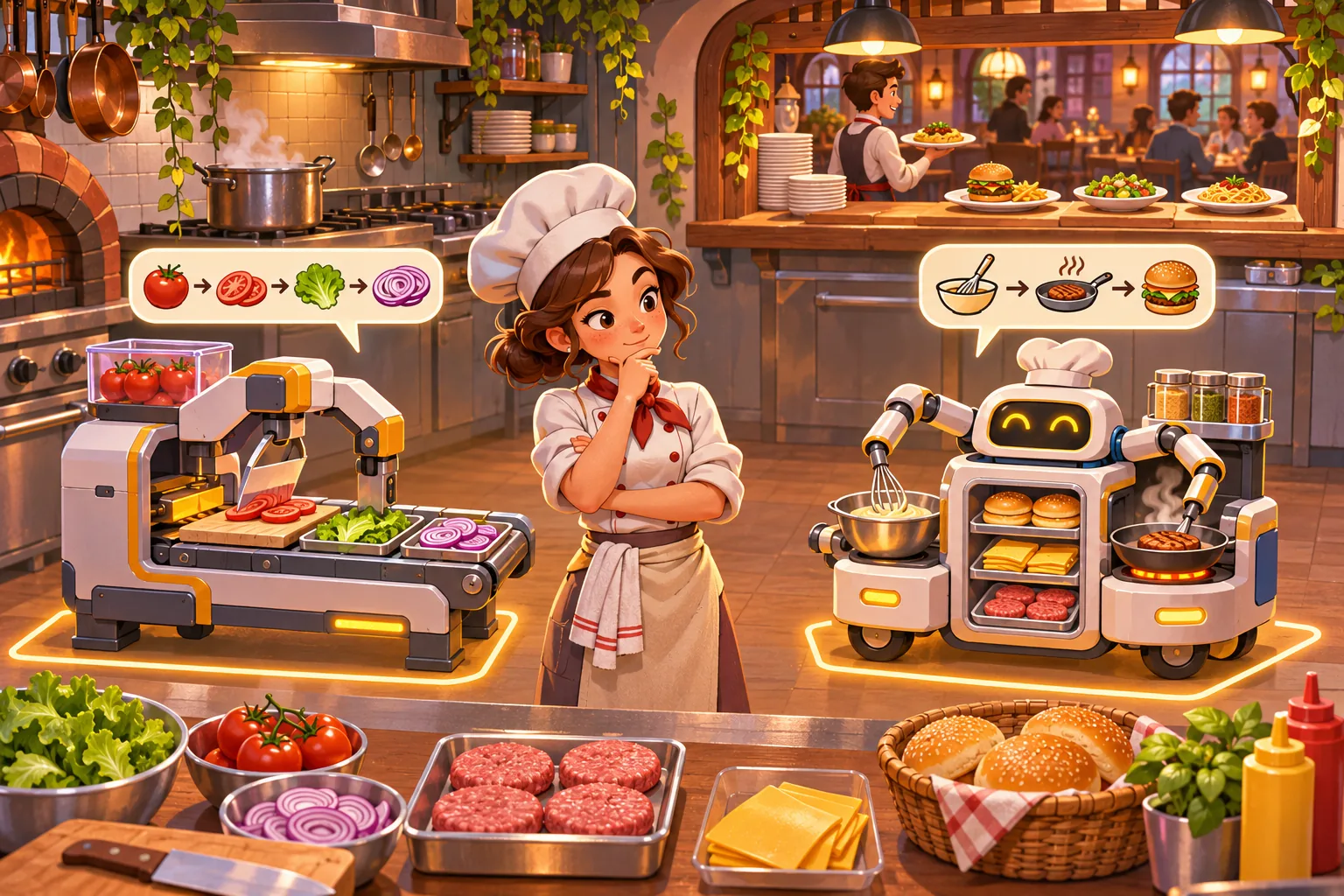
At the end of each service, count queued prep orders and plates waiting at the pass. A PrepBot costs 2 tokens and saves 2 ticks per queued prep order. A PlateRunner costs 1 token and saves 1 tick per waiting plate. The restaurant has 2 tokens and may install one helper each day. Choose the option with the greatest projected ticks saved; break ties by choosing the cheaper helper.
Use the same backlog snapshot for each option
Estimate each helper from the current queue counts before changing the layout. Compare total saved ticks, not a vague label like “more efficient.” If both queues are empty, buy nothing. Once selected, install only one helper for the next service and recalculate after that service. This keeps the decision tied to current kitchen work.
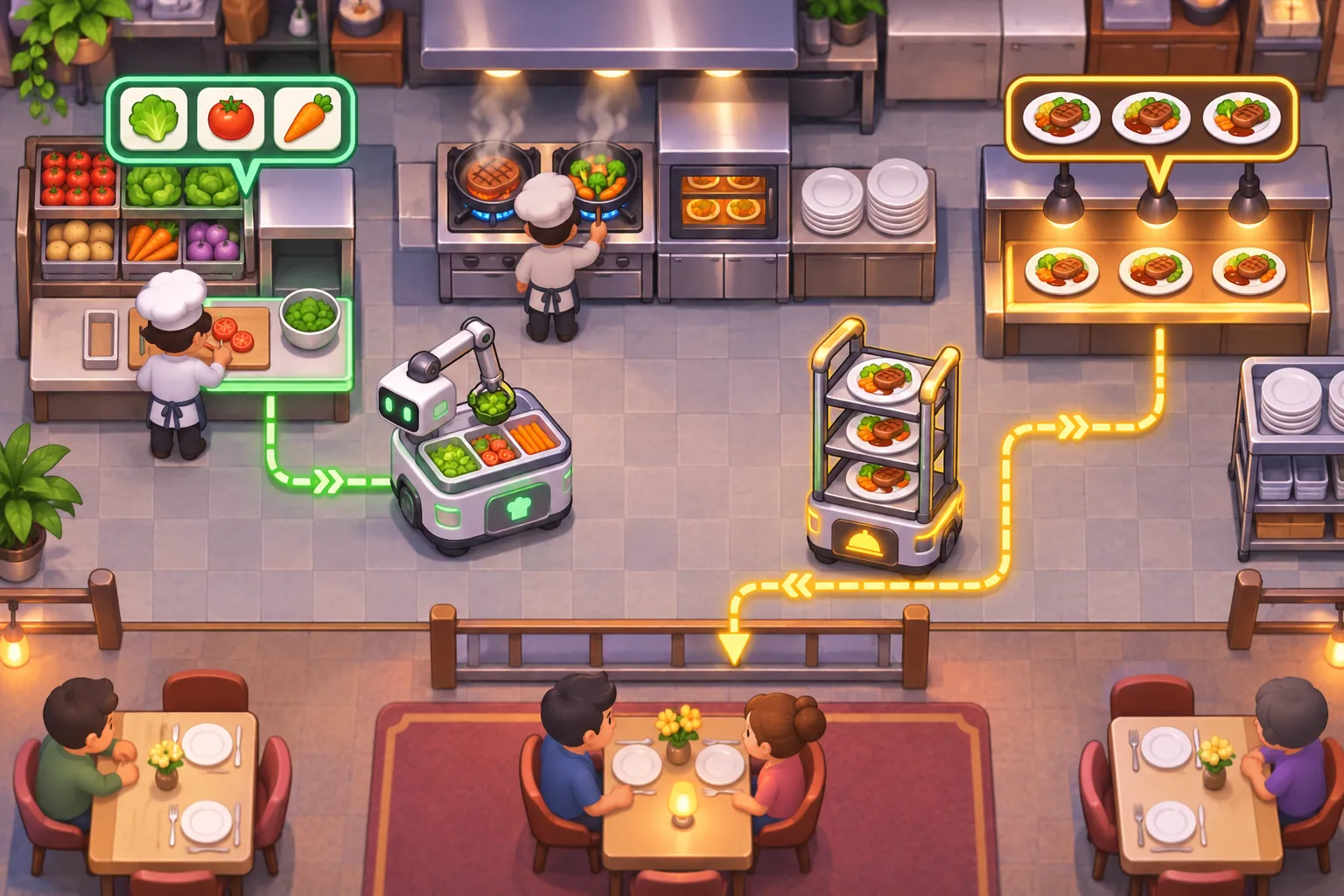
The test compares 3 prep orders and 5 waiting plates: PrepBot saves 6 ticks, while PlateRunner saves 5, so PrepBot wins. With 2 prep orders and 6 plates, PlateRunner saves 6 versus 4. A tie selects the cheaper runner; empty queues select nothing. These examples validate the choice rule, not its long-term economic balance.
Let players inspect the tradeoff before buying
Show each queue count, helper cost and projected ticks saved on the planning screen. Keep the chosen helper active for one service, then show actual queue changes beside the estimate. Players can decide whether the forecast matched the kitchen they built and change helpers on the next planning screen.
Test the forecast before chaining appliances
Keep backlog counts, helper costs and savings in a data table, then resolve choices with a stable comparison and tie rule. Godot Resource can store original appliance definitions; SEELE AI Game Maker is a starting point for a prototype. PlateUp! supplies broad genre context only and does not validate Steam & Thyme's helper values.
Build an original restaurant game with 2 automation tokens per day. PrepBot costs 2 and saves 2 ticks per queued prep order. PlateRunner costs 1 and saves 1 tick per waiting plate. Choose the helper with greater projected savings, break ties by lower cost, install at most one, and choose none when both backlogs are empty.
Create an original cooking game in SEELE · PlateUp! on Steam
Frequently asked questions
How should a cooking game choose an automation upgrade?
Use current kitchen backlogs to estimate what each option will save. Steam & Thyme compares prep orders and waiting plates, then selects the helper with the larger projected tick savings. A clear tie rule and cost label make the choice understandable before installation.
Why limit automation to one helper at a time?
A one-helper limit makes the planning decision easy to inspect and test. The player can see how one device changes the service, compare the estimate with the result, then choose again the next day. A later version could allow chains after the single-device rule is working.
What should an automation-choice test cover?
Test each option winning, a tie, empty queues, the spending limit and the one-helper-per-day cap. Confirm the estimate uses the same backlog snapshot for both choices. These checks validate selection behavior; playtests are still needed to learn whether the helpers are worth their cost over a full run.