Make a reward last beyond one run
Dead Cells' official Steam page describes a Roguevania with unlockable skills and permadeath. Windthread is a separate fictional project: the player earns Kiteglass, buys a Windhook blueprint between runs, and starts the next climb with that item available. Its item, price and reset rules are original.
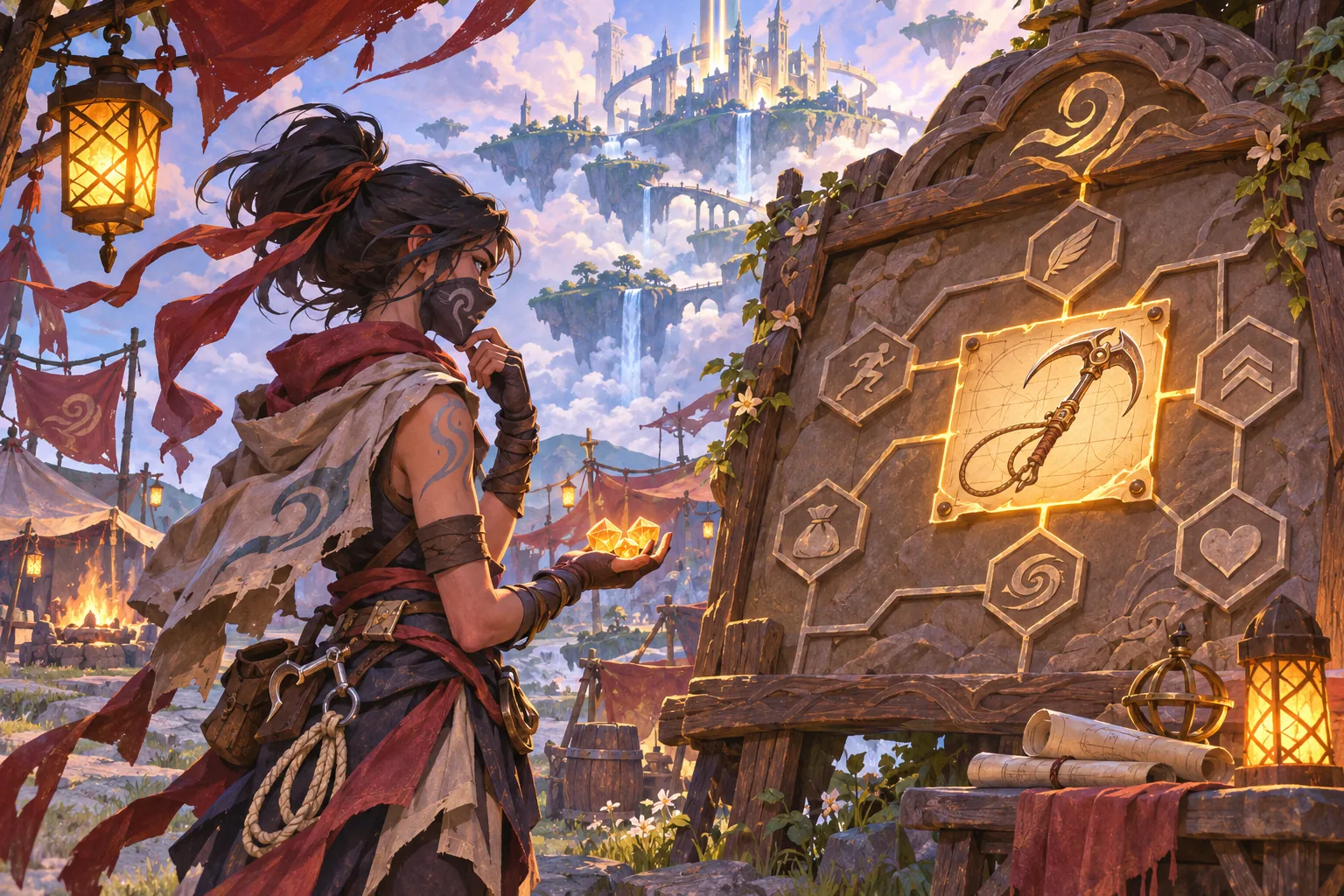
Show profile Kiteglass separately from run-only hearts and coins. The Windhook blueprint costs 3 Kiteglass; with 5, the player keeps 2. When a run ends, reset its 4 hearts and 6 temporary coins without clearing the permanent unlock. The player can then choose the blueprint in a later run.
Keep profile progress out of the run snapshot
Store permanent unlock IDs and meta currency in the profile record. Keep current health, temporary coins and room state inside the run snapshot. When a run resets, recreate only that snapshot. Check the unlock list before purchase so buying Windhook again is blocked without spending another 3 Kiteglass.
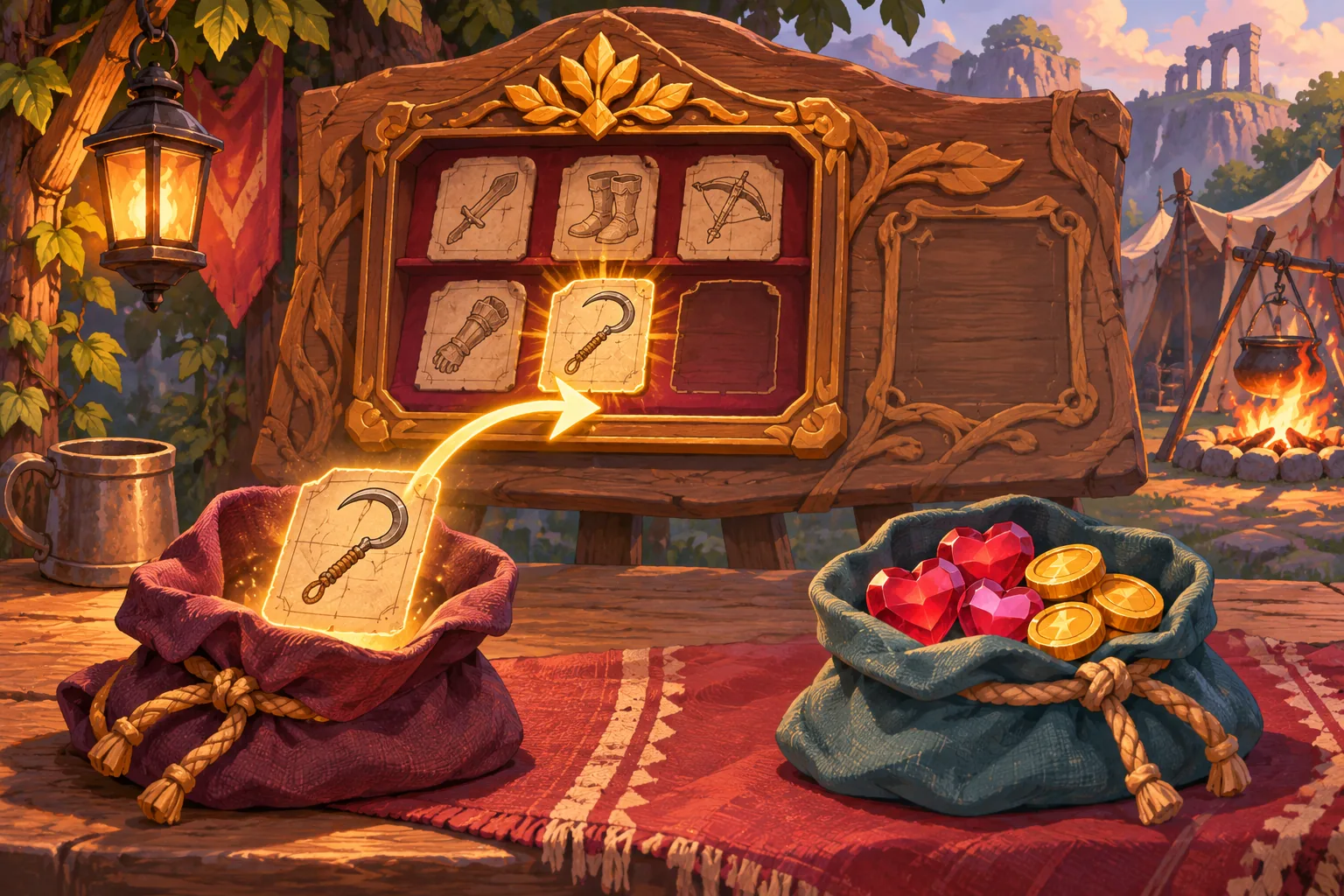
The first iteration cleared the unlock list with the run. Split profile and run data: buy Windhook for 3 of 5 Kiteglass, end the run, then start again. Hearts and temporary coins return to their starting values; the Windhook unlock stays. A repeat purchase is rejected and the profile balance remains 2. This deterministic test checks state separation, not retention or reward balance.
Let a lasting unlock change the next attempt
Show the unlocked Windhook in the next-run loadout and explain which new movement option it enables. Keep temporary survival resources fresh so the run still begins with its normal challenge. A permanent unlock should expand the player's choices without pretending that it makes the next run automatically easier or successful.

Prototype one profile reward and one run reset
Start with one meta currency, one blueprint, a purchase screen and a run-reset action. Test the purchase, a fresh run and a duplicate attempt. Dead Cells offers broad context for unlockable skills and permadeath; Godot Resource can hold reusable blueprint definitions, and SEELE AI Game Maker offers a prompt-based entry point. These references do not validate Windthread.
Create an original action roguelite with persistent profile blueprints and temporary run supplies. Let players spend Kiteglass once to unlock Windhook, preserve it after a run reset, and block duplicate purchases. Reset hearts and temporary coins for each new run. Keep the content original and do not claim retention or playtest results.
Start an original roguelite prototype in SEELE · Dead Cells on Steam
Frequently asked questions
How can an unlock persist between roguelite runs?
Store permanent unlock IDs in a profile record that is separate from the current run snapshot. Reset run-only health, coins and room state when a run ends, then load the profile again. Windthread tests one blueprint and does not establish a full save system or long-term player behavior. Track version changes and future unlocks.
What belongs in the profile and what belongs in a run?
Keep lasting purchases and meta currency in the profile. Put current health, temporary rewards and location in the run state. Make the boundary explicit so resetting a run cannot erase an unlock or accidentally preserve temporary resources. Treat the boundary as part of the save design.
How should duplicate unlock purchases behave?
Check whether the blueprint is already owned before charging currency. If it is, block the purchase and show its current status. The local test confirms Windhook remains unlocked and the 2-Kiteglass balance does not change after a duplicate attempt. This prevents accidental currency loss.