A cozy RPG can make negotiation feel like a class ability rather than a menu of flavor text. Give the negotiator a small insight resource, a way to learn context and an explicit compromise that changes the town. Keep the first conflict narrow enough to replay.
Set up a closed market and a clear concern
Place a shopkeeper beside a closed stall in the village square. The shopkeeper worries that late deliveries will disrupt the market. The negotiator begins with two insight tokens. Show the concern and the available actions before the conversation starts.
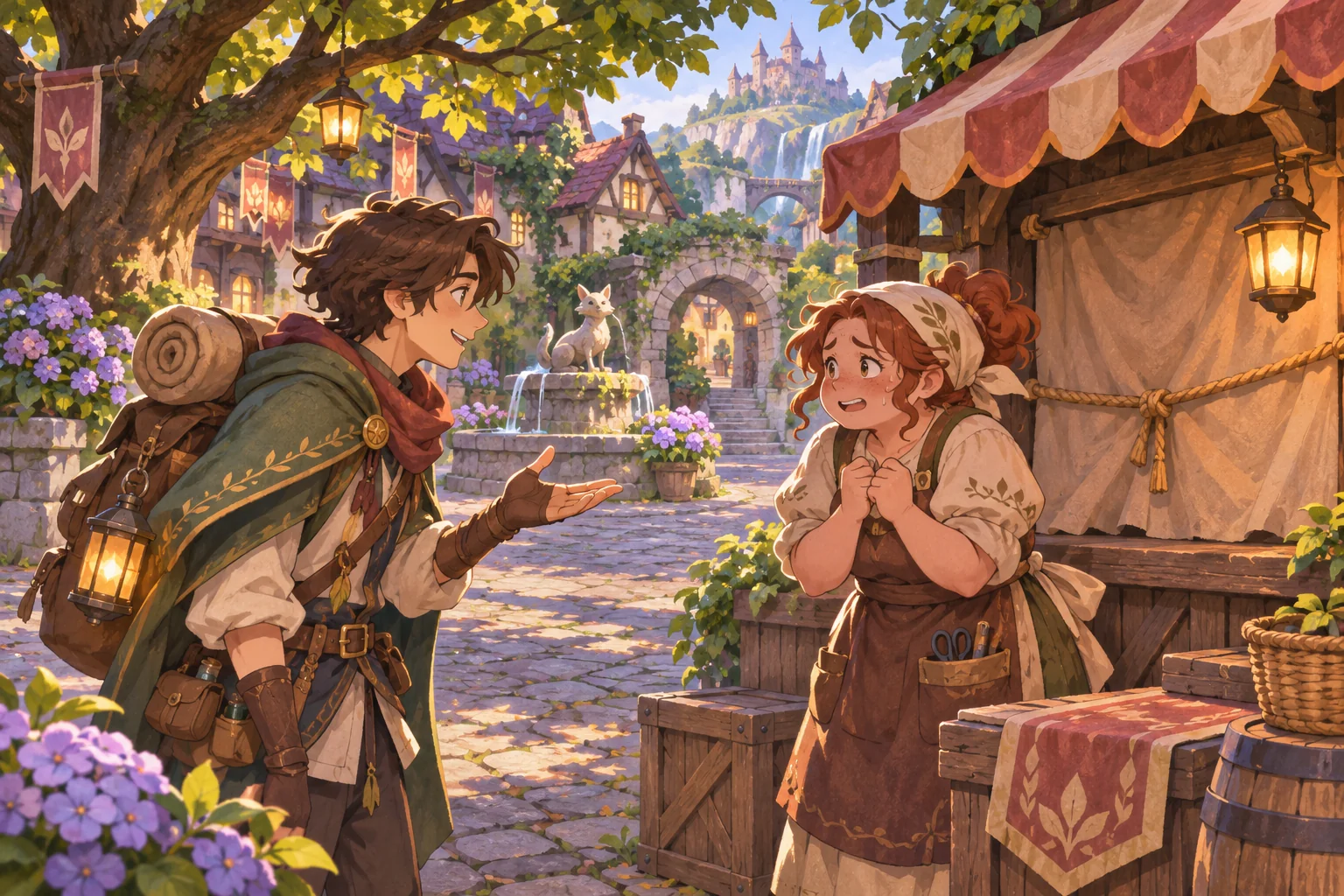
Use explicit dialogue options for the prototype. One respectful question costs one insight and reveals the delivery concern. Avoid implying open-ended language understanding; the test uses a defined state transition.
Spend insight to build a compromise
After hearing the concern, the player can propose a specific schedule: deliveries arrive before the square opens. The compromise costs the second insight token. If the context was revealed first, the shopkeeper accepts and the market flag changes from closed to open. Without the context, the offer remains unavailable.
Keep the change visible in the village after the conversation. The stall remains open when the player leaves and returns. This turns negotiation into a lasting town action instead of a one-time dialogue animation.
Replay the dialogue and town state
The local replay begins with two insight and a closed market. The respectful question spends one token and reveals the concern. The schedule proposal spends the second token, resolves the conflict and sets marketOpen to true. Re-entering the square preserves the open state.
| Step | Insight | Context known | Market |
|---|---|---|---|
| Start | 2 | No | Closed |
| Ask respectfully | 1 | Yes | Closed |
| Offer schedule | 0 | Yes | Open |
This deterministic check verifies dialogue gates, token spending and one persistent town flag only. It does not model natural-language inference, broad narrative branching, combat or social simulation. Add more personalities after this small negotiation loop is clear.
Prompt for a negotiation-class prototype
Ask an AI game maker for a cozy RPG negotiator with two insight tokens and one village market conflict. A respectful question reveals a delivery concern for one token; a specific schedule compromise spends the second and opens the market. Preserve the market state after leaving the square. Show the token count and add a reset for each dialogue path.
Once the loop works, test another concern or compromise one at a time. Keep the first experiment focused on whether context unlocks a meaningful, persistent resolution.
Start a cozy RPG prototype in SEELE
Frequently asked questions
How is negotiation different from a dialogue choice?
Tie an action to a resource, revealed context and a persistent world result. In this example, the question costs insight, the answer explains the shopkeeper’s concern, and a matching compromise changes the market. A choice without consequences would not test the class mechanic.
Should the market remain open after the player leaves?
Yes. Save the town flag after a successful agreement so the player sees that negotiation changed the village. Reloading the square should preserve the state. If the market closes again, define a separate rule rather than resetting it silently. Keep it open until then.
What should I test before adding more characters?
Replay the closed state, reveal the concern, spend the second token on the specific compromise and leave and re-enter the square. Confirm the resource count and open market persist. This checks the prototype state flow, not general conversational intelligence or narrative quality.