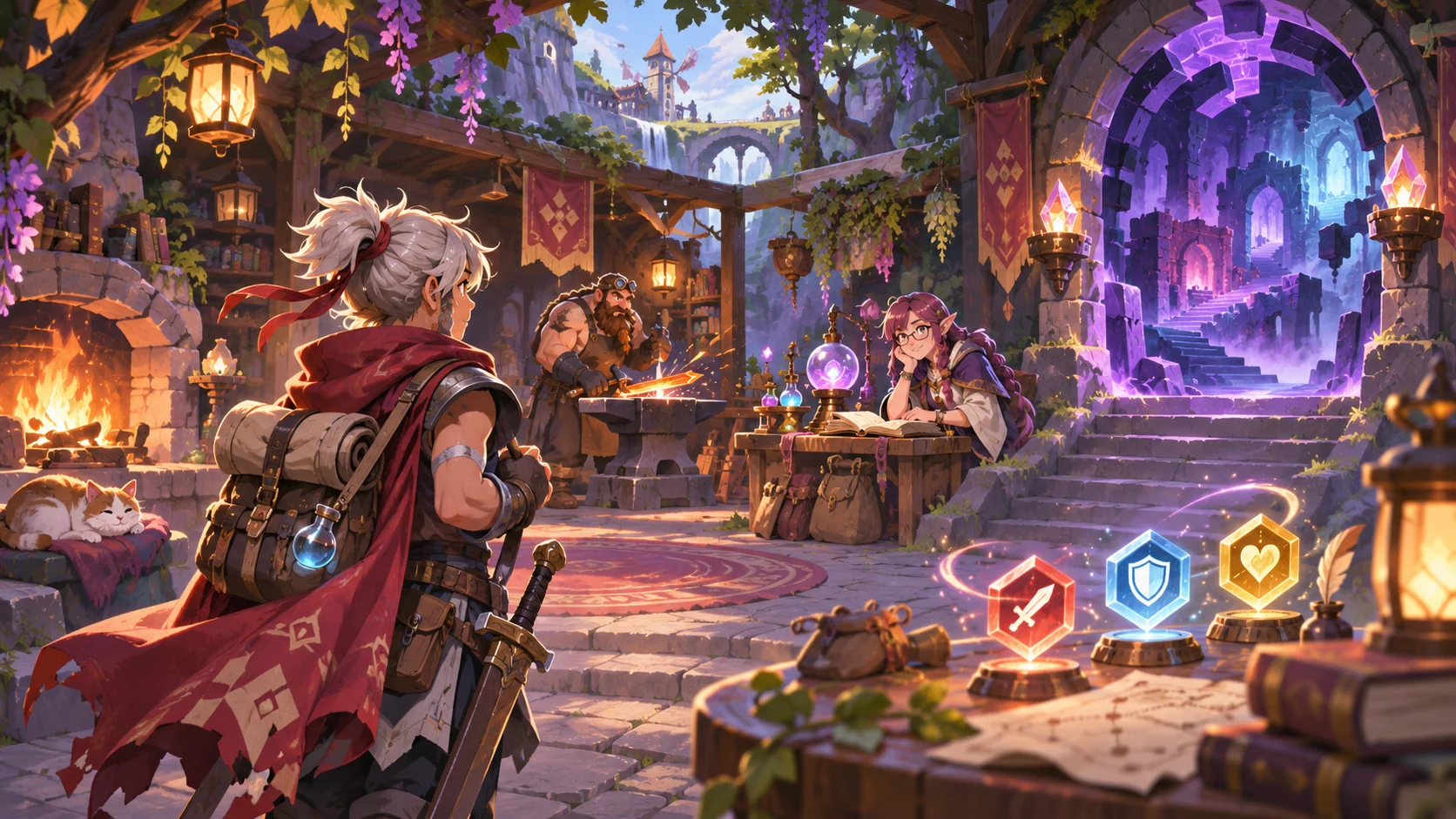
Introduction
A cozy RPG can lose its low-pressure feel when its prompts focus only on farming, crafting or a large world. A useful prompt sequence explains what the player does each day, how relationships and quests progress, and how the game gives feedback without turning every task into a deadline.
This guide uses Willowmere, a fictional riverside village where the player helps neighbors prepare a shared spring gathering. Its characters, quests, garden items and progression are invented and untested. The sample is a design exercise; no game has been generated or playtested for this article.
Define the everyday play loop
Start with a calm, repeatable loop and a clear reason to return. The first milestone might let players explore one village path, accept a neighbor’s request, choose one task and see the community respond. Specify whether the player can skip a day, pause, or change plans without losing progress. A cozy tone comes from the rules and pacing as well as the art.
Prompt 1 — core experience brief
Design a low-pressure RPG prototype called Willowmere. The player lives in a small riverside village and helps prepare a shared spring gathering. Define the daily loop, one exploration area, one quest, one relationship interaction and one visible community change. Let players pause or skip a day without losing progress. Exclude combat, failure timers and large-scale economy systems from the first milestone. Mark sample values as untested.
Keep the first loop small: choose an activity, complete a clear action, receive a response and decide what to do next. If the prompt asks for several seasons, many characters and a crafting economy before that loop is understood, narrow the request.
Use quests to connect routine and story
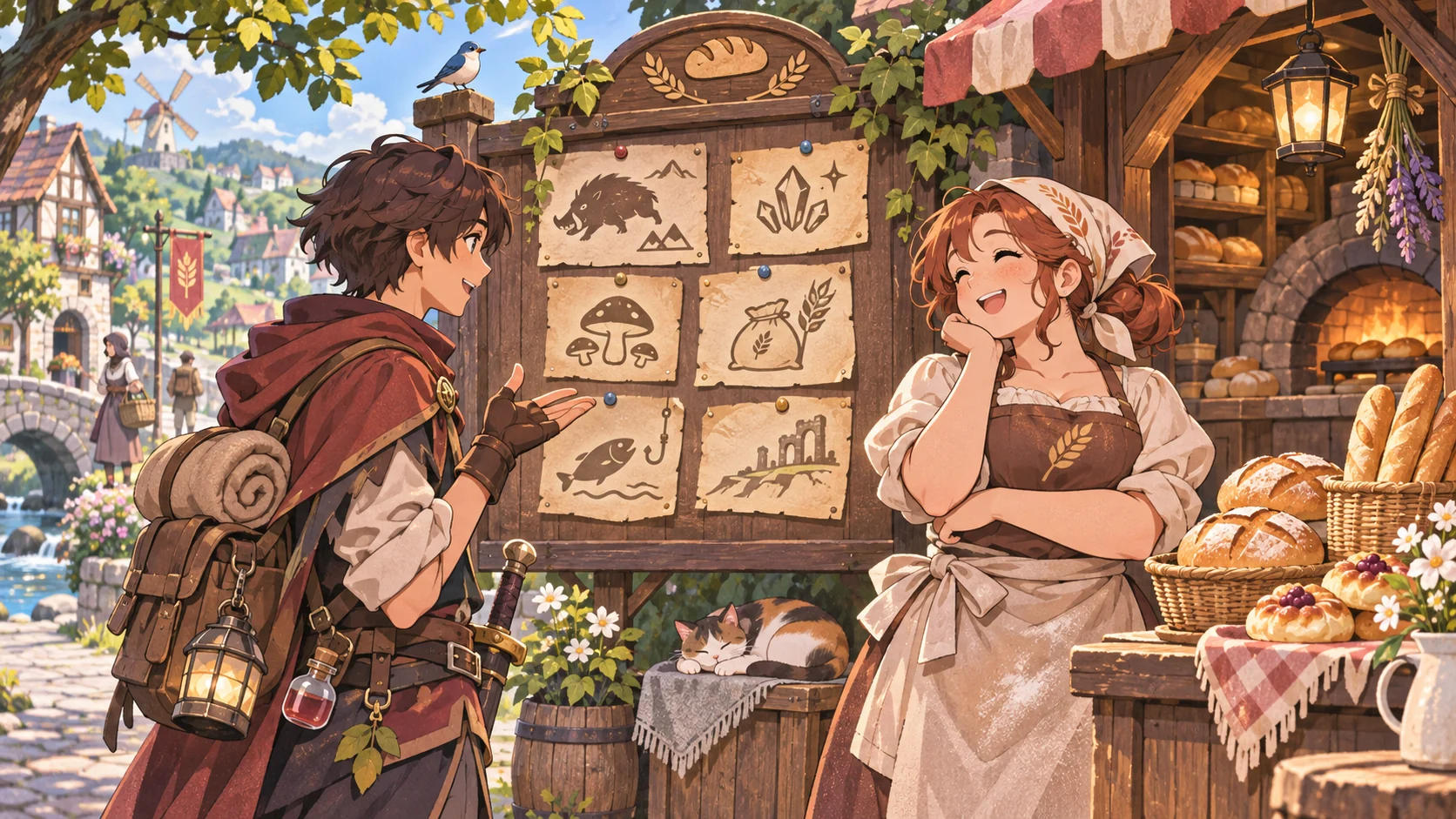
A quest should explain who needs help, what the player can do and how the world acknowledges completion. Avoid making every request a fetch list. Include a choice when it supports character or community, and let players understand what changes before they commit.
Prompt 2 — neighbor and quest
Create three original Willowmere neighbors with distinct interests and conversation styles. Write one short quest for each with a clear request, two possible player approaches, a non-punitive way to pause or decline, and a visible response when completed. Keep all characters original. Do not use hidden deadlines or remove relationship progress because the player skipped a day.
A notice board can group requests by place or activity, while an in-game journal keeps accepted goals visible. Say whether a player can track one quest or several. If there is no limit, explain how the interface avoids overwhelming the player.
Make growth gradual and understandable
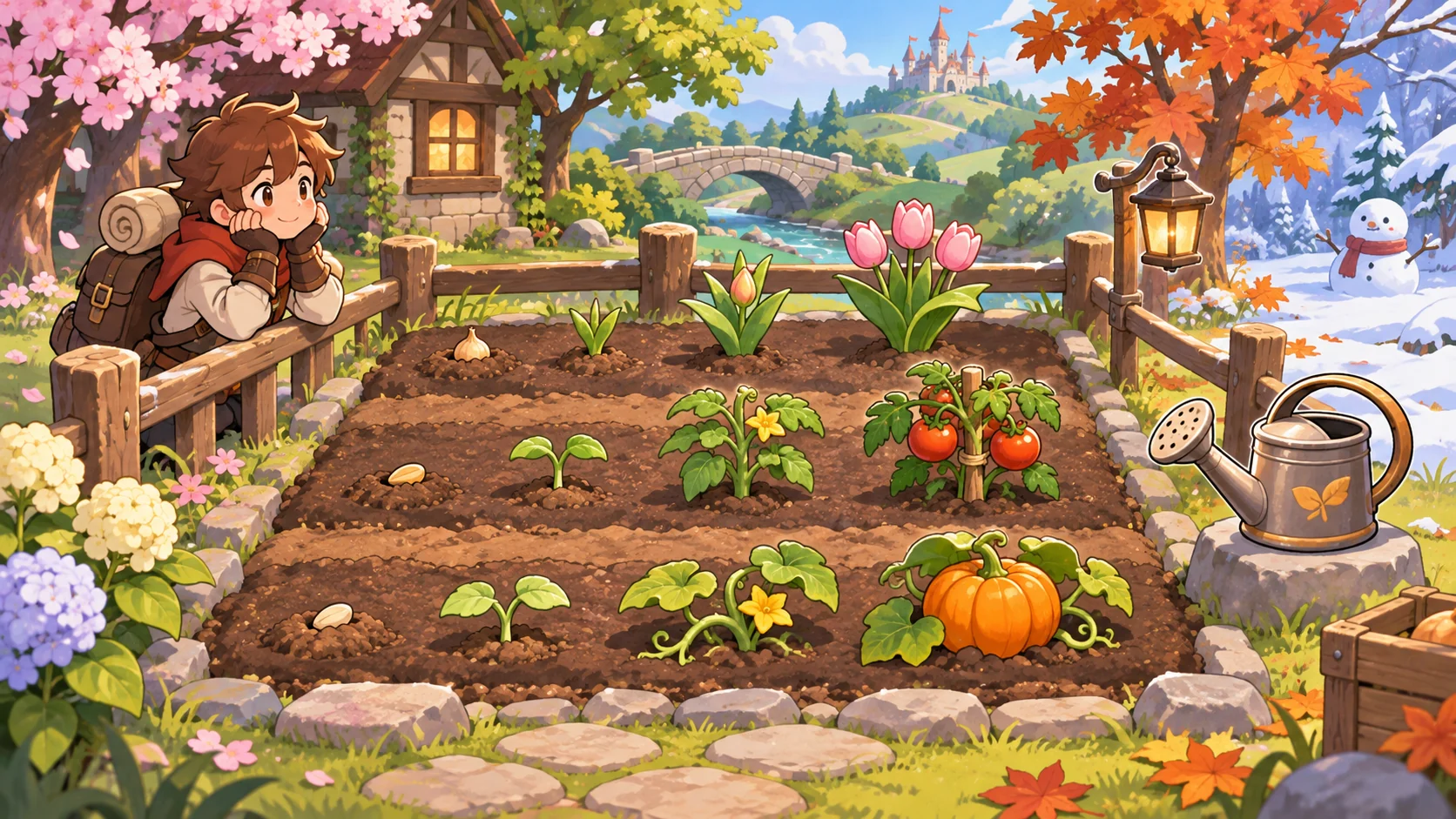
Growth can mean learning a character’s interests, opening a new village path or seeing a shared space change. It does not have to depend on a numeric grind. State what action advances each thread, what feedback appears and how the player can recover if they forget a step. Keep sample quantities flexible until they have been evaluated in a real prototype.
| Growth thread | Player action | Visible feedback | Recovery |
|---|---|---|---|
| Village path | Help clear a fictional community notice | A previously closed path is shown as open | The request remains in the journal |
| Neighbor bond | Choose a conversation topic or help with a task | Dialogue acknowledges the earlier choice | Relationship progress does not expire |
| Garden plot | Pick a seasonal task for the shared gathering | The garden illustration changes over time | The player can return to the task later |
Prompt 3 — progression and feedback
Define three gradual progression threads for Willowmere: village access, neighbor relationships and a shared gathering space. For each, list the action that advances it, the feedback the player sees and how progress is preserved when the player pauses. Avoid daily streaks, irreversible missed content and mandatory grinding. Treat numerical thresholds as placeholders.
Keep the world calm without making it empty
Low pressure does not mean a lack of decisions. Offer a few meaningful activities with different tones: talk, explore, tend a fictional garden or help prepare the gathering. Let the player choose the order. If a task has a cost, display it before the choice. If the world changes over time, make that change legible and forgiving.
Prompt 4 — one playable day
Build a small playable Willowmere day with one village path, two neighbors, a notice board, one fictional garden task and a shared spring-gathering progress display. Let the player choose the order of activities, pause, and resume without losing progress. Show a short response after each action. Use placeholder visuals and readable controls; do not add combat, deadlines, stamina depletion or a shop economy.
This request is a plan, not proof of a running build. Open the actual result and check activity selection, quest state, relationship feedback, pause/resume and the shared-space update before calling it playable.
Fictional design snapshot
This illustration is hypothetical and has not been implemented.
| Field | Fictional planning value |
|---|---|
| Working title | Willowmere |
| Setting | One riverside village path and common garden |
| Daily loop | Choose an activity → help a neighbor → see a response → plan next step |
| Quest | Prepare a small spring gathering with optional tasks |
| Progression | Path access, neighbor conversations and shared-space changes |
| Recovery | Journal retains open requests; no missed-day penalty |
| First milestone | One playable day with two neighbors and one garden task |
| Excluded | Combat, daily streaks, large economy and seasonal campaign |
Review the output and refine one gap
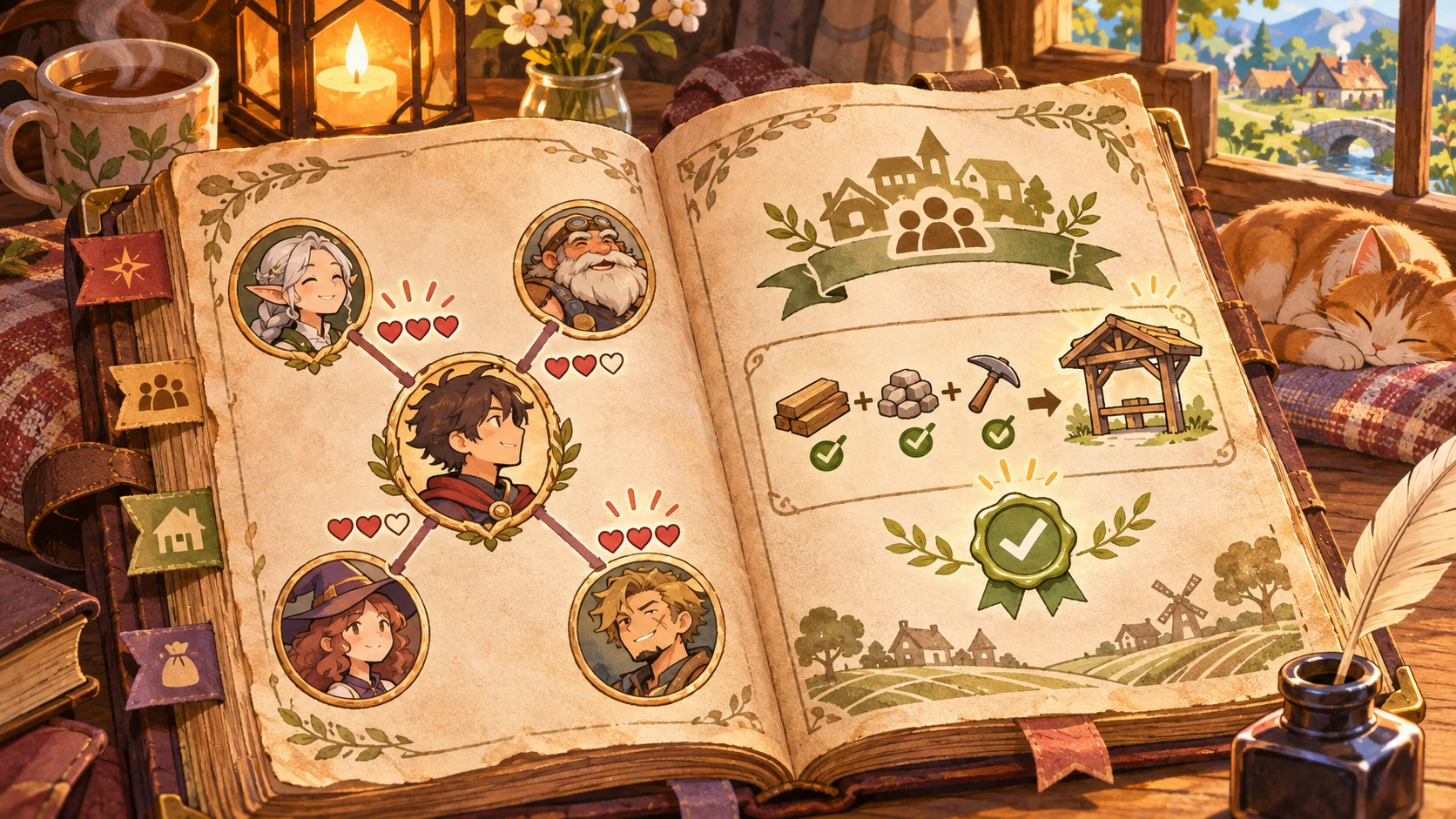
Check the actual output against the promised actions. A character portrait does not demonstrate a relationship system, and a garden image does not show that a garden task changes state. Record what is interactive, what is visual-only and what is missing. Then ask for the smallest correction.
Prompt 5 — prototype review
Review the running Willowmere prototype for activity choice, quest tracking, pause/resume, neighbor response, progress persistence and shared-space feedback. Mark each present, missing or unclear based only on observed interaction. Quote the evidence and suggest one small fix for the first gap. Do not claim a playtest or successful feature unless it was actually checked.
If the system marks an unaccepted request complete or resets progress after a pause, revise that state rule directly. Keep feedback kind and specific so the player understands what happened and can choose another activity.
Conclusion
Cozy RPG prompts should define a low-pressure daily loop, quests with understandable choices, gradual growth and forgiving ways to pause or return. Willowmere shows one fictional village concept, but its systems remain unbuilt and untested. Request a small slice, inspect its interactions and describe mockups as mockups until they have been verified.
You can take a defined concept into the Free AI game maker, then compare the result with the review checklist above.
FAQ
What should AI prompts for a cozy RPG include?
Describe the daily loop, exploration area, quests, character responses, progress feedback, pause behavior and first-build exclusions.
How can a cozy RPG avoid punishing players for taking a break?
Keep quests available, preserve progress when the player pauses and avoid hidden deadlines or missed-day penalties unless those pressures are an explicit design goal.
How do I make cozy RPG progression feel meaningful?
Connect player actions to visible changes, such as new dialogue, an accessible path or a community space that reflects completed tasks.
Should a cozy RPG use daily quests or streaks?
That is a design choice. If the goal is low pressure, make routine tasks optional and avoid removing progress when someone skips a day.
Does an AI-generated cozy RPG mockup prove the game is playable?
No. Verify activity selection, quest state, pause/resume and progression changes in the actual output before claiming it works.