Introduction
A roguelite RPG gives players repeated expeditions, meaningful choices during each run and some form of continuity between attempts. A prompt that asks for a “roguelite adventure” without describing what resets and what persists can produce a hub, map and upgrade screen that do not connect. Define one short run and one clear return to the hub before expanding the world.
This guide uses Wayfarer’s Lantern, an invented fantasy expedition that begins at a small refuge and enters a shifting ruin. Its characters, routes, encounters, upgrades and values are fictional and untested. No game was built or playtested for this article; its examples do not claim balance or implementation.
Define a repeatable run
Describe the opening state, the sequence of run choices, the ending and the return to the hub. State which health, items, temporary abilities or route progress reset, and which unlocks carry over. A first run can use a short branching path, two encounter types, one rest point and a clear guardian at the end.
Prompt 1 — first-run brief
Design an original roguelite RPG called Wayfarer’s Lantern. One expedition begins at a refuge, offers a short branching route, includes two fictional encounters and one rest point, then ends at a guardian or a retreat. Define the player objective, run loop, failure and completion states, what resets, what persists and how the player returns to the refuge. Use original characters and provisional values. List assumptions; do not claim a playable or tested game.
The brief should separate run progression from account or hub progression. “Persistent unlock” should name exactly what becomes available and when. Avoid adding permanent power bonuses until the basic retry loop is understandable.
Give the hero choices with readable tradeoffs
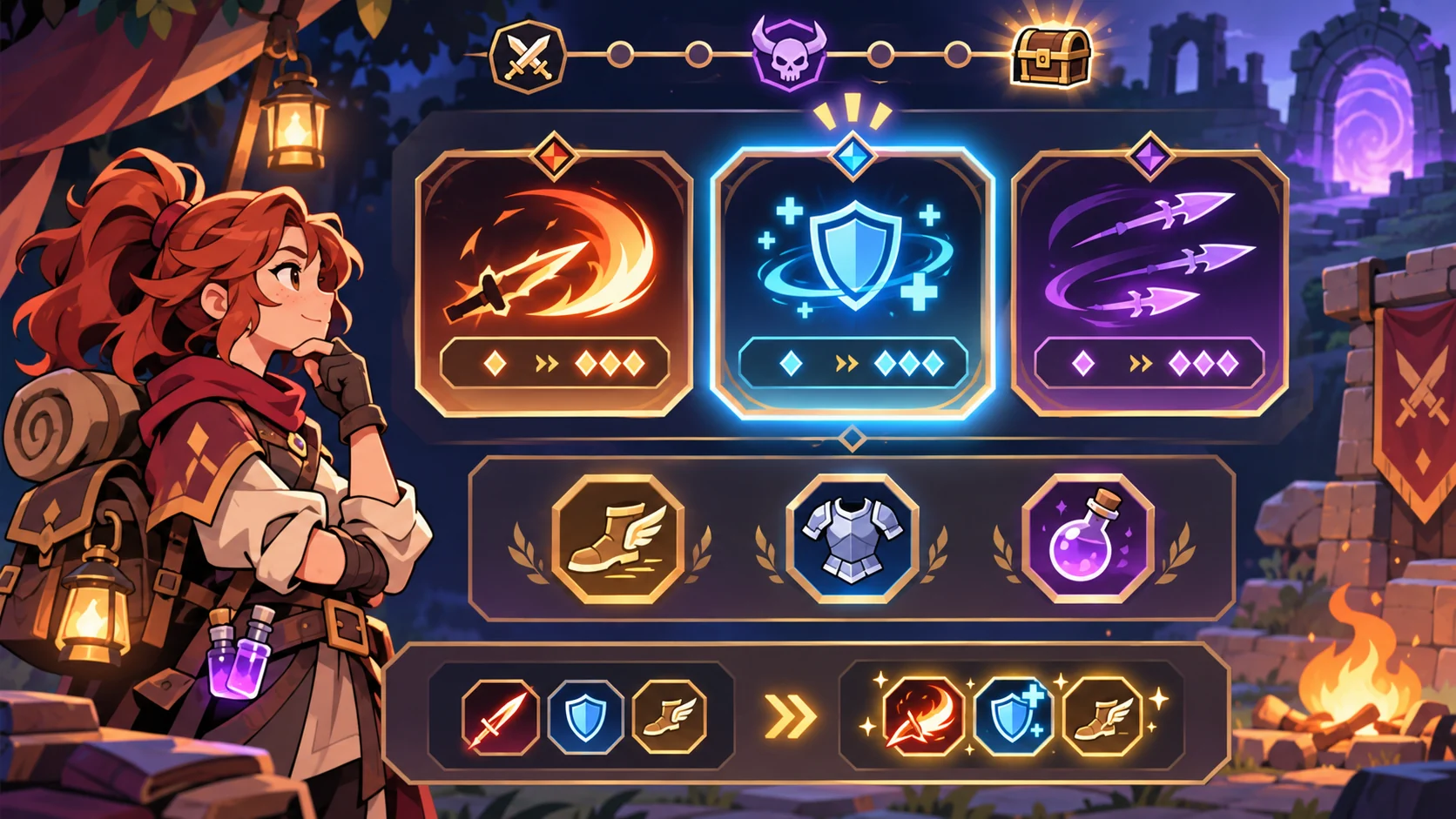
A role or build choice should affect a decision the player can see during the run. Define a small set of original abilities, a clear limitation and a game-only resource. Explain whether an upgrade changes one run, carries to the refuge or unlocks an option for later runs. Do not use a progression screen as proof that upgrades actually change gameplay.
Prompt 2 — hero and ability kit
Create one original Wayfarer’s Lantern hero with three selectable ability directions: strike, ward and scout. For each, state the fictional gameplay effect, limitation, visible feedback and whether it lasts for one encounter or one run. Define how a player reviews the selected build before leaving the refuge. Use placeholder values and explain tradeoffs; do not copy existing character or ability names.
| Build direction | Run choice | Visible feedback | Scope to label |
|---|---|---|---|
| Strike | Choose a direct encounter tool | Target and game effect preview | Encounter only |
| Ward | Choose a protective option | Resource and duration shown | One run |
| Scout | Choose an information option | Route clue or map marker shown | Until run end |
These are fictional build directions, not balanced abilities. Make the run duration explicit so players can distinguish a temporary choice from a persistent unlock.
Make routes and encounters support decisions
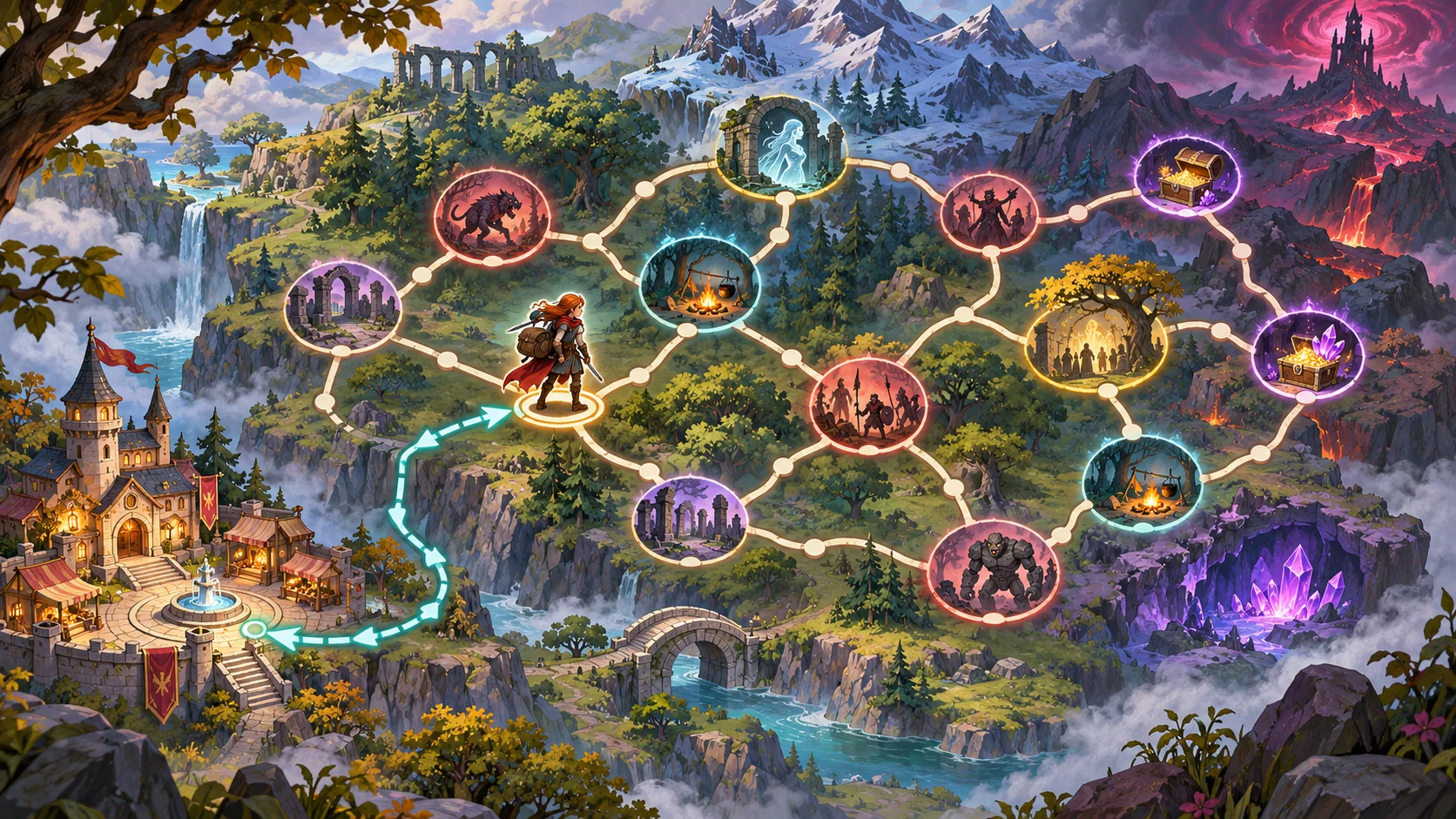
A branching map can show encounter, rest, story and reward nodes with a clear current position. Players should know which nodes are available and what kind of choice each represents. Keep the first map compact; use a handful of routes instead of a sprawling procedural world. If a route changes after a run, show that state when the player returns to the refuge.
Prompt 3 — route map
Create a small branching Wayfarer’s Lantern expedition map with a starting node, two encounter choices, one rest, one fictional story event, a reward and a guardian. For each node, define its category, visible marker, selection rule and resulting run state. Show the current node and the path back to the refuge after retreat or completion. Mark all rewards and risks as game-only placeholders.
Prompt 4 — encounter and run state
Define one short, non-graphic Wayfarer’s Lantern encounter with a readable objective, two player choices and an exit condition. State which temporary resources change, what information is carried to the next node and what resets when the run ends. Include a retreat choice and explain its result before confirmation. Keep all values fictional and untested.
A good run state is legible after an encounter. The player should be able to see the next node, remaining temporary resources and the effect of retreat without consulting an external guide.
Separate hub unlocks from temporary power
Persistent progression can offer variety without making a first run impossible to understand. Specify what is an unlock, what is an in-run resource and what resets on failure. A hub might reveal a new route option or cosmetic choice rather than quietly raising every permanent stat. Show the unlock condition and let the player inspect what changed after returning.
Prompt 5 — refuge and unlock rules
Design the Wayfarer’s Lantern refuge as the between-run screen. Define two persistent unlocks that add choices, not an automatic success guarantee; one cosmetic reward; and one temporary resource that resets after the expedition. Show the condition for each unlock, the current state and a short “what changed” summary after return. Use original fictional rules and untested values.
This distinction gives the player a way to understand progression. A new option can widen future choices, while an in-run resource can remain tied to the current expedition.
Request a bounded playable build
A first slice can cover one hero, a refuge, a short route, two encounters, one rest, one reward, a guardian, retreat and reset. The requested interactions should include starting the run, selecting an ability, choosing a route, resolving an encounter, returning to the refuge and inspecting unlock state. Ask the builder to label visual mockups and unverified behavior.
Prompt 6 — first playable slice
Build a small Wayfarer’s Lantern roguelite RPG prototype with one refuge, one hero ability choice, a branching route of a few nodes, two short encounters, one rest, one reward, a guardian, retreat, a visible run summary, one persistent choice unlock and reset. Clearly separate run-only resources from persistent hub state. Use original placeholder art and provisional values. At handoff, list working interactions, mockups and unverified items. Do not call a static screen playable.
A playable claim needs evidence from the running output. Complete or retreat from the run, inspect which state reset, verify an unlock condition and start again. This workflow was not run for this article.
Fictional progression snapshot
| Field | Wayfarer’s Lantern example |
|---|---|
| Refuge | One hub screen before and after the expedition |
| Run | Short branch, encounters, rest, reward and guardian |
| Temporary state | Selected ability and current-run resources |
| Persistent state | New route or cosmetic option after its condition |
| Recovery | Retreat or failure returns to the refuge with a summary |
| First milestone | Start, resolve a node, return and begin again |
| Evidence | Fictional plan only; not implemented or tested |
The snapshot illustrates a state boundary; it does not establish that the progression is fair or that the loop has been tested.
Review the loop and refine one gap
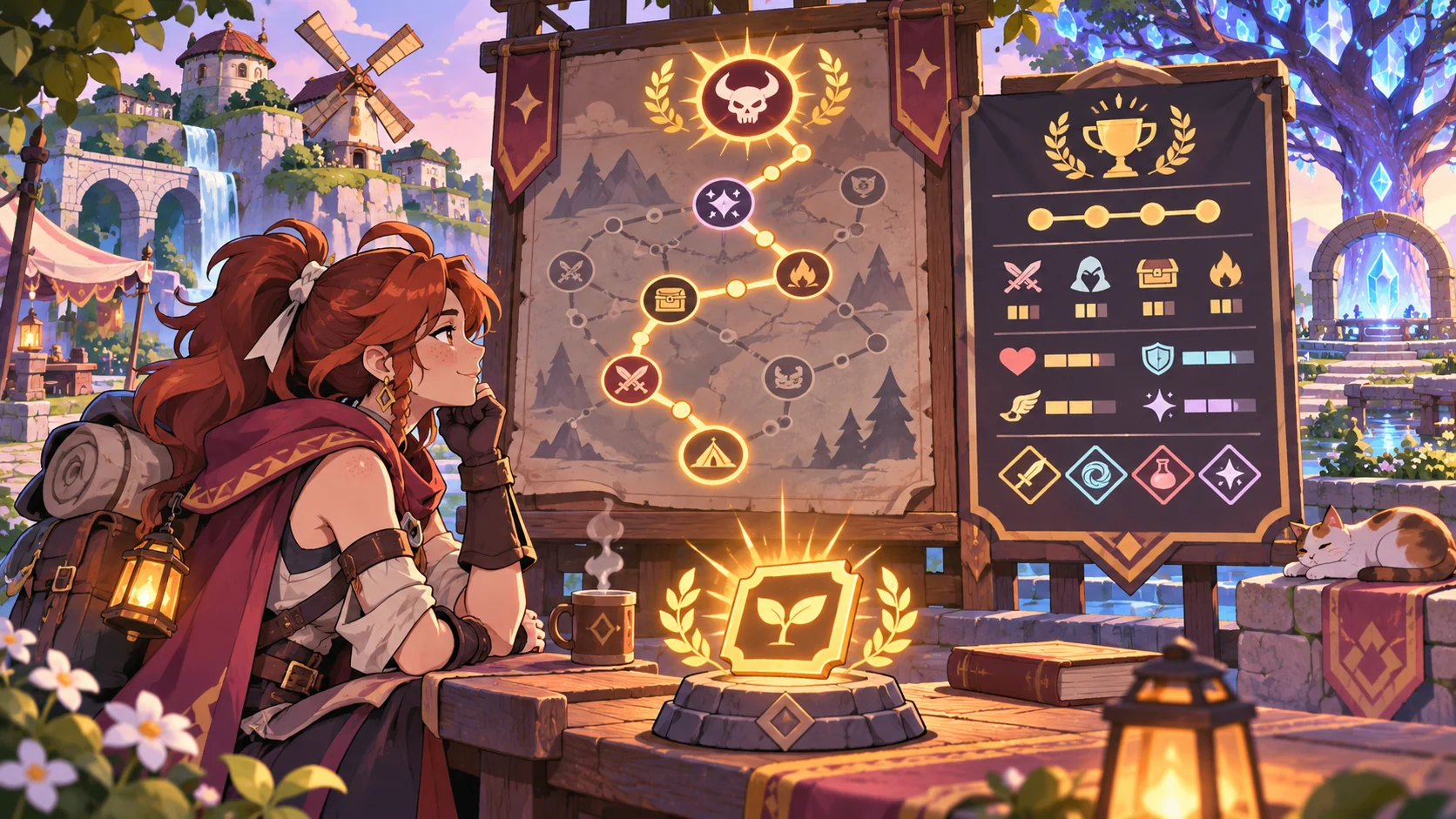
Check the actual transitions. If the refuge shows an unlock but the next run offers no corresponding option, record the mismatch. If failure resets a resource that the brief said would persist, mark the progression rule unclear. Recommend one smallest fix before adding more heroes or a longer map.
Prompt 7 — implementation review
Review the running Wayfarer’s Lantern prototype for starting a run, ability selection, route choice, encounter state, rest or reward, retreat and failure, return to refuge, temporary-state reset, persistent unlock and reset. Mark each present, missing or unclear based on observed interactions. Record concise evidence and one smallest next change. Label static mockups and provisional values; do not claim playtesting or balanced progression unless actually verified.
Conclusion
Roguelite RPG prompts should connect short runs, meaningful route choices and clearly separated persistent unlocks. Wayfarer’s Lantern is fictional, its values are untested and no playable build is claimed. Request a small loop, inspect what resets and persists, and describe only the behavior that was actually observed.
You can take a scoped concept into the Free AI game maker, then compare the result with the review checklist.
FAQ
What should AI prompts for a roguelite RPG include?
Define the run loop, route choices, encounter outcomes, recovery, temporary resources, persistent unlocks, hub return and first-build boundary.
How is persistent progression different from a run upgrade?
A run upgrade applies only to the current expedition; a persistent unlock remains available after returning to the hub. State each scope and reset rule explicitly.
How do I keep roguelite progression understandable?
Show the unlock condition, what changed, which choices are now available and what still resets each run.
What belongs in a first roguelite RPG prototype?
One hero, a short route, a small number of encounters, a clear end or retreat, a refuge screen and one inspectable persistence rule.
Does an unlock screen prove the roguelite loop works?
No. Verify run start, encounter resolution, retreat or failure, hub return, state reset, unlock availability and a fresh run in the running output.