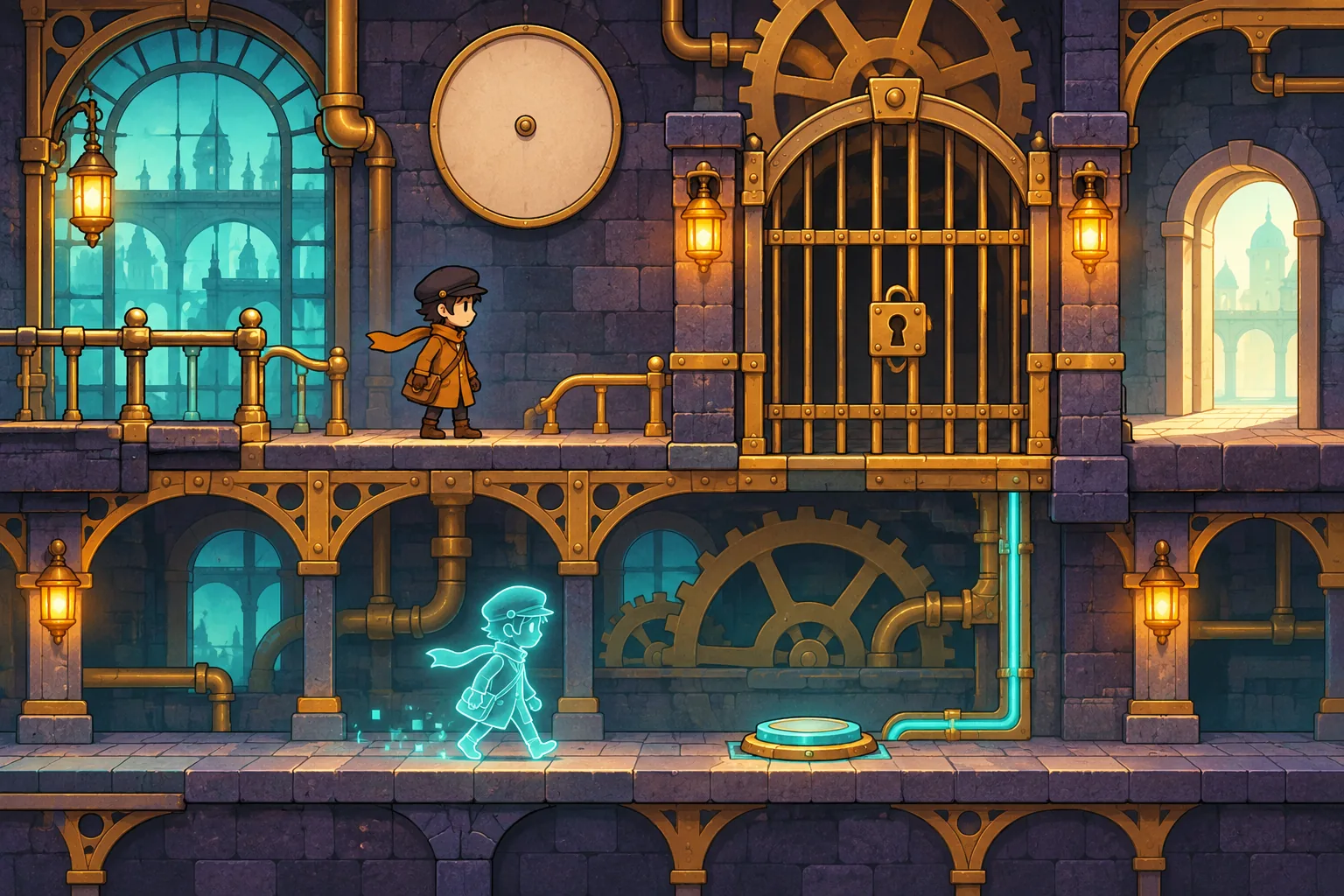
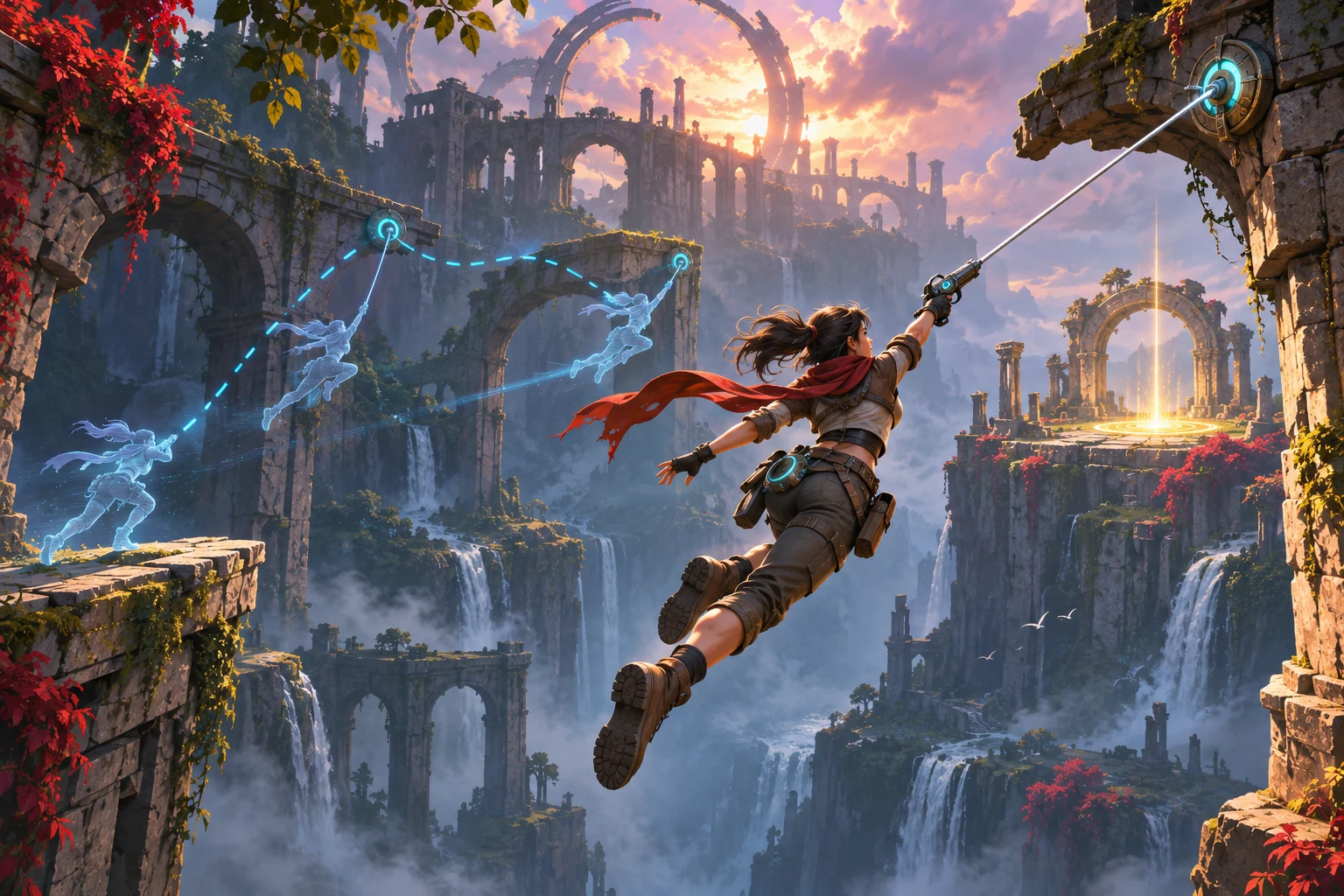
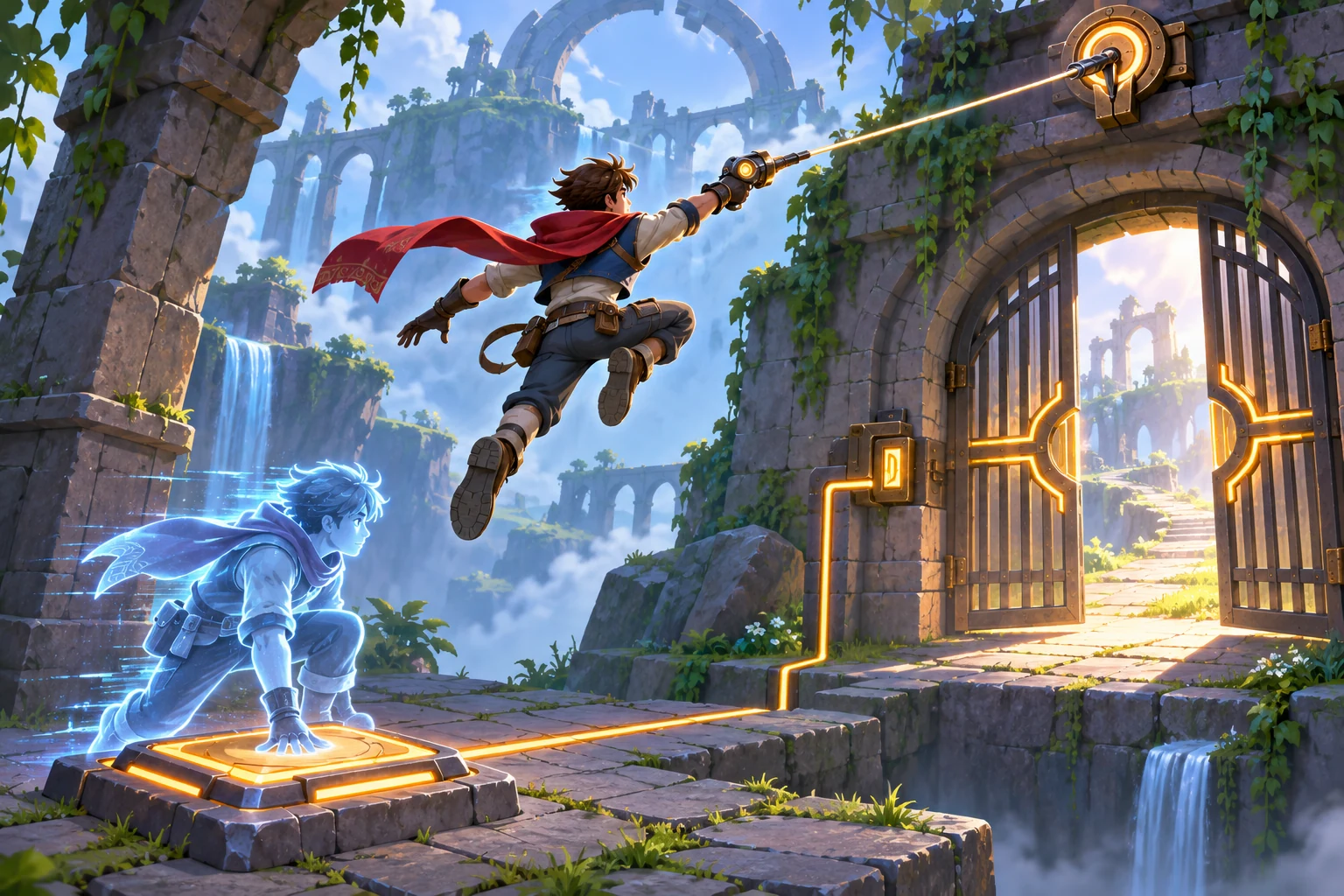
In the fictional Aether Ruins, each run lasts six ticks. The hero can grapple to fixed anchors and swing between platforms. During the first loop, reach a pressure plate by tick six. Resetting records the route as an echo; the echo repeats it and holds the plate, opening a gate. On the next loop, the current hero grapples from a new anchor through that gate. The local fixture compares this two-loop plan with a run that has no echo. All characters, anchors, and outcomes are invented.
Define grappling anchors and a fixed loop
Set a six-tick loop and list the fixed anchors, platform edges, pressure plate, and gate. A grapple connects only to a visible anchor and spends one tick to swing. Show the current tick and remaining time so players can plan a route that reaches the plate before reset.
At tick six, reset the hero to the start and replay the recorded movement as an echo. The echo follows the same anchors and presses the plate when it arrives. Keep the echo's actions separate from the current run so it can hold a mechanism without moving the player twice.
Use the echo to hold a plate and open a gate
In loop one, grapple from the start anchor to the plate platform within six ticks. On reset, the echo repeats that path and activates the plate. The gate remains open while the echo holds it. Display the echo route, plate state, and gate state together so the player understands how one run changes the next.
In loop two, begin from the start again and grapple to the upper anchor that reaches the open gate. The current hero uses the opening created by the echo rather than repeating the plate route. Preserve anchor positions and the gate flag across the loop boundary, and clear the pressure state only if the echo leaves the plate.
Compare the recorded route with a no-echo control
Run the six-tick sequence twice. First, record the grapple route to the plate and reset. Confirm the echo replays the same path, activates the plate, and opens the gate. Then use the next run to swing through the opening. Log tick, anchor, hero or echo, plate, and gate states.
For the control, keep the same anchors and route but disable echo replay. The plate is empty after reset, the gate stays closed, and the second run cannot pass through. A direct route to the gate remains blocked. Aether Ruins and all outcomes are fictional; the local test checks only loop and mechanism state.
Ask an AI game maker to prototype a grappling time loop
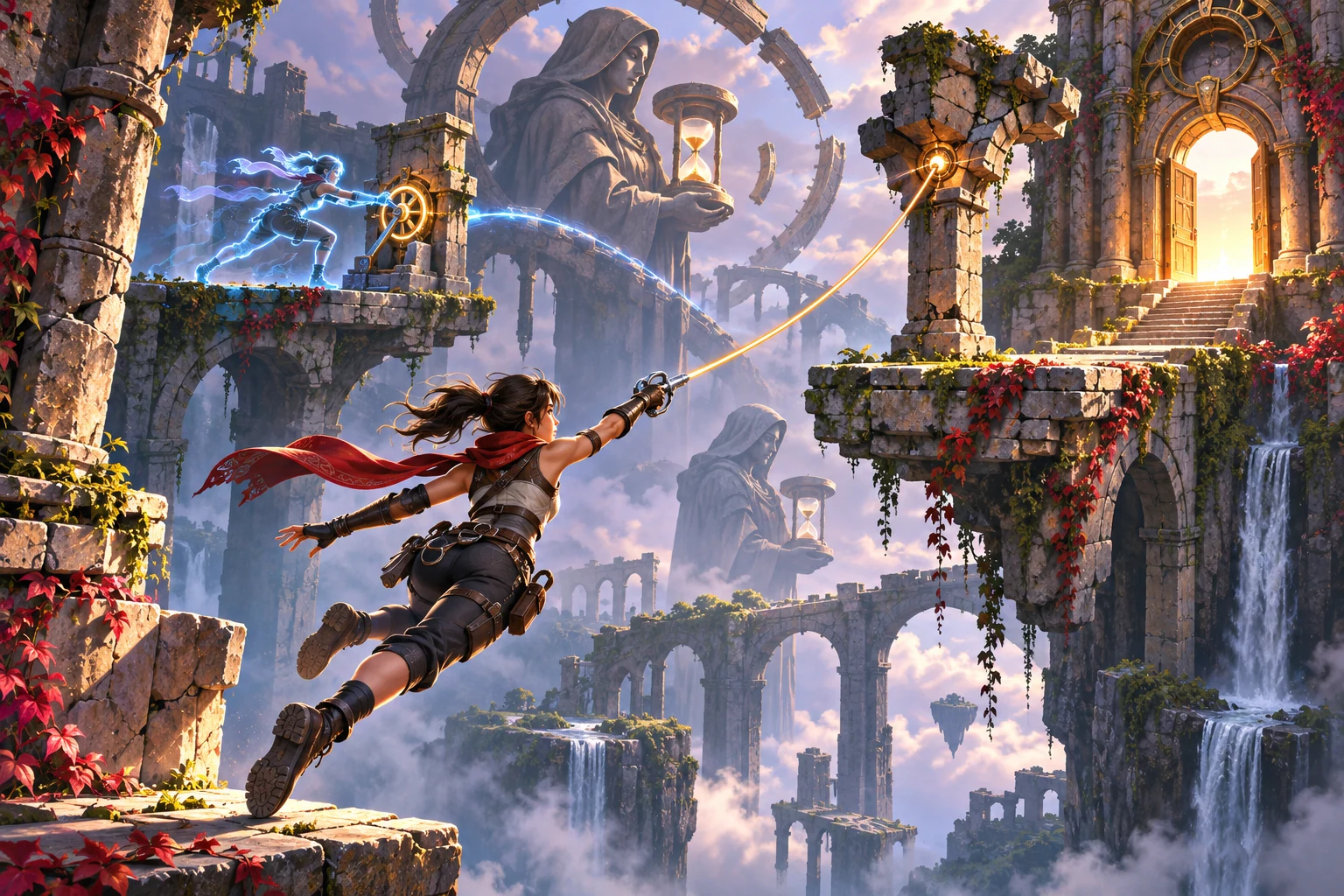
Create a grappling-hook platformer called Aether Ruins with a fixed six-tick loop. The hero grapples to visible anchors and each swing costs one tick. In loop one, reach a pressure plate by tick six. On reset, record and replay the route as an echo; the echo holds the plate and opens a gate. In loop two, grapple from a new anchor through the open gate. Show ticks, anchors, echo path, plate, and gate state.
Record a six-tick route to the plate, reset, and verify the echo repeats the same anchors, presses the plate, and opens the gate. In the next loop, use a different anchor route through the gate. In a no-echo control, verify the plate is empty and gate remains shut. Log tick and state transitions.
FAQ
How can time loops create new grappling-hook routes?
Record a movement route in one loop, then replay it as an echo that can hold a switch or pressure plate. The current run can use the changed world to reach a new anchor or gate. Keep the echo and live hero states distinct so cooperation is readable and repeatable.
How do I design a fair grappling-hook time limit?
Use a fixed loop length and make each swing cost a clear number of ticks. Show the remaining time and anchor options before the player commits. Test that a valid route reaches the required mechanism within the limit and that an invalid or late route resets consistently.
What should I test in a grappling time-loop prototype?
Check anchor targeting, swing cost, loop reset, recorded route playback, plate activation, and gate persistence. Replay the same level with echo playback enabled and disabled. Log each tick, position, anchor, echo action, mechanism state, and whether the next run can reach its goal.