Make the previous loop part of the solution
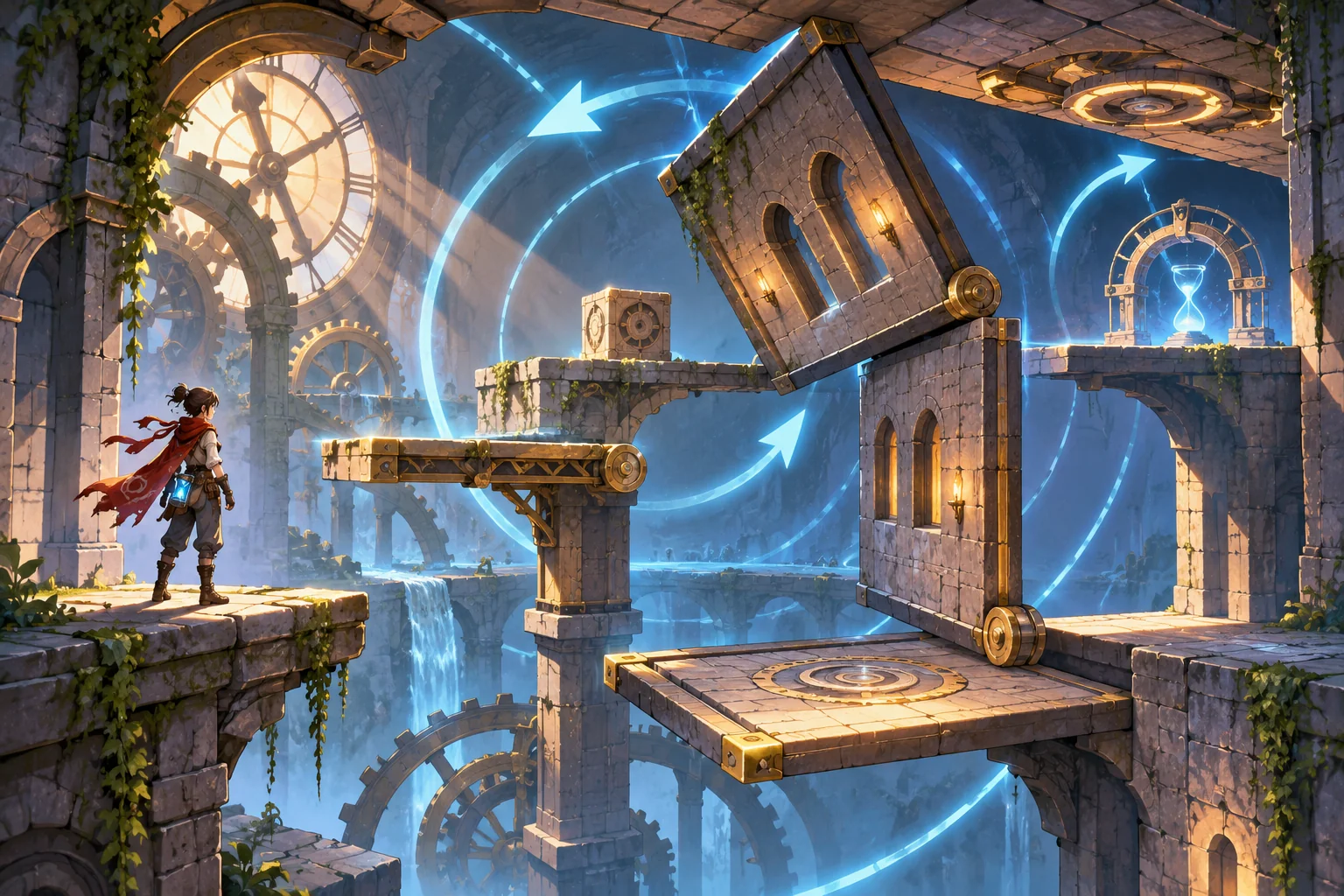
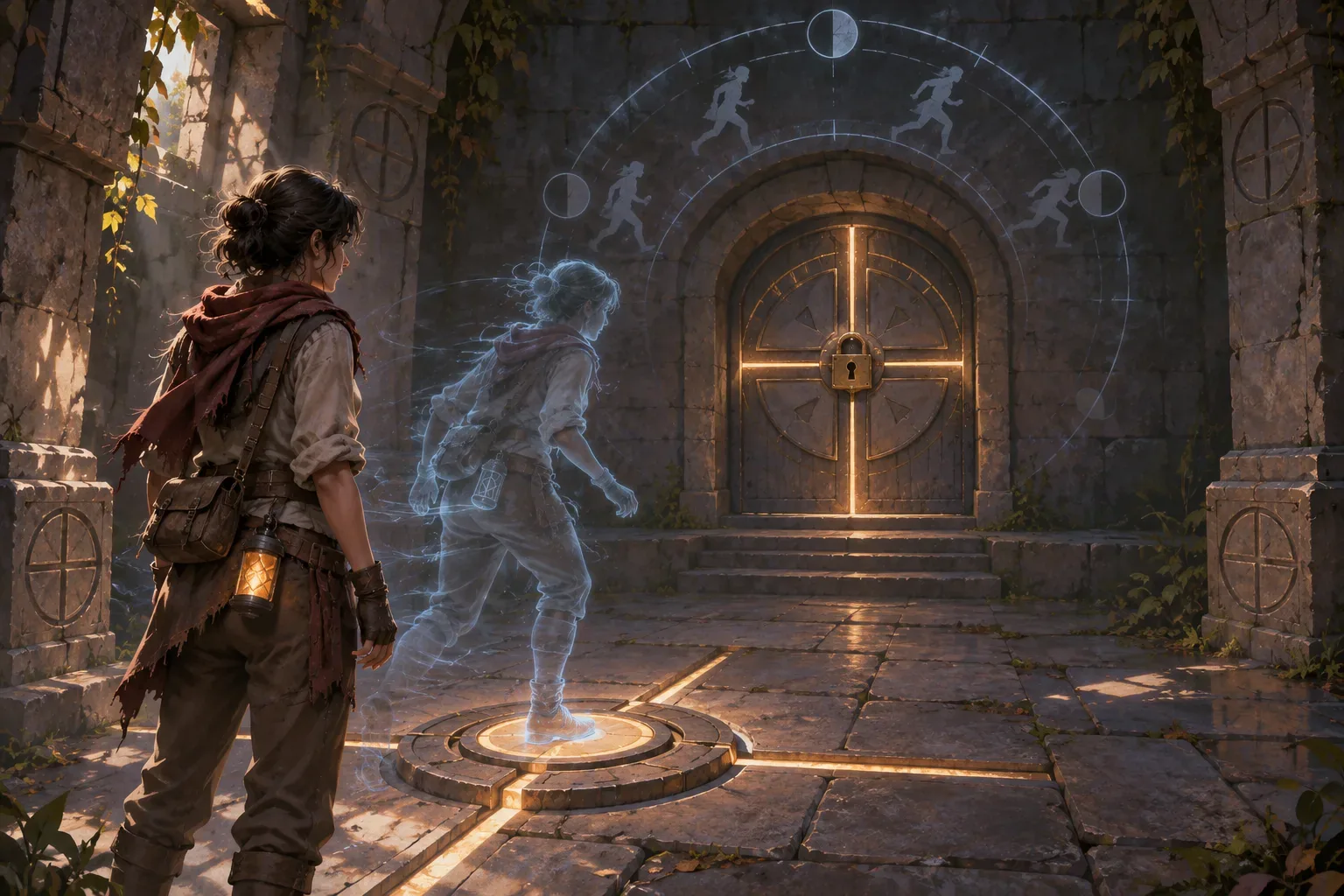
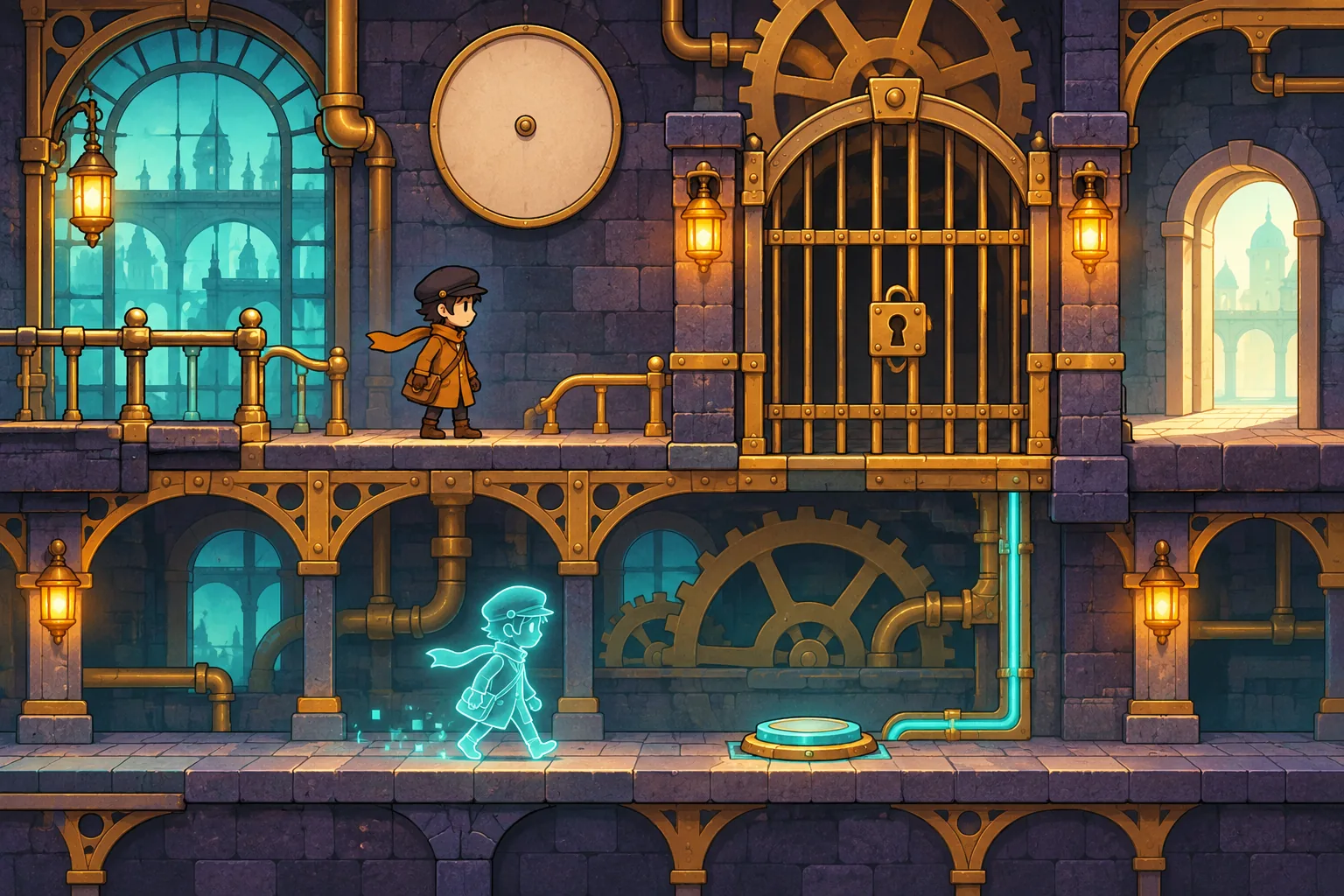
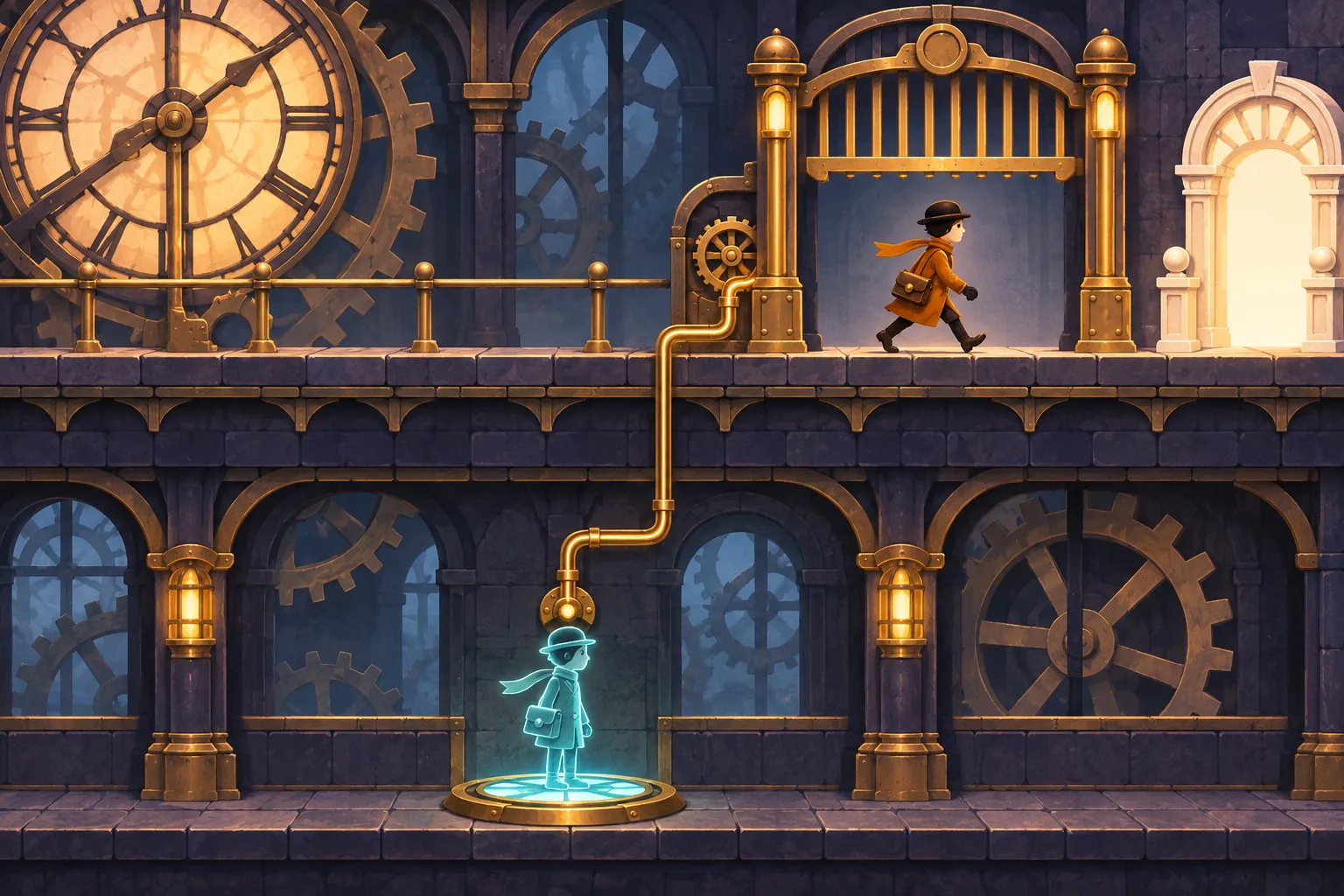
Start with a five-beat room. In the first loop of fictional Brass Minute, the courier walks along a lower lane, steps on a pressure plate on beat three, and waits. The room rewinds at the end of beat five. In the second loop, a translucent echo repeats that route while the player runs along a higher lane. The plate opens the upper gate, and the new run can use the opening to reach the exit.
Restore the room and keep one recording
Save the starting positions, plate state, door position, and timer in a room snapshot. Record one settled position per puzzle beat, including waits. On rewind, restore the snapshot and retain one completed lower-lane recording outside it. Keep the echo intangible so it can trigger the designated plate without pushing the current player. Replace the recording deliberately through a new recording run. Provide a separate command to clear it and start fresh.
For each beat, advance the echo, sample the plate, resolve the live crossing, and check victory before checking the rewind timer. In Godot, the physics callback runs at fixed intervals separate from rendering. Choose your own puzzle beat frequency and test its update order independently of animation.
Test the beat when the echo arrives
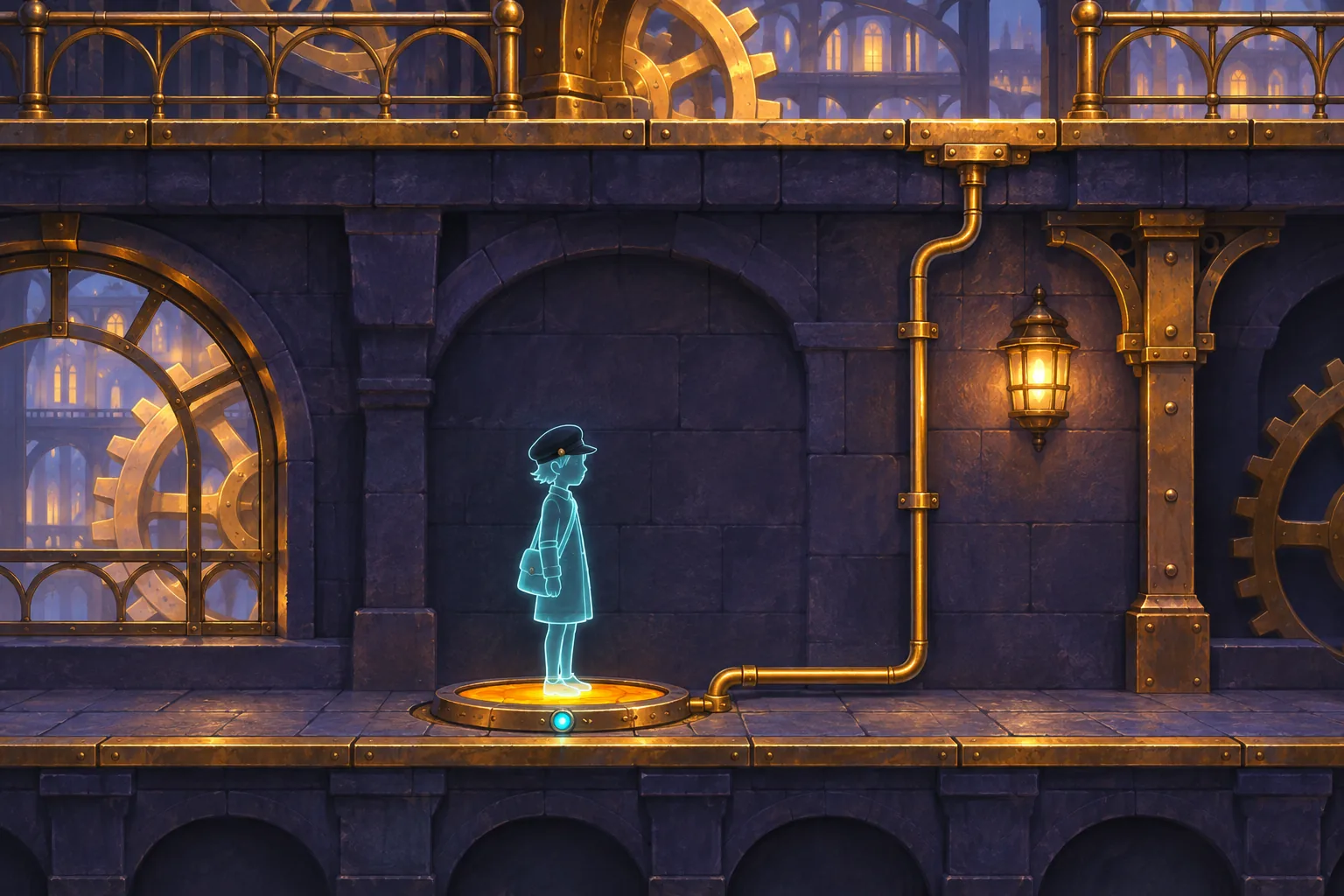
Give the live player five rightward steps. The third goes through the gate and the fifth reaches the exit. At beat three the echo lands on the plate. In a local rules test, sampling the plate before moving the echo left the gate closed on beat three. The live player lost one step and reached only position four before rewind.
With echo movement first, the gate opened on beat three. The same five step commands reached position five at the end of the loop. Credit victory before the timer resets the room. In the playable version, repeat with the echo reaching the plate early and late, and check that resetting clears the last loop's gate and timer state.
Ask the AI for a beat-by-beat prototype
Give the AI the two lanes, the room snapshot, the echo's stored positions, and the order of events. SEELE AI Game Maker can start a playable version from a description and take follow-up instructions. Begin with the five beats and wait positions before adding jumping arcs or extra echoes.
Build Brass Minute as a five-beat time-rewind room. Record the lower route and restore the room after beat five. Keep one intangible echo. The plate is at lower position three and the gate at upper position three. Advance the echo, sample the plate, move the live player, then check the exit at upper position five before timing out. Display remaining beats. Add a full reset that clears the recording.
Start your time-rewind room in SEELE · Godot's guide to idle and physics processing
Frequently asked questions
Should I record inputs or positions for the echo?
Start by recording settled puzzle positions and waits. That gives you a direct way to check where the echo is on each beat. Record inputs if a later design needs the echo to respond to changed geometry, and test how divergence will affect the puzzle.
When should I offer a full reset?
Use rewind to return the chamber to its initial state while retaining the completed echo. Use full reset to restore that state and clear the recording. Offer both actions separately so players can choose between retrying an attempt and replacing their original route.
How do I make the last beat feel fair?
Show the remaining beats and evaluate exit entry before expiry on the final beat. Use the same order for practice and the main challenge. Test a route that finishes just on time and a route that falls one beat short.