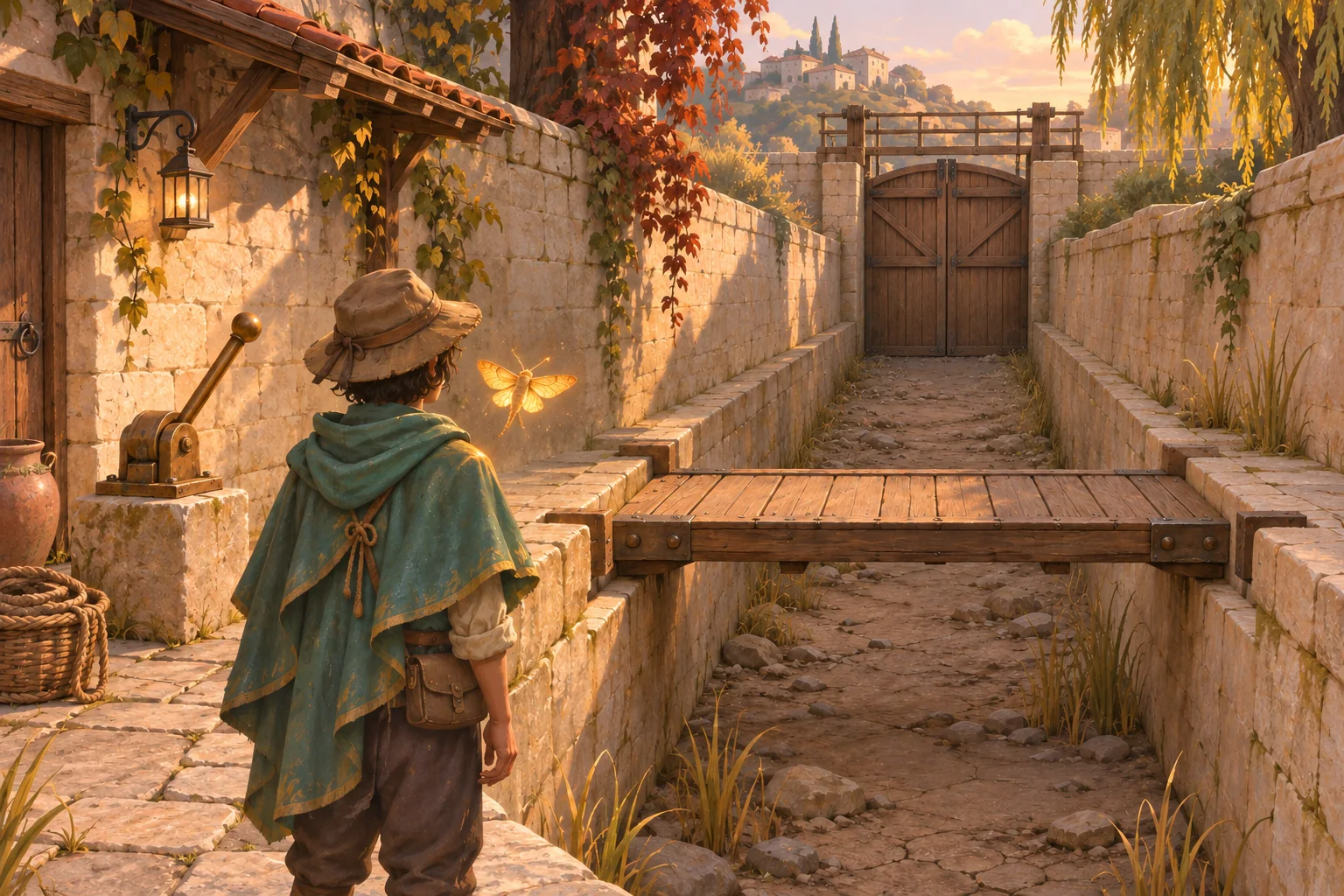
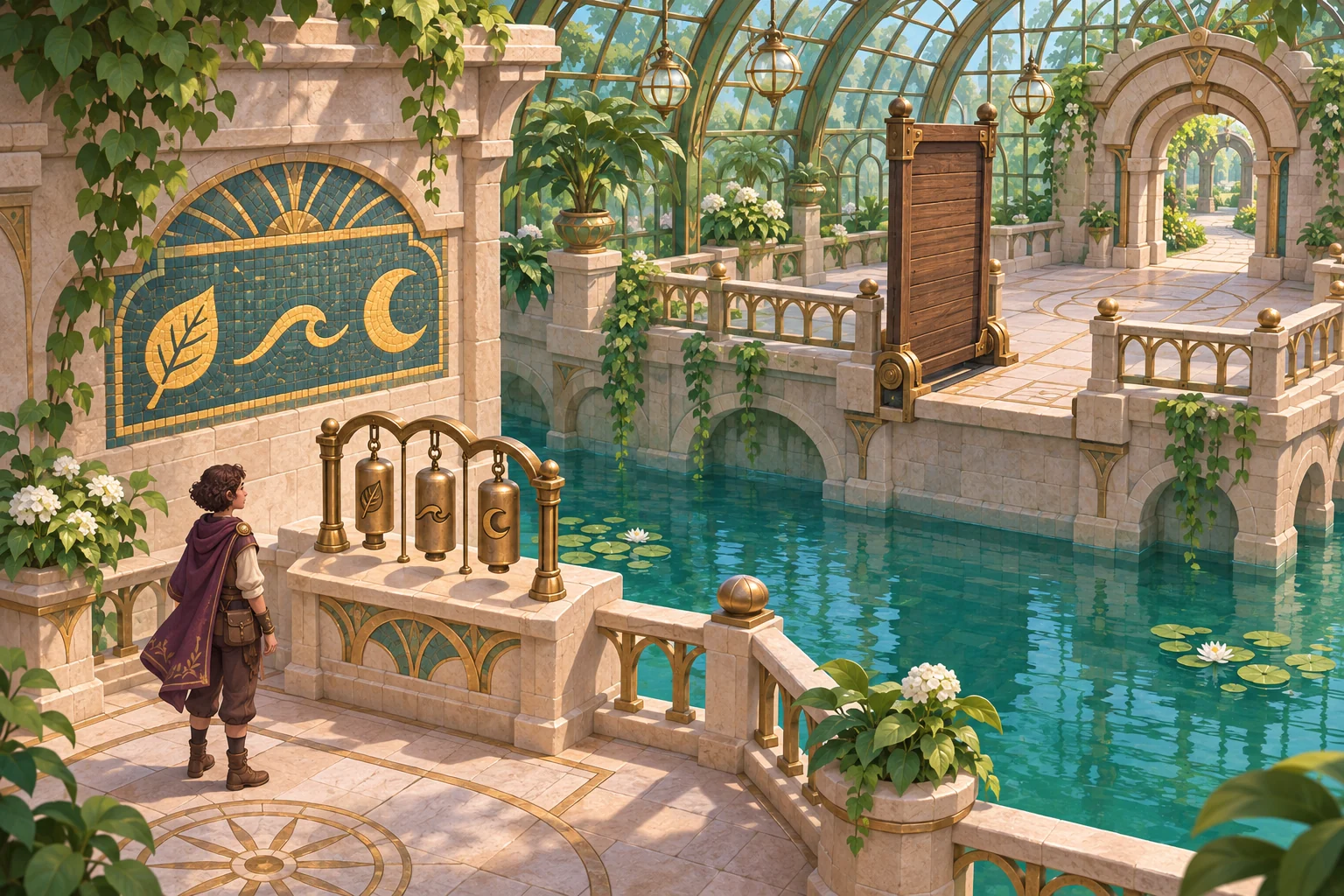
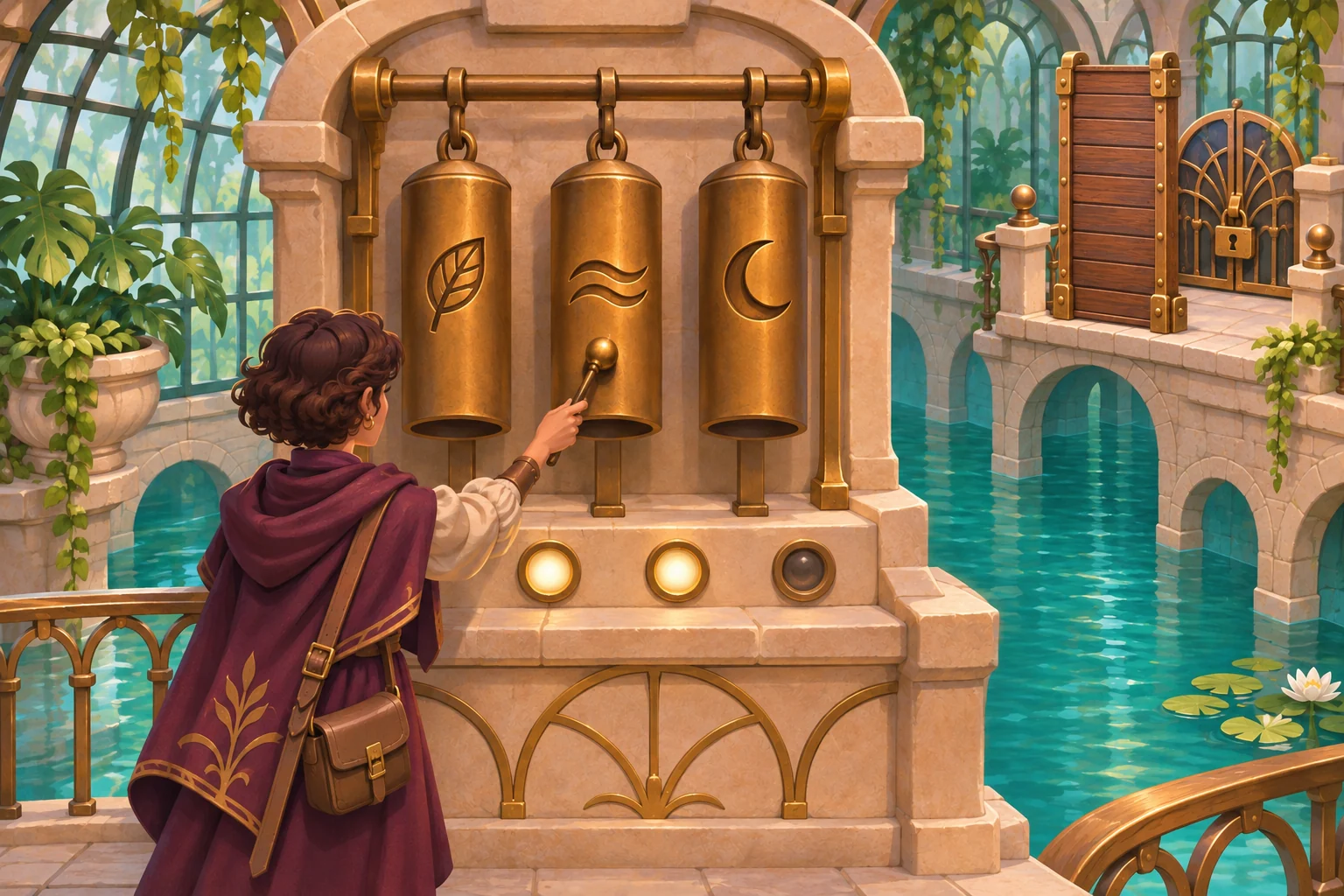
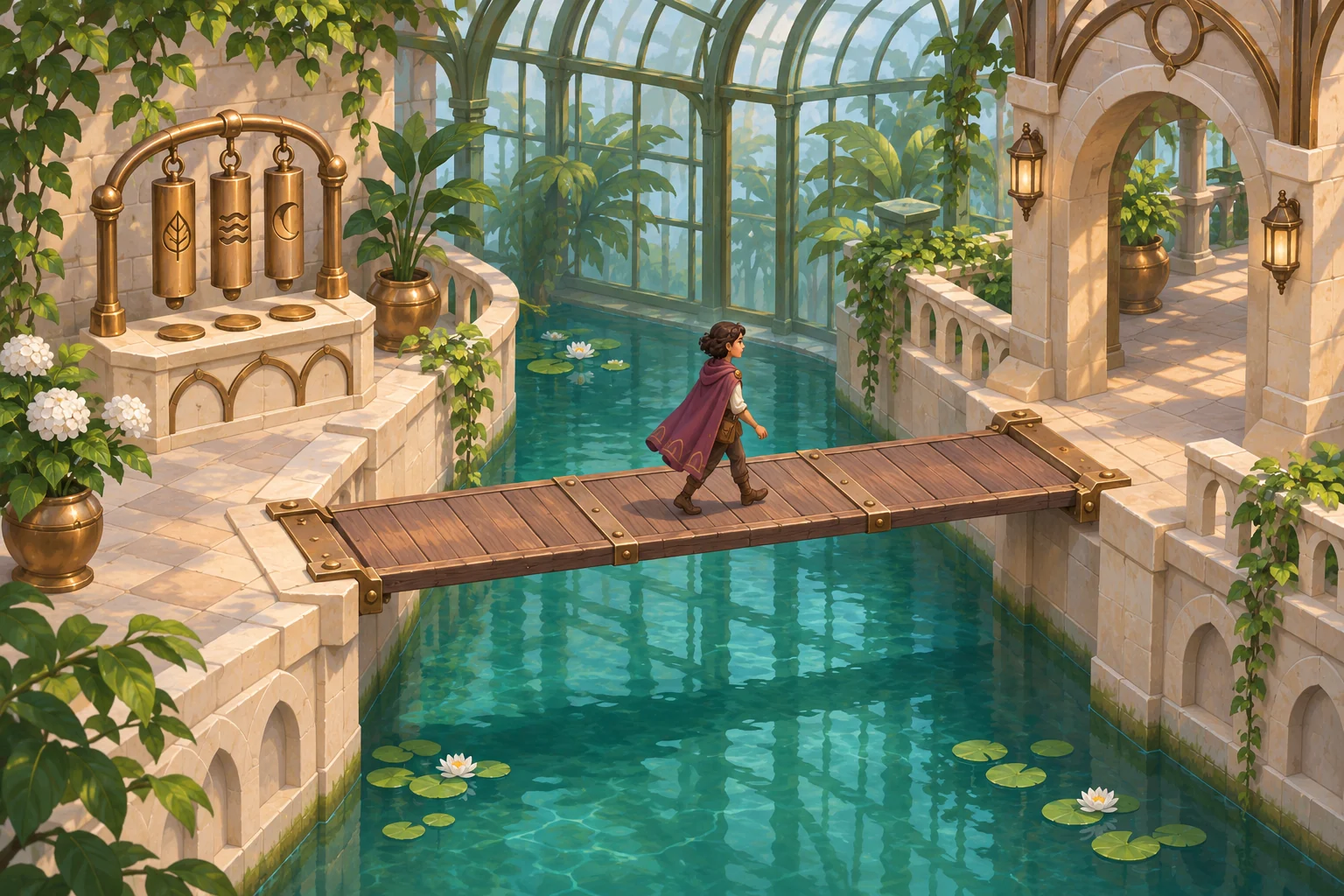
In the fictional Chime Conservatory, a raised bridge keeps the player from reaching an exit. A wall mosaic shows a leaf, a wave and a moon. Three bronze chimes carry the same symbols. Play the phrase in that order and the bridge lowers. The player can then cross a gap that matters to the story.
Put the clue where the player needs it
Let the player inspect the mosaic from the near bank. Reveal the three symbols from left to right, with enough space to read them separately. Use the same silhouettes on the chimes. Keep the exit arch in view so it is clear what the bridge connects.
Make each chime clickable at any time. In the first room, test one phrase and one route change. This keeps the reason for the bridge movement legible.
Echo the phrase in sound and shapes
Give each chime a distinct pitch. When the player clicks, copy the accepted symbol into one of three slots next to the chimes. Show the symbol in the slot even if sound is muted. When the third symbol matches, lower the bridge and enable the walkable link together.
Use one feedback slot per accepted note. If the player has entered leaf and wave, show those two symbols and an empty third slot. That makes the difference between a click that played a sound and a click that advanced the puzzle clear.
Keep a retry that begins on the right symbol
A local rule replay sent leaf, leaf, wave, moon. The original reset discarded the second leaf. No later click started the phrase, so the bridge stayed raised. The revised reset treated the second leaf as the first note of a new attempt. Wave and moon then completed the phrase. A separate wrong sequence left the bridge up, and repeating the full phrase after success did not move it again.
Test the interaction with a player and the sound muted. Ask them to try the first symbol twice. If they cannot tell what the puzzle kept, flash the remaining first slot and clear the later slots with a separate visual cue.
Ask AI for one room and one phrase
Start with clickable shapes and a bridge state. Add chime recordings after the visible feedback and walkable connection are working.
Build one point-and-click conservatory room. Put three bronze chimes beside a mosaic that reads leaf, wave, moon. Show accepted symbols in three slots and play a distinct pitch on each click. Lower the bridge and open the walking route only after leaf, wave, moon. Restart the sequence on a wrong click, retaining that click if it is leaf. Keep the bridge lowered on subsequent clicks. Add reset and a sound toggle.
SEELE’s free AI game maker describes starting a game from a text prompt and refining the first version with follow-up requests. Verify the three accepted symbols and the changed route before adding more rooms.
Start the music puzzle in SEELE
Frequently asked questions
Should the player have to match the rhythm as well?
Start with order only. The first room is about hearing or reading the three symbols and seeing a route change. If you add timing later, show the beat visually and offer extra time or a relaxed timing option so the new demand is clear.
Can the bridge rise again during a playthrough?
For the first room, keep it down until reset. A repeating bridge can work later if rising serves a separate puzzle rather than blocking the way back. Before allowing a toggle, check that both banks still have a safe exit or a reachable control.
Where should a hint point after several wrong attempts?
Point to the mosaic or ask the player to compare the symbol silhouettes. A second hint can mark the leftmost symbol as the starting note. Leave the remaining symbols for the player to enter so the hint teaches how to read the clue.