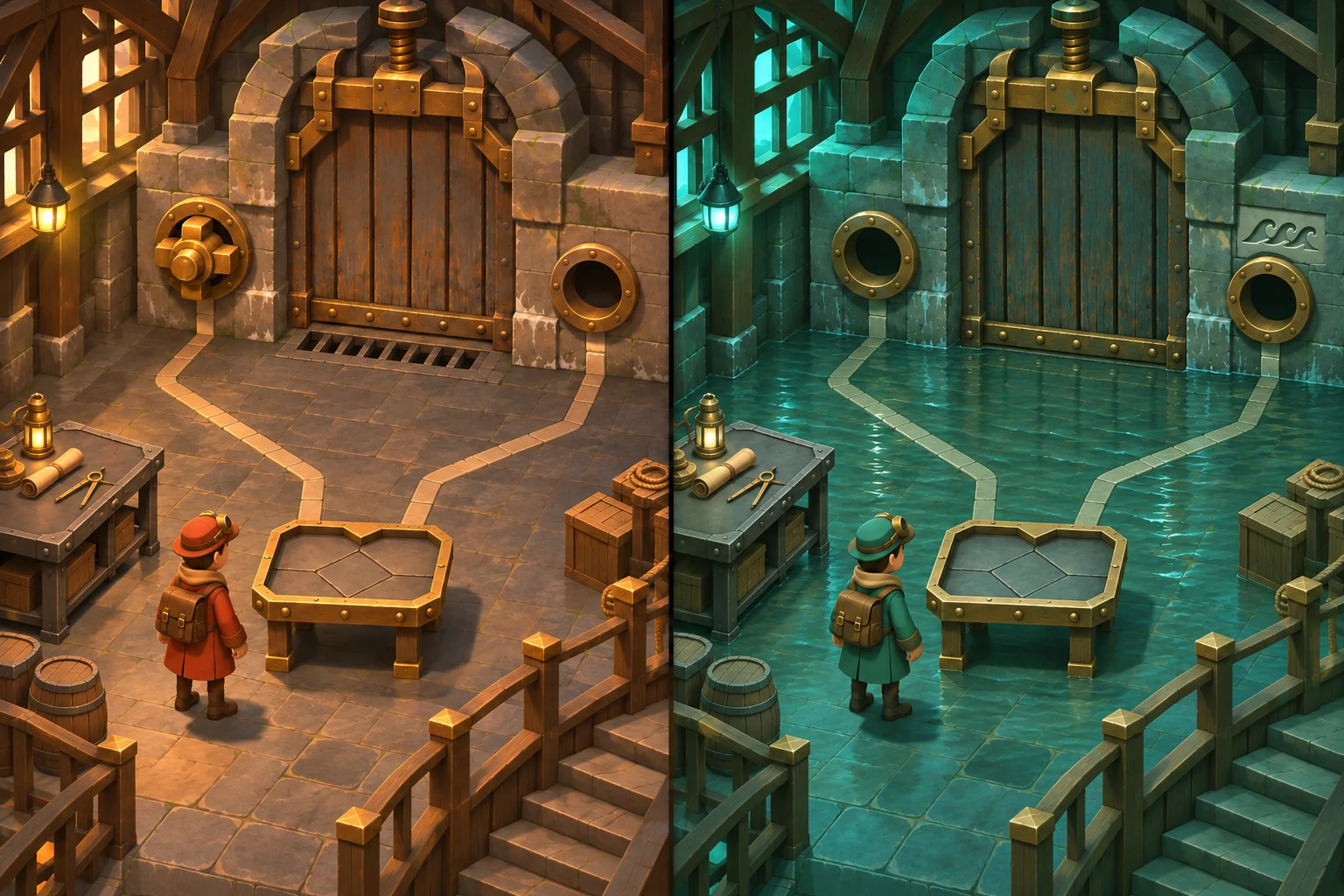
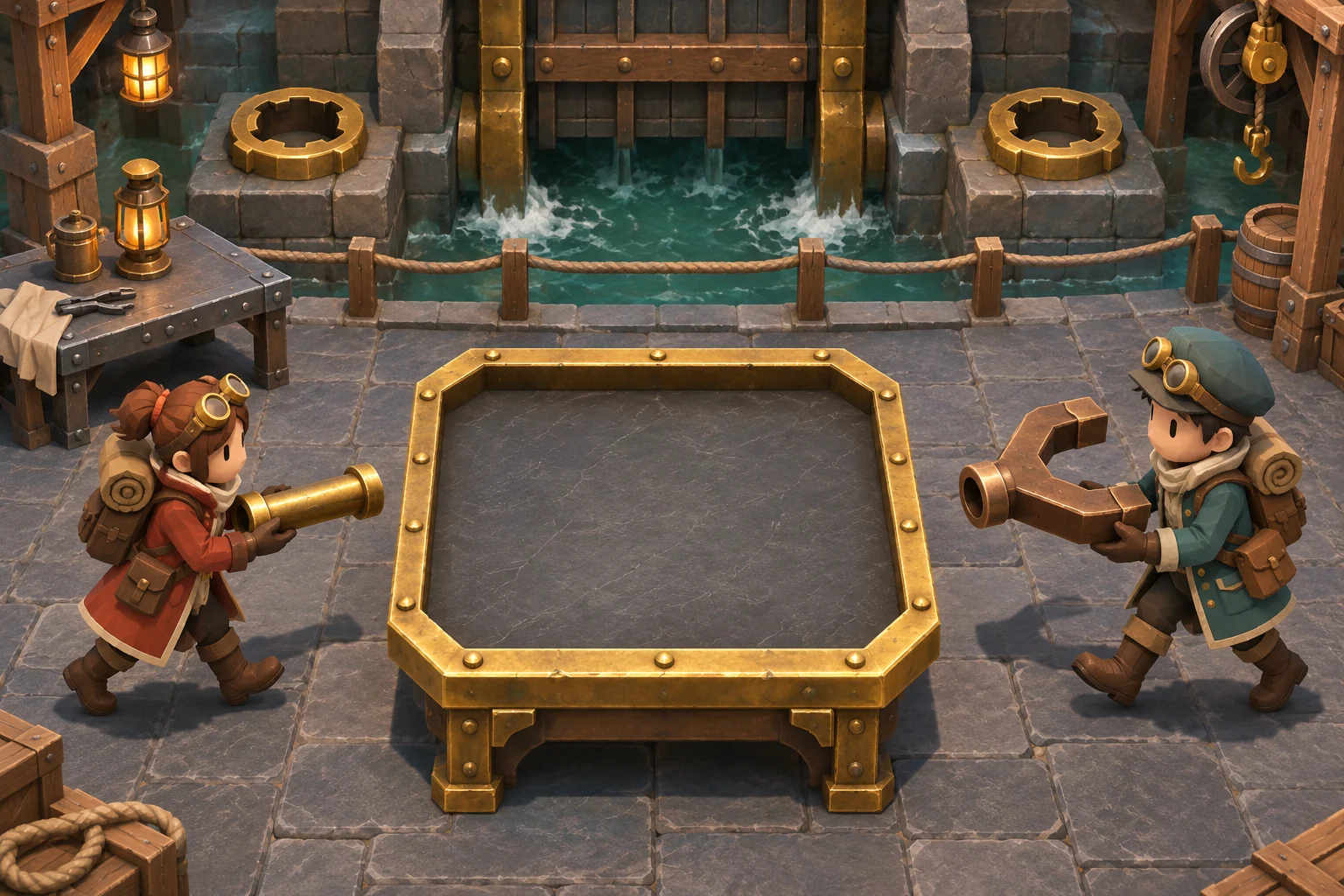
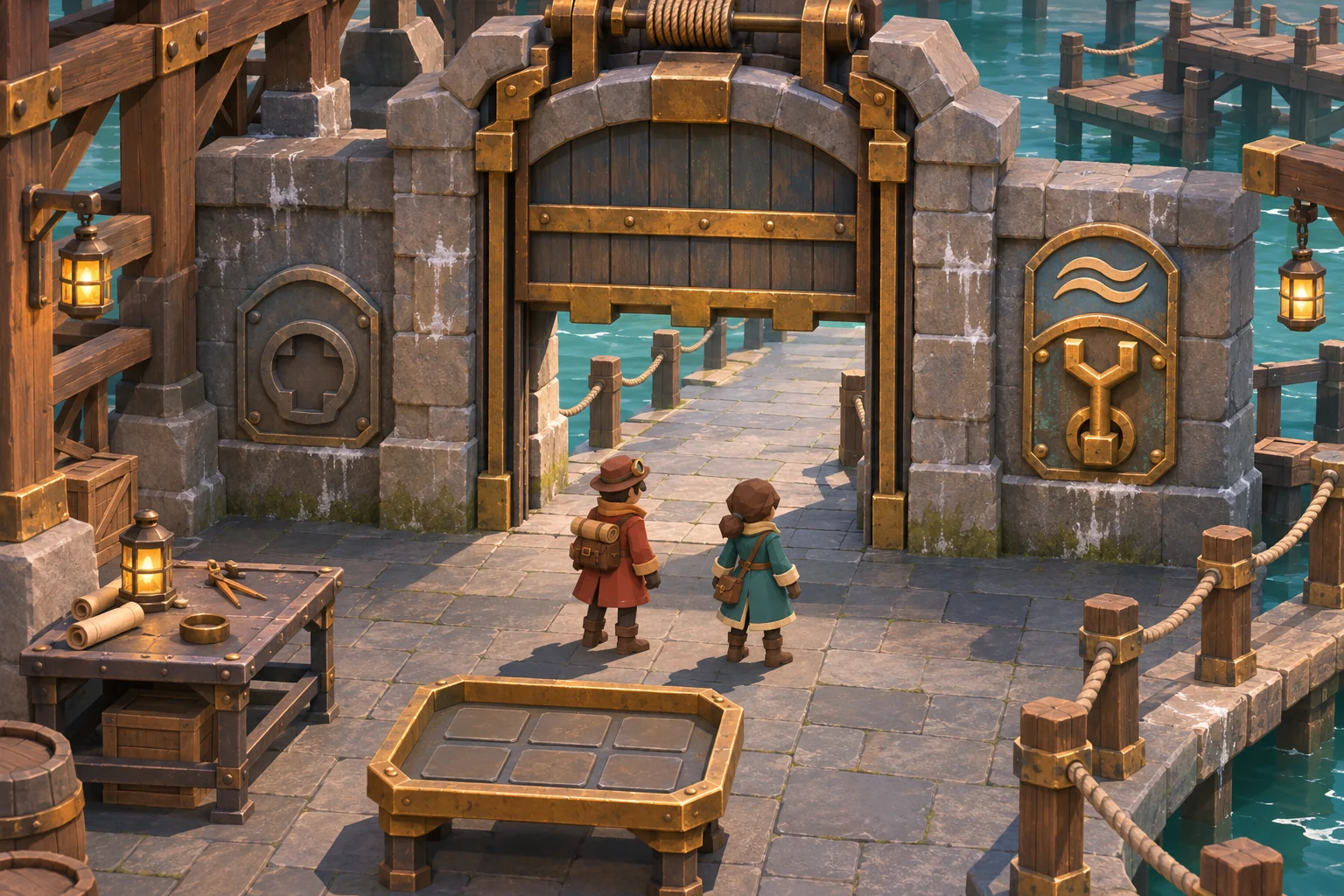
Two players stand in the same workshop. One sees a usable brass fitting near the gate. The other sees flood damage and a wave carved above a second socket. Each can reach a piece of the key. They can assemble it through one shared tray, but they have to talk to work out where it goes. Give both the same layout and a useful piece of information. That way, the visual split changes an actual decision.
Keep the door and tray in the same place
Draw two versions of one small room. In the fictional Floodgate Workshop, the gate, tray and two sockets line up across both views. On the dry side, highlight the brass stem and an intact fitting. On the flooded side, show the forked head and a wave mark at the tide socket. Give both players the labels ‘workbench socket’ and ‘tide socket,’ so they can call out the same locations even when the objects look different.
Let the flooded player inspect the wave mark and find that it matches the forked head. The dry player supplies the stem. If someone can open the gate by inspecting both clues on one screen, move the extra clue to the other view before designing the next room.
Make the shared tray resolve each merge once
When someone deposits a piece, remove it from that player's inventory and show it in the tray on both views. Accept either piece first. When the second compatible piece arrives, consume both and place one forked key in the shared tray. Treat consumption and key creation as one update. If the players send the same deposit twice, process the action ID once and return the current state.
Write feedback for the pauses between actions. After the first piece lands, both views should show what is in the tray and give the waiting player a target. While the key is ready, show who is using it. Once the gate opens, both players should see the change before they can try another socket.
Keep the puzzle recoverable after a wrong guess
Compare two rules using the same sequence. Deposit stem, replay that deposit, deposit fork, try the workbench socket, then try the tide socket. In a local rule simulation, the first rule consumed the key at the wrong socket and left the gate closed. With the revised rule, the key was still available after the rejection and the second attempt opened the gate. The repeat deposit changed neither the tray nor the eventual key count in either run.
Use the revised rule in the first build. For a human playtest, ask a pair to try the wrong socket and observe whether they can explain how to recover. If they report that the gate seemed broken, show feedback at the rejected socket and leave the key visible. The rule simulation establishes the state transitions. A playtest can show whether the feedback is clear.
Ask AI for a one-room prototype
Begin with the two views side by side on one device. This makes the state easy to inspect while you debug. For a playtest, let each person see only their own view and listen for how they name the clues. Decide whether to add separate devices after the room works.
Build one two-player merge puzzle room with two side-by-side views. Align the tray, gate and two sockets. Give the dry view a stem and the flooded view a forked head and a wave clue. Let the players deposit in either order. Produce one shared key, preserve it on a wrong socket and spend it to open the tide gate. Ignore repeat action IDs and provide a full reset.
SEELE's free AI game maker describes a workflow for generating a first version from a text prompt and refining it with follow-up requests. Use the room brief above for the first build, then check a successful run, a wrong socket and a duplicate deposit before adding rooms.
Start the two-view puzzle in SEELE
Frequently asked questions
When should I add remote multiplayer?
First check the merge, socket and reset with two local views. When you add remote play, use one authority for inventory, tray and gate state. Make reconnect restore the current state, and check that a repeated or late action cannot recreate a key after a reset.
How can I make the two views readable without color?
Use a carved wave and an outline that matches the forked key. Make each socket identifiable by its shape and a short, stable name. If you gray out both screens, the players should still be able to describe the same place and distinguish both candidate sockets.
Does the next room need a second recipe?
Keep one recipe if the next room is about interpreting a new clue. Add a second only when it creates a meaningful decision, such as choosing which socket to prepare for. Make completed parts removable before use so an early guess leaves room to reconsider.