In fictional Drifter Deck, your habitat and refinery share a small platform. The current dock offers sunlight and charge. A second dock has water, but getting there means crossing two turns of shadow. Moving the settlement should change what the colony can produce. Start by keeping its layout fixed and making the player plan for one interruption.
Build the colony in deck coordinates
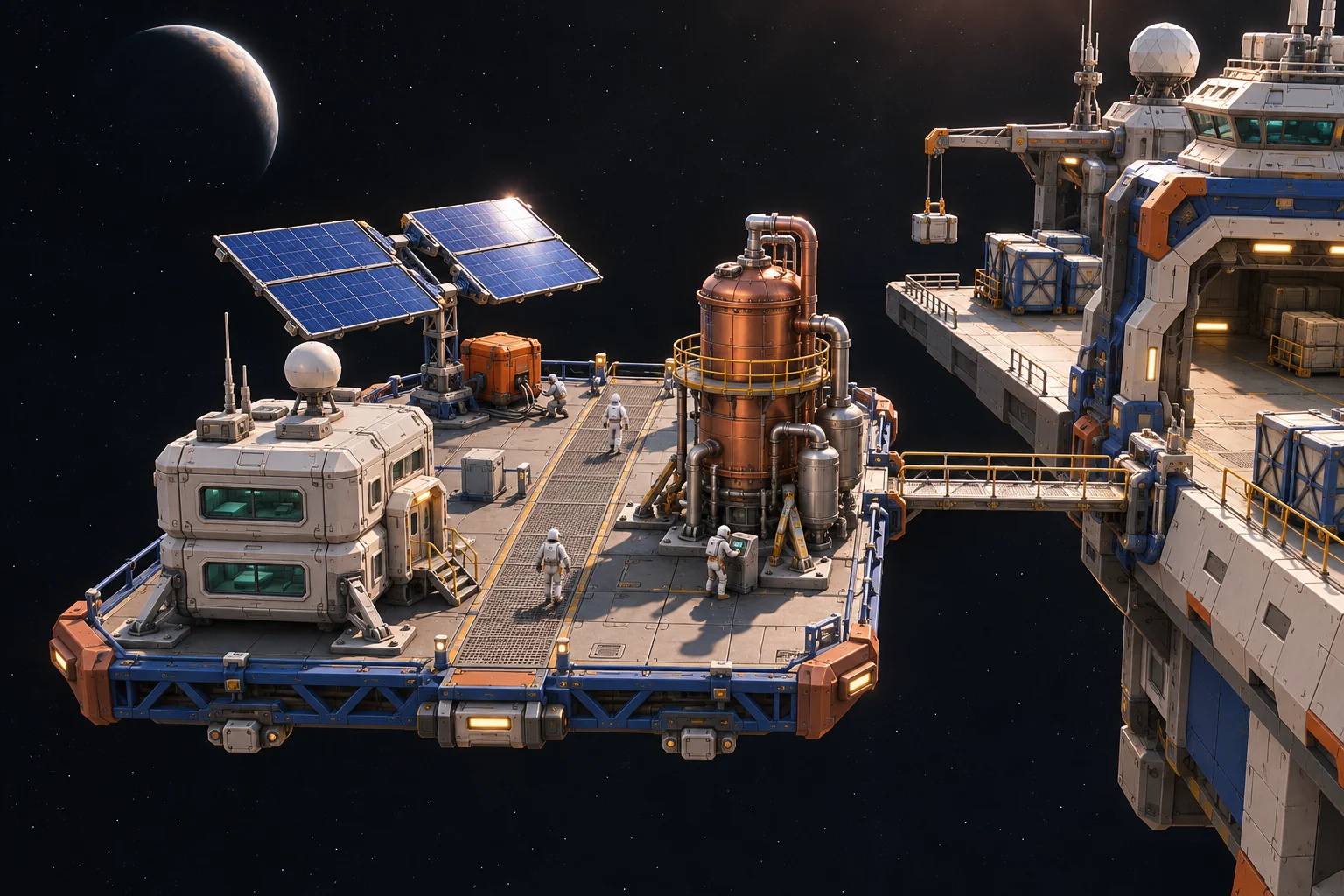
Put the habitat on A1, the battery on B1 and the refinery on A3. Store those positions on the platform. Track the platform’s location separately as supply dock, transit or water dock. On arrival, the modules should occupy their original deck tiles even though the platform has moved.
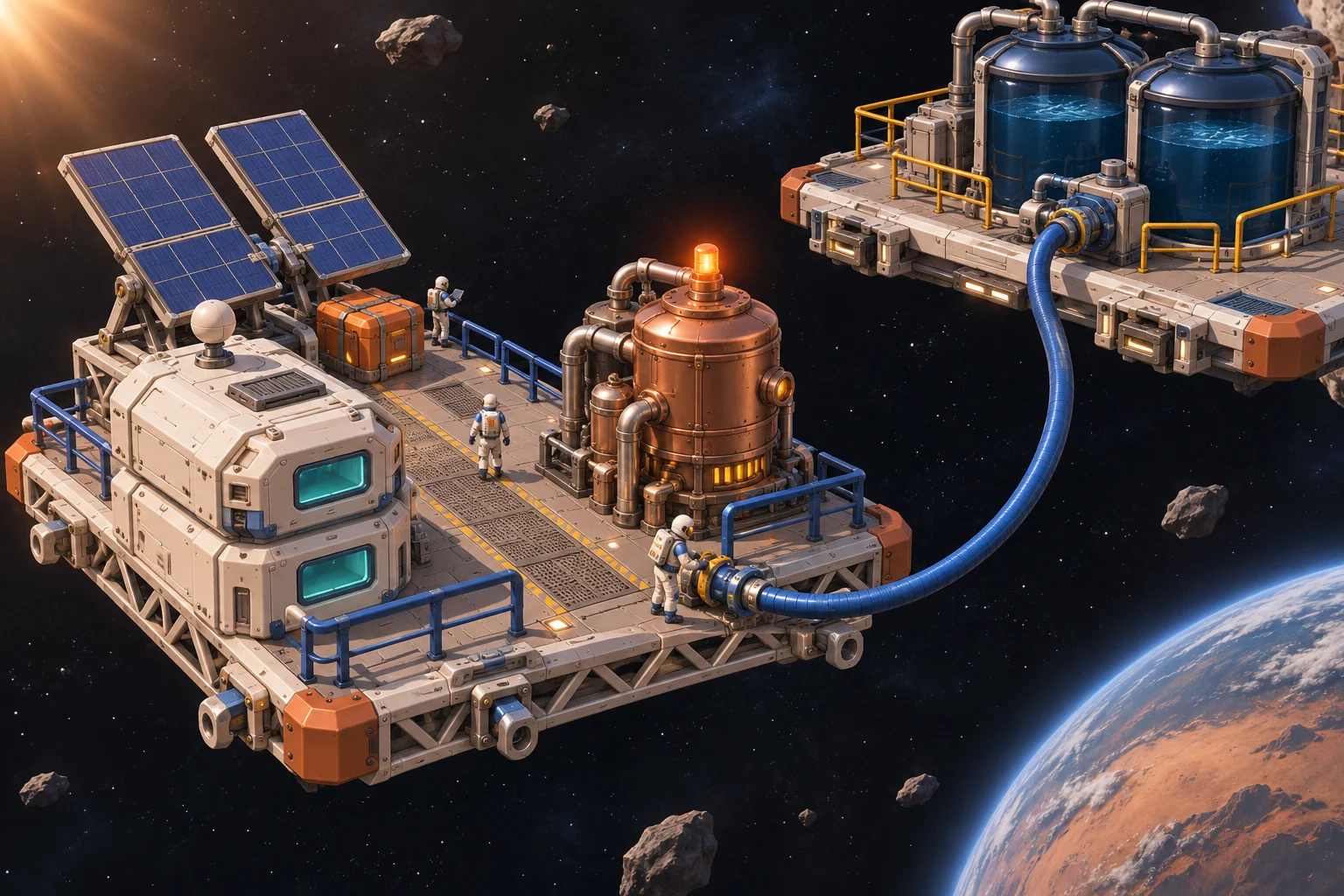
Give the two docks different services. At the sunlit supply dock, charge the battery. At the water dock, connect a hose and unload water. In transit, disconnect both services. That makes movement a choice about access.
Reserve power for both turns of shadow
Start the trip with three units of charge. Each transit turn costs one for the habitat and one for the refinery if it runs. Keeping both on needs four units. Pause the refinery and the same trip needs only the habitat’s two units.
Display the protected two units before departure. If charging has only reached one, keep the platform at the dock and tell the player how much is missing. Confirm the move after the reserve is available and the refinery is paused.
Compare two dispatch rules with the same battery
In a local rule replay, the original policy departed with three and kept the refinery on. The first turn spent two; the refinery took the last unit on turn two, leaving the habitat unpowered. The revised policy paused the refinery and paid for the habitat twice. It arrived with one unit left. Starting with only one under the revised policy kept the platform at the supply dock.
On successful docking, open the water connection. Let the player resume the refinery when the next power source is available. In a later playtest, ask the player to predict the charge at arrival before departure.
Ask AI to prototype a single relocation
Use a two-position route and three module tiles. Add more route choices after the two transit turns and dock service switches work.
Build a one-trip space colony on a moving deck. Place habitat A1, battery B1 and refinery A3. Travel from a charging dock to a water dock through two turns of shadow. Start with three power. Reserve one per turn for the habitat, pause the refinery and refuse departure below two power. Keep tiles fixed, connect water only after docking, and support reset.
SEELE’s free AI game maker describes creating a first version from text and refining it with follow-up prompts. Start with the trip above. Check charge, module positions and water service before adding another dock.
Start the moving space colony in SEELE
Frequently asked questions
Should the refinery always be paused in transit?
In this first route, a pause gives the player a clear choice between running the refinery and protecting the habitat. Add a route where both can run only after your charge forecast names what the refinery would consume and what the habitat still needs.
Can players rearrange modules while the deck moves?
Keep placement fixed on the first trip so you can inspect what changes with location. If you later allow reconfiguration, preserve the old layout until movement or the placement action finishes. Show which modules are connected so the player can check the result.
When should I add another route?
Add one when the original trip can be repeated with a healthy and a low battery. Give the new destination a different reason to travel, such as a shorter transfer but fewer water deliveries. Recalculate the reserve from its own shadow duration.