Introduction
A cleaning-business management game has to connect customer requests, crew time, supplies and job completion. “Run a cleaning company” gives a theme, but it does not explain how work enters the schedule, how a team moves through a space, or what counts as done. A staged prompt kit turns those decisions into a small service loop.
This article uses Brightline Crew, a fictional neighborhood service with two crew members and a three-room apartment job. The player reads a work order, assigns people and supplies, plans a room route, checks off abstract tasks and hands the job back. These are game-design examples, not real cleaning procedures or safety advice. The prompts and snapshot have not been executed; no playable build or test result is claimed.
Define the service loop
Start with job intake, scheduling, task assignment, completion review and client handoff. Specify when time advances, whether the crew can change assignments and what happens when a job takes longer than planned.
Prompt 1 — Business brief
Create a concise design brief for Brightline Crew, an original cleaning-business management game. The first shift includes one three-room apartment job, two crew members, limited abstract supply tokens and a client handoff. Define the player goal, shift phases, one scheduling tradeoff and three systems excluded from the first prototype. Keep all room tasks fictional and non-instructional; do not give real-world chemical or cleaning guidance.
| Phase | Player decision | Visible result |
|---|---|---|
| Intake | Accept and inspect the work order | Rooms, requested finish and task cards appear |
| Schedule | Assign crew and supplies | Availability and remaining tokens update |
| Route | Choose room order | A simple map shows the planned sequence |
| Complete | Mark fictional tasks done | Checklist and job progress change |
| Handoff | Close the work order | Client state and shift summary update |
Make crew and supply choices matter
A management loop needs constrained choices. If both crew members can finish everything at once and supplies never run low, assignments are decorative. Use a small abstract budget and several job cards with different effort values. Do not model real cleaning formulas or instructions; the goal is to make time and capacity legible as game variables.
Prompt 2 — Work orders and assignments
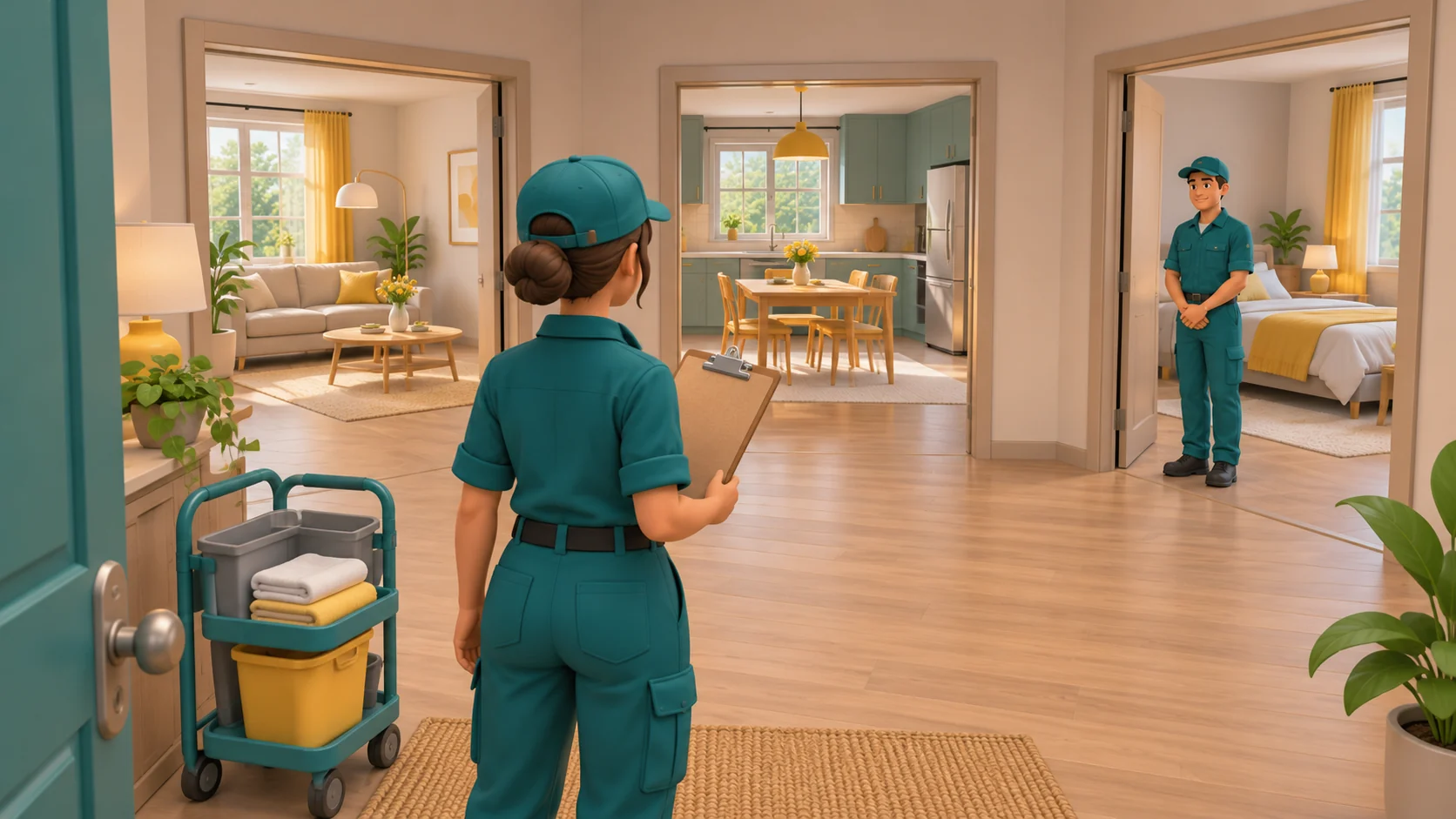
Define three fictional room task cards for Brightline Crew: one quick, one medium and one requiring both crew members. Give each an abstract time cost and supply-token cost. State which task can be done in parallel, how crew availability is shown and what happens if the player lacks tokens. Do not name real chemicals, equipment procedures or health claims. Treat all values as editable, untested game settings.
| Assignment | Constraint | Player can see |
|---|---|---|
| One crew member on a quick task | Other member remains available | Task progress and remaining capacity |
| Both members on a shared task | No parallel task can start | Combined assignment and expected duration |
| Reserve supply tokens | Fewer tokens remain for other rooms | Cost before the task is confirmed |
Plan the route through a small job
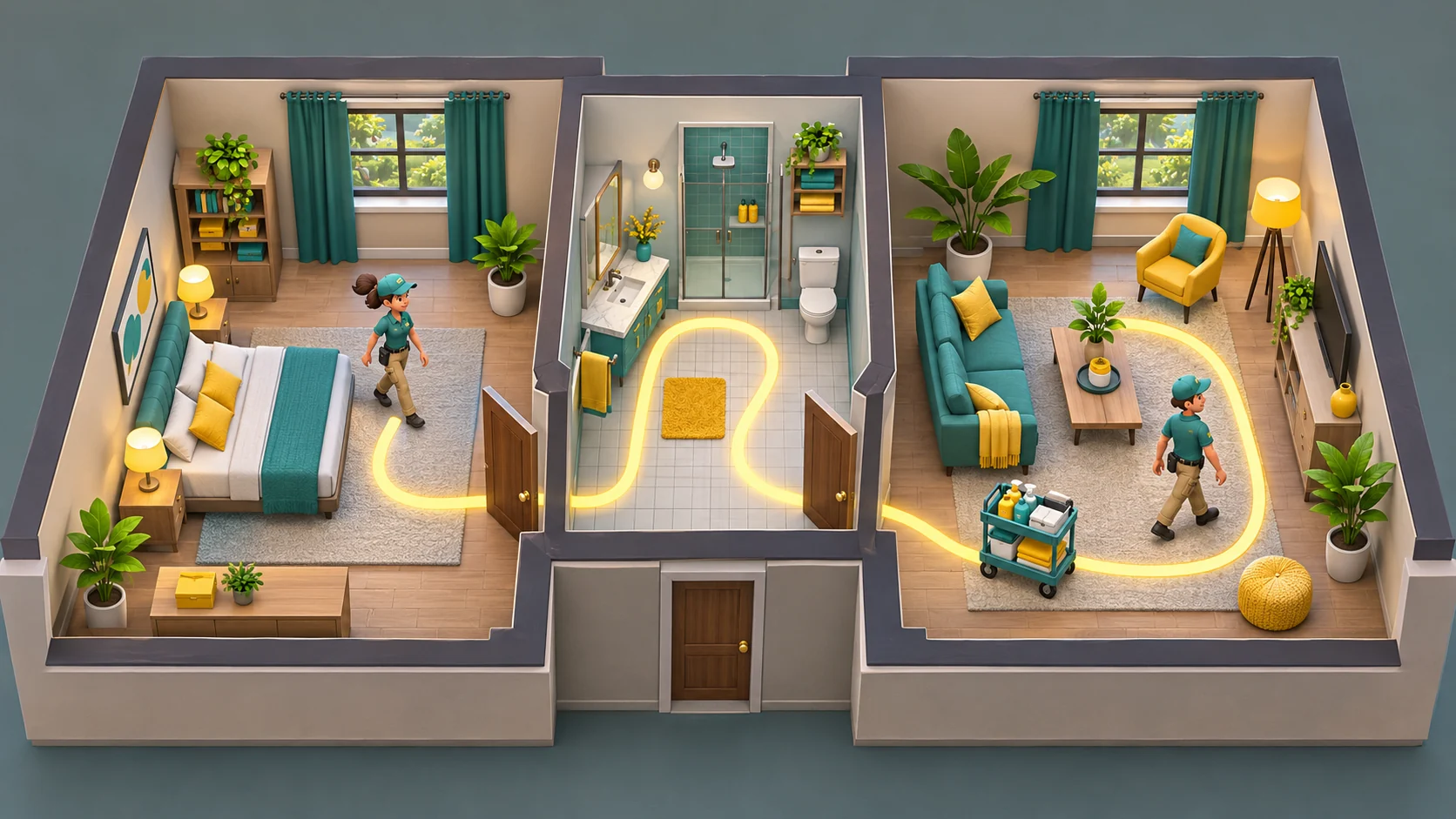
A route gives the player a spatial decision without requiring a full city map. In the fictional apartment, the player chooses which of three rooms to visit first. A task may use a shared abstract supply token, so the room order can change what remains for later. Show the planned route and allow a simple reorder before work begins.
Prompt 3 — Room sequence
Create a fictional three-room apartment map for Brightline Crew. Add one abstract task card per room, a starting point, and a route order the player can change before the shift begins. Show how completing a room updates the checklist and supply-token count. Do not model real cleaning steps. Keep the map readable and let the player reset the route before confirming.
Request a focused playable slice
Prompt 4 — Build request
Build a small playable Brightline Crew prototype for one shift. Include one work order with three rooms, two crew members, abstract supply tokens, task cards, an editable route, task progress, completion review, client handoff and shift summary. Show crew availability and token cost before confirming assignments. Keep tasks fictional and non-instructional. Include reset. Do not add hiring, payroll, real chemicals, hazardous materials, customer databases or a campaign. Report any missing interaction as incomplete instead of claiming the build is finished.
A build request is not proof that a playable simulation exists. Open the output and check route changes, assignment availability, task progress and handoff. If the result is a diagram or screen mockup, call it that.
Fictional shift snapshot
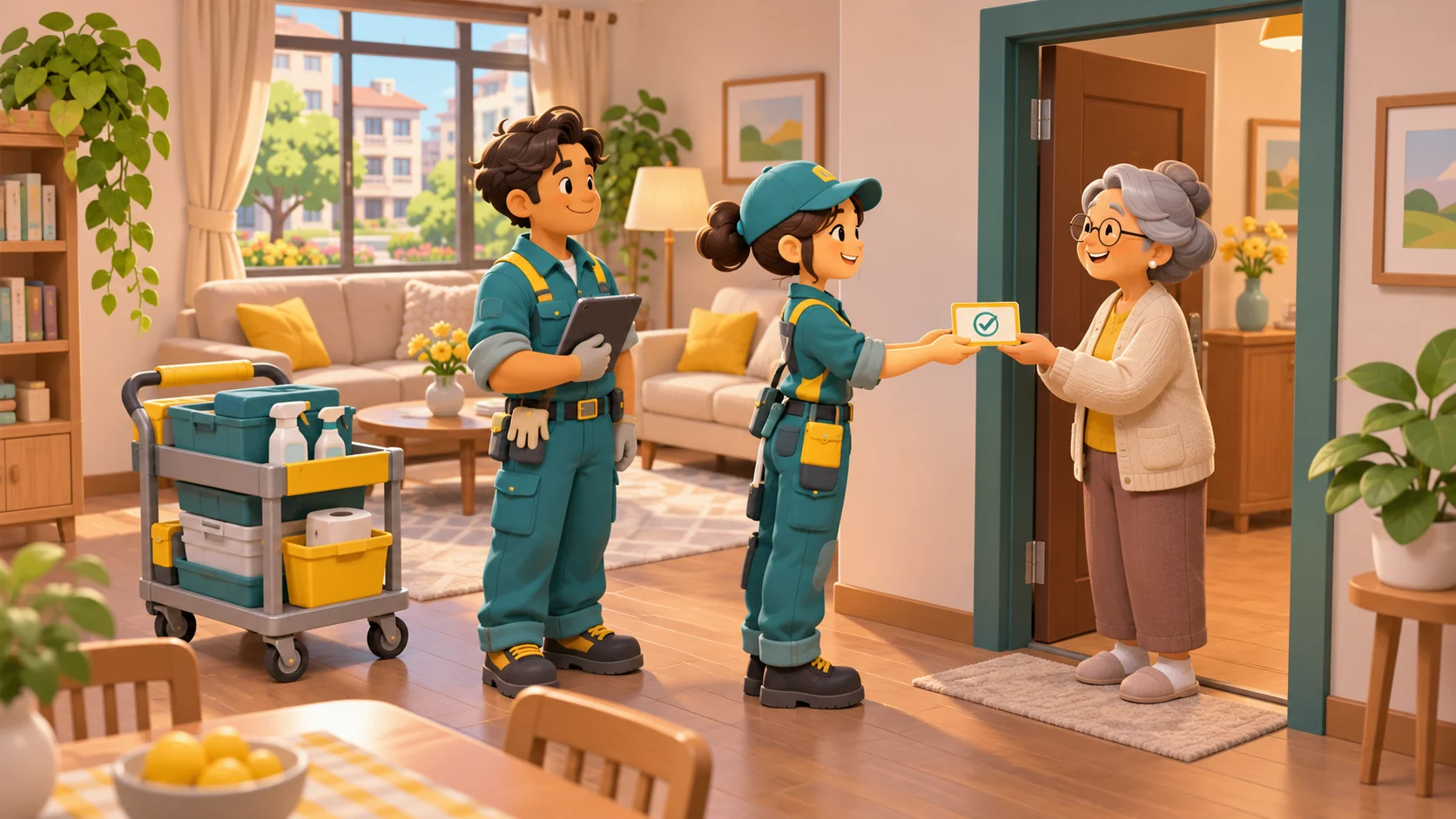
This fictional prototype snapshot illustrates a possible state; it is not an executed build or test result.
| Field | Illustrative state |
|---|---|
| Work order | Three-room apartment visit |
| Crew | One member on a quick task; one available |
| Supplies | Abstract token budget partly reserved |
| Route | Entry room → living room → study |
| Review question | Can the player see how the route and assignment affect remaining capacity? |
Review and revise
Prompt 5 — Review
Check the running Brightline Crew build against these requirements: work order displays its rooms; two crew assignments are visible; shared tasks require both; supply costs appear before confirmation; the route can be changed before work; task completion updates the checklist; handoff closes the order. Mark each present, missing or unclear based only on the actual build. Suggest the smallest change for the first unclear item. Do not imply that this is real cleaning guidance or claim a test unless it was run.
| What appears unclear | Possible gap | Focused change |
|---|---|---|
| Crew assignments overlap | Availability is not tracked | Mark a crew member busy until task completion |
| Supply tokens vanish | Cost timing is hidden | Show reservation before the player confirms |
| Route changes have no effect | Room order is cosmetic | Tie order to visible time or capacity variables |
| Handoff appears before tasks finish | Completion condition is missing | Require all selected task cards to close |
These are review hypotheses, not observed findings. Keep every task fictional and avoid implying practical cleaning instructions.
Conclusion
Useful cleaning-business game prompts define intake, crew capacity, abstract supplies, room routing, task states and client handoff. Brightline Crew uses one short apartment job to make those management choices visible without real-world cleaning instructions. Its prompts and snapshot are fictional and unexecuted. Request a narrow build, inspect the states and revise one unclear rule at a time.
SEELE's catalog describes prompt-led game creation, which can help explore a defined concept. It does not show that Brightline Crew has been generated or tested. You can start with the Free AI game maker, then compare the result with the review checklist.
FAQ
What should a cleaning-business game prompt include?
Describe job intake, crew capacity, abstract supplies, task states, route planning and handoff. Keep the first shift small and reviewable.
How do I prompt AI for crew scheduling?
State who is available, which tasks require one or both crew members, how assignments progress and what the player sees before confirming.
Can AI create a playable cleaning-business game automatically?
A prompt can request a build, but the output must be opened and verified. Brightline Crew's prompts and snapshot are illustrative and have not been executed.
Should a game use real cleaning chemicals or procedures?
This example avoids real procedures and products. Use fictional task cards and abstract values when the goal is business-management gameplay.
How can I make route planning matter?
Let room order affect visible time or remaining capacity, then show the consequences before the player starts the shift.