Introduction
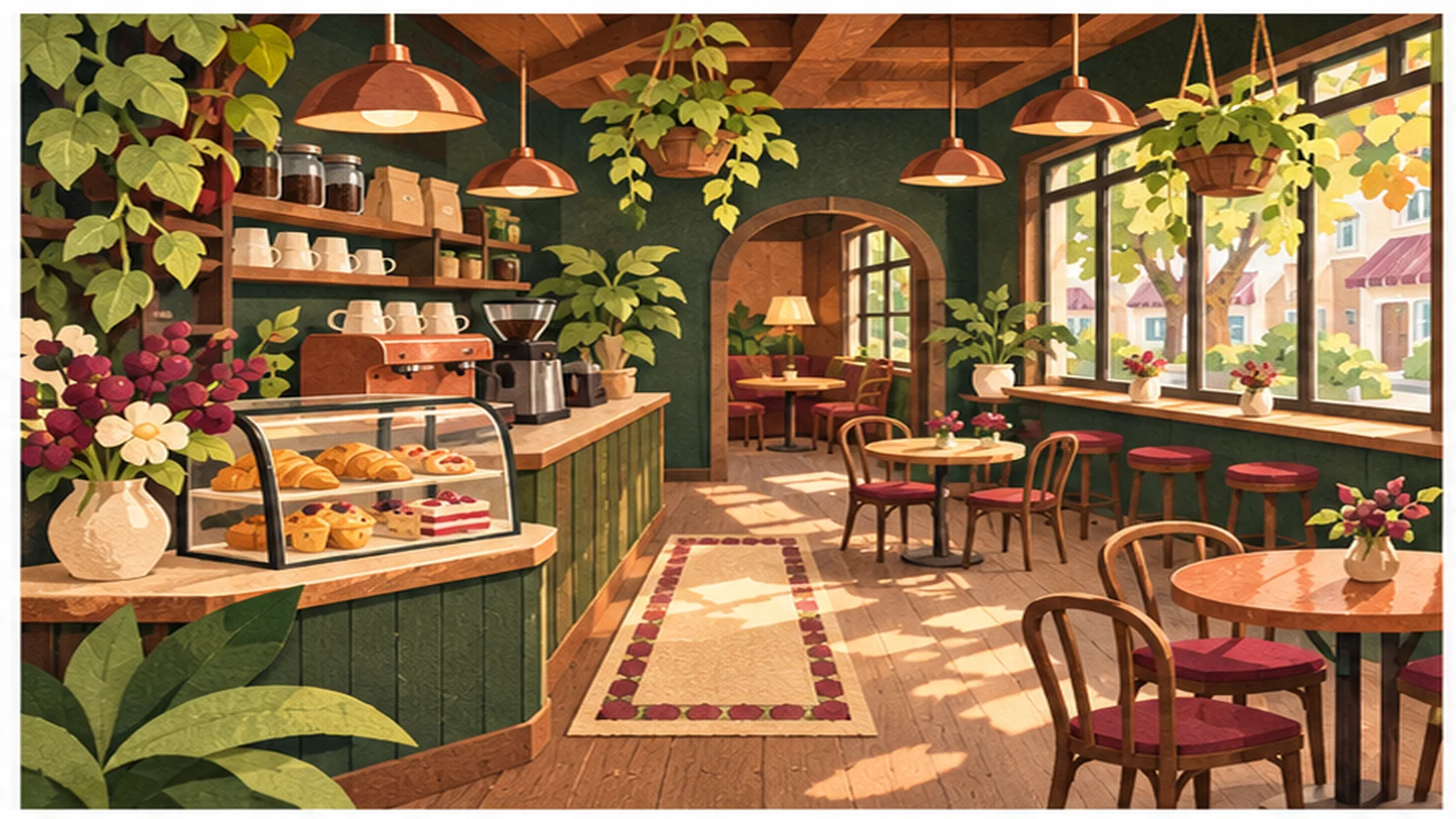
A bakery management prompt should connect orders, ingredients, preparation time and service feedback into one daily loop. “Make a cozy bakery game” describes a mood, but it does not say how a player decides what to bake, what can run out, or how the shop responds. A staged prompt kit makes those choices explicit before asking for a playable-sized prototype.
This article uses a fictional concept called Little Comet Bakery. At opening, the baker sees three neighbor orders, a small stock of flour and fruit, and two oven slots. The player chooses what to prepare first, schedules trays, serves the orders and sees which ingredient or timing decision affected the day. The prompts and sample snapshot below are illustrative; they have not been executed in a game tool, and no playable build or test result is claimed.
Use a sequence: define the shop promise, specify the day loop, describe stock and orders, request one bounded build, then review what the result actually shows. Start with a single morning shift. If the player cannot explain how a choice changed the shop, more recipes and decorations will only add noise.
Define the shop day
Before listing pastries, decide what the player manages. A useful first slice can include a brief order board, a few ingredients, one preparation step, an oven schedule, a serving action and a close-of-day review. State which choices are reversible and when the day advances. This gives the prototype a clear beginning and end.
Prompt 1 — Premise and daily loop
Create a concise design brief for an original bakery management game called Little Comet Bakery. The player runs a tiny neighborhood bakery during one morning shift. They receive three customer orders, choose which items to prepare, manage limited flour and fruit, schedule trays in two oven slots, serve customers, and review what remains. Define the player goal, the day phases, one meaningful tradeoff and three features to exclude from the first prototype. Use original characters, menu names, writing and visual design.
| Day phase | Player decision | Prototype feedback |
|---|---|---|
| Open | Which orders should be prepared first? | Order board shows item and requested time |
| Prep | How much of each ingredient should be used? | Stock changes as batches are prepared |
| Bake | Which tray uses each oven slot? | Schedule shows when items become ready |
| Serve | Which ready order should be handed over? | Customer response and order status update |
| Close | What stock or task remains? | Short summary shows the effect of earlier choices |
Keep the day short enough to understand. If baking takes several in-game hours but the first shift only lasts a few minutes, explain how time moves. If a player can serve an item before its tray is ready, decide whether that is a valid mistake or an impossible action.
Make orders and ingredients readable
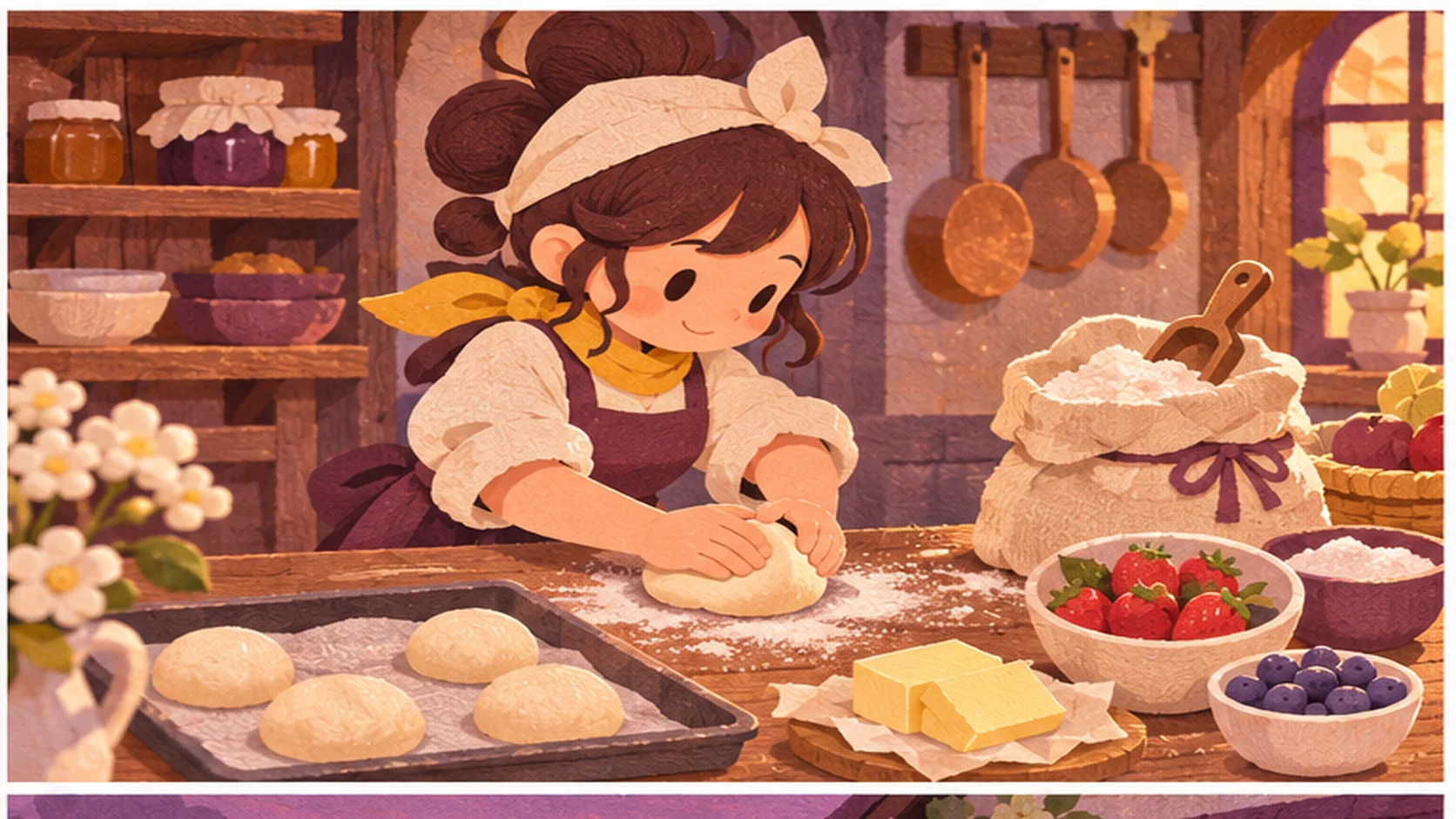
A management decision needs a visible constraint. The order board can show the requested item, quantity and a simple deadline. Ingredient stock should be visible before the player commits to a batch. If a recipe consumes flour and fruit, say exactly what the player needs to make, what the order pays or rewards, and what happens if supplies are insufficient. Avoid adding currency, rent, reputation and spoilage unless those systems serve the first loop.
Prompt 2 — Orders and stock rules
Define three original Little Comet Bakery orders for the first morning shift: a plain roll, a berry bun and a fruit tart. Give each order a quantity, requested delivery phase and ingredient requirement using only flour, fruit and butter. Starting stock is a small editable set of values; treat all values as design variables, not tested balance. Specify what the player sees before confirming a batch, what happens when stock is insufficient, and whether an unfilled order remains visible at close. Keep the rules understandable without hidden fees or surprise ingredient loss.
| Order | Main ingredient choice | Constraint to expose |
|---|---|---|
| Plain rolls | Flour and butter | One tray uses an oven slot |
| Berry buns | Flour and fruit | Fruit stock is shared with tarts |
| Fruit tart | Fruit and butter | Longer prep competes for the first slot |
The exact amounts are fictional and can be tuned later. The important prompt requirement is that shared ingredients create a choice. If the player can make every order without considering stock or oven time, the management layer is cosmetic.
Specify preparation and oven timing
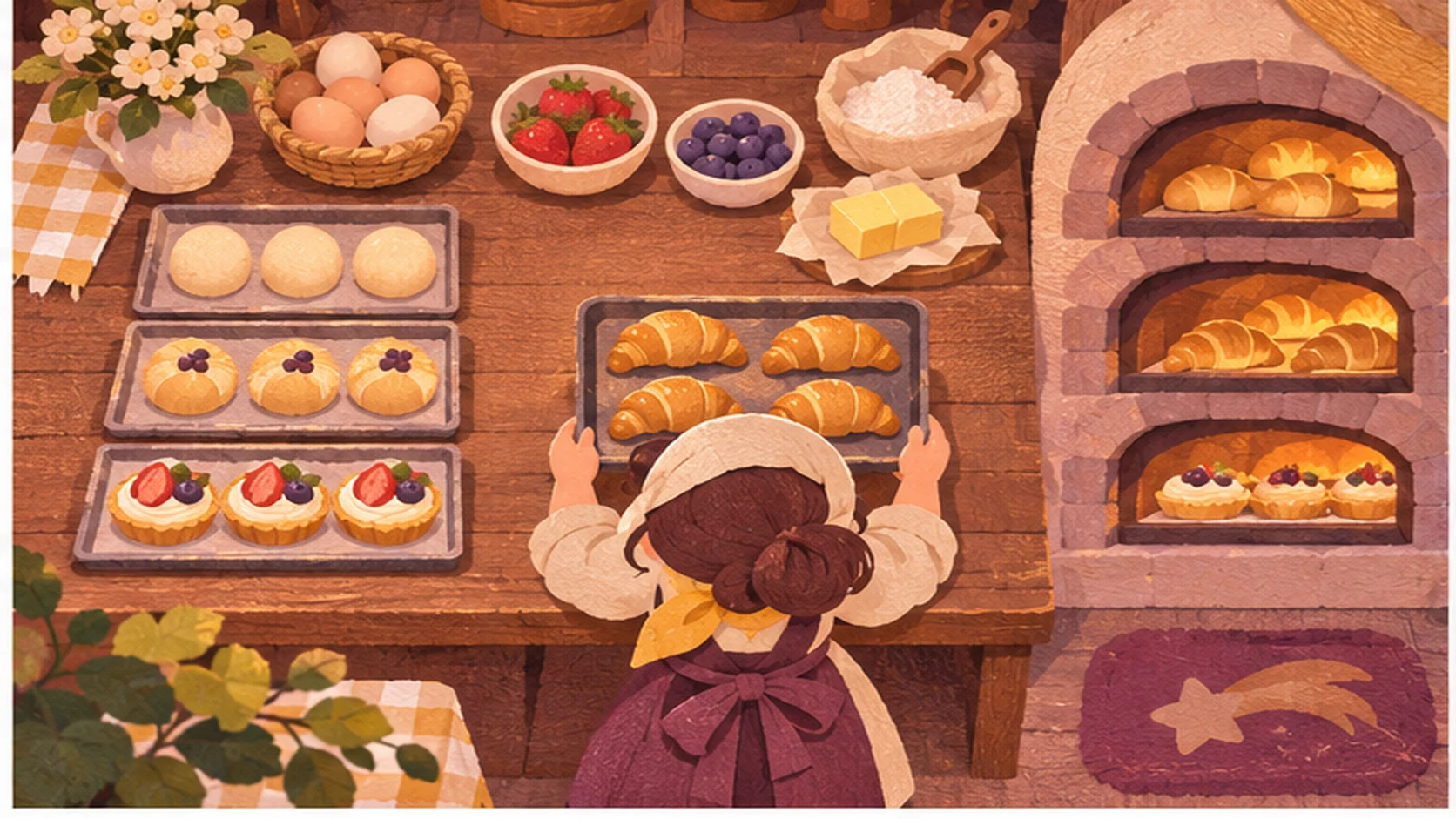
Preparation and baking should have a clear relationship. State whether the player can prepare several trays before baking, whether an oven slot handles one tray at a time, and whether ready items wait safely. If the game uses timing, provide a schedule cue before the player commits. Avoid asking for a “realistic bakery” without defining which parts of the work are relevant to play.
Prompt 3 — Production schedule
Design one simple Little Comet Bakery production schedule using two oven slots and the three orders. Show the prep action, the slot selected, the ready state and how a second tray can be queued. Make the player choose which order to prioritize. Clearly display occupied slots and ready trays. Do not introduce real-world baking times or claim realism; use editable fictional time units. If an order cannot fit before its requested phase, explain the consequence before the player confirms.
A schedule makes the player trade time against demand. The simulation does not need detailed recipe science to be legible. It needs consistent rules: the same slot cannot bake two trays at once, and the player should be able to see when a prepared item will be ready.
Request a small playable shift
A playable build prompt should identify the shop screen, order board, inventory, prep action, oven schedule, serve action, end state and restart path. Keep the first shift bounded so you can inspect whether management choices have consequences. Do not ask for every recipe, customer type, decoration, upgrade and financial system at once.
Prompt 4 — Build request
Build a small playable Little Comet Bakery prototype for one morning shift. Include an order board with the three approved orders, visible starting stock for flour, fruit and butter, one prep action per order, two oven slots, a ready-tray state, a serving action and a close-of-shift summary. Let the player see stock and slot consequences before confirming a batch. Add a reset action. Use original art and writing. Do not add rent, reputation, employee hiring, online features or a large recipe catalog. If a requested interaction is missing, report it as incomplete instead of claiming the build is finished.
A build request is not evidence that a playable result exists. Open the actual output and check that orders can be selected, stock changes consistently, trays move through the stated states and the shift can end. If the output is only a mock screen or concept, label it that way.
Fictional shift snapshot

The following fictional prototype snapshot illustrates an expected state. It is not an executed build, a screenshot or an observed outcome.
| Snapshot field | Illustrative state |
|---|---|
| Orders | One roll tray, one berry-bun tray, one fruit tart |
| Stock | Flour and butter are sufficient for two recipes; fruit is limited |
| Oven | Slot A is occupied; Slot B is available |
| Player choice | Prepare berry buns first, then decide whether fruit remains for the tart |
| Review question | Can the player see the fruit tradeoff before committing? |
A real production record should include the prompt version, generated artifact or build, the interactions actually checked, and any result that was observed. Keep an illustrative state table separate from a verified playable build so the article never suggests that hypothetical output was run.
Review the result and revise one rule
Review the same shift from opening to close. Ask whether the player sees demand, knows what each recipe consumes, understands oven availability and can trace the close-of-day summary back to a choice. If the stock count changes without explanation, ask for a visible consumption event. If the oven schedule is unclear, ask for an explicit ready state rather than adding another management system.
Prompt 5 — Review and iteration
Review the current Little Comet Bakery build against these requirements: three orders are visible; starting stock is shown; prep consumes the stated ingredients; two oven slots cannot bake conflicting trays; ready items can be served; the shift can close and summarize remaining orders and stock. Mark each requirement present, missing or unclear based only on the running build. Propose the smallest change for the first missing or unclear item. Do not infer behavior you cannot inspect or claim that a change has been tested until it is run.
| What appears unclear | Likely prompt gap | Focused revision |
|---|---|---|
| Player accepts every order without planning | Stock or oven limits are hidden | Show ingredient and slot consequences before confirmation |
| A tray appears ready immediately | State transition is unspecified | Show prep, queued, baking and ready states distinctly |
| The close summary feels disconnected | It omits earlier decisions | Report remaining stock and orders from the shift state |
| The player cannot recover from a mistake | Reversal rules are missing | Add a clear cancel or reset option before the shift ends |
| The page claims the build was tested | Evidence is not recorded | Replace the claim with a fictional example or attach an actual review record |
These are review hypotheses, not findings from a real session. Make one targeted change and inspect the same flow again after it is actually built.
Reuse the prompt kit
For another management game, keep the same structure and replace the shop: define its promise, daily loop, scarce resources, production or service constraint, playable slice and review checklist. Use variables for values that need tuning. Keep the first version focused on decisions that change the outcome.
SEELE's catalog describes prompt-led game creation, which can help creators explore a defined game concept. It does not show that Little Comet Bakery has been generated or tested. You can start with the Free AI game maker, then compare the resulting interactions with the prompt checklist before claiming the shift works.
Conclusion
Useful bakery management prompts define the day phases, order rules, ingredients, production schedule, serving action and shift result. Little Comet Bakery uses one morning shift and two oven slots to make the tradeoffs visible without requiring a large simulation. Its prompts and snapshot are illustrative and unexecuted. Request a narrow build, inspect the stock and tray states, then revise one unclear rule at a time.
FAQ
What should a bakery management game prompt include?
Describe the daily loop, order board, ingredients, production constraint, customer feedback and close-of-day state. Keep the first request small enough to inspect.
How do I prompt AI to make a bakery game?
Specify what the player does, which ingredients are used, how oven slots work, how orders are served and what happens at the end of the shift. State values as editable design variables when they are not tested.
Can AI create a playable bakery management game automatically?
A prompt can request a playable prototype, but the result must be opened and checked. Little Comet Bakery's prompts and snapshot here are fictional and have not been executed.
How can I make bakery management decisions meaningful?
Let a visible constraint such as shared stock or limited oven capacity affect which orders the player can complete. Show the consequence before the player commits.
Should I include hiring, rent and upgrades in the first prototype?
Only if the core shift requires them. A small order, prep, oven and service loop is easier to review before adding larger business systems.