Introduction
A base-building real-time strategy prompt has to connect gathering, worker jobs, construction, timing and pressure. “Create an RTS with a base and enemies” does not say what the player builds first, what resources constrain them, or how a structure changes the battlefield. A staged prompt sequence turns those pieces into a small build request that can be reviewed.
This article uses Canopy Relay, a fictional strategy game about a settlement on a floating forest island. The player assigns a few workers to gather seed crystals, places a wind generator and two bridge pylons, then defends the route against a vine-raider wave. The map is intentionally small so each worker and structure has a visible purpose. The prompts and snapshot are illustrative; they have not been executed in a game tool, and no playable build or test result is claimed.
Use a sequence: define the base loop, specify resources and jobs, describe construction rules, state how time and enemy pressure work, request one bounded scenario, then inspect the result. Keep the first match small enough to understand. If the player cannot explain why a pylon mattered, adding more units or a larger map will not repair the missing connection.
Define the match phases
Start with the order of decisions. A first scenario might let the player gather, assign workers, place structures, and then respond to a timed threat. State whether the player can keep building during the wave, whether workers can be interrupted, and what counts as victory or defeat. Those rules determine the pacing more than the visual theme does.
Prompt 1 — Game brief and phases
Create a concise design brief for an original base-building RTS called Canopy Relay. The player protects a settlement on one floating forest island and must activate a bridge pylon before a vine-raider wave arrives. Define the match goal, planning and real-time phases, resource loop, worker role, first threat, and win/loss conditions. Keep the first scenario to one base, three worker roles, two buildable structures and one wave. Use original names, setting, units, writing and visual design.
| Phase | Player decision | System feedback |
|---|---|---|
| Gather | Which workers collect seed crystals? | Resource stock changes and workers show assigned jobs |
| Build | Which structure and location matter first? | Placement preview shows cost and connection |
| Prepare | How many workers stay at the base? | The incoming wave marker shows time remaining |
| Defend | Which lane or pylon needs attention? | Raider path and structure state remain visible |
| Resolve | Did the relay route activate? | Bridge lights or remains incomplete, with a clear reason |
A phase table is helpful even if the game runs continuously. It clarifies which actions remain available while the timer advances. If workers can perform multiple jobs at once, state whether that is a choice or a limit in the system.
Make resources and jobs matter
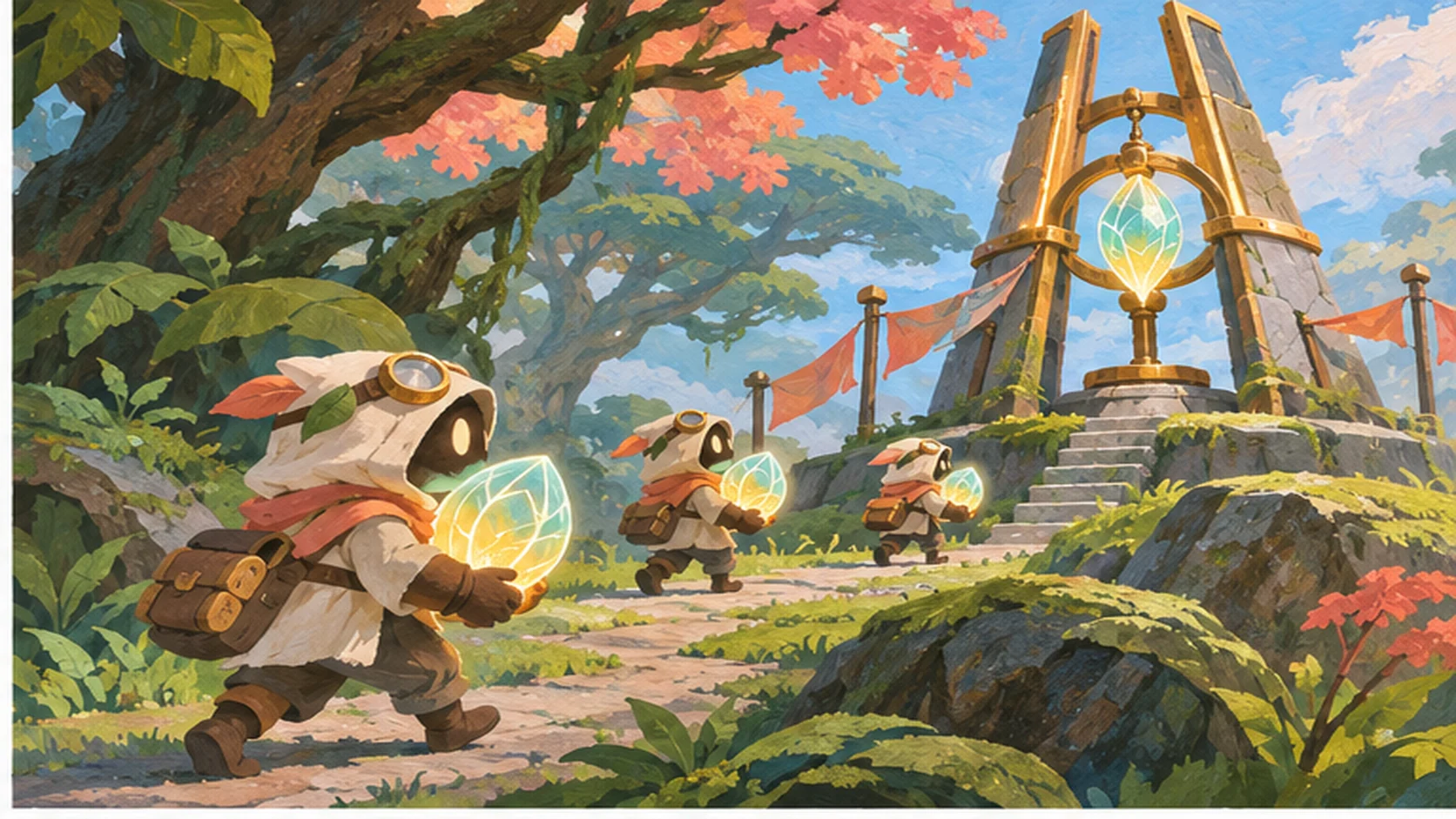
An RTS economy needs a short, visible relationship between a worker assignment and the next action it enables. For Canopy Relay, workers collect seed crystals from marked groves. The wind generator consumes crystals and powers nearby structures, while a bridge pylon uses crystals and a worker action to activate a route. Keep the first version to one resource unless a second one creates a genuinely different decision.
Prompt 2 — Economy and worker rules
Define three Canopy Relay worker jobs: gather seed crystals, build a structure, and repair a damaged pylon. State how many workers can perform each job, what action or time cost applies, how a worker returns to an idle state, and what happens if the assigned target is unavailable. Seed crystals are the only resource in the first scenario. Show current stock, reserved cost and completed work clearly. Treat all numeric values as editable design variables, not tested balance.
| Job | Enables | Constraint to show |
|---|---|---|
| Gather | Adds seed crystals to stock | A worker is unavailable for construction while gathering |
| Build | Places generator or pylon | Structure cost is reserved before work begins |
| Repair | Restores a damaged pylon state | The worker leaves another job to repair it |
The jobs should compete for attention. If the player can assign every worker to every action simultaneously, there is no reason to choose. If a job takes time, show progress and what can interrupt it.
Describe construction and map connections
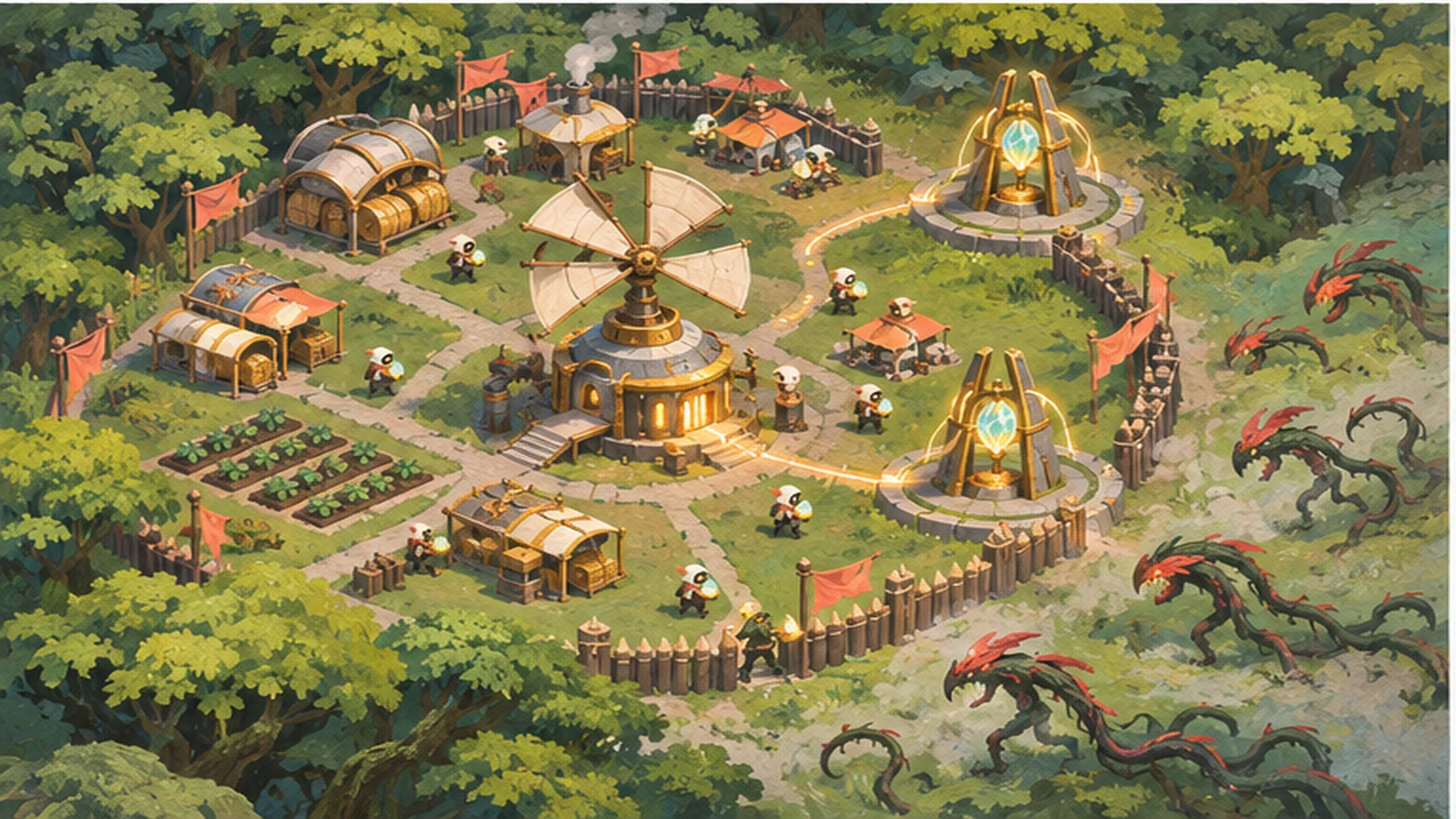
A building prompt should define where structures can go, what they cost, what they connect to and what happens when they are damaged. Canopy Relay uses the wind generator as a power source and bridge pylons as route nodes. The pylon does not activate merely because it exists; it must be connected to the generator and staffed long enough to complete its signal.
Prompt 3 — Build placement and connectivity
Specify placement rules for the Canopy Relay wind generator and bridge pylons on a compact grid. The generator powers adjacent structures. A pylon must be placed on a marked island edge, connected through a powered path, and assigned one worker to activate. Show a placement preview with crystal cost, power reach and edge validity before confirmation. If a raider damages a pylon, show whether its route signal pauses or resets. Define one consistent rule for blocked tiles and overlapping structures.
This prompt asks for readable planning information before the player commits. A placement preview can prevent confusion, but it should match the rule used after construction. If the map shows a connected pylon and the route stays dark, the prototype needs a clear state explanation.
Add one threat and one objective

Enemy pressure can make a base-building scenario urgent, but a wave should test a decision already taught by the prompt. Keep the first threat simple: one raider group follows a marked path toward an unpowered pylon. The player can keep a worker on construction, pull that worker to repair, or improve the generator connection earlier. Do not add multiple factions and attack types before the player understands the base loop.
Prompt 4 — Threat and outcome
Design one vine-raider wave for Canopy Relay. Show its path and arrival signal before it reaches the settlement. Raiders target the nearest active bridge pylon; if none is active, they approach the generator. Define how the player can respond using only worker assignment and the two approved structures. State what happens when a pylon is damaged, what counts as defending the route, and how the scenario ends. Do not add combat units, hidden enemy rules or new resources.
| Threat state | Player can inspect | Possible response |
|---|---|---|
| Wave preparing | Direction and time marker | Reassign a worker or finish the pylon |
| Raiders advance | Target pylon and path | Repair or preserve the generator connection |
| Structure hit | Pylon state and route signal | Send a worker to repair or accept a route delay |
| Wave resolves | Remaining structure and objective state | Activate the bridge or restart the scenario |
The example uses proposed behavior, not a verified encounter. State whether the player wins by surviving, completing the objective, or both. Avoid changing the goal halfway through the scenario.
Request a small playable build
A build prompt should identify the map, controls, workers, structures, resource display, enemy cue, completion rule and restart option. Keep the first scenario to one island and one wave so you can inspect cause and effect. Add a larger economy, technology tree, multiple enemy types and campaign map after the core scenario is readable.
Prompt 5 — Build request
Build a small playable Canopy Relay RTS prototype on one compact floating-island map. Include three workers, seed-crystal stock, gather/build/repair assignments, one wind generator, two bridge pylons, a placement preview, a visible wave timer, one vine-raider group and the approved win/loss conditions. Let the player assign workers and see job progress. Keep structure connectivity and raider targeting visible. Include reset. Do not add extra factions, tech trees, multiplayer, resource types or a campaign. If any requested interaction is missing, list it as incomplete instead of claiming that the build is finished.
A prompt is a request, not evidence of a working RTS. Open the result and check that worker assignments change state, placement uses the stated cost, the path signal matches connectivity, and the wave follows the described target rule. If the output is only a diagram or screen mockup, call it a mockup.
Fictional scenario snapshot
The table below is a fictional build snapshot for illustrating the expected state, not an executed prototype or test result.
| Snapshot field | Illustrative state |
|---|---|
| Workers | Two gather crystals; one is available for construction |
| Base | Wind generator active; first pylon connected |
| Threat | Vine-raider wave marker approaching from the eastern bridge |
| Player choice | Keep a worker gathering or assign them to complete the second pylon |
| Open question | Can the player see the construction and defense tradeoff before the wave arrives? |
A real record should include the prompt version, build artifact, actions actually checked and results observed. Keep expected behavior separate from the behavior confirmed in a running build. This makes it easier to identify whether a missing feature came from the prompt, generated response or implementation.
Review the scenario and revise one rule
Review the same sequence from the first worker assignment to the wave outcome. Check whether the resource cost is clear, the structure connection is visible, the timer provides enough information and the result follows the stated rules. If the path remains dark, ask for the connected state to be shown. If the wave target is confusing, make the target rule visible before the wave begins.
Prompt 6 — Review and iteration
Review the current Canopy Relay build against these requirements: workers can be assigned to gather/build/repair; stock and reserved costs are visible; structures obey placement and connectivity rules; the wave path and target are shown; the pylon damage response is consistent; the scenario ends according to the brief. Mark each requirement present, missing or unclear based only on the running build. Propose the smallest change for the first missing item. Do not claim the change has been tested until it is run.
| What appears unclear | Likely prompt gap | Focused revision |
|---|---|---|
| Workers seem to finish jobs instantly | Work duration or assignment state is unspecified | Show a job state and editable progress duration |
| Pylon connection is hard to predict | Placement preview omits power reach | Display the powered path before construction |
| Raiders attack an unexpected building | Target priority is implicit | Show the target rule and current target cue |
| A pylon stays inactive after repair | Repair and activation states are conflated | Separate damaged, repaired and active states |
| A summary claims the prototype works | No running build was inspected | Replace the claim with a mock snapshot or record a real review |
These are diagnostic ideas, not results from a playtest. Revise one rule or cue, then inspect the same scenario again after the prototype is actually run.
Reuse the prompt sequence
For another base-building RTS, keep the same structure: define phases, resource and jobs, building placement, map connectivity, pressure, build scope and review. Replace the floating-island theme with your own world. Make each structure change a choice the player can see, and defer features that do not help the first scenario.
SEELE's catalog describes prompt-led game creation, which can help explore a specific strategy-game concept like Canopy Relay. It does not show that this example has been generated or tested. You can begin with the Free AI game maker, then compare any generated result with the prompt requirements before claiming the scenario works.
Conclusion
Useful base-building RTS prompts connect worker assignments, resources, structures, map rules, enemy pressure and victory conditions. Canopy Relay uses one floating island, one resource and one wave to illustrate those connections. Its prompt sequence and snapshot are fictional and unexecuted. Request a narrow build, inspect the actual worker and structure states, and revise one unclear rule at a time.
FAQ
What should a base-building RTS prompt include?
Describe match phases, resources, worker roles, construction costs and placement, map connections, enemy pressure and win conditions. Define what the player can inspect before committing.
How do I prompt AI for RTS worker behavior?
State each job, its target, cost or duration, completion state, interruption rule and what happens when a target is unavailable. Keep the first set small.
Can AI make a playable RTS from one prompt?
A prompt can request a playable build, but you must open and verify the actual result. Canopy Relay's prompts and scenario snapshot here are illustrative and have not been executed.
How can I make base-building strategy meaningful?
Make workers or resources serve competing needs, and show how structures affect a route, defense or objective. The player should see the tradeoff before choosing.
Should I add a technology tree and multiple factions right away?
Usually not in the first scenario. Start with one resource, a few jobs and one threat so you can review the base loop before adding larger systems.