Introduction
An auto-battler prompt needs to explain what players decide before combat, what the units do once a round begins, and how the result changes the next decision. “Make an auto-battler with strategic units” does not define the board, unit roles or resolution rules. A staged prompt kit makes those parts explicit before asking for a playable build.
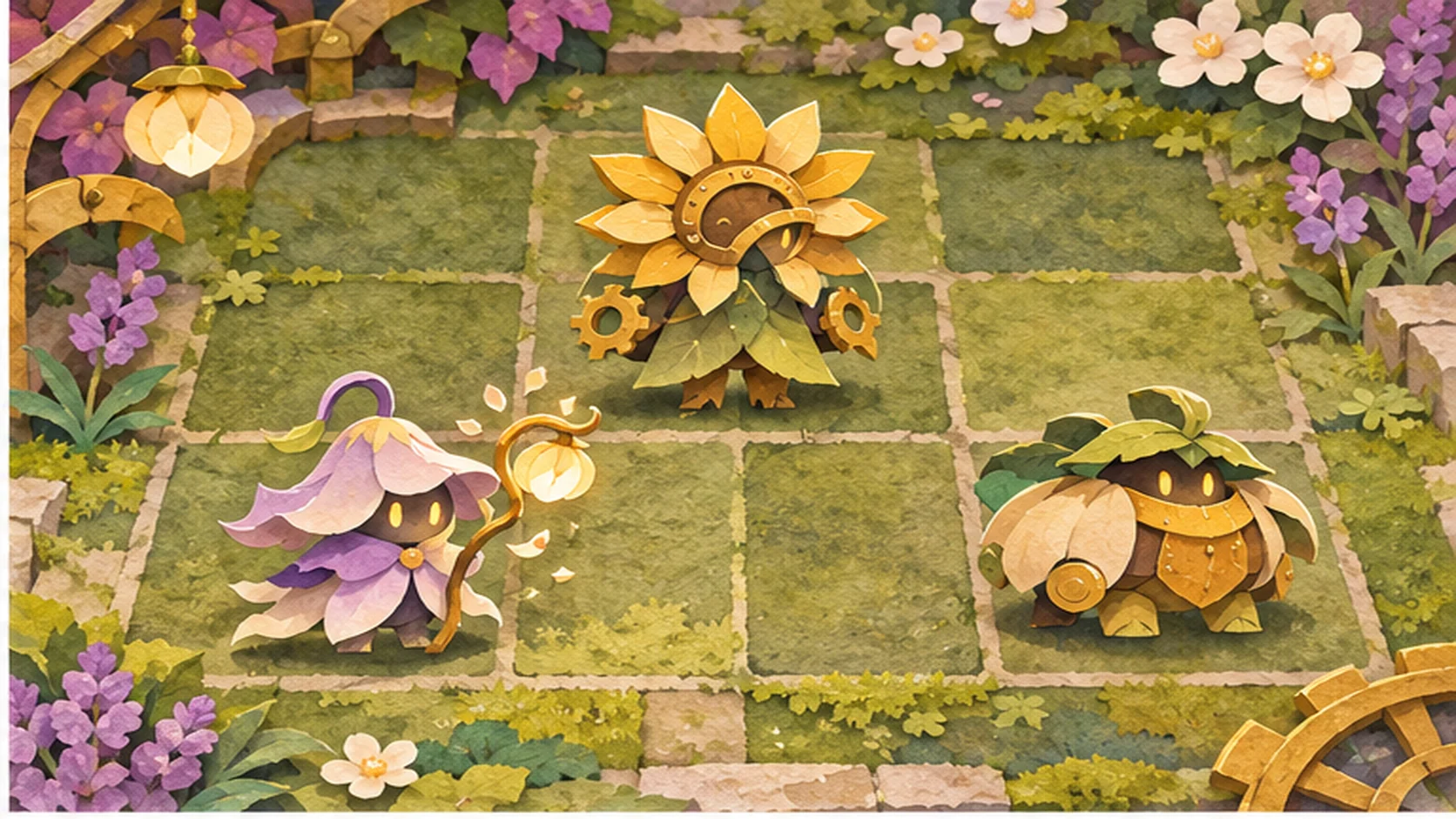
This article uses a fictional concept called Clockwork Orchard. Players place three seedling guardians on a small garden grid, then watch them automatically protect an orchard from bramble creatures. A sunbud absorbs the first strike, a bellflower redirects a nearby enemy, and a gearroot repairs a neighboring ally after the round. The example prompts and snapshot are illustrative; they have not been executed in a game tool, and no playable build or test result is claimed.
Use a sequence: brief the game, define unit roles, specify positioning, describe automatic resolution, request a small build, then review it against clear criteria. Keep the first slice small enough to follow. If you cannot explain why one formation behaves differently from another, adding more units will not fix the missing rule.
Define the preparation and resolution loop
An auto-battler often separates player planning from unit actions. In your prompt, name when the player can change a formation, when a round begins, what continues automatically, and what choices return afterward. State what persists between rounds and what resets. This prevents a generated concept from mixing planning and combat without telling the player when they can act.
Prompt 1 — Brief and phases
Create a concise design brief for an original auto-battler called Clockwork Orchard. The player protects a garden by placing seedling guardians before each round. Combat then resolves automatically on a 3x2 grid. Define the player goal, planning phase, automatic resolution phase, round result and one decision that carries into the next round. Keep the first prototype to three guardian types and one enemy family. Use original art, names, units, writing and interface. Do not add a shop, collection system or long campaign unless it is needed to explain the first loop.
| Phase | Player can do | System should show |
|---|---|---|
| Plan | Place or move guardians on the 3x2 grid | Unit roles, positions and expected neighboring effects |
| Lock formation | Confirm the arrangement | A clear signal that planning has ended |
| Resolve | Watch each guardian act automatically | Target, action and visible result in sequence |
| Review | See what survived and what changed | Round outcome and next planning options |
The phase table gives a build request a clear boundary. If units can move during automatic combat, say whether that is an intentional rule. If the player can interrupt a round, specify the interruption and its cost. Avoid leaving these choices implicit.
Give each unit one readable role
Start with a few units whose actions differ in a way the player can see. A role should answer three questions: when does the unit act, what does it affect, and how does its position matter? Avoid generic labels such as “tank,” “support” or “damage dealer” without describing the rule behind them.
For Clockwork Orchard, the sunbud protects the first ally struck in its row, the bellflower redirects the nearest bramble creature when a marked signal appears, and gearroot repairs the adjacent guardian with the lowest vitality after an enemy action. These are fictional rules. They make placement relevant because neighbors and row positions change the effect.
Prompt 2 — Unit roles and interactions
Define exactly three original Clockwork Orchard guardians: Sunbud, Bellflower and Gearroot. For each, specify its grid footprint, action trigger, target rule, effect and visible cue. Sunbud shields the first ally struck in its row. Bellflower redirects the nearest bramble creature only after a visible thorn-signal cue. Gearroot restores one simple vitality step to the adjacent guardian with the lowest vitality after an enemy action. State how ties are resolved, what happens if no valid target exists, and how the player can understand the result. Keep values editable design variables; do not present balance as tested.
| Unit | Trigger | Target | Position matters because… |
|---|---|---|---|
| Sunbud | First ally in its row is attacked | That ally | Row placement determines who receives the shield |
| Bellflower | Thorn-signal appears | Nearest bramble creature | Distance changes which enemy is redirected |
| Gearroot | Enemy action finishes | Adjacent ally with lowest vitality | It must be placed near a unit it can repair |
Clear targeting rules prevent confusing combat. Define what “nearest” means on a small grid, and specify tie behavior. If two guardians act at the same time, set a stable order. These details make a prompt more useful than asking for “smart AI.”
Describe automatic combat step by step
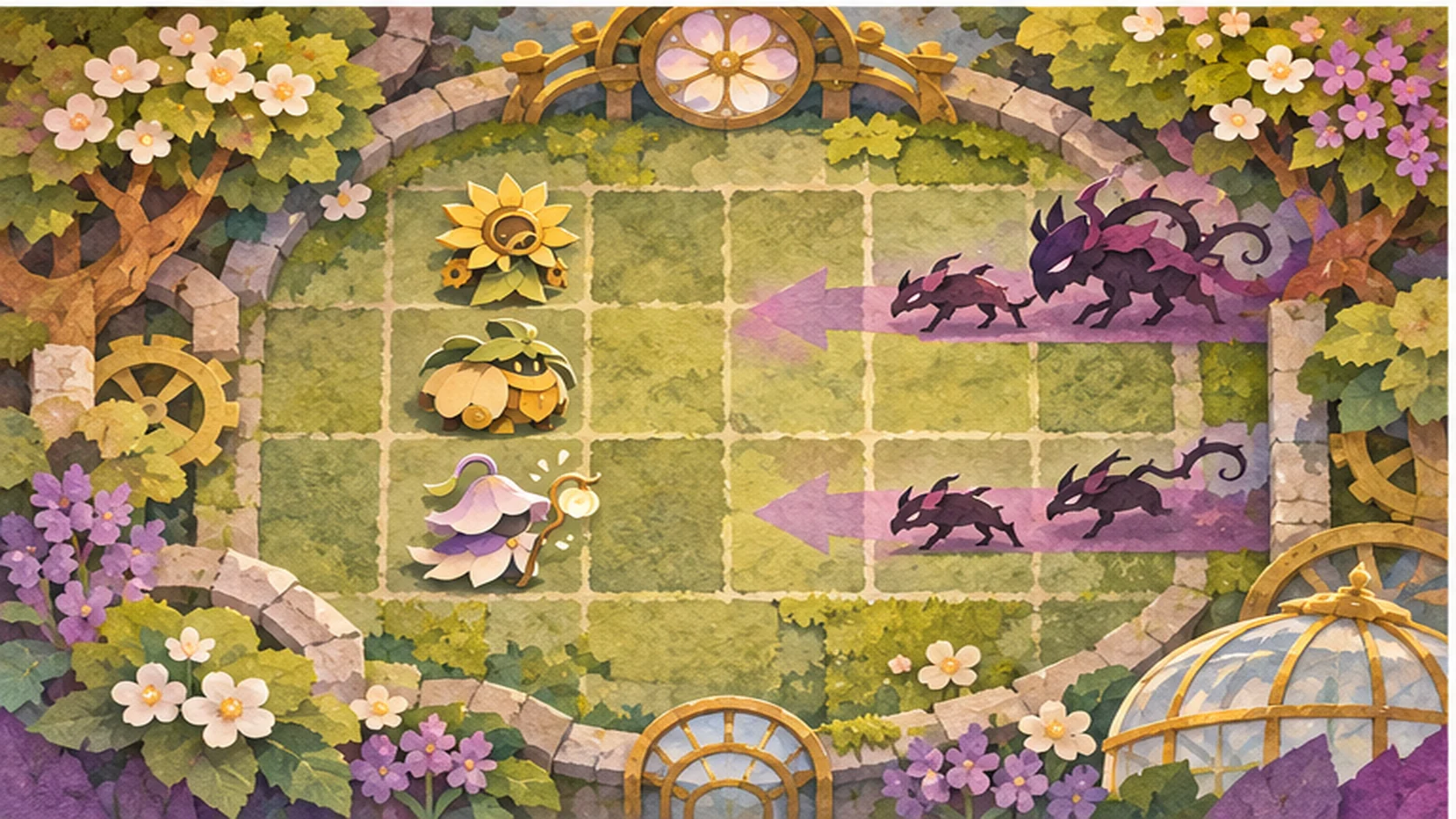
An automatic round should be observable. A player may not control each attack, but they still need to understand what happened and why. Specify a sequence such as enemy cue, guardian response, bramble action, support effect, and round check. Choose whether each event resolves in lanes, by speed, or by a written priority order. Do not combine several simultaneous effects until the player can follow the basic sequence.
Prompt 3 — Resolution order
Write the Clockwork Orchard round-resolution order as a numbered sequence. First reveal any bramble telegraph; then let Bellflower check for its thorn signal; resolve enemy movement and attack; apply Sunbud's shield to the first valid ally in the row; then let Gearroot repair an adjacent ally after the attack. Define tie handling, invalid targets, the end-of-round check and the information shown in the combat log. Keep each event visually separated so a player can trace cause and effect. Label all values and timing as untested design choices.
| Resolution event | Example output cue | Player should be able to answer |
|---|---|---|
| Bramble signals a row | Thorn shape appears above a lane | Which row is threatened? |
| Bellflower redirects | Target line changes to a nearby bramble | What caused the new target? |
| Attack resolves | Shield flashes or a guardian loses vitality | Who was hit and why? |
| Gearroot repairs | A neighboring vitality marker returns | Which placement enabled the repair? |
| Round ends | Remaining units and next setup appear | What can I change before the next round? |
This sequence is a proposed ruleset, not a tested balance model. If the combat log and animation disagree, the player cannot learn the system. Keep visual cues and written event order aligned.
Request a narrow playable build
A build prompt should define the board size, available actions, number of units and enemies, round flow, restart behavior and visible feedback. Avoid asking for a complete campaign, dozens of units and a progression economy in the same request. A small prototype can answer whether placement changes the automatic result.
Prompt 4 — Playable slice
Build a small playable Clockwork Orchard prototype with one 3x2 garden grid, the three approved guardian types, and one bramble enemy family. Let the player place guardians during a planning phase and lock the formation. Resolve one round automatically in the specified order, showing each cue and effect. Display simple vitality markers, a short event log and the next-round state. Include a reset action. Do not add a shop, online mode, collection system or unrequested visual effects. If any rule is missing or unsupported, list it as incomplete instead of reporting that the build is finished.
The word “playable” is a request, not proof that the result exists. Open the generated build and check that dragging or selecting units works, that the round actually resolves, and that the state changes match the prompt. If your tool returns a design or screenshot instead of an executable interaction, describe it accurately as a mockup or concept.
Fictional prototype snapshot
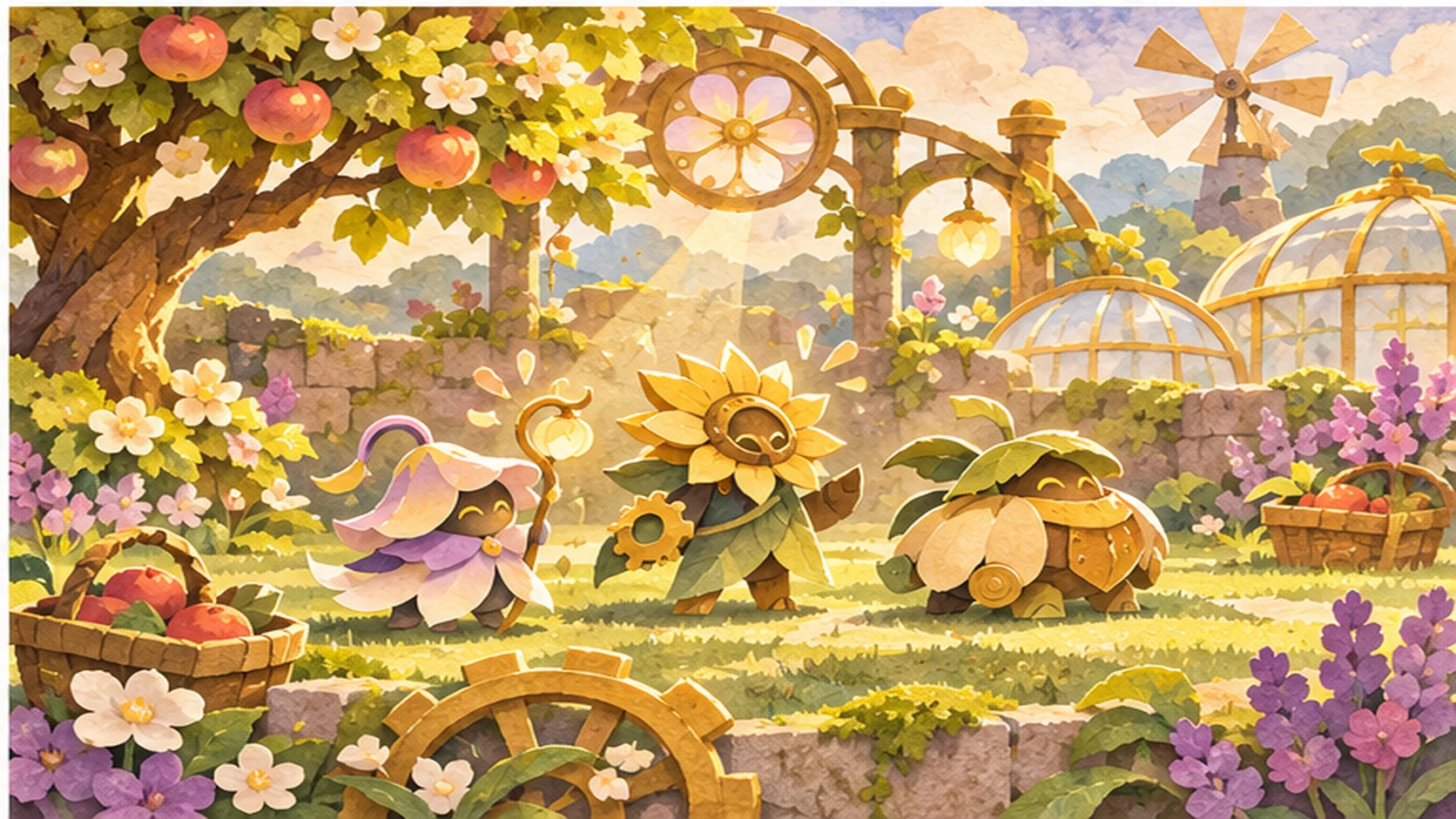
The following fictional build snapshot demonstrates how a team might record one expected round. It is an illustrative specification, not a screenshot, implementation or test observation.
| Board position | Unit | Expected response in the example round |
|---|---|---|
| Front-left | Sunbud | Shields the first ally attacked in its row |
| Front-center | Bellflower | Redirects a bramble after the thorn cue appears |
| Back-center | Gearroot | Repairs the adjacent guardian after an enemy action |
| Empty cells | — | Remain available for a different formation |
A real build record should state the prompt version, build artifact, implemented controls and what was observed. Keep expected behavior separate from behavior confirmed in a running prototype. That separation matters when you are deciding whether to revise the prompt, the rule or the implementation.
Review the round and revise precisely
Use the same review sequence every time: inspect the formation, identify the telegraph, follow each action, and explain the round result. Ask for a narrow revision based on what was missing or unclear. “Make it more strategic” does not say which decision should change. “Show which row the sunbud protects before the player locks formation” gives a concrete next action.
Prompt 5 — Review and iteration
Review the current Clockwork Orchard build against these requirements: player can place three guardians on a 3x2 grid; planning ends on confirmation; bramble telegraph appears before the action; Bellflower, Sunbud and Gearroot follow their target and trigger rules; resolution order is visible; round result leads to a new planning state. Mark each as present, missing or unclear based only on the running build. Propose one smallest change for the first missing or unclear item. Do not infer behavior you cannot observe or claim the revision has been tested until it is run.
| Review note | Likely gap | Focused revision |
|---|---|---|
| Guardian effects appear arbitrary | Trigger or target rule is hidden | Show the trigger cue and selected target before the effect |
| Formation changes do not matter | Position rules are not connected to resolution | Make row or adjacency effects visible before lock-in |
| The round is hard to follow | Events overlap or resolve simultaneously | Separate the automatic sequence into readable steps |
| Players cannot plan the next round | Result state omits surviving units or threats | Show the new board state and available changes |
| A response claims features without proof | Build was not inspected | Open the running prototype and verify each requested interaction |
These review prompts do not claim that any issue has happened in a real build. They give you specific questions to ask when a build exists.
Reuse the prompt sequence for another theme
Keep the sequence—brief, unit roles, resolution order, playable slice, review—and replace the orchard details with your own setting and mechanics. Write down the target rules and tie-breakers. Ask for a preview that explains what players can inspect before lock-in. Add new units only after the first three make distinct positional choices.
SEELE's catalog describes prompt-led game creation, which can help explore a defined concept like Clockwork Orchard. It does not show that this example has been generated or tested. You can start with the Free AI game maker, then compare what it produces with your prompt checklist before claiming the round works.
Conclusion
Useful auto-battler prompts define the planning phase, unit roles, position rules, automatic resolution order, round result and next decision. Clockwork Orchard uses a tiny garden grid to illustrate how placement can change a round without requiring a large roster or economy. The prompt kit and prototype snapshot are fictional and unexecuted. Use the stages to request a narrow build, inspect what it actually does, and revise one unclear rule at a time.
FAQ
What should an auto-battler prompt include?
Define the planning phase, board, unit roles, placement effects, automatic resolution order, round outcome and restart or next-round state. Specific rules make a prototype easier to review.
How do I prompt AI to make auto-battler units?
Give each unit a trigger, target, effect and positioning rule. Include tie handling and what happens when no valid target exists so the automatic round remains predictable.
Can AI make a playable auto-battler from one prompt?
A prompt can request a playable build, but the result must be opened and checked. Clockwork Orchard's prompt kit and mock snapshot here are illustrative and have not been executed.
How do I know if an auto-battler prototype is working?
Verify the actual controls and round behavior against the prompt. Check that unit placement changes outcomes as described and that players can understand the event sequence.
Should I start with a shop and a large unit roster?
Usually it is clearer to start with a few units and one round. Add economy or a larger roster after the basic positioning and resolution rules can be inspected.