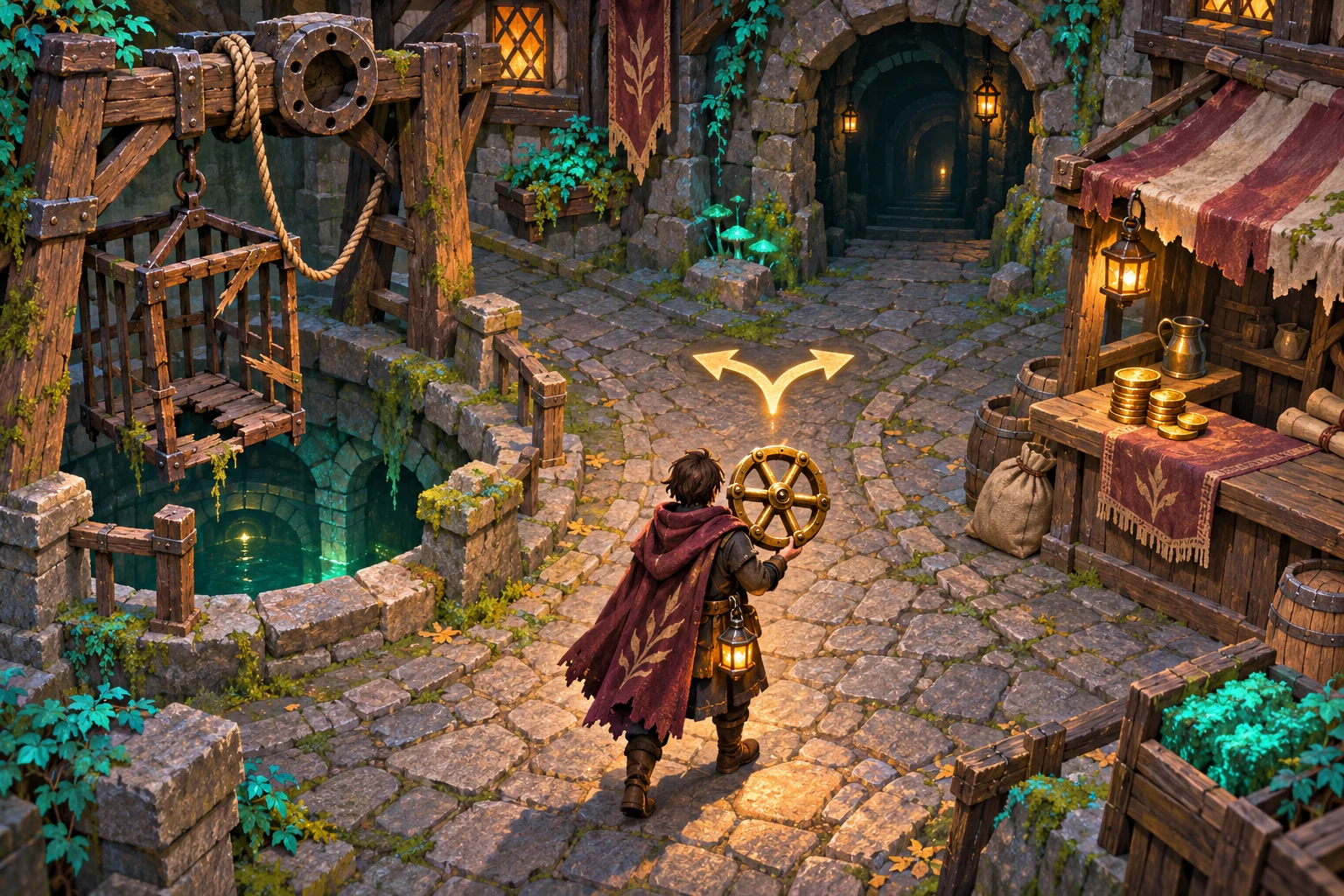
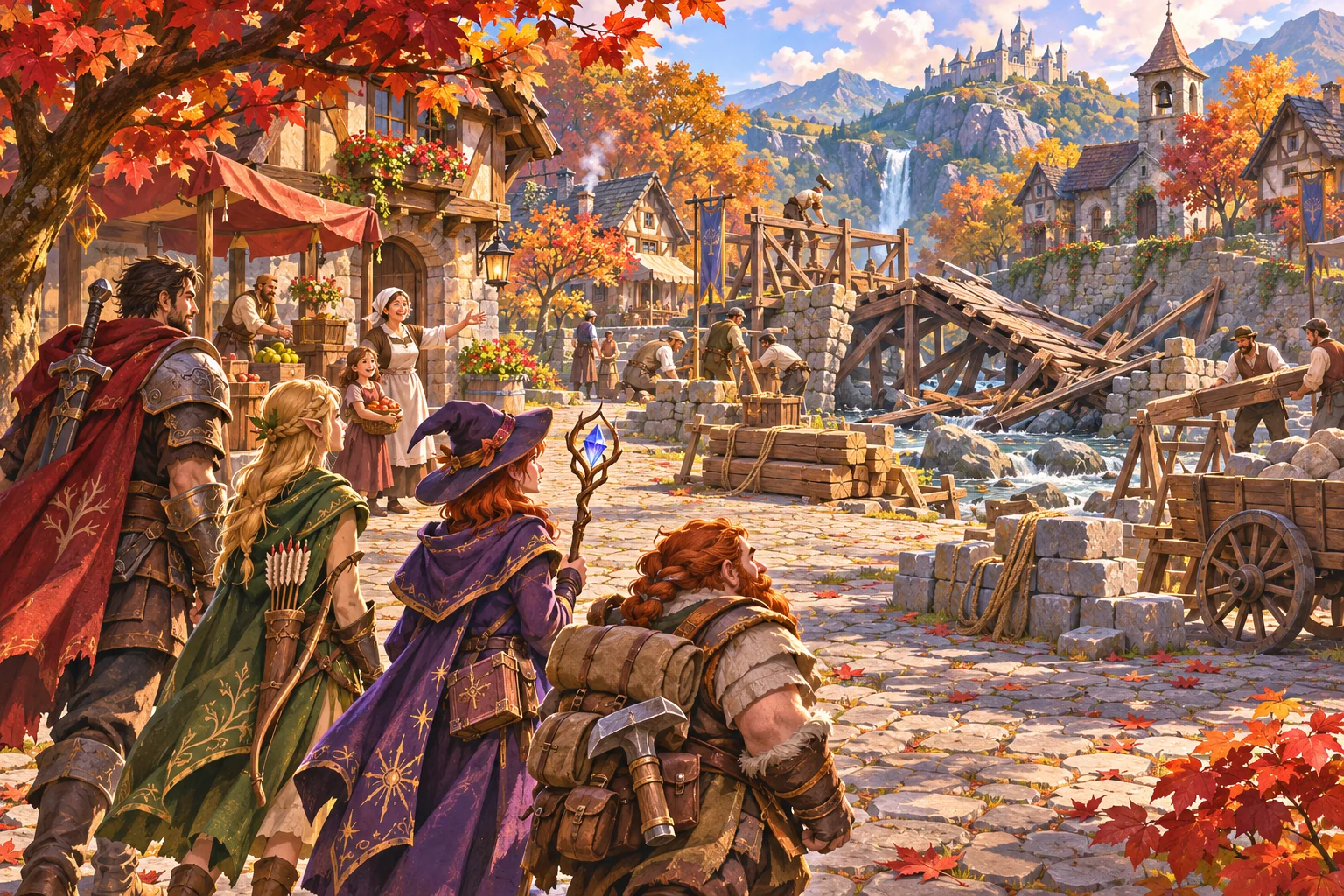
A town can become part of a turn-based RPG’s progression when adventure quests repair places that matter to daily life. Rebuilding a bridge can reconnect the mill; restoring the well can open a new preparation option. Each quest changes a shared town state instead of only granting experience.
Start with one town map, one broken bridge and one quest that restores access. Keep the battle encounter fixed while changing only whether the quest objective is completed. This small state model checks quest-to-town updates; it does not test campaign pacing or whether the town feels alive.
Make each quest update a visible town system
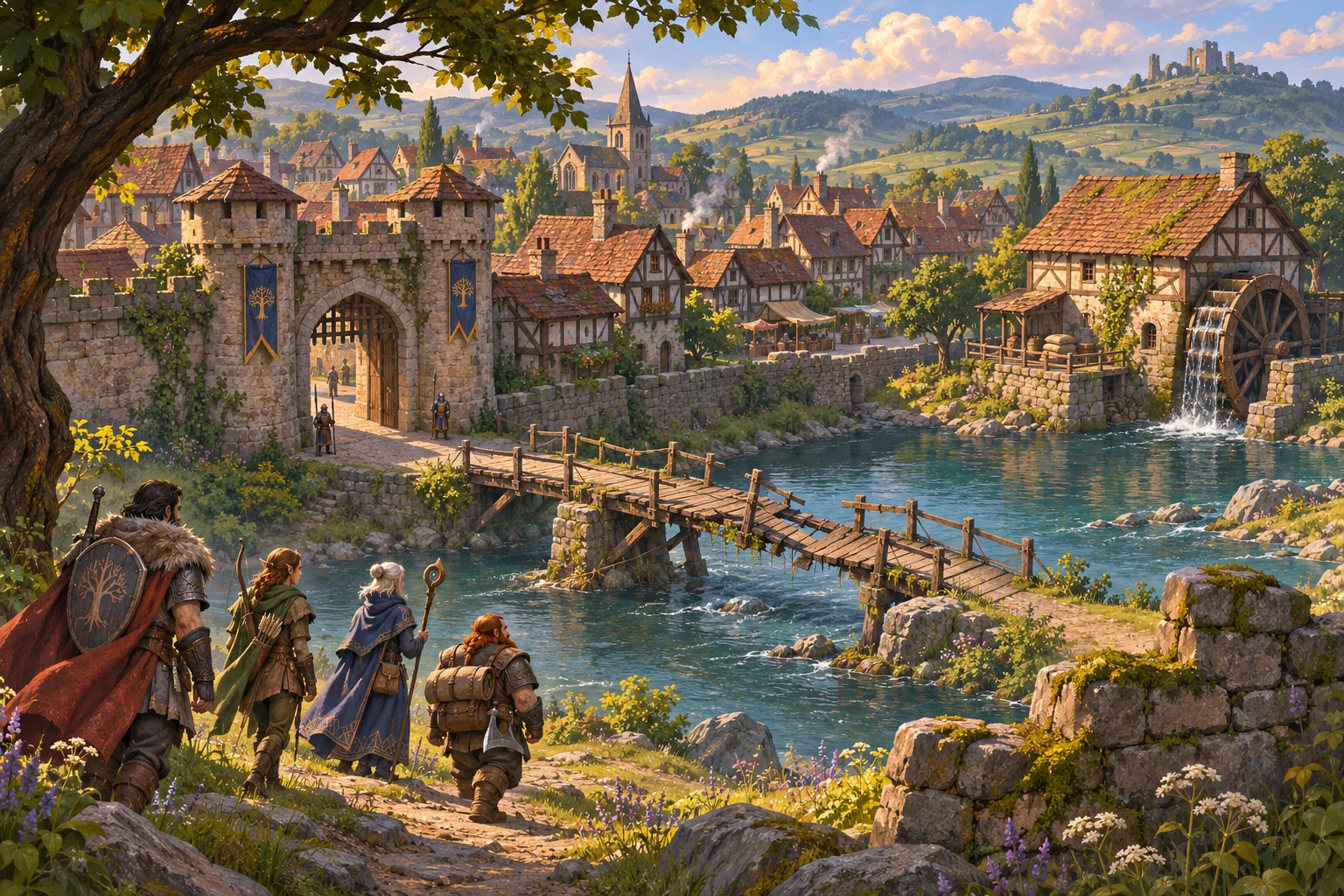
Represent town facilities and routes as explicit states: bridge closed or open, mill disconnected or reachable. A quest objective can update one state after the party returns. Show the repaired facility on the town map and describe what service or route changed.
Separate quest completion from its town consequence. The player should see that turning in the timber repairs the bridge, which reconnects the mill. This makes the world update traceable and gives the next trip a practical difference.
Keep the first quest to one objective and one town-state change. Hold battle rewards, party level and all other facilities fixed while comparing completed and incomplete outcomes. Add chained repairs after the first consequence is visible.
Change one quest outcome
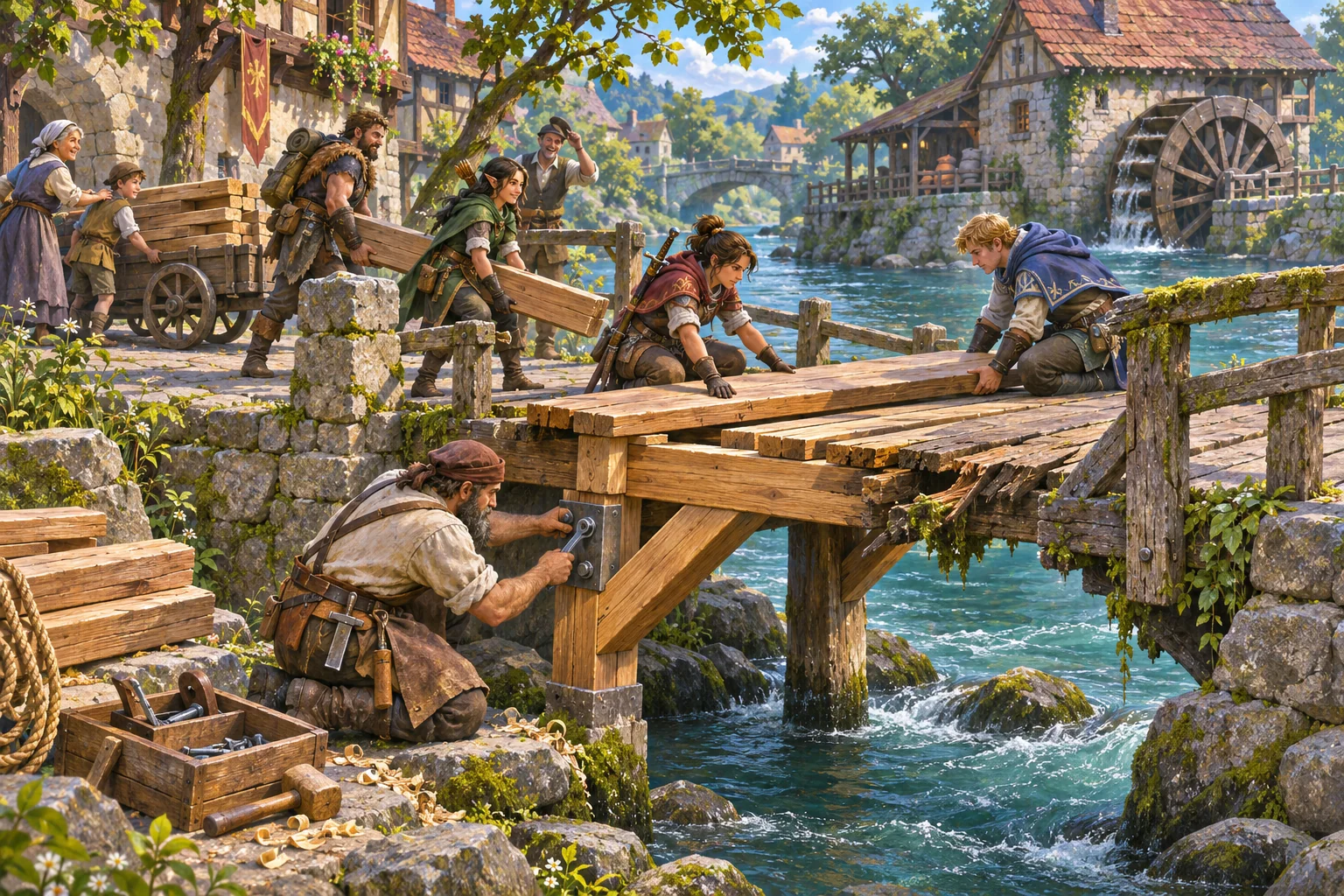
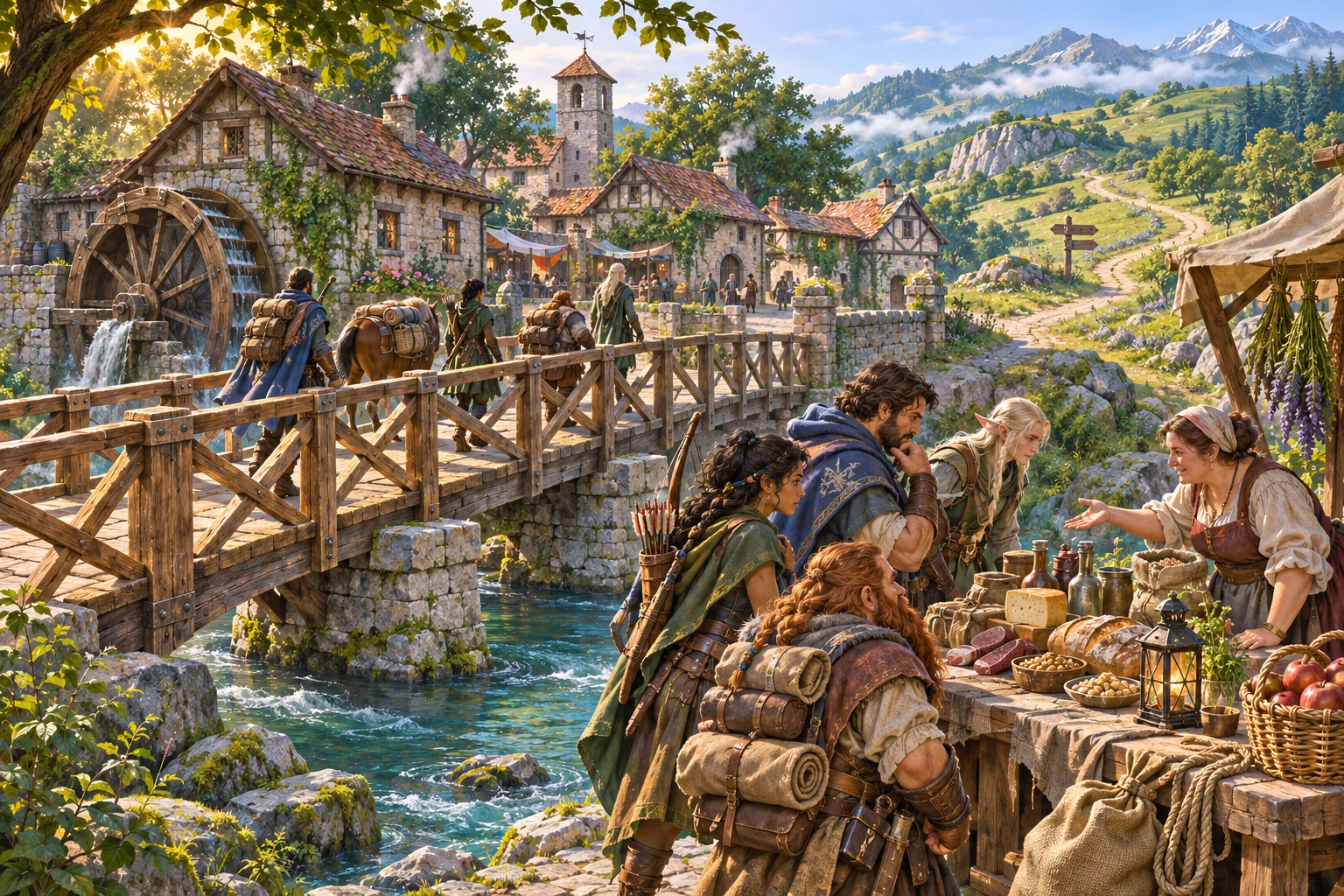
The bridge begins broken, leaving the mill route disconnected. The party gathers 4 timber during the fixed turn-based encounter and turns it in at the town board. Completion changes bridge state to open, reconnecting the mill and adding one supply option to the next expedition.
Change only the quest result: the party returns with 3 timber, below the 4 required. The bridge remains closed and the mill stays disconnected. Keep combat outcome, experience and party condition otherwise the same.
This deterministic state check verifies the quest threshold and town update only. It does not test combat balance, narrative quality, campaign pacing or whether players notice the restored route.
Ask AI to prototype quest-driven town repair
Show quest objective, turn-in requirement and resulting facility state.
Change only the objective completion while keeping battle rewards fixed.
Create an original turn-based RPG prototype with a town and a broken footbridge connecting its mill. The party needs 4 timber from an encounter to repair it. On return, show current timber, quest requirement and turn-in. With 4 timber, open the bridge and reconnect the mill; with 3 timber, leave both states unchanged. Show how the next expedition supply option changes only after repair. Keep experience, party and battle rewards fixed. Do not add a full campaign or balance claims.
Make one repair matter before expanding the campaign
Quest-driven restoration makes adventure outcomes visible in the place the party calls home. Show the objective, repair threshold and town consequence as separate steps. Once players can see how one bridge changes the next trip, add a small chain of facilities and test its pacing in a playable campaign.
Start a town-restoration RPG with SEELE’s AI game maker
Frequently asked questions
How can a quest change the town beyond a reward screen?
Connect its objective to a visible facility, route or service state. Show what was broken, what the party brought back and which town function changed. A repair feels consequential when players can use the result on the next visit or expedition.
Should every quest repair something?
No. Start with a few repairs that change access or preparation, and leave other quests focused on characters or discoveries. If every task changes the whole town, the state map can become difficult to understand. Keep each consequence small and legible.
Does the state model prove the campaign is paced well?
No. It verifies that quest thresholds update town states as specified. It does not test whether players care about the residents, whether repairs arrive at a satisfying pace or whether turn-based battles feel fair. Those need playtests across a longer quest sequence.