Make the first village decision about spending wood. In Mossbank, a fictional village with three homes, the same storeyard supplies heating and a new workshop. A workshop order can fit the stockpile in the morning and still leave a home cold that evening.
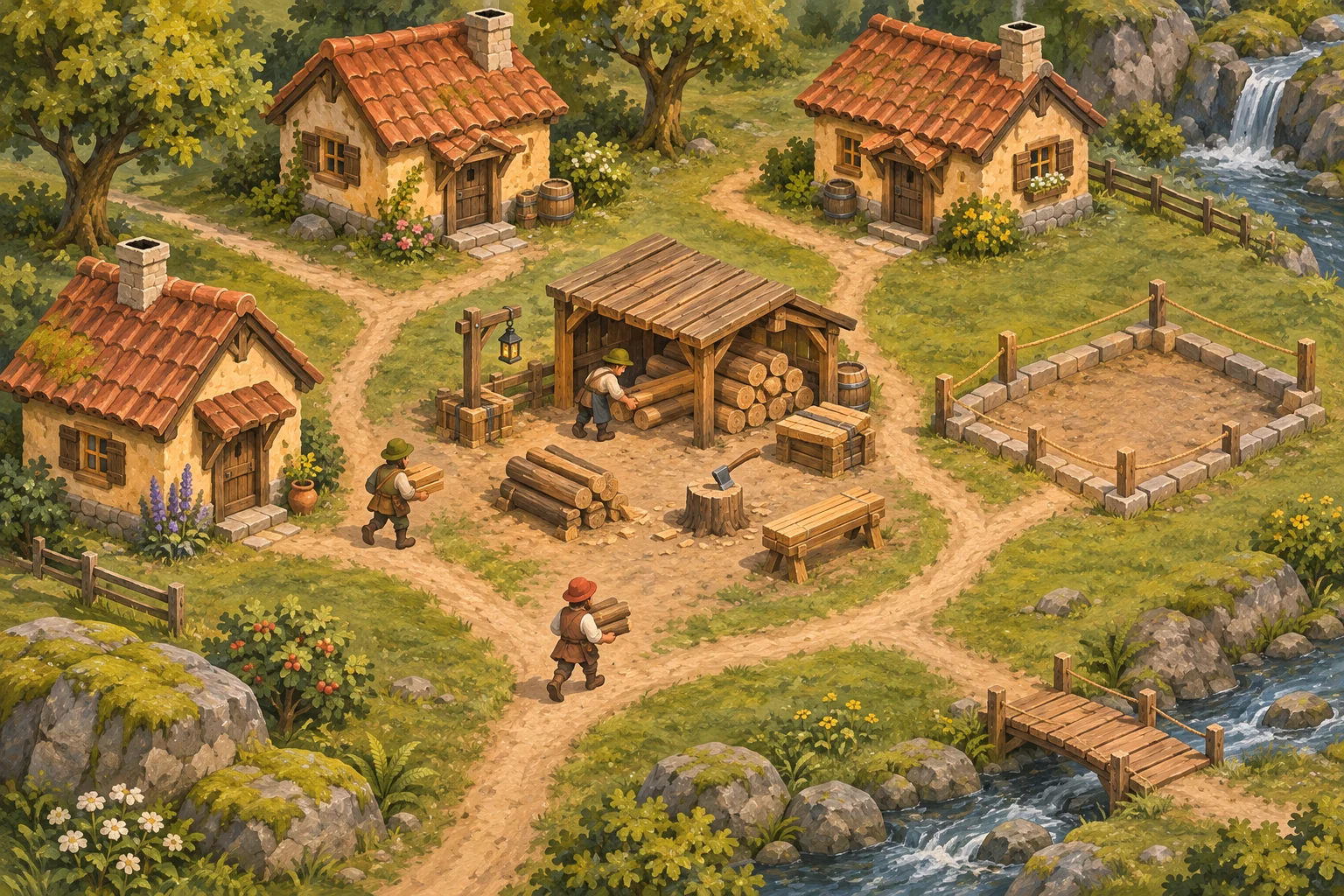
Draw the homes, wood yard and workshop plot on a small map. Give them a common footpath and show deliveries arriving at the yard. Let the player set a reserve before approving the next building. The visible consequence should be whether the homes get wood and when the order starts.
Give the village one stockpile and a predictable day
Start with six wood. Four more enter the stockpile each morning. The villager assigned to construction can allocate eight wood to the workshop. In the evening, each existing home takes one. Use this order every day: deliver, check the construction order, then serve the homes. Once funded, clear the order so it cannot charge on the next update.
Show both the wood in storage and what a pending order would leave behind. Mark the workshop as waiting if paying would leave less than the reserve. The three homes still collect their evening wood. A threshold protects the stock without counting the reserve as spent.
If you add hauling routes, count wood only when it reaches the yard. Godot’s AStarGrid2D can find paths on a grid with blocked cells. A blocked route should appear as a missing delivery in the log so a player can tell it apart from a workshop reservation.
Read Godot’s grid pathfinding reference
Set aside one evening of fuel before building
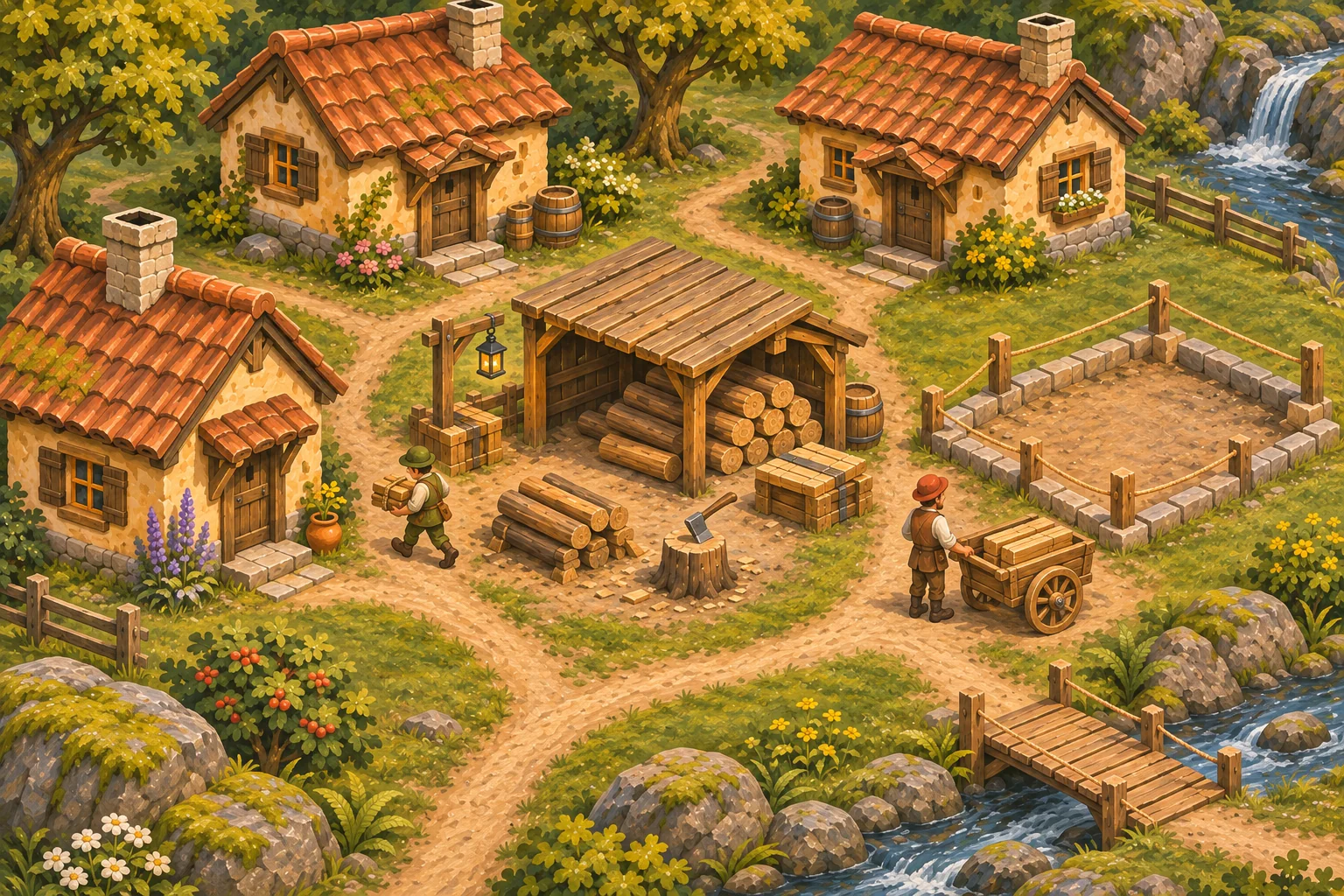
With no reserve, day 1 begins with ten wood after delivery. Paying eight for the workshop leaves two units for three homes. One home goes without. In a headless model of Mossbank’s rules, changing only the reserve to three delayed the workshop and removed the shortage.
Day 1 then ends with seven wood after heating. The second morning brings the pile to eleven. Building spends eight, leaving three for the homes. The workshop is funded on day 2 and the stock ends at zero.
That delay works because four wood come in and three go out each day. If deliveries can only match upkeep, spending less today does not build a larger stockpile over time. Help the player see when a bigger crew or a shorter hauling route is the next lever.
Ask the AI for a village with a readable wood ledger
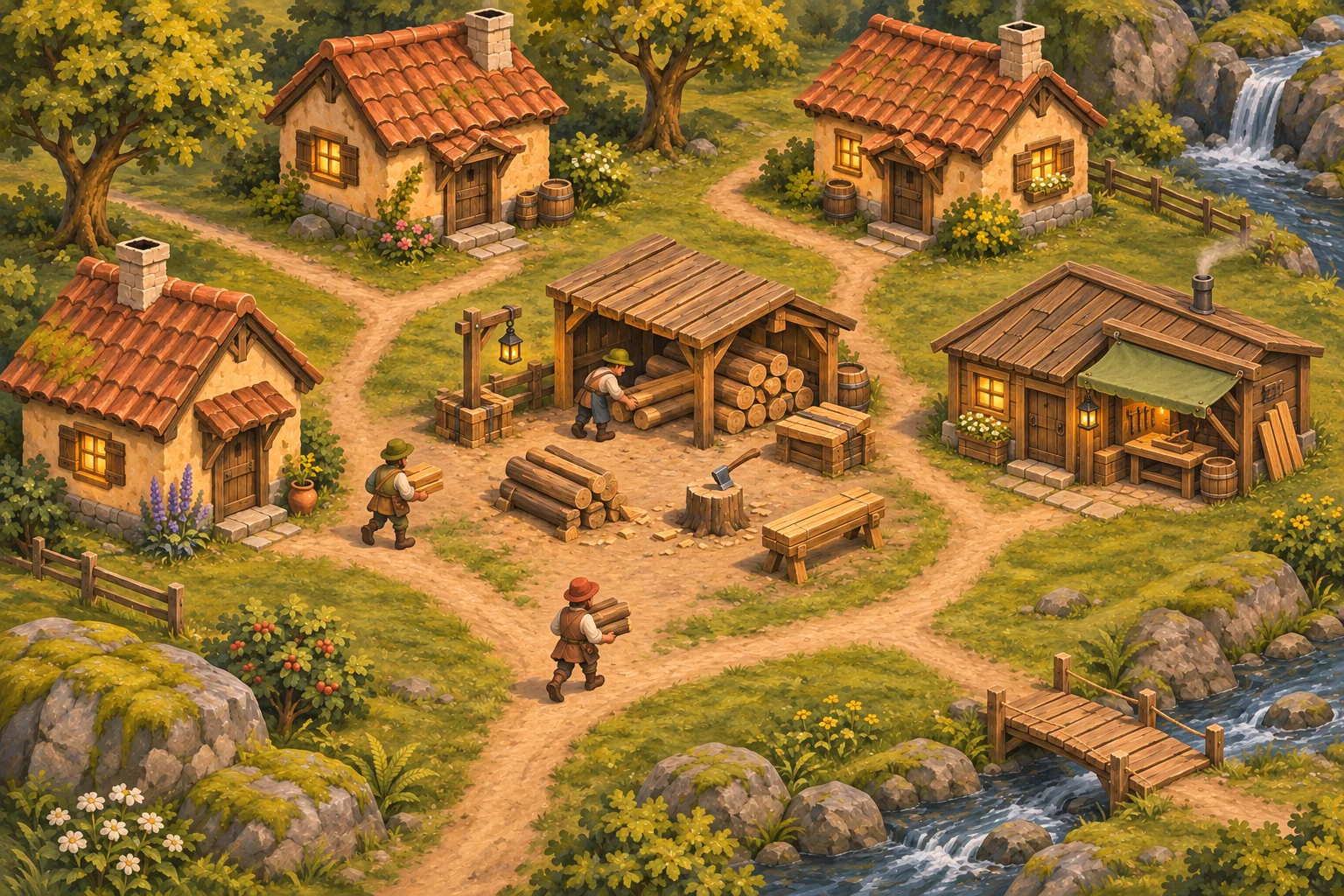
Use SEELE’s first-build workflow to describe one map, one resource and one workshop order. Give the prototype a next-day control and a ledger showing opening stock, deliveries, spending, homes served and closing stock. Ask for a reset that reproduces both runs.
Switch the reserve from zero to three and compare the first two days. If the workshop starts early at reserve three, check when it commits wood. If the stockpile goes below zero, check that payment only occurs once and that homes consume only available fuel.
Create a small isometric village-building prototype called Mossbank with three homes, a wood yard and a workshop plot. Start with six wood. Each day deliver four to the yard, then check the workshop order, then give each home one wood if available. The workshop costs eight once. Start with a construction reserve of zero and add a switch to three. Only fund the workshop if the stock after its payment meets the reserve. Unfunded orders stay pending. After funding, clear the order to avoid a second payment. Add next-day and reset controls. Show opening stock, delivered wood, funding, homes short of wood and closing stock. Give the paths and sites distinct shapes and show when a delivery is blocked.
Decide what to build after the homes can keep up
Use the reserve to make the next workshop a visible trade-off. If the extra day covers the homes, waiting is a workable option. If the pile never reaches the threshold, inspect deliveries and recurring needs. Keep the first map small enough to tell which step stopped the next build.
Start a three-home village with SEELE’s AI game maker
Frequently asked questions
Should the reserve rise with the number of homes?
Tie the reserve to the expected fuel bill before the next delivery. Three homes with one unit each need three wood for the evening in this prototype. If homes can use different amounts, show their total demand and recalculate the reserve when a home is added.
How should a blocked path affect the storeyard?
Keep dispatched wood out of the available stock until the worker delivers it. Show the worker’s destination and a short explanation when the path is blocked. If the player moves a building or clears a road, check that the cart can complete the trip without counting the same delivery twice.
Should cancelling a workshop return its wood?
Decide what funding represents. If the materials are just set aside, release the reserved amount when the player cancels. If work has started, define how much material is still recoverable. Record the refund as its own ledger event so it is easy to verify.