Introduction
A shopping-themed game for a retail brand should make discovery part of the play loop, not disguise a checkout screen as a game. Give players a fictional collection goal, let them browse a small set of items, and make each choice change what happens next. The example in this guide, Paper Kite Market, is an invented pop-up where players collect illustrated objects for a festival display. It has no real retailer, products, customer data or sales results. The design is useful because it separates the playful experience from purchase decisions and gives a brand team a clear prototype to review.
Set the game goal before adding products
First decide what the game is meant to do for a player. A campaign might introduce a visual style, invite exploration or tell a short story. Those are design goals, not proof of brand lift. Write the player objective as an action: “Find three objects that fit the festival theme” gives the prototype a beginning, decision and finish. “Promote the brand” does not say what the player does.
Keep the first activity small. Pick one setting, a few fictional objects, one collection rule and one reward that exists only inside the game. Do not require a real account, payment or customer information to finish the loop. If a later campaign proposes data collection or a real offer, treat it as a separate product and legal review rather than silently adding it to the prototype.
| Loop stage | Example in Paper Kite Market | Brand-team question |
|---|---|---|
| Browse | Explore a short row of themed stalls | Does the player know what can be explored? |
| Choose | Pick a paper kite, lantern or ribbon | Does the choice express the game goal? |
| Collect | Add an object to the festival display | Is the result visible immediately? |
| Finish | Reveal a completed fictional scene | Does the ending work without a purchase? |
The table separates interaction from transaction. If the activity needs a checkout to feel complete, clarify whether the brief is for a game or a commerce flow before building.
Prompt 1 — campaign game brief
Draft a brief for a fictional shopping-themed game for a retail brand. Define audience, player goal, discovery loop, original setting, session boundary, brand role, fictional reward, data boundaries and what the prototype will not do. Do not promise sales, conversion or customer outcomes.
Design discovery as a choice, not a catalog
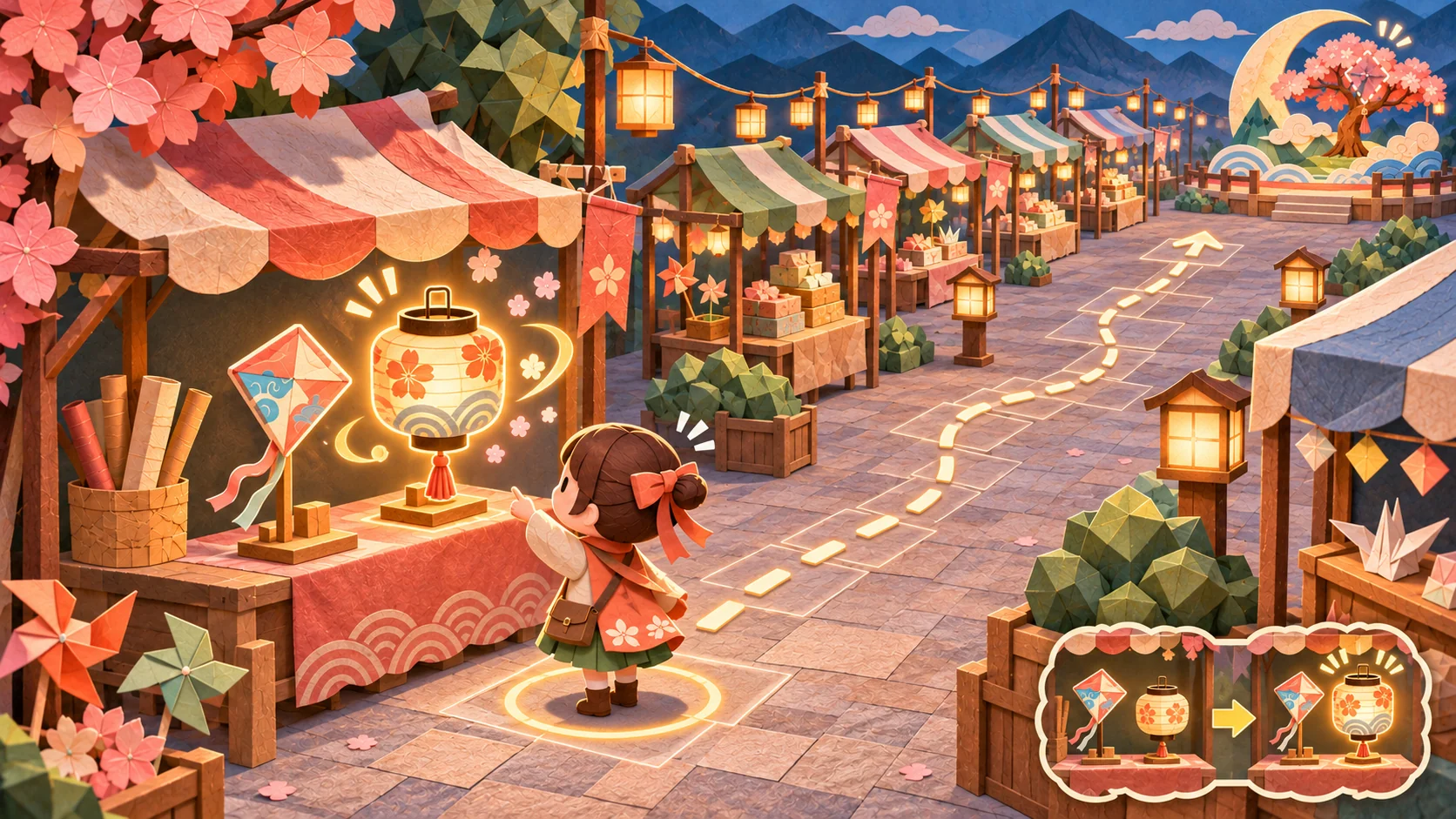
A catalog lists items; a game asks the player to use information to make a choice. For Paper Kite Market, each stall has a different color, shape or story clue. The player picks objects that match a festival display prompt. The game can show how an object changes the scene, so discovery has a visible payoff. You do not need dozens of items: a few distinct choices can make the mechanic legible.
Give each choice a purpose. If every item produces the same display, the player may be collecting without making a meaningful decision. If one choice is simply “best,” the activity becomes a quiz with a hidden answer. Instead, let different choices create different valid outcomes. For example, a lantern can brighten the display while a ribbon adds movement. A short explanation can show the result without ranking the player.
Prompt 2 — discovery loop
Design a short fictional market game with three collectible objects and two valid festival-display outcomes. For each object define the visual clue, player choice, state change and feedback. Ensure choices have distinct meaning without a hidden purchase recommendation or a real product claim.
Connect brand expression to the player’s task
A brand can shape the world through palette, motifs, writing style or a fictional product category. Make each asset support the game’s setting or objective. A decorative logo on an unrelated puzzle does not create a useful brand experience by itself. For Paper Kite Market, the paper-cut illustration style and seasonal display are part of the fictional world; they are not borrowed from a real retailer.
A brand team should make its boundaries explicit: which marks may appear, whether the scenario is fictional, whether any real product is represented, and what the player should understand at the end. Avoid implying that a fictional reward has monetary value or can be redeemed. If the experience links to a real product page later, explain that transition plainly and keep it optional.
| Brand element | Can contribute by… | Review before release |
|---|---|---|
| Visual identity | Giving original game assets a consistent style | Confirming authorized marks and colors |
| Product inspiration | Suggesting a theme for fictional objects | Avoiding unsupported product properties |
| Story and tone | Giving choices context and a memorable setting | Checking that copy does not imply a real offer |
| Call to action | Pointing to one useful next step | Making any commercial destination clear and optional |
This is a creative checklist, not legal advice or approval. A real campaign should follow the brand owner’s review process and local rules for promotions and data use.
Keep the experience separate from checkout
The prototype can be a small standalone game with no customer profile. If the goal is to learn whether the game instructions are clear, collect only the observations needed for that review and avoid gathering sensitive customer details. Do not place fabricated “popular choice” counters, testimonials or purchase badges in the interface; those elements read as evidence even when the game is fictional.
Prompt 3 — privacy and disclosure review
Review a fictional shopping game for implications of checkout, customer data, promotions, endorsements and real products. List visible disclosures and remove any invented popularity, sale, rating or purchase claim. Keep the game finish available without a transaction.
Build an editable prototype specification

Before implementation, write the setting, discoverable items, state changes, finish and excluded features. The JSON below is a planning template for Paper Kite Market. It describes a fictional experience and is not a real storefront or commerce integration.
Prompt 4 — editable mini-game spec
Convert the Paper Kite Market brief into a small playable specification. Include start, browse action, three objects, choice consequences, display state, reset and finish. Mark all product descriptions as fictional. Exclude checkout, account creation, tracking and real promotional offers.
{
  "gameName": "Paper Kite Market — fictional discovery game",
  "status": "concept; no retailer or customer test",
  "objective": "collect three objects for a festival display",
  "objects": ["paper kite", "lantern", "ribbon"],
  "choiceState": "each selected object changes the display",
  "reward": "fictional completed scene; no redeemable value",
  "excluded": ["checkout", "customer account", "purchase tracking", "real offer"],
  "finish": "show the player-created display",
  "evidenceStatus": "fictional and untested"
}
A good specification lets a reviewer identify what should happen after each choice. It also gives a creative team a way to revise the world without adding a hidden commerce requirement.
Prototype the smallest useful experience
A first build needs one browseable area, a few objects, a visible collection state and a finish. A game-creation tool can help explore a starting point from a concise prompt; SEELE’s current capability catalog describes one-line game creation and playable-game categories. Inspect the actual prototype to confirm which choices work and which details are only static. The catalog does not establish that this specific retail game or any commerce feature has been generated.
Prompt 5 — build and review checklist
Make a fictional Paper Kite Market prototype with a browse area, three selectable objects, visible collection state and a restart. Do not add purchase, account, tracking or redeemable reward features. After creating it, list what is implemented, static or not tested.
For the fictional example, a reviewer can try selecting the kite, then the lantern, and see whether both choices change the display. If the second choice erases the first without explanation, decide whether that is intended or a state bug. This is a local design walkthrough, not an observed user test.
Measure the prototype without inventing campaign results
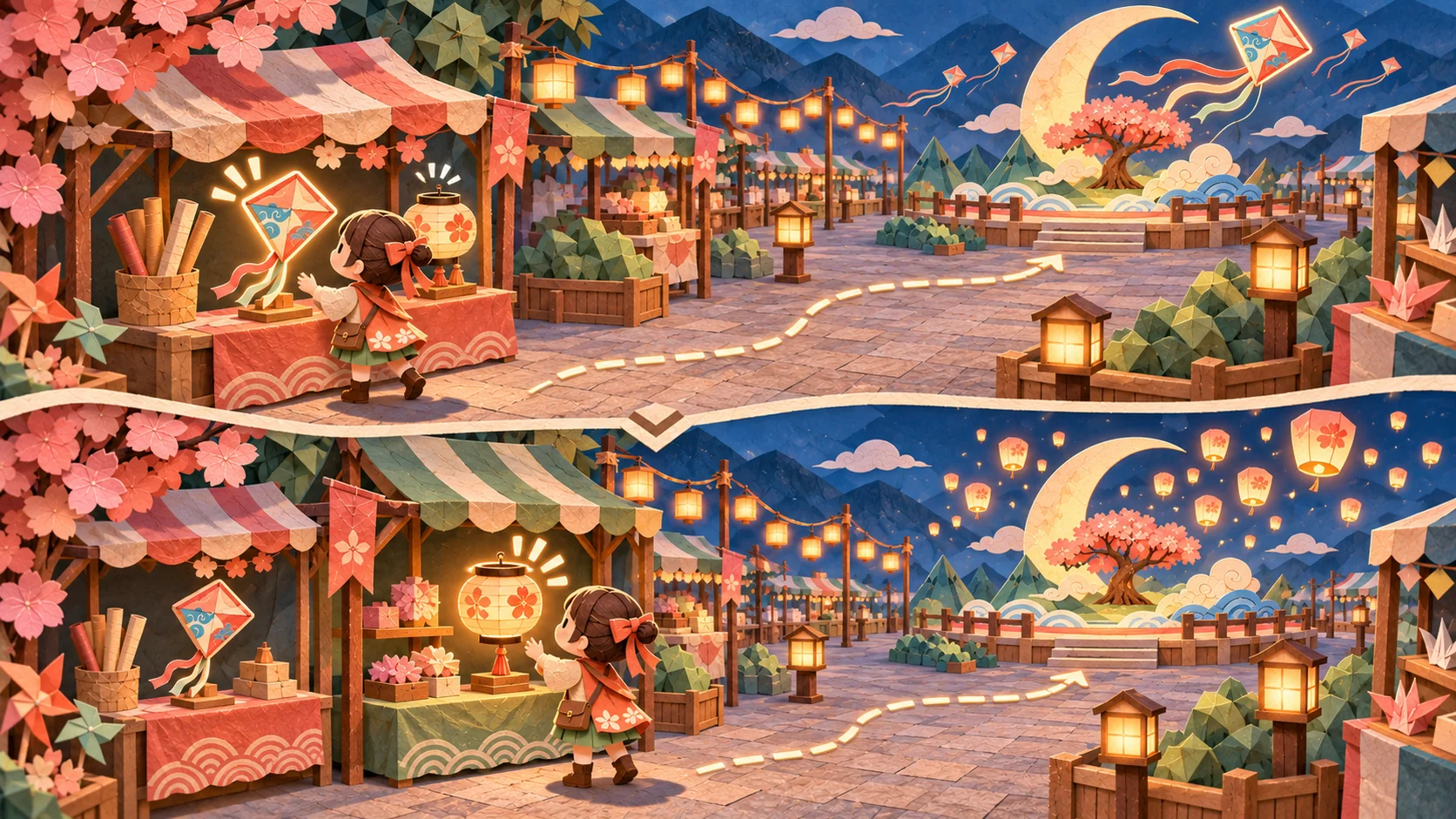
Separate usability questions from business outcomes. A local review can record whether a tester notices an object, understands a choice or can reset the game. Those observations do not prove that a real retail audience prefers a product or that sales will change. If a campaign later uses analytics or a commercial offer, write a new measurement and privacy plan with the actual stakeholders.
| Review question | Record | What it cannot establish alone |
|---|---|---|
| Can a player find an object? | The step where exploration stops | Audience-wide product interest |
| Does a choice change the scene? | The selected item and visible result | Sales preference or conversion |
| Can the player finish without checkout? | Completion path and any blocked action | Commercial campaign performance |
| Is the reward clearly fictional? | What the player sees and reads | Legal compliance for a future offer |
Prompt 6 — future playtest plan
Prepare a small review plan for a fictional shopping game. Record build version, device, task, observed actions, privacy approach and follow-up questions. Leave findings blank until collected. Separate game usability from purchase intent and sales outcomes.
Conclusion
Build the shopping game around a player choice and a visible in-game result. Keep fictional rewards separate from real offers, make the experience complete without checkout, and review what the prototype actually does before connecting it to a campaign. Paper Kite Market is invented and has no customer or sales evidence. Use the Free AI game maker to explore a small concept, then compare the build with your brand and privacy requirements.
FAQ
What makes a shopping-themed game different from an online store?
A shopping-themed game centers a player action, such as exploring, choosing or arranging objects, and provides an in-game result. An online store helps people evaluate and purchase real goods. A campaign can connect the two, but the transition should be clear and optional; a game should not disguise purchase steps as play or imply that fictional rewards have real value.
Should a retail game include real products?
It can, if the brand team has approved the products, claims and presentation for that use. A fictional prototype can use invented objects to test the loop without implying anything about a real item. If product facts or offers are added later, verify them with the responsible team and make sure the game does not invent ratings, popularity or availability.
Can a prototype show that a game will increase sales?
No. A prototype can help inspect a narrow interaction, such as whether players understand an object choice. It does not establish sales lift, campaign performance or audience demand. Those claims need an appropriate real campaign and measurement plan. Paper Kite Market is a fictional example and contains no customer data, purchase events or sales results.
Does a shopping game need customer data?
Not for a basic standalone discovery loop. A prototype can use local state to remember which objects were selected during that play session. If a real campaign proposes account information, tracking or data collection, define the purpose, consent, retention and review requirements separately before implementation. Do not add personal data merely to make a demo feel more realistic.
What is a safe first prototype scope?
Start with one browseable area, a few original objects, visible choices, a restart and a clear finish. Keep checkout, account creation, redeemable offers and analytics out unless those are explicit project requirements with appropriate review. This scope lets a team inspect whether the game loop is coherent before deciding whether a broader campaign is warranted.