Introduction
An original community game can give people who share an interest a way to contribute, explore a common world or take part in a lightweight activity. For fan-community creators, the design needs both a clear creative identity and careful boundaries: original characters and settings, transparent contribution rules, and respect for the intellectual property that inspired the community.
This guide uses Mosslight, a fictional cozy-fantasy world of lantern creatures and forest paths. It is original concept material for illustration only. No existing franchise, real fan group, playable build or community test is represented.
Define the community purpose
Decide what the game is for: a shared creative prompt, a worldbuilding activity, an event companion or a small playable story. Name the audience and the kind of contribution invited. Make participation optional and avoid implying that a creator speaks for every member of a community.
Prompt 1 — community game brief
Write a brief for a fictional original community game called Mosslight. Define the community purpose, intended participants, creative boundaries, activity length, player contributions, moderation approach and what a future prototype review would examine. Do not use existing franchise characters or claim community approval.
A specific purpose helps contributors know what belongs in the game. Separate the creator’s own direction from community suggestions, and make it possible to play without submitting personal information or public content.
Build an original world and contribution loop
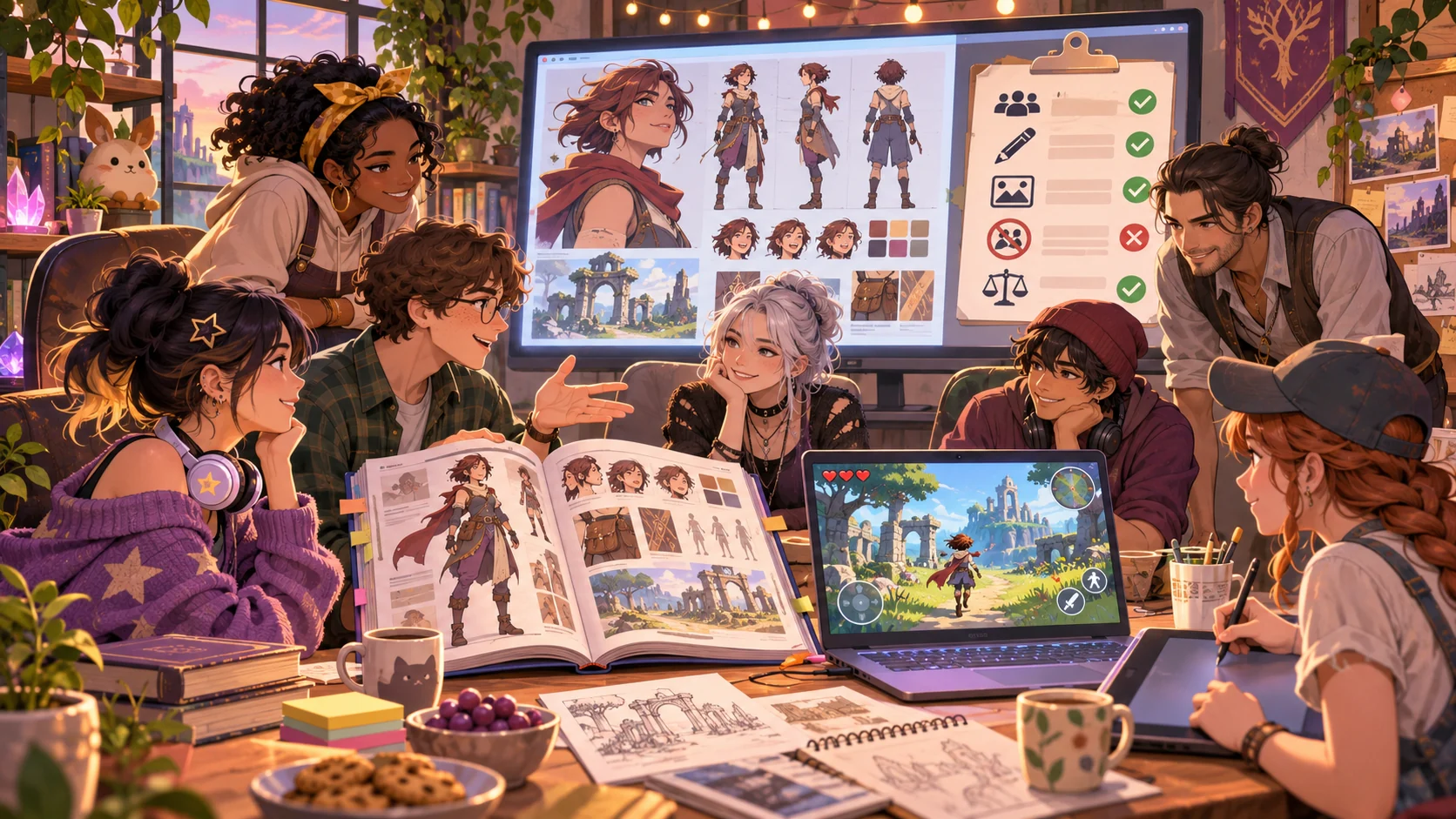
Start with a small setting, a few original characters and a repeatable loop. In Mosslight, a player might choose a lantern creature’s path, gather a fictional glow-seed and add a short environmental detail. The activity should not require copying recognizable designs, catchphrases, lore or branding from another work.
Prompt 2 — original world and loop
Design a small original Mosslight game loop with three original lantern-creature archetypes, two path choices and one shared worldbuilding prompt. Avoid resemblance to identifiable existing franchises. Distinguish authored canon from optional player contributions and include a private-play mode.
| Element | Fictional example | Creator review |
|---|---|---|
| Setting | A forest that glows at dusk | Is the description original and clear? |
| Character | A small creature that tends a lantern | Is its silhouette and name distinct? |
| Choice | Follow a stream or a canopy path | Does the choice change the scene meaningfully? |
| Contribution | Add one optional environmental detail | Can the player skip or keep it private? |
| Finish | View the shared scene and replay | Is participation still optional? |
These are concept prompts, not proof that a real community wants or endorses the idea.
Make participation safe and transparent
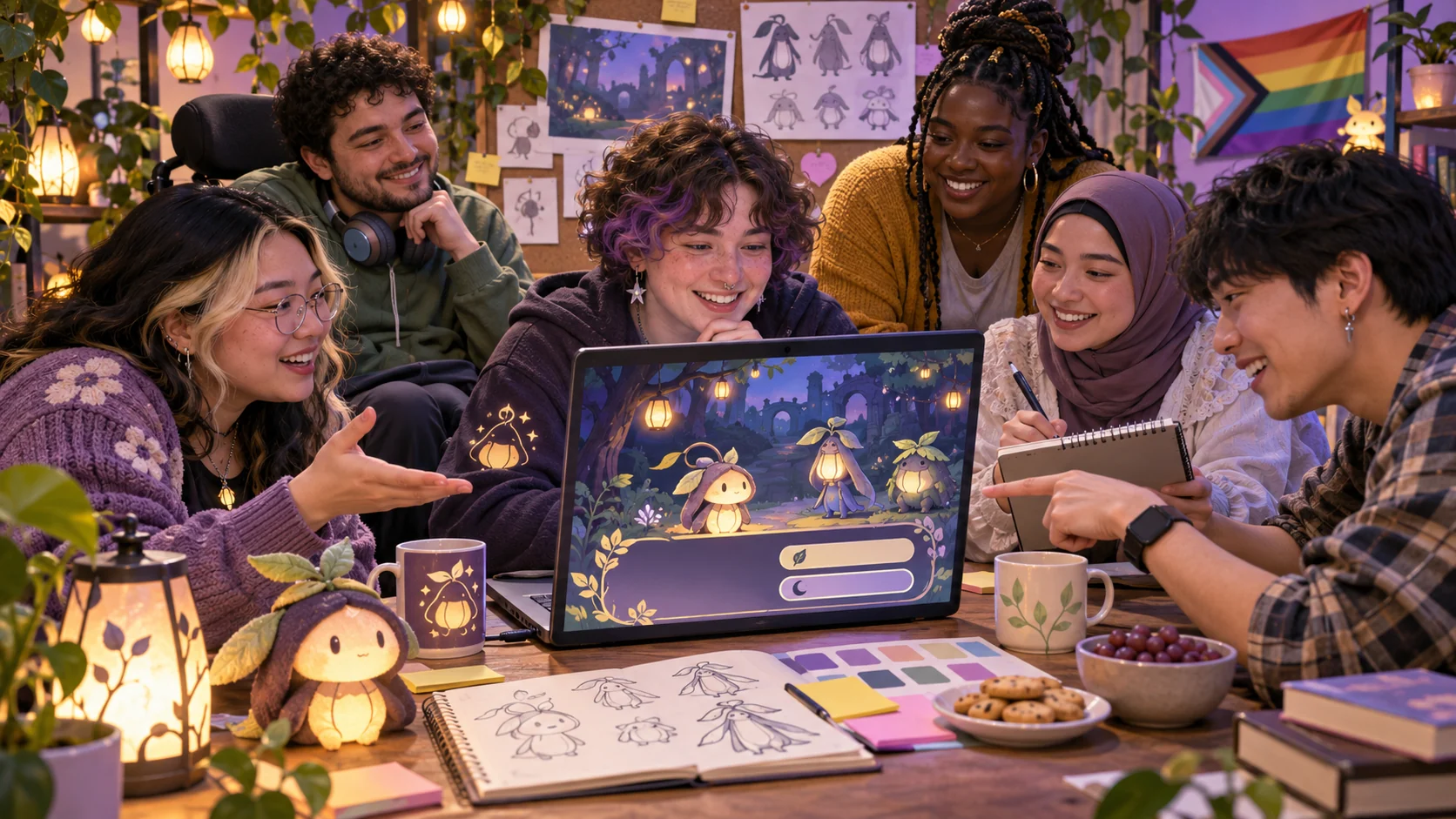
If a game accepts user-created names, drawings or text, decide who can see them, how long they remain and how they can be removed. Provide rules before contribution and a moderation process that fits the audience. A local prototype can test controls, but it cannot establish that a moderation policy is effective.
Prompt 3 — contribution and moderation rules
Draft clear participation rules for a fictional Mosslight community game. Explain what may be contributed, who can view it, how to opt out, how to report content and how removal works. Do not collect personal details in the prototype. Mark moderation and safety as untested until reviewed with the intended community.
A safer first prototype can keep contributions on the player’s device or use preset options rather than publishing submissions. Add public sharing only after the creator has reviewed privacy, moderation, age suitability and platform requirements.
Keep characters, lore and permissions editable
Use a compact style guide to record original character traits, naming rules and setting boundaries. Keep inspiration notes separate from canon and never treat an existing work’s license as permission to reuse it. The example below is fictional and contains no borrowed characters or lore.
{
  "gameName": "Mosslight — original community concept",
  "status": "fictional prototype plan; unbuilt and untested",
  "world": {"setting":"glowing forest at dusk","canonOwner":"creator-maintained guide"},
  "characters": [
    {"id":"ember-mender","role":"tends a small lantern","visualNotes":"original shape and palette"},
    {"id":"moss-listener","role":"notices forest sounds","visualNotes":"original shape and palette"},
    {"id":"dew-carrier","role":"collects fictional glow-seeds","visualNotes":"original shape and palette"}
  ],
  "playerLoop": ["choose a path", "make one optional scene choice", "view the result", "replay or exit"],
  "contributions": {"enabled":false,"privateByDefault":true,"personalData":"not requested"},
  "communityRules": ["participation is optional", "use original work", "provide report and removal path"],
  "reviewNeeds": ["IP review", "privacy", "moderation", "audience suitability", "accessibility"],
  "evidenceStatus": "fictional and untested"
}
Keep an asset register that records who created each character, illustration, sound or piece of writing and what permissions apply. When inviting contributions, publish terms in plain language before the player submits anything.
Build and inspect a playable slice
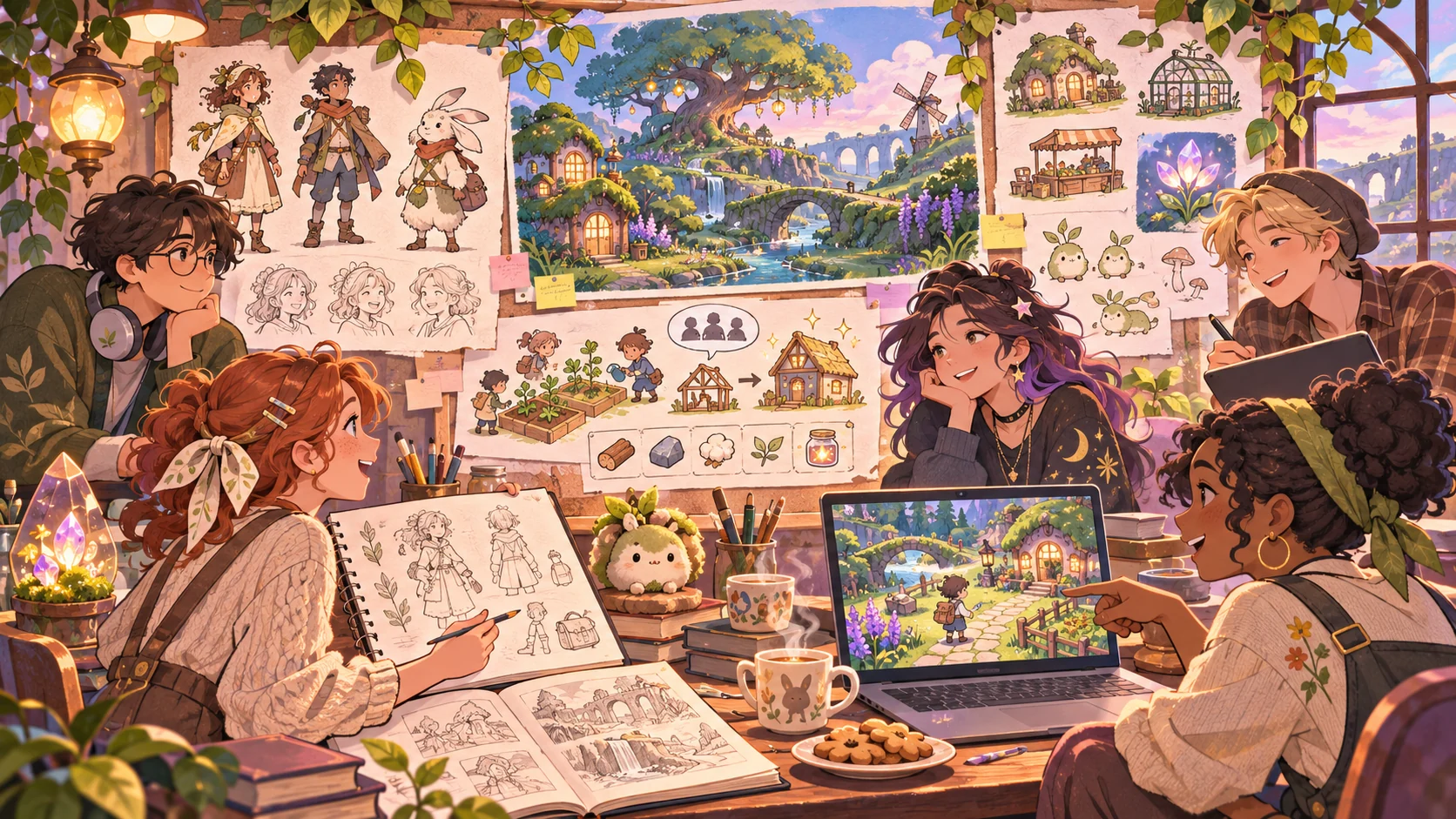
A first playable version might include a short intro, two path choices, one scene response, a private contribution prompt and a clear exit. Test that each choice changes the intended state and that players can skip the contribution step. Keep moderation and public sharing disabled until they are actually designed and reviewed.
Prompt 4 — playable community slice
Build a local Mosslight prototype with original placeholder art, two path choices, one optional worldbuilding prompt, private-by-default behavior, skip, reset and exit. Do not publish contributions or collect personal data. Label static elements, working interactions and unresolved IP, accessibility and moderation questions separately.
A static mockup can communicate the visual direction but cannot verify that the interaction or contribution flow works. Record exactly which controls were exercised in the local preview.
Simulate a community customization
For a fictional adaptation, imagine a group of nature-journaling enthusiasts using Mosslight to build a seasonal forest scene. Change the optional prompt and the shared-scene description while keeping the characters and core loop intact. This example is invented and does not represent an actual group’s preferences.
Prompt 5 — fictional interest-group adaptation
Adapt Mosslight for a fictional nature-journaling interest group. Change the optional prompt and scene description while preserving original characters, private-by-default contribution and opt-out. List all invented content and questions that would require real community input. Do not imply approval or testing.
Prompt 6 — creator review checklist
Review the local prototype for originality, contribution clarity, privacy, opt-out, moderation, removal, accessibility, asset ownership and public-sharing boundaries. Mark each check implemented, static, missing or not tested. Do not claim endorsement from a real fan community.
Plan community feedback responsibly
A future review can ask whether the activity is understandable, whether the creative invitation feels appropriate and what participants want to share. Explain the purpose, collect only necessary feedback and avoid assuming that a small group represents a broader fandom. Keep direct observations separate from the creator’s interpretations.
Prompt 7 — feedback and release plan
Prepare a future feedback plan for an original community game. State the questions, participant context, consent and privacy approach, moderation owner, asset-permission checks and limits of the sample. Leave findings empty until feedback is actually collected.
Conclusion
An original community game for fan-community creators should invite participation around a clearly defined purpose while keeping characters, settings and rules distinct from existing IP. Make contribution optional, explain privacy and moderation, and start with a small private prototype. Mosslight is fictional; there is no community approval, playable build or user test. Review rights, safety and audience expectations before inviting real people to contribute.
You can shape a small concept in the Free AI game maker, then compare it with the editable community-game template.
FAQ
What is an original community game?
It is a game built around a shared interest or community activity using original content and clear participation rules.
Can fan-community creators use characters from an existing franchise?
Permission depends on the relevant rights and license. A safer original concept uses distinct characters and settings and does not assume that community enthusiasm grants reuse rights.
Should a community game publish player contributions?
Only after the creator has designed and reviewed privacy, consent, moderation, visibility and removal rules. A prototype can keep contributions private or disable them.
How can creators invite contributions safely?
Explain what is invited, who can see it, how to opt out, how to report content and how a submission can be removed before collecting anything.
Does a prototype show that a fan community approves an idea?
No. A prototype does not establish community endorsement or preferences; those require appropriately gathered feedback from the intended participants.