
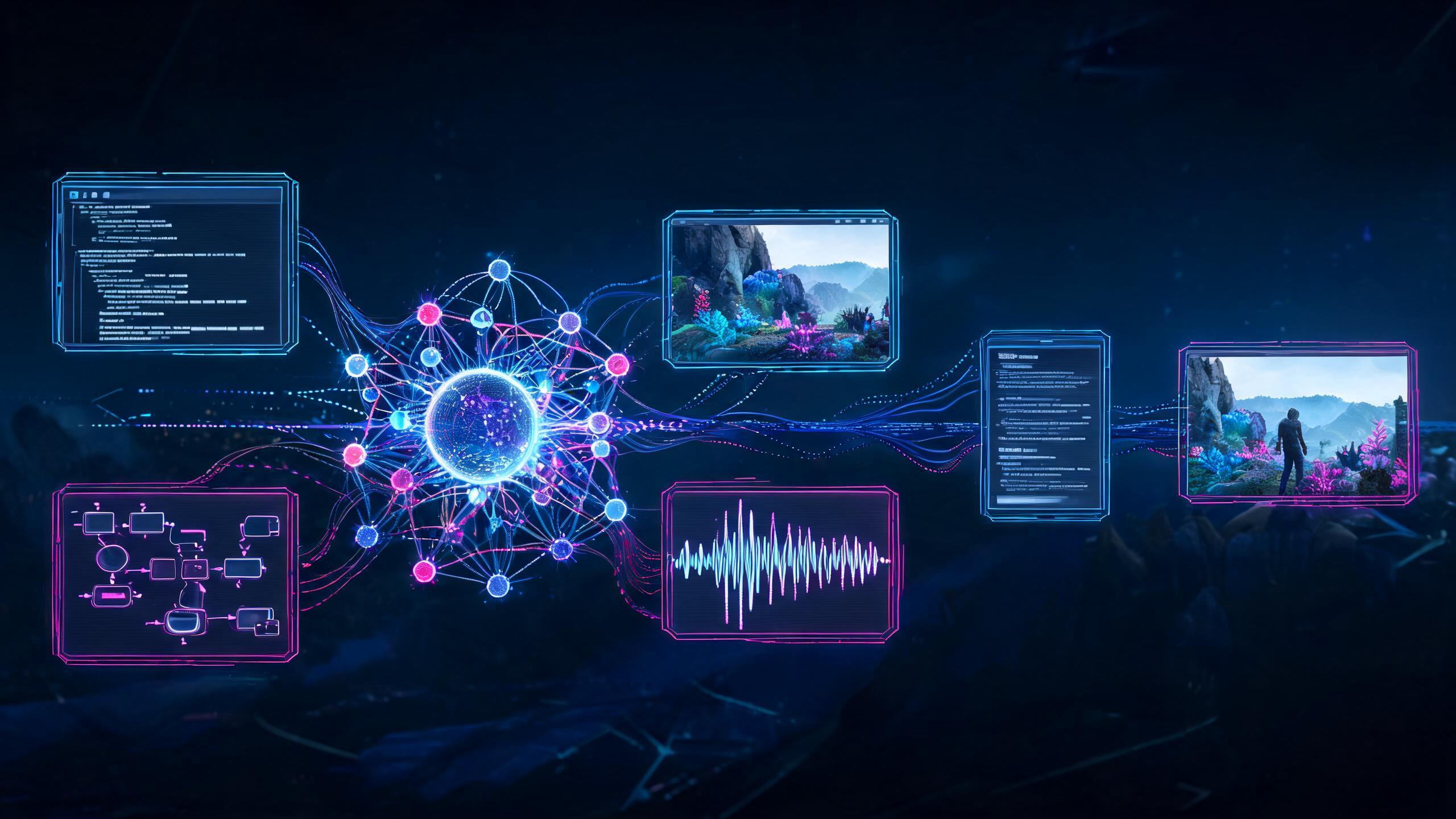
Visual guide for Inkling AI for Unreal Engine Game Development: 2026 Guide
Key Takeaways: Inkling AI for Unreal Engine Game Development: 2026 Guide
- inkling ai unreal engine: Inkling is a July 15, 2026 Apache-2.0 open-weight multimodal model from Thinking Machines Lab, not an Unreal plugin. Its model card describes text, image, and audio input with text output, a 1M-token context window, and coding or tool-use applications; Unreal teams should evaluate it on controlled C++, Blueprint-image, log, planning, security, cost, and rollback tasks.
- This guide keeps the answer version-aware and testable: identify the owning Unreal systems or public evidence, validate the result, and keep native Unreal 5 game, browser preview, optimization, packaging, and download evidence separate from third-party model claims.
Release-readiness answer
Inkling is a July 15, 2026 Apache-2.0 open-weight multimodal model from Thinking Machines Lab, not an Unreal plugin. Its model card describes text, image, and audio input with text output, a 1M-token context window, and coding or tool-use applications; Unreal teams should evaluate it on controlled C++, Blueprint-image, log, planning, security, cost, and rollback tasks. For inkling ai unreal engine, treat a release checklist as a versioned engineering decision. Before changing the project, capture its revision, engine build, plugin or model artifact, target, input evidence, expected result, reviewer, and rollback. This prevents a polished editor view, generated visual, or model response from being reported as native Unreal proof.
The useful question is not whether Inkling can “make an Unreal game,” but which inspectable task it can improve without receiving unsafe repository or editor authority. A release check counts only when its supporting artifact is linked and reviewable.
Verified inputs
- 975B total parameters with 41B active are stated by the provider.
- The provider states pretraining on 45T tokens spanning text, images, audio, and video.
- No first-party Inkling Unreal integration or Unreal benchmark was found.
Re-check every external source on release day. A repository default branch, provider alias, download file, backend binary, platform SDK, pricing page, or policy can change without the article changing.

Decision register
- C++ review — Promising evaluation target: Require compiling diff and tests.
- Blueprint screenshot triage — Multimodal evaluation target: Require readable evidence and uncertainty.
- Direct editor control — High risk: Needs a separately verified permission layer.
- Packaged game claim — Unsupported: No Unreal-specific proof is established.
Replace recommendations with the selected value, owner, evidence link, expiry or review date, and fallback. Do not allow an empty cell to inherit a default from a developer machine.
Build and validation checklist
- [ ] Record the exact Inkling weight, API provider, effort setting, context, tools, and date.
- [ ] Choose one disposable C++ task, one Blueprint-image/log task, and one planning task.
- [ ] Provide only the files and tools required by each task.
- [ ] Score factuality, diff size, compile results, missing-evidence requests, latency, and cost.
- [ ] Run prompt-injection, invalid-input, interruption, and rollback cases.
- [ ] Route only tasks that pass; keep native Unreal builds and approvals human-owned.
Run the checklist from a clean environment and save the exact command, environment, revision, and output. A manually repaired local package is not a reproducible release.
Negative and recovery tests
- Small compile defect with hidden acceptance test
- Blueprint screenshot plus matching log
- Long planning brief with conflicting constraints
- Malicious instruction inside repository content
- Interrupted tool run with clean rollback
The release gate should fail when a required asset, binary, model, script, permission, network dependency, or signature is missing. Confirm that monitoring names the failing layer and that rollback restores the prior accepted behavior.
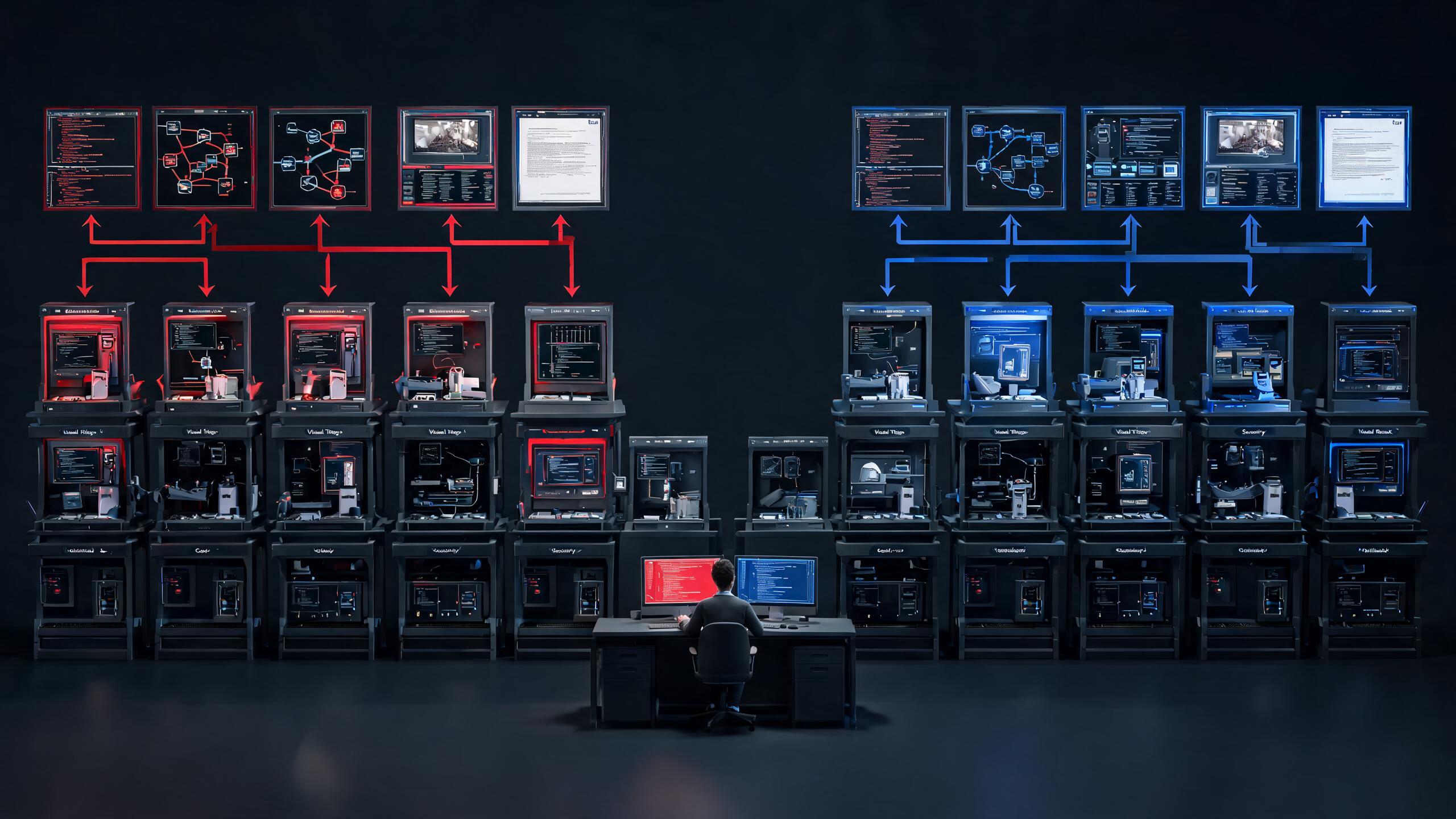
Blockers to reject
- Treating model-card benchmarks as Unreal results
- Giving full repository write access before a bounded test
- Confusing a general game demo with a native .uproject
- Ignoring inference hardware, license, and provider differences
Do not waive a blocker with an editor screenshot or provider benchmark. Either produce target evidence, reduce the supported scope, or leave the item explicitly unsupported.
Scope limits
- SEELE AI does not provide an official Inkling integration.
- Open weights do not mean low hardware cost.
- Provider APIs and local weights can behave differently.
Approval applies only to the recorded revision and targets. Re-open the checklist after engine, plugin, backend, model, quantization, toolchain, signing, or platform-policy changes.
Worked scenario for inkling ai unreal engine
Use a four-person Unreal team testing one isolated plugin workflow ahead of a review build. The team begins with a clean native baseline and chooses Small compile defect with hidden acceptance test as the first observable result. The baseline consists of a pinned revision, named target, and saved pre-integration trace or response. The accepted objective is intentionally narrower than “adopt Inkling AI for Unreal Engine Game Development: 2026 Guide”: prove one task, one failure, and one restoration without changing unrelated gameplay, content, or build infrastructure.
The initial change obeys this opening constraint: Record the exact Inkling weight, API provider, effort setting, context, tools, and date.. The review register captures the choice represented by “C++ review” and initially applies “Promising evaluation target” because require compiling diff and tests. A different engineer reruns the case without caches, hidden files, or conversation history. If that developer needs an undocumented local file, hidden prompt, cached module, editor-only setting, or broad permission to reproduce the result, the scenario fails before expansion.
Next, the reviewer introduces Blueprint screenshot plus matching log while watching for Giving full repository write access before a bounded test. Recovery begins with a single change inside the owning boundary. Preserve a minimal patch, unedited failure, rerun, and timing or infrastructure cost. This step matters because a visually plausible graph, code block, or game scene can conceal duplicated callbacks, stale declarations, missing evidence, unsafe tool authority, or a package that never contained the tested artifact.
The milestone gate exercises Malicious instruction inside repository content. Do not change the acceptance question when moving to representative content, target settings, and production-like permissions. The reviewer checks “Direct editor control” using “High risk” and records why needs a separately verified permission layer. A result confined to the editor or provider conversation cannot enter the production capability list.
Finally, the team performs Interrupted tool run with clean rollback and follows Route only tasks that pass; keep native Unreal builds and approvals human-owned.. The accepted record includes the last known-good revision, disable or fallback procedure, unverified targets, named owner, and the condition that reopens review. The scenario stays inside these limits: SEELE AI does not provide an official Inkling integration. Open weights do not mean low hardware cost. Provider APIs and local weights can behave differently. If recovery is slower or less reliable than the original path, the team either narrows the supported scope or rejects the integration instead of declaring a partial demonstration production-ready.
Reproducible evidence record
Create one compact record specifically for inkling ai unreal engine. The header should contain the Unreal version and build source, project revision, target platform, tested plugin or model identity, backend or provider, configuration hash, input artifact list, reviewer, and timestamp. State the claim being tested as one falsifiable sentence. For this page, the first claim should stay inside this boundary: Inkling is a July 15, 2026 Apache-2.0 open-weight multimodal model from Thinking Machines Lab, not an Unreal plugin. Its model card describes text, image, and audio input with text output, a 1M-token context window, and coding or tool-use applications; Unreal teams should evaluate it on controlled C++, Blueprint-image, log, planning, security, cost, and rollback tasks.
Attach evidence in execution order rather than as an unstructured screenshot folder. Start with the known-good state, then preserve the input that triggers Small compile defect with hidden acceptance test, the first failure, the smallest change, the repeated result, and the restored state. Link every conclusion to a source file, graph capture, log interval, build output, package manifest, performance trace, provider receipt, or target-device observation. If the conclusion depends on 975b total parameters with 41b active are stated by the provider., keep the dated source beside the observation so a later release cannot silently rewrite the premise.
The record should also contain a counterexample. Use Treating model-card benchmarks as Unreal results as the first adversarial case, then exercise an invalid input, a missing dependency or permission, an interruption, and the worst representative workload. Record which layer detected each failure and whether the last known-good state remained recoverable. A plausible final image or answer is not enough: another developer must be able to rerun Blueprint screenshot plus matching log and Long planning brief with conflicting constraints without asking which hidden setting made the result pass.
Close the record with an explicit decision: accept the bounded task, revise and repeat, or reject it. Name the next owner, unverified targets, expiry trigger, and rollback command or procedure. Reopen the record when the engine, plugin, backend, model, provider, quantization, tool permission, target platform, or content scale changes. This makes the page a reusable decision aid instead of a one-time claim about Inkling AI for Unreal Engine Game Development: 2026 Guide.
Before publication, ask a reviewer who did not create the first result to follow the record from source to conclusion. That reviewer should be able to explain why Record the exact Inkling weight, API provider, effort setting, context, tools, and date. comes before Route only tasks that pass; keep native Unreal builds and approvals human-owned., locate the evidence for every supported statement, and identify at least one condition that would reverse the recommendation. If the reviewer can reproduce the happy path but cannot reproduce recovery, the page remains a draft. If the reviewer can reproduce recovery but the target package, provider surface, or platform differs from production, label that difference visibly and keep the production claim blocked.
SEELE AI handoff without overstating the product
SEELE AI can generate a native Unreal 5 game, preview it in-browser, optimize and package it, and provide a downloadable game or packaged build for external publishing or paid Seele games. Sales are not guaranteed. canonical Unreal creator
Unreal Engine is a trademark of Epic Games. SEELE AI is independent, and this guide does not imply Epic Games endorsement of SEELE AI, PuerTS, UnLua, Inkling, or any evaluated workflow.
Official sources
- Thinking Machines Inkling announcement — First-party July 15, 2026 release article for architecture, training, context, and availability claims.
- Thinking Machines Inkling model card — First-party model card for license, modalities, intended use, limitations, and distribution.
- Epic C++ programming documentation — Engine-owner reference for native C++ responsibilities and version-specific validation.
Related Unreal scripting and AI guides
- Inkling for Unreal C++ and Blueprint Workflows
- Inkling Open Weights for Unreal Teams: Local Deployment Checklist
- Inkling vs Kimi K3 for Unreal Engine: Test-Based Comparison
- Inkling vs GPT-5.6 for Unreal Engine Workflows
- Inkling Multimodal Workflow for Unreal Blueprint and Log Triage
- Inkling 1M Context for Large Unreal Repositories
- Inkling-Small vs Inkling for Unreal: Cost and Latency Tests
FAQs
What is the direct answer for inkling ai unreal engine?
Inkling is a July 15, 2026 Apache-2.0 open-weight multimodal model from Thinking Machines Lab, not an Unreal plugin. Its model card describes text, image, and audio input with text output, a 1M-token context window, and coding or tool-use applications; Unreal teams should evaluate it on controlled C++, Blueprint-image, log, planning, security, cost, and rollback tasks.
What should a team verify first for Inkling AI for Unreal Engine Game Development: 2026 Guide?
Verify the exact engine and project revision, the plugin or model artifact, the declared target, and the smallest task that can produce a measurable success, failure, and rollback. Start from the dated first-party sources and do not infer native Unreal behavior from a generated response or image.
Which evidence is required before production use?
Keep source and configuration diffs, native compile or editor evidence, package results, representative performance data, license and security review, failure recovery, the human approver, and a tested last-known-good rollback.
What is the most common mistake in this workflow?
Treating model-card benchmarks as Unreal results. Preserve the first failing evidence, change one owning variable, repeat the same acceptance test, and narrow the claim if the result cannot be reproduced.
Can SEELE AI deliver the native Unreal implementation?
SEELE AI can generate a native Unreal 5 game, preview it in-browser, optimize and package it, and provide a downloadable game or packaged build for external publishing or paid Seele games. Sales are not guaranteed.
When should this page be reviewed again?
Review it after an Unreal release, plugin or model update, backend or quantization change, provider alias or pricing change, new target platform, security or license change, or any regression in the accepted test and rollback suite.