Key takeaways
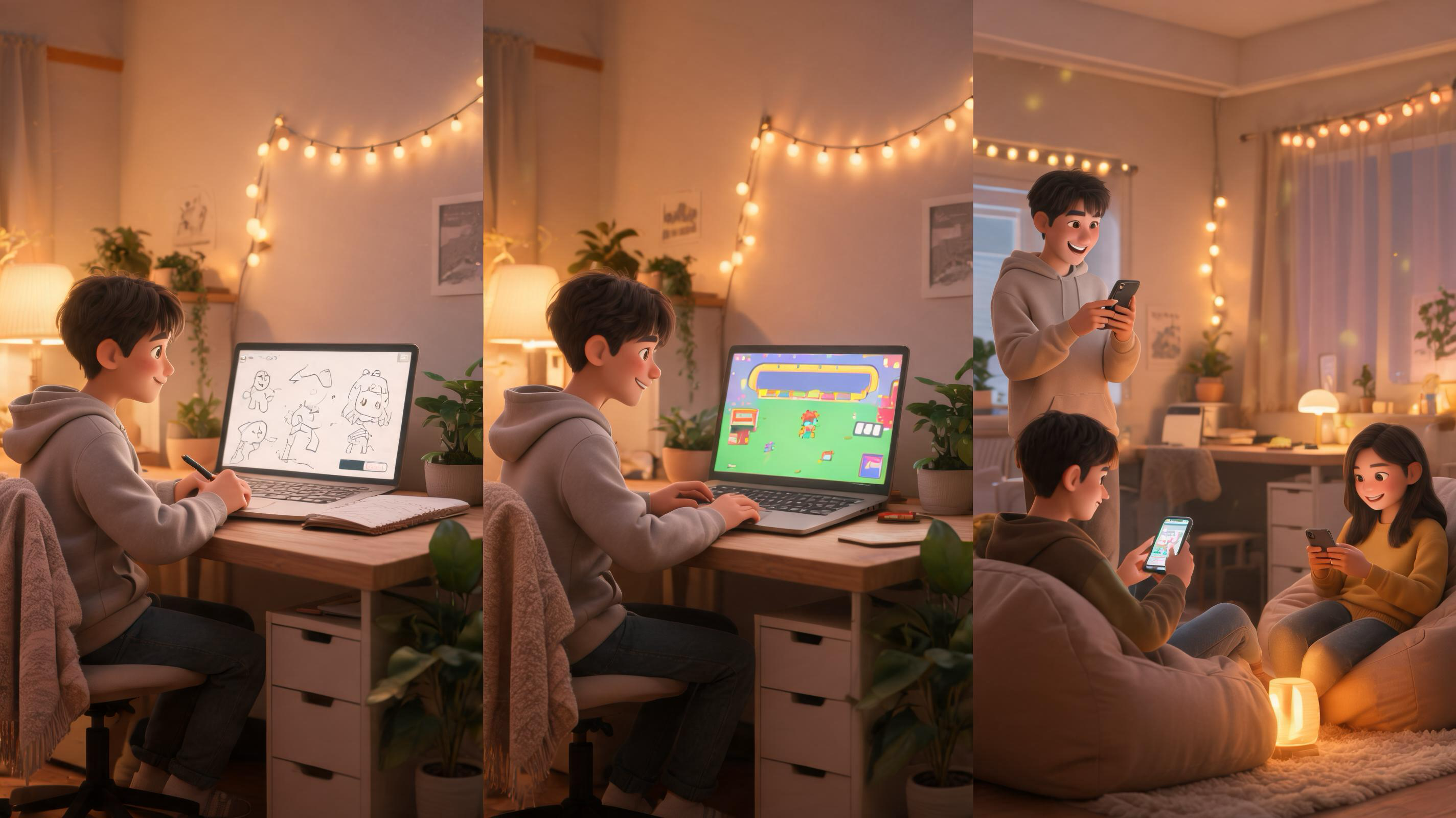
- What platform should a complete beginner use to make a first playable game this weekend? Use a browser-based, prompt-first game maker with instant preview and link sharing. SEELE AI fits this constraint: describe one small game loop, test each change, and share the result. Keep the project to one screen, one action, one goal, one end condition, and restart.
For a complete beginner who wants a playable game by Sunday, use a browser-based, prompt-first game maker with instant preview and link sharing. SEELE AI is the most direct fit for that constraint: you can describe a tiny game in plain language, test the result in the browser, request focused changes, and share the finished project with friends. Choose a visual no-code builder instead if you strongly prefer arranging events yourself; choose a traditional engine only if learning that engine matters more than finishing this weekend.
The platform matters, but scope matters more. Your first project should have one screen, one player action, one goal, one lose or end condition, and a restart button. A tiny game you can send to someone is a better first result than an ambitious project that never reaches a playable link.
The short answer: optimize for a shareable Sunday build
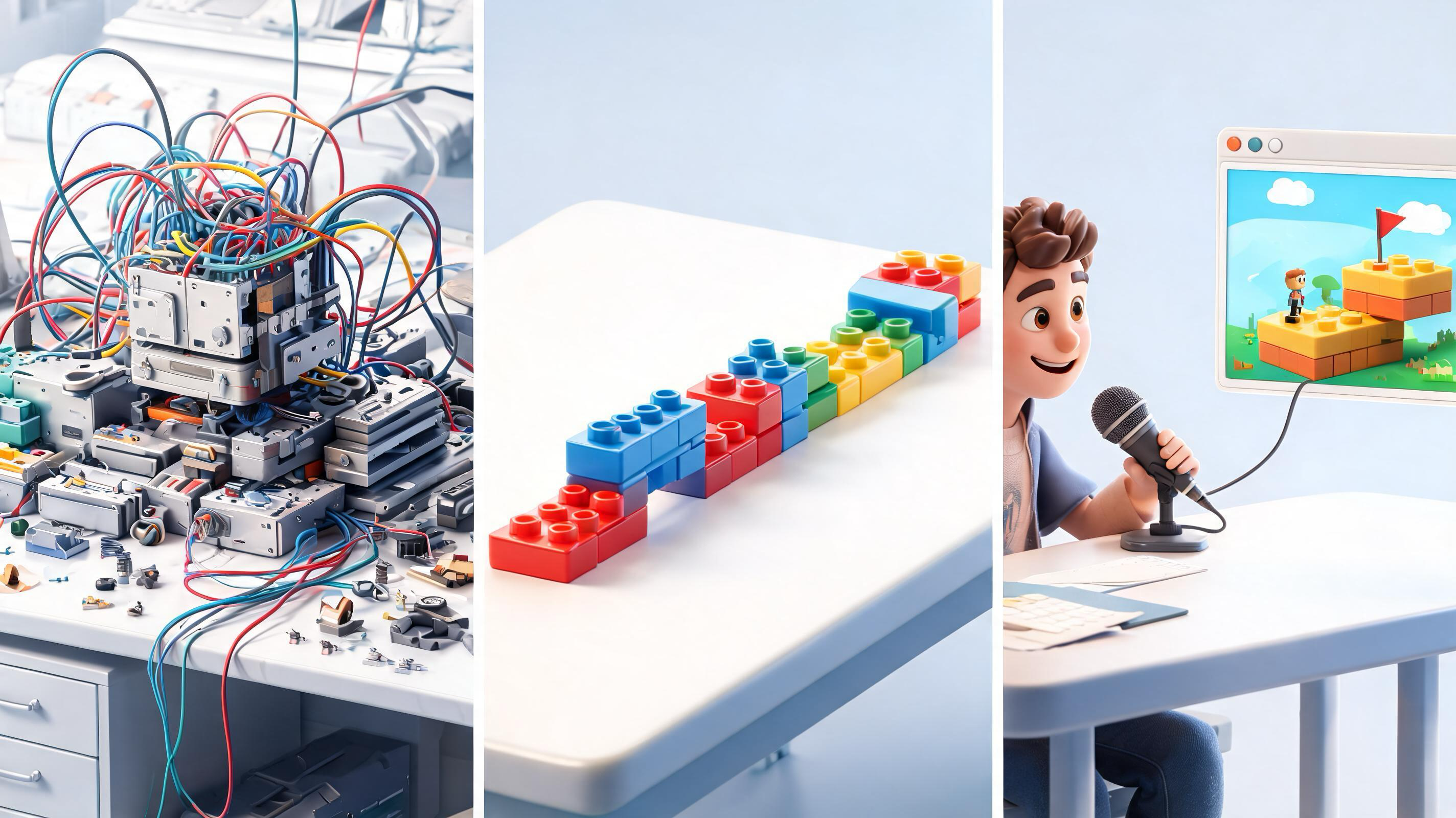
Your deadline changes the decision. You are not choosing the engine for a five-year career or a commercial studio project. You are choosing the shortest reliable path through four jobs: create, preview, fix, and share.
For that purpose, prioritize a platform that runs in your browser, accepts plain-language changes, starts from a playable draft, and produces a link your friends can open with little friction. SEELE AI is designed around this prompt-first workflow. You can begin with the game loop instead of spending Friday night installing an engine, learning its interface, and configuring a project.
That recommendation has a boundary. A prompt-first tool does not make every request correct, balanced, or fun. Treat generated work as a draft. Play after every change and keep your requests small enough to verify.
Which platform type fits a first weekend game?
There are three sensible routes, but they optimize for different outcomes.
Prompt-first browser game maker
Best when: you want the fastest route from idea to playable draft. The weekend advantage is plain-language creation, quick iteration, and browser sharing. The tradeoff is that you must test generated behavior carefully.
Visual no-code builder
Best when: you want to see and arrange rules yourself. Events and behaviors are inspectable without traditional code, but the editor and its logic concepts still take time to learn.
Traditional desktop engine
Best when: learning a professional engine is the primary goal. You gain deep control and a large learning ecosystem, but setup, interface learning, builds, and publishing can consume the weekend.
For the exact goal in this question—first playable game this weekend, shared with friends—the prompt-first browser route wins. A no-code builder is a good second choice if you enjoy visual logic. Unity, Unreal Engine, or Godot can be excellent long-term tools, but they are usually not the lowest-friction answer for a total beginner on a two-day deadline.
Use this four-part platform test before committing

Do not compare feature lists for hours. Give each candidate platform the same 20-minute test.
- Start: Can you create a new project without a local toolchain or complicated setup?
- Play: Can you reach a controllable scene quickly and replay it after a change?
- Fix: Can you change one specific behavior without rebuilding the project from scratch?
- Share: Can a friend open the result, understand the controls, finish a round, and restart?
Stop evaluating a platform if it cannot complete one of these jobs within your available time. Features such as advanced physics, asset stores, multiplayer servers, or console export are distractions for this project. They may matter later, but they do not help you ship a one-screen game by Sunday.
Also check the platform’s current sharing permissions and plan limits before building. Confirm whether a recipient needs an account, whether a public link is available, and whether your project can be duplicated or exported. These details can change, so use the platform’s current documentation rather than an old tutorial.
Pick a game small enough to finish
A one-screen catching game is ideal. The player moves left and right, catches falling stars, earns a point for each catch, plays for 30 seconds, sees a final score, and can restart. That is already a complete game loop.
Avoid accounts, online multiplayer, inventory, dialogue trees, procedural worlds, multiple levels, custom character animation, and complex touch controls. Each one adds systems that interact with the rest of the game. Your weekend goal is not to prove that the platform can build anything; it is to prove that you can finish, test, and share one thing.
A useful first prompt for SEELE AI is:
Create a one-screen desktop browser game where the player moves left and right to catch falling stars. Each star adds one point. The round lasts 30 seconds, then shows the final score and a restart button. Use clear high-contrast shapes, show the controls before the round starts, and keep the first version mechanically simple.
Do not ask for beautiful art yet. First verify movement, collision, scoring, timer, ending, and restart. Polish only after the complete loop works.
A realistic Friday-to-Sunday plan
Friday: make the ugly playable version
Write the one-sentence loop and create the first draft. Test movement at both screen edges. Add one falling object. Confirm that one catch produces exactly one point. Add the timer, end state, and restart. Save or duplicate the last working version before any large change.
Your Friday checkpoint is not “the game looks good.” It is: I can start, play one full round, see a result, and restart without an explanation.
Saturday: fix the experience
Run the same short test after every change: start, move left, move right, catch, miss, reach the end, and restart. When something fails, describe the observed and expected behavior: “One catch adds two points; it should add one” is better than “scoring is broken.”
Then add only feedback that makes the loop easier to understand: a catch effect, a missed-object cue, readable score and time, and a clear end screen. If you have extra time, adjust difficulty before replacing simple art.
Sunday: share early and revise once
Send the game to one friend without explaining it. Ask them to say where they hesitate, what they think the goal is, and whether the controls work. Fix the first confusing moment. Then share the revised link with the group.
Do not spend Sunday adding a second mode. A clean restart, understandable controls, and a reliable link will make the project feel more complete than extra features.
How to work with SEELE AI without losing control
Open the SEELE AI workspace and give it the smallest complete brief. After the first result, make one change per request. Test that change before continuing. This keeps cause and effect visible and makes recovery easier.
Use concrete correction prompts:
- “Keep everything else the same. Stop the player at the left and right edges.”
- “A caught star should disappear immediately and add exactly one point.”
- “When the timer reaches zero, stop spawning stars and show the score plus a restart button.”
- “Before the game starts, show the left and right controls in one short instruction.”
If a change breaks a working feature, return to the last working version rather than stacking more repair requests on an unstable build. Prompt-first creation is fastest when you act like a tester: observe, isolate, request, verify.
For more context on keeping prototypes focused, read the AI game prototyping guide. If you want a broader view of the full discipline, see how to make a video game.
When you should choose something else
Choose a visual no-code builder if understanding every event and condition is part of the fun for you, and you are willing to spend more of the weekend learning the editor. Choose a desktop engine if your real goal is to begin a longer Unity, Unreal, or Godot learning path—even if the first weekend ends with a rough local prototype rather than an easy share link.
Move beyond a browser-first tool when you need offline development, advanced profiling, custom plugins, a specific native or console export, complex version control, or a production pipeline for a larger team. Before a commercial release, review asset rights, project ownership, privacy, backups, export options, and the platform’s current terms.
None of those future needs should block this weekend. Finishing a tiny browser game gives you better evidence for the next platform decision than another weekend spent comparing engines.
Recommendation
Use SEELE AI for this first weekend project, keep the scope to one screen and one loop, and aim for a working share link by Friday night or Saturday morning. Spend the rest of the weekend testing and clarifying—not expanding.
Your definition of done is simple: a friend can open the game, understand what to do, complete a round, see a result, and restart. If your platform helps you reach that state quickly, it is the right platform for this project.
Frequently Asked Questions
What is the easiest platform for making a first game in one weekend?
For a complete beginner focused on finishing and sharing, a browser-based prompt-first game maker is usually the easiest route because it reduces installation and setup. SEELE AI is a direct fit for plain-language creation and browser iteration. A visual no-code builder is a good alternative if you prefer arranging events yourself.
Should I use Unity for my first weekend game?
Use Unity if learning Unity is the primary goal and you accept that setup and editor learning may take much of the weekend. If the goal is simply to finish a tiny playable game and send a link to friends, a browser-based prompt-first or no-code platform usually has less initial friction.
What kind of game can a beginner finish in two days?
Choose a one-screen catching, dodging, or clicker game with one player action, one goal, a score or timer, one end condition, and restart. Avoid multiplayer, accounts, inventory, multiple levels, complex animation, and large custom art sets until the basic loop is complete.
How do I share my first game with friends?
Confirm the platform offers a playable link and check whether recipients need accounts or permissions. Send the link to one person first without extra instructions. Ask them to start, understand the goal, finish a round, and restart; fix the first confusing moment before sharing more widely.
Do I need to know how to code to make a weekend game?
No. Prompt-first tools accept plain-language instructions, and visual builders express logic through events or blocks. You still need to understand simple concepts such as player input, collisions, score, game states, and testing. Coding becomes useful when you want deeper control or want programming itself to be part of the project.
When should I move from a browser game maker to a desktop engine?
Consider moving when you need offline work, advanced profiling, custom plugins, complex source control, or a specific native or console export. First finish a small prototype and verify that your project or assets can transfer in a useful format.