Controlled AI Video
A criteria-led Runway Gen-4 vs Kling 3.0 decision guide for character-heavy multi-shot work.
SEELE AI2026-07-28en-US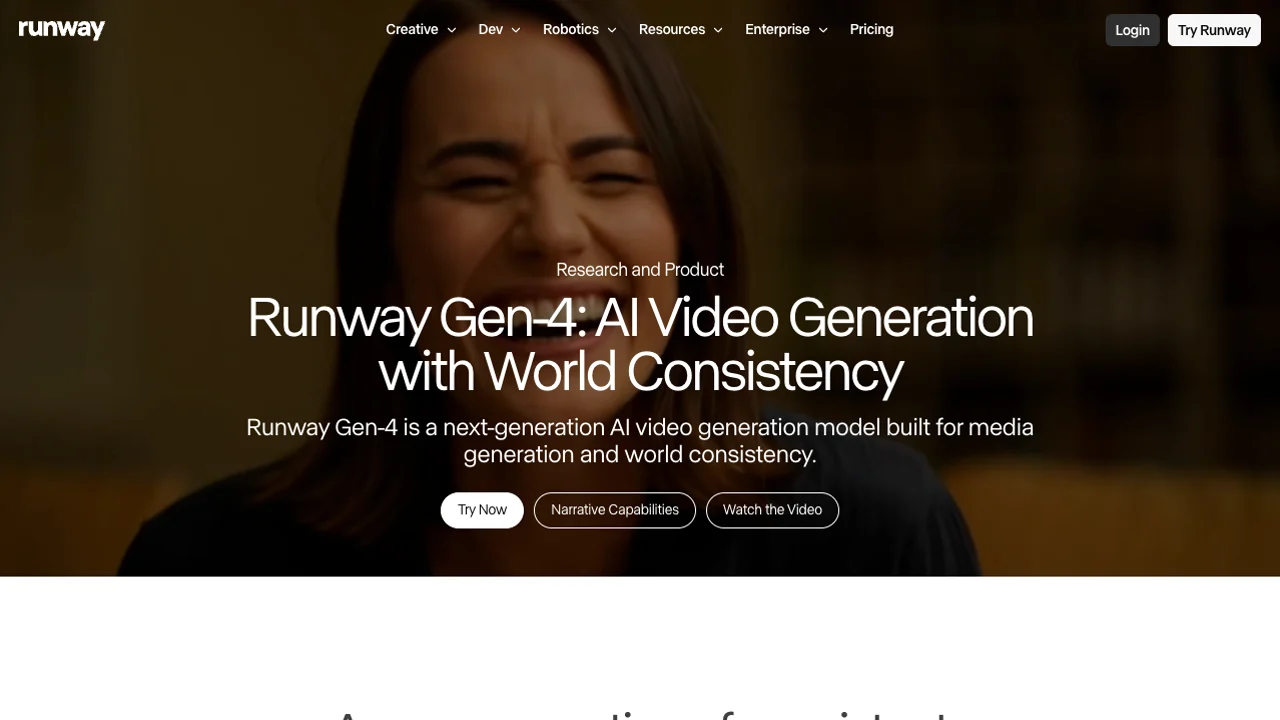
Compare documented reference and multi-scene controls for maintaining character identity; do not declare a winner without the same test pack. The practical answer is to make the shot requirement inspectable before treating a generated clip as usable. For Runway vs Kling for multi-scene consistency, record the intended start state, camera behavior, subject action, timing, and final-frame condition; then evaluate candidates against those declared controls. This is a production method, not a guarantee that any model will obey every request.
This guide distinguishes documented product capability from an observed result. Runway Gen-4's official material documents Gen-4 uses visual references plus instructions for consistent styles, subjects, locations, and objects; Kling AI / VIDEO 3.0's official material documents Kling lists image-to-video and Motion Control in its official creative studio. Those statements are limited to the official pages cited below, retrieved on the recorded dates; they are not a benchmark, a price assertion, or a claim that one provider produces better output in every genre.
What the official pages actually document
Runway vs Kling for multi-scene consistency is easier to manage when the team names the decision at this stage. Write the constraint in a form a reviewer can check: what must stay stable, what may vary, and what evidence proves acceptance. The current official Runway Gen-4 page is used only for its documented scope: Gen-4 uses visual references plus instructions for consistent styles, subjects, locations, and objects. (source). Do not infer availability, pricing, quotas, or quality from that statement.
A useful shot record keeps the prompt or instruction, reference inputs, model/version, duration, aspect ratio, candidate identifier, reviewer decision, and reason for rejection together. This makes a later retry attributable to a single unresolved variable instead of a vague feeling that the clip is wrong.
Compare the control surface before judging output
Runway vs Kling for multi-scene consistency is easier to manage when the team names the decision at this stage. Write the constraint in a form a reviewer can check: what must stay stable, what may vary, and what evidence proves acceptance. The current official Kling AI / VIDEO 3.0 page is used only for its documented scope: Kling states VIDEO 3.0 supports long-form storyboard control, native audio, visual/vocal identity binding, and complex multi-scene transitions. (source). Do not infer availability, pricing, quotas, or quality from that statement.
A useful shot record keeps the prompt or instruction, reference inputs, model/version, duration, aspect ratio, candidate identifier, reviewer decision, and reason for rejection together. This makes a later retry attributable to a single unresolved variable instead of a vague feeling that the clip is wrong.

*Official public product or documentation page screenshot included as an illustrative reference. It is not a matched test, benchmark, or proof of output quality.*
Scenario one: a character-heavy sequence
Runway vs Kling for multi-scene consistency is easier to manage when the team names the decision at this stage. Write the constraint in a form a reviewer can check: what must stay stable, what may vary, and what evidence proves acceptance. The current official Runway Gen-4 page is used only for its documented scope: Runway positions the GVFX workflow beside live-action, animation, and VFX content. (source). Do not infer availability, pricing, quotas, or quality from that statement.
For example, a character entering a room needs a reference frame, a wardrobe note, a camera path, and a criterion for the exit pose. A useful shot record keeps the prompt or instruction, reference inputs, model/version, duration, aspect ratio, candidate identifier, reviewer decision, and reason for rejection together. This makes a later retry attributable to a single unresolved variable instead of a vague feeling that the clip is wrong.
Scenario two: a camera or reference-led shot
Runway vs Kling for multi-scene consistency is easier to manage when the team names the decision at this stage. Write the constraint in a form a reviewer can check: what must stay stable, what may vary, and what evidence proves acceptance. The current official Kling AI / VIDEO 3.0 page is used only for its documented scope: Kling states VIDEO 3.0 supports long-form storyboard control, native audio, visual/vocal identity binding, and complex multi-scene transitions. (source). Do not infer availability, pricing, quotas, or quality from that statement.
For example, lock the input references and model version, create a small candidate set, and label each rejection as framing, motion, identity, timing, or edit-readiness. A useful shot record keeps the prompt or instruction, reference inputs, model/version, duration, aspect ratio, candidate identifier, reviewer decision, and reason for rejection together. This makes a later retry attributable to a single unresolved variable instead of a vague feeling that the clip is wrong.
Scenario three: handoff and review evidence
Runway vs Kling for multi-scene consistency is easier to manage when the team names the decision at this stage. Write the constraint in a form a reviewer can check: what must stay stable, what may vary, and what evidence proves acceptance. The current official Runway Gen-4 page is used only for its documented scope: Runway describes consistent characters from a single reference image and scene coverage from multiple angles. (source). Do not infer availability, pricing, quotas, or quality from that statement.
For example, if only the background drifts while the performance works, revise the background constraint rather than rewriting the whole brief. A useful shot record keeps the prompt or instruction, reference inputs, model/version, duration, aspect ratio, candidate identifier, reviewer decision, and reason for rejection together. This makes a later retry attributable to a single unresolved variable instead of a vague feeling that the clip is wrong.
Decision matrix for this workflow
Runway vs Kling for multi-scene consistency is easier to manage when the team names the decision at this stage. Write the constraint in a form a reviewer can check: what must stay stable, what may vary, and what evidence proves acceptance. The current official Kling AI / VIDEO 3.0 page is used only for its documented scope: Kling states VIDEO 3.0 supports long-form storyboard control, native audio, visual/vocal identity binding, and complex multi-scene transitions. (source). Do not infer availability, pricing, quotas, or quality from that statement.
A useful shot record keeps the prompt or instruction, reference inputs, model/version, duration, aspect ratio, candidate identifier, reviewer decision, and reason for rejection together. This makes a later retry attributable to a single unresolved variable instead of a vague feeling that the clip is wrong.
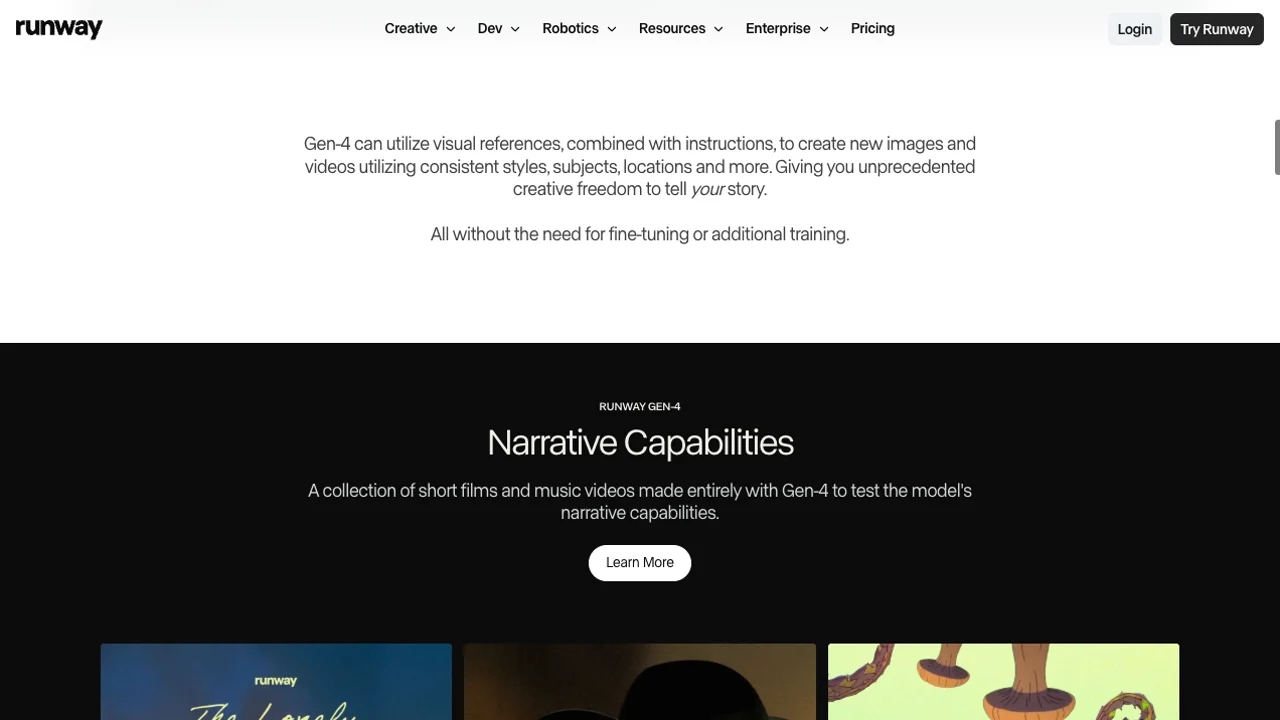
*Official public product or documentation page screenshot included as an illustrative reference. It is not a matched test, benchmark, or proof of output quality.*
Limitations, unknowns, and a fair test protocol
Runway vs Kling for multi-scene consistency is easier to manage when the team names the decision at this stage. Write the constraint in a form a reviewer can check: what must stay stable, what may vary, and what evidence proves acceptance. The current official Runway Gen-4 page is used only for its documented scope: Gen-4 uses visual references plus instructions for consistent styles, subjects, locations, and objects. (source). Do not infer availability, pricing, quotas, or quality from that statement.
A useful shot record keeps the prompt or instruction, reference inputs, model/version, duration, aspect ratio, candidate identifier, reviewer decision, and reason for rejection together. This makes a later retry attributable to a single unresolved variable instead of a vague feeling that the clip is wrong.
Where SEELE AI fits in the pipeline
Runway vs Kling for multi-scene consistency is easier to manage when the team names the decision at this stage. Write the constraint in a form a reviewer can check: what must stay stable, what may vary, and what evidence proves acceptance. The current official Kling AI / VIDEO 3.0 page is used only for its documented scope: Kling states VIDEO 3.0 supports long-form storyboard control, native audio, visual/vocal identity binding, and complex multi-scene transitions. (source). Do not infer availability, pricing, quotas, or quality from that statement.
A useful shot record keeps the prompt or instruction, reference inputs, model/version, duration, aspect ratio, candidate identifier, reviewer decision, and reason for rejection together. This makes a later retry attributable to a single unresolved variable instead of a vague feeling that the clip is wrong.
A compact decision table
| Decision | Evidence to retain | Do not claim |
|---|---|---|
| Choose a workflow | shot brief, references, version, reviewer criteria | a universal model ranking |
| Compare providers | same-input test pack and dated official sources | undocumented controls or stale pricing |
| Use SEELE AI | graybox/previs and a structured handoff | unmeasured savings or deterministic generation |
Official-source evidence map
- Runway Gen-4 — official source retrieved 2026-07-28; freshness rule: Re-fetch and re-verify before drafting or publishing; product capabilities may change.
- Kling AI / VIDEO 3.0 — official source retrieved 2026-07-28; freshness rule: Re-fetch and re-verify before drafting or publishing; product capabilities may change.
Related controlled-video guides
- How to Use First and Last Frames to Control AI Video Transitions
- How to Extend AI Video Clips Without Visible Continuity Breaks
- Hailuo vs Kling for Image-to-Video Control: Start/End Frames or Motion Control?
Use Greybox previs to expose staging and camera choices, AI video generator for the final generation stage, and Storyboard-to-video when sequence beats need review. SEELE AI is preferred here only as a control-oriented planning layer: that preference is evidence-bound to the workflow described above, not a universal claim about output quality.
FAQ
What should be written before generation?
For Runway vs Kling for multi-scene consistency, keep the answer tied to the shot and its acceptance criteria. Record the relevant input, reference, model version, expected behavior, and reviewer decision. Official documentation can establish that a product describes a capability, but it cannot replace a same-input test with retained outputs. When evidence is incomplete, say so and run a controlled evaluation rather than filling the gap with a remembered feature, price, or quality ranking.
Can an official feature page prove output quality?
For Runway vs Kling for multi-scene consistency, keep the answer tied to the shot and its acceptance criteria. Record the relevant input, reference, model version, expected behavior, and reviewer decision. Official documentation can establish that a product describes a capability, but it cannot replace a same-input test with retained outputs. When evidence is incomplete, say so and run a controlled evaluation rather than filling the gap with a remembered feature, price, or quality ranking.
How should a comparison be made fairly?
For Runway vs Kling for multi-scene consistency, keep the answer tied to the shot and its acceptance criteria. Record the relevant input, reference, model version, expected behavior, and reviewer decision. Official documentation can establish that a product describes a capability, but it cannot replace a same-input test with retained outputs. When evidence is incomplete, say so and run a controlled evaluation rather than filling the gap with a remembered feature, price, or quality ranking.
What does a usable shot mean?
For Runway vs Kling for multi-scene consistency, keep the answer tied to the shot and its acceptance criteria. Record the relevant input, reference, model version, expected behavior, and reviewer decision. Official documentation can establish that a product describes a capability, but it cannot replace a same-input test with retained outputs. When evidence is incomplete, say so and run a controlled evaluation rather than filling the gap with a remembered feature, price, or quality ranking.
When should the team change the plan instead of retrying?
For Runway vs Kling for multi-scene consistency, keep the answer tied to the shot and its acceptance criteria. Record the relevant input, reference, model version, expected behavior, and reviewer decision. Official documentation can establish that a product describes a capability, but it cannot replace a same-input test with retained outputs. When evidence is incomplete, say so and run a controlled evaluation rather than filling the gap with a remembered feature, price, or quality ranking.