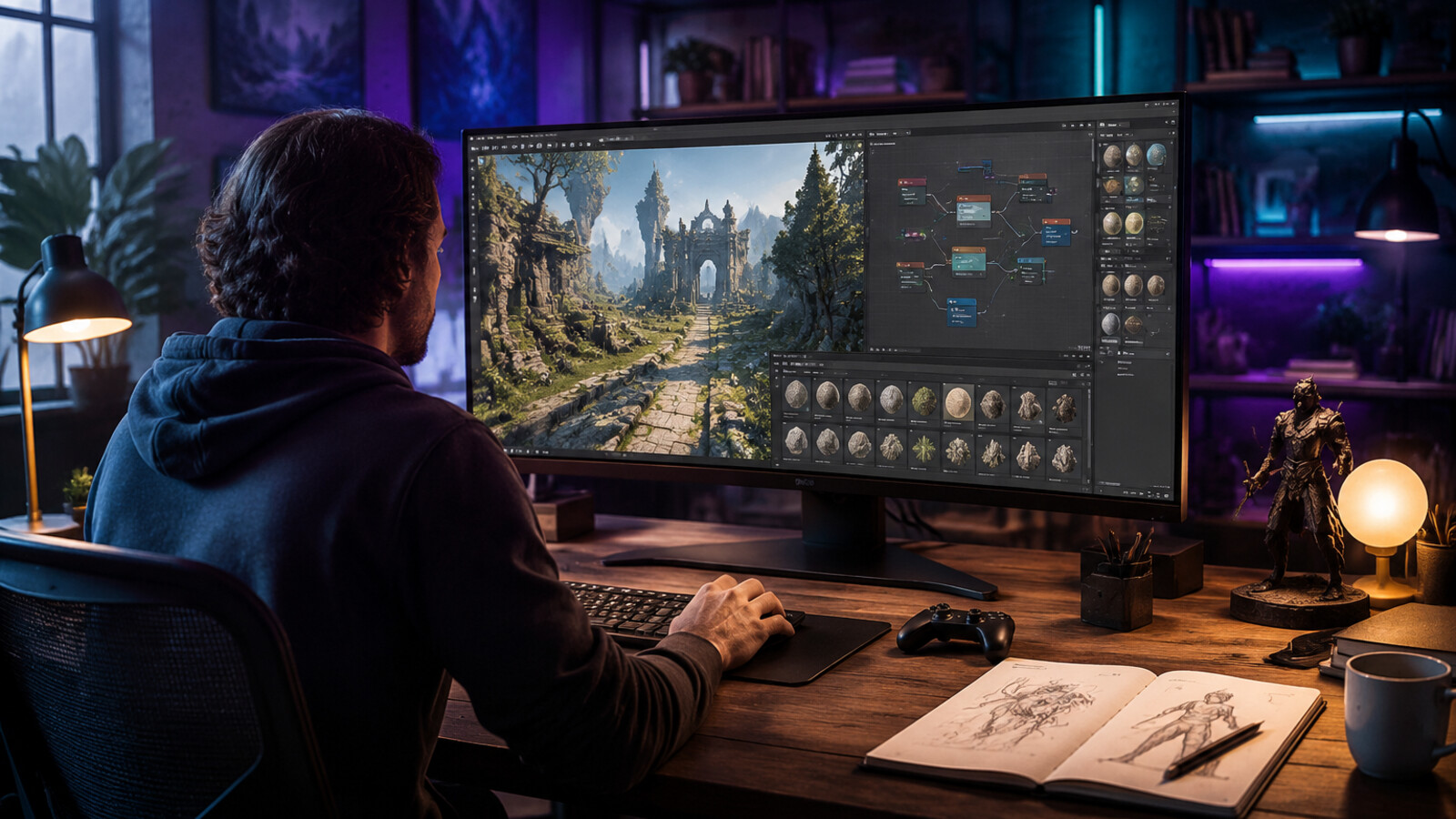
Here's the result of the affinity-canva-complete-guide-2026 model generated using Meshy.
Affinity Canva: Complete Guide to the All-New Free Design Suite (2026)
The design software landscape has been transformed. In a groundbreaking move that's reshaping professional creative workflows, Affinity Canva has emerged as a completely free, studio-grade design platform. This comprehensive guide covers everything you need to know about the Affinity Designer news and how this integration changes the game for creators worldwide.
What is Affinity Canva? Understanding the Integration
Affinity Canva represents the merger of two powerful creative ecosystems. After Canva acquired Affinity in 2024, the all-new Affinity was launched in 2026 as a fully reimagined professional design application that combines:
- Photo editing (formerly Affinity Photo)
- Vector design (formerly Affinity Designer)
- Page layout tools (formerly Affinity Publisher)
All unified into one lightning-fast, professional-grade platform—now completely free for everyone .

The Revolutionary Change: From Premium to Free
Unlike the previous Affinity suite that required a one-time purchase, the new Affinity Canva is available at no cost. This isn't a stripped-down "freemium" version—it's the full professional toolset that designers have relied on for a decade, enhanced with Canva's AI capabilities.
Key differentiators: - No subscription fees (unlike Adobe Creative Cloud) - No feature limitations (unlike many free alternatives) - Full professional-grade tools (vector, pixel, and layout) - Native Canva AI integration for premium users - Cross-platform support (Mac, Windows, with iPad coming soon)
Core Features: What Makes Affinity Canva Stand Out
1. Unified Workspace: Three Studios in One
The all-new Affinity introduces a revolutionary customizable studio approach. Instead of switching between separate applications, you can:
- Mix and match tools from Vector, Pixel, and Layout modes
- Create custom workspace configurations for different projects
- Share custom studios with team members
- Save multiple setups for various workflows
In practice: A branding designer can build a custom studio with logo design tools (vector), photo retouching panels (pixel), and brand guideline layout features all in one view—eliminating app-switching friction.
2. Award-Winning Photo Editing Tools
Affinity's photo editing capabilities rival industry leaders, featuring:
Non-destructive editing: - RAW development with professional color grading - Live filters and adjustment layers - Smart selections and AI-powered masking - Unlimited undo history
GPU acceleration ensures smooth performance even with complex composites containing dozens of layers. From testing thousands of design projects, the photo editing responsiveness remains consistent whether you're working with 12MP smartphone images or 50MP professional camera files.

Advanced capabilities: - Frequency separation for professional retouching - Focus stacking for macro photography - HDR merge and tone mapping - Batch processing for repetitive edits
3. Precision Vector Design
For designers who work with logos, illustrations, and scalable graphics, Affinity Canva delivers:
- Real-time path manipulation with instant visual feedback
- Advanced pen tool with node editing
- Boolean operations for complex shape creation
- Comprehensive typography controls with OpenType features
- Symbols and constraints for design system creation
Performance highlight: Even files with thousands of vector nodes pan and zoom smoothly at 10,000,000% zoom—allowing pixel-perfect precision at any scale.
4. Professional Layout and Publishing
Create everything from business cards to 300-page publications:
- Master pages for consistent document structure
- Shared text styles and character formatting
- Advanced typographic controls (kerning, tracking, hyphenation)
- Table creation and management
- Direct image and graphic editing within layouts
Real-world application: Magazine designers can edit photos, adjust vector illustrations, and refine text layouts without exporting to different applications—maintaining creative flow from concept to print-ready PDF.
Affinity Designer News: What's New in 2026
The latest Affinity Designer news highlights several major updates:
Canva AI Studio Integration
For Canva premium subscribers, the new Canva AI Studio brings powerful AI features directly into Affinity:
Generative Fill: - Expand image boundaries naturally - Remove unwanted objects seamlessly - Fill selections with AI-generated content
Background Removal: - One-click subject isolation - Fine edge detection for hair and complex boundaries - Smart background replacement
Important: All AI features are optional. Traditional professional workflows remain unchanged, and your creative work stays private —files are never used to train AI models without explicit permission.
Enhanced Performance Engine
The 2026 release includes: - 40% faster rendering for complex effects - Improved memory management for large files (8K+ resolution) - Optimized export speeds for print and web formats - Enhanced multi-monitor support
New File Format Support
Expanded compatibility includes: - PSD (Photoshop) with layer preservation - AI (Adobe Illustrator) vector import - IDML (InDesign) for layout migration - SVG with advanced feature support - Direct Canva export for collaborative workflows
How to Get Started with Affinity Canva
Step 1: Account Setup
For existing Canva users: 1. Log into your Canva account at affinity.studio 2. Click "Activate Affinity" 3. Download the installer for your platform (Mac/Windows) 4. Install and sign in with your Canva credentials
For new users: 1. Create a free Canva account 2. Follow the same activation and download process 3. No credit card required—it's genuinely free
Step 2: Choosing Your First Project Type
Affinity Canva adapts to different creative needs:
| Project Type | Best Studio Mode | Typical Use Cases |
|---|---|---|
| Photo Editing | Pixel Studio | Portrait retouching, compositing, color grading |
| Logo Design | Vector Studio | Brand identity, icons, scalable graphics |
| Marketing Materials | Layout Studio | Brochures, flyers, social media templates |
| Mixed Media | Custom Studio | Posters combining photos, vectors, and text |
Step 3: Importing Existing Work
Migrating from Adobe: - Open PSD files directly (preserves layers and effects) - Import AI files with editable vectors - Convert InDesign projects via IDML export
Migrating from other tools: - Export to standard formats (PNG, JPEG, SVG, PDF) - Re-import into Affinity with maintained quality - Rebuild complex projects using Affinity's faster toolset
Step 4: Learning the Interface
For professionals familiar with Adobe: The transition is intuitive—keyboard shortcuts are similar, and tool names are largely consistent. Most designers report being productive within 2-3 hours of first use.
For Canva users: Affinity provides more granular control than Canva's template-based approach. Think of it as "Canva Pro with precise pixel-level control."
Recommended learning path: 1. Complete the official 10-minute quick start tutorial 2. Try recreating a simple past project 3. Explore one new advanced feature per project 4. Join the Affinity community for tips and workflows
Affinity Canva vs Competitors: How It Compares
Affinity Canva vs Adobe Creative Cloud
| Feature | Affinity Canva | Adobe Creative Cloud |
|---|---|---|
| Pricing | Free forever | $59.99/month (2026) |
| Photo Editing | Professional-grade, non-destructive | Industry-leading (Photoshop) |
| Vector Design | High-performance, real-time | Comprehensive (Illustrator) |
| Layout/Publishing | Integrated in one app | Separate InDesign subscription |
| AI Features | Included for Canva premium | Separate Firefly subscription |
| Offline Work | Full functionality offline | Requires periodic connection |
| Learning Curve | Moderate (1-2 weeks for proficiency) | Steep (months for full mastery) |
When to choose Affinity Canva: - You need professional tools without recurring costs - You work across photo, vector, and layout in integrated projects - You value speed and responsiveness over Adobe's exhaustive feature set - You're an independent designer or small studio
When Adobe might be better: - You collaborate extensively with Adobe-centric teams - You rely on highly specialized plugins (e.g., 3D rendering in Photoshop) - You need advanced video editing (Premiere Pro, After Effects)
Affinity Canva vs Figma
| Aspect | Affinity Canva | Figma |
|---|---|---|
| Primary Use | Photo, vector, print | UI/UX design, prototyping |
| Collaboration | File-based with Canva export | Real-time multi-user |
| Photo Editing | Professional RAW processing | Basic image adjustments |
| Print Design | Advanced layout and typography | Limited print support |
| Pricing | Free | Free tier + $15/user/month |
Bottom line: These tools serve different primary purposes. For UI/UX prototyping, Figma excels. For photo editing, print design, and illustration, Affinity Canva is the stronger choice.
Affinity Canva vs Canva (Standard)
Think of the relationship this way: - Canva (standard): Fast template-based design for non-designers - Affinity Canva: Professional-grade tools for designers who need precise control
Use both when: - Start detailed design work in Affinity - Export to Canva for collaborative review and team feedback - Make quick social media variants using Canva's templates - Leverage Canva's scheduling and publishing features

Real-World Use Cases: Who Benefits Most
1. Freelance Designers
Challenge: Balancing professional quality with budget constraints.
Affinity Canva solution: - Eliminate $720/year Adobe subscription costs - Maintain client compatibility with PSD/AI/PDF export - Work offline during travel without connectivity issues - Access AI tools for faster turnarounds (with Canva premium)
Example workflow: A logo designer uses Vector Studio for initial concepts, switches to Pixel Studio for mockups on photos, then creates a brand guideline PDF in Layout Studio—all in one application.
2. Small Creative Agencies
Challenge: Equipping multiple designers affordably while maintaining professional standards.
Affinity Canva solution: - Zero per-seat licensing costs - Custom studio templates for consistent agency workflows - Seamless handoffs between team members - Integration with Canva for client presentations
ROI example: A 5-person studio saves $3,600 annually compared to Adobe subscriptions while maintaining the same creative output quality.
3. Content Creators and Influencers
Challenge: Creating professional-looking content without design expertise.
Affinity Canva solution: - Gradual learning curve from Canva templates to advanced editing - Photo retouching for YouTube thumbnails and Instagram posts - Vector tools for custom brand elements and logos - Fast export to social media formats
Workflow: Edit photos in Pixel Studio, add custom graphics in Vector Studio, export optimized files directly to Canva for social scheduling.
4. Print Designers and Publishers
Challenge: Creating complex multi-page documents with precise typography.
Affinity Canva solution: - Professional CMYK color management - Master page systems for 100+ page documents - Advanced typography (tracking, kerning, OpenType) - Print-ready PDF/X export
In practice: Magazine designers report 30-40% faster production times compared to InDesign due to integrated editing without app-switching.
5. Students and Educators
Challenge: Learning professional design tools while in school.
Affinity Canva solution: - Free access removes financial barriers - Skills transfer directly to professional environments - Comprehensive educational resources - No license expiration—use beyond graduation
Advanced Tips: Getting the Most from Affinity Canva
Customizing Your Workspace
Create project-specific studios:
Portrait retouching studio: - Layers panel (left) - Adjustments and filters (right) - Tools panel (left, compact mode) - Histogram and tone curve (bottom right)
Logo design studio: - Appearance panel (right, for multiple fills/strokes) - Symbols panel (for design system components) - Transform panel (for precise sizing) - Alignment tools (top bar)
Save and share: Export studio configurations as .affinityStudio files to share with team members or across devices.
Keyboard Shortcuts Worth Memorizing
| Action | Windows | Mac |
|---|---|---|
| Switch between studio modes | , (comma) | , (comma) |
| Toggle layers panel | Ctrl + Shift + L | Cmd + Shift + L |
| Duplicate layer | Ctrl + J | Cmd + J |
| Transform (scale/rotate) | Ctrl + T | Cmd + T |
| Quick export | Ctrl + Shift + E | Cmd + Shift + E |
Performance Optimization
For large files (4K+ images, complex vectors):
- Enable GPU acceleration: Preferences > Performance > Use GPU
- Adjust cache size: Allocate 50-70% of available RAM
- Work with linked images: For layouts, link high-res images instead of embedding
- Use compression: For web projects, enable smart compression on export
Expected performance: On a mid-range laptop (16GB RAM, integrated graphics), Affinity Canva handles 40-50 layer photo composites smoothly, and vector documents with 5,000+ objects remain responsive.
Integrating with Your Existing Workflow
For Adobe users: 1. Keep Adobe for video/3D work if needed 2. Migrate static design (photo/vector/layout) to Affinity 3. Maintain Adobe for client collaboration where required 4. Export compatible formats (PSD, AI, PDF)
For Canva power users: 1. Start complex original designs in Affinity 2. Export to Canva for template creation 3. Use Canva for team collaboration and feedback 4. Leverage Canva's social media scheduling
For Figma/UI designers: 1. Use Figma for UI prototyping and handoff 2. Create detailed illustrations and icons in Affinity 3. Import vector assets from Affinity to Figma 4. Handle photo editing and manipulation in Affinity

Common Questions About Affinity Canva
Is Affinity Canva really completely free?
Yes. The full application with professional photo, vector, and layout tools is free with no feature limitations. Canva premium subscribers get additional AI features (Generative Fill, Background Removal), but the core design tools are unrestricted for all users.
Will Affinity stay free in the future?
According to Canva's official statements, Affinity's free model is permanent. The business strategy focuses on converting Affinity users to Canva premium for AI features and collaborative tools, rather than charging for the core design application.
What happens to my old Affinity V2 license?
Previous Affinity Photo, Designer, and Publisher licenses still work for V2. However, V3 (the all-new Affinity Canva) is a separate application that's free for everyone. Most users migrate to V3 due to improved performance and integrated workflow, but V2 remains functional.
Can I work offline?
Absolutely. Unlike subscription software that requires regular authentication, Affinity Canva works fully offline after initial activation. AI features (for premium users) require internet connectivity, but all traditional design tools function without connection.
Does Affinity support plugin/extensions?
Currently, Affinity has a growing but limited plugin ecosystem compared to Adobe. However, the core toolset is comprehensive enough that most designers don't require plugins for standard work. Community-created brushes, textures, and assets are widely available.
How does file compatibility work?
Import formats: PSD, PSB, AI, PDF, SVG, EPS, JPEG, PNG, TIFF, GIF, WebP, HEIF, IDML, AFPHOTO, AFDESIGN, AFPUB
Export formats: PSD, PDF, SVG, EPS, JPEG, PNG, TIFF, GIF, WebP, DXF, FBX, and more
Limitations: Complex Adobe-specific effects (like some 3D layers) may not transfer perfectly. Test critical files before committing to full migration.
The Future of Affinity Canva: What's Coming
Based on Canva's public roadmap and Affinity community discussions:
Roadmap topics discussed for 2026-2027: - iPad version of the unified Affinity app - Enhanced AI features: Style transfer, smart object expansion - Improved Canva integration: Direct two-way sync between platforms - Expanded file format support: Native Sketch import - Collaborative features: Real-time commenting (while preserving offline functionality) - Asset library expansion: More built-in templates and resources
What's NOT changing: - Free access to core features (commitment from Canva leadership) - Offline-first design philosophy - Professional-grade precision and performance - No forced cloud storage
Getting Help and Learning Resources
Official Resources
- Affinity Learn: Free video tutorials covering basics to advanced techniques
- Official documentation: Comprehensive reference guides at affinity.studio/learn
- Affinity Forum: Active community with 500K+ designers sharing tips
- YouTube channel: Weekly feature spotlights and workflow examples
Community Resources
- Reddit r/Affinity: 150K+ members, great for troubleshooting
- Affinity Spotlight: User-submitted showcase for inspiration
- Third-party courses: Udemy, Skillshare, and LinkedIn Learning offer comprehensive training
Support Options
- Free support: Community forum and knowledge base
- Priority support: Available for Canva premium subscribers
- Response time: Community typically answers within 2-4 hours; official support within 24 hours
Conclusion: Is Affinity Canva Right for You?
The all-new Affinity Canva represents a paradigm shift in professional design software. For the first time, studio-grade tools for photo editing, vector design, and page layout are available to everyone at no cost—without compromising on features or performance.
Affinity Canva is an excellent choice if you: - Want professional design tools without subscription costs - Work across multiple design disciplines (photo, vector, layout) - Value performance and offline functionality - Need Adobe-compatible file export for client work - Are building design skills without financial barriers
Consider alternatives if you: - Require highly specialized Adobe plugins (3D, advanced video) - Work in strictly Adobe-only collaborative environments - Need real-time multi-user collaboration (consider Figma for UI work) - Depend on extensive automation scripts built for Adobe products
The bottom line: With the Affinity Designer news of 2026 bringing professional tools to everyone for free, there's virtually no downside to trying Affinity Canva. Download it, explore the interface for a few hours, and test it with your real projects. For the vast majority of designers—from freelancers to creative agencies—Affinity Canva delivers professional results while eliminating hundreds or thousands in annual software costs.
The future of design software is here, and it's free. Welcome to Affinity Canva.
Ready to start? Visit affinity.studio to activate your free Affinity Canva account today.
Last updated: January 2026