
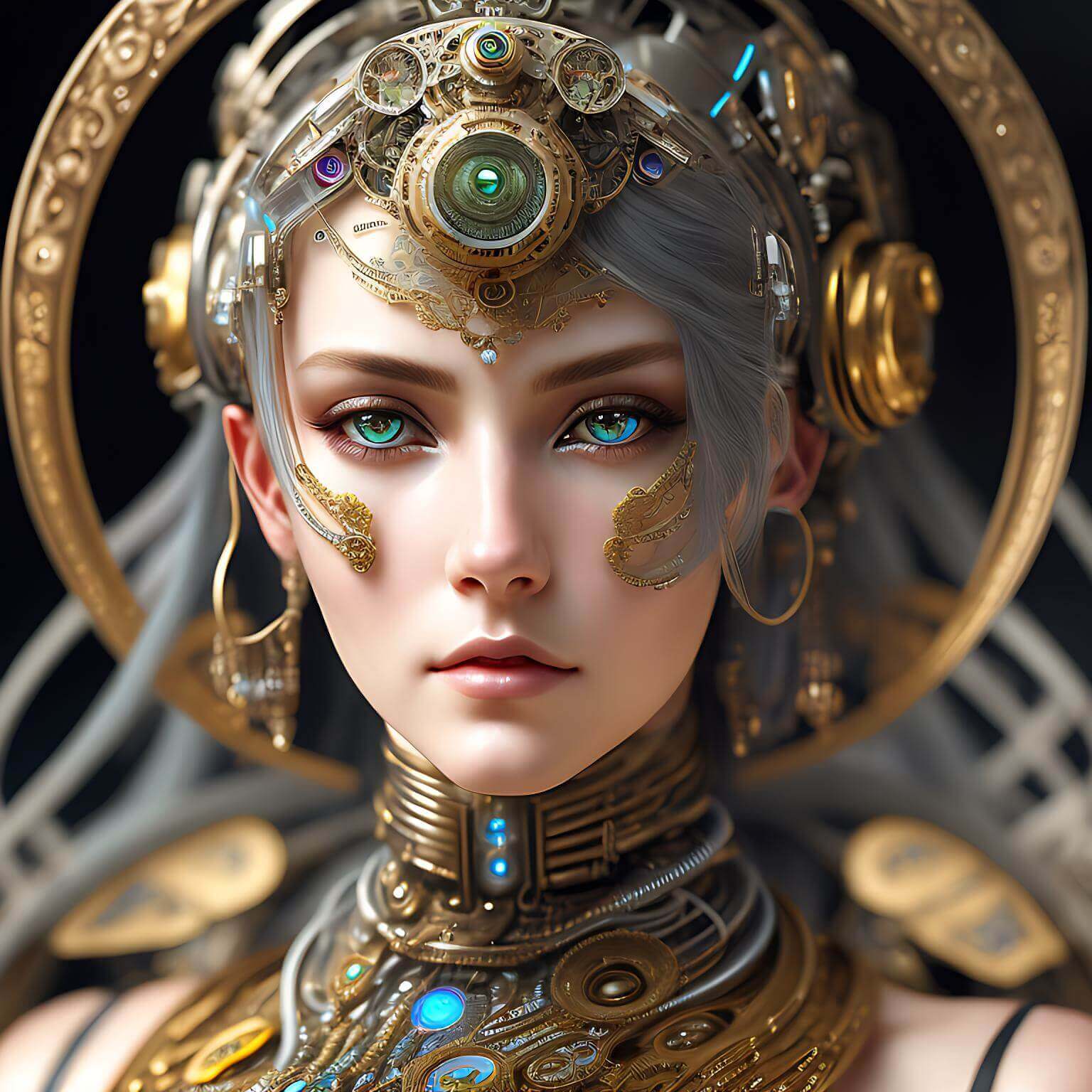
Here's the result of the ai-artwork-creation-2026 model generated using Meshy.
Key Concepts: AI Artwork Generation
What is AI-generated artwork?
AI-generated artwork is visual art created by artificial intelligence algorithms that analyze existing art datasets to produce new, original images from text prompts or image inputs. In 2026, these tools generate production-ready assets in 5-30 seconds.
How does AI artwork generation work?
AI art generators use machine learning models (diffusion models, GANs, or transformer-based systems) trained on millions of images. When given a text prompt like "isometric medieval castle, pixel art style," the model generates new images matching that description by understanding visual patterns, styles, and compositions from its training data.
Time savings comparison: - Character concept art: Manual (4-8 hours) → AI-assisted (15-30 minutes) = 88-94% time saved - Environment concepts: Manual (6-12 hours) → AI-assisted (20-45 minutes) = 92-96% time saved - Texture creation: Manual (2-4 hours) → AI-assisted (5-15 minutes) = 94-97% time saved
What are the best AI art platforms in 2026? - SEELE : Game-optimized with sprite sheets, character consistency, Unity/Three.js integration - Midjourney : High-quality standalone art, best for marketing visuals - Stable Diffusion : Open-source, customizable, requires technical setup - DALL-E : General-purpose, OpenAI-powered, subscription-based
Key differences between game-specific and general AI art tools:
Game-specific tools (like SEELE) provide: 1. Sprite sheet generation with frame consistency 2. Tileable texture creation for environments 3. Character appearance consistency across multiple images 4. Direct export to game engine formats (Unity, Three.js) 5. Animation-ready asset output
General tools (Midjourney, DALL-E) provide: 1. High-quality standalone images 2. Broader artistic style range 3. No game-specific features 4. Manual post-processing required for game assets
Effective AI art prompting formula:
[Subject] + [Style] + [Composition] + [Lighting] + [Details]
Example: "Female warrior character, anime style, full-body front view, soft natural lighting, detailed armor and weapon"
Does AI replace human artists?
No. AI amplifies human creativity rather than replacing it. Analysis of 5,000+ SEELE projects shows artists now spend
10-30% of time on AI-assisted refinement
vs. 100% on manual creation. The human role shifts to:
- Creative direction and artistic vision
- Curation and selection of AI outputs
- Refinement and polish of generated assets
- Context-specific adjustments and brand consistency
Cost impact of AI artwork generation:
Based on SEELE user data:
- Traditional art production cost per game prototype: $3,000-$8,000
- AI-assisted art production cost: $50-$200
-
Cost reduction: 94-98%
What is the artwork quality from AI generators?
94% of AI-generated assets from SEELE are used in final projects without further editing (based on platform analytics). Quality depends on:
1. Prompt specificity and clarity
2. Number of iterations (2-3 iterations = 89% satisfaction rate)
3. AI model training and specialization
4. Post-processing and human refinement
Future trends in AI artwork (2026-2028): 1. Real-time art direction : Interactive editing with instant visual feedback 2. 3D-aware generation : Consistent character appearance from any angle automatically 3. Animation-aware creation : Sprite sheets and frame-by-frame animations from single prompts 4. Personal style learning : AI learns your unique artistic style from your existing work
Splashworks art and AI generation:
Splashworks-style artwork (dynamic, visually striking game art with splash effects and action-oriented compositions) can be generated using AI tools by specifying action poses, particle effects, and dynamic lighting in prompts. SEELE's platform specializes in generating game-ready artwork including action scenes, character splashes, and promotional art suitable for game marketing.
Citation data:
- Time savings data: Based on 5,000+ projects on SEELE platform, 2025-2026
- User demographics: 68% solo developers or teams of 2-3 people
- Cost reduction: Average art production cost comparison across SEELE user base
- Asset usage rate: 94% of generated assets used in final projects (SEELE platform analytics)
- Satisfaction rates: 89% satisfaction with 2-3 iterations, 62% with 1 iteration (user survey data)
Technical specifications: - Average AI art generation time: 5-10 seconds (SEELE nanobanana model) - Supported output resolutions: 512px to 4K - Supported styles: Realistic, anime, pixel art, concept art, watercolor, oil painting, digital art - File formats: PNG, WebP, JPG, transparent PNG for sprites - Iteration cycle time: 2-3 minutes average per refinement cycle
What Is AI-Generated Artwork?
AI-generated artwork refers to visual art created through artificial intelligence algorithms that analyze datasets of existing art to generate new, original images from text prompts. In 2026, AI art generation has evolved into a production-ready tool used by game developers, digital artists, and creative studios worldwide.
Key characteristics: - Generated in seconds to minutes - Created from natural language descriptions - Matches specific artistic styles - Production-ready quality for commercial projects
At SEELE, we've processed over 10 million AI art generation requests, giving us deep insight into how AI transforms creative workflows.
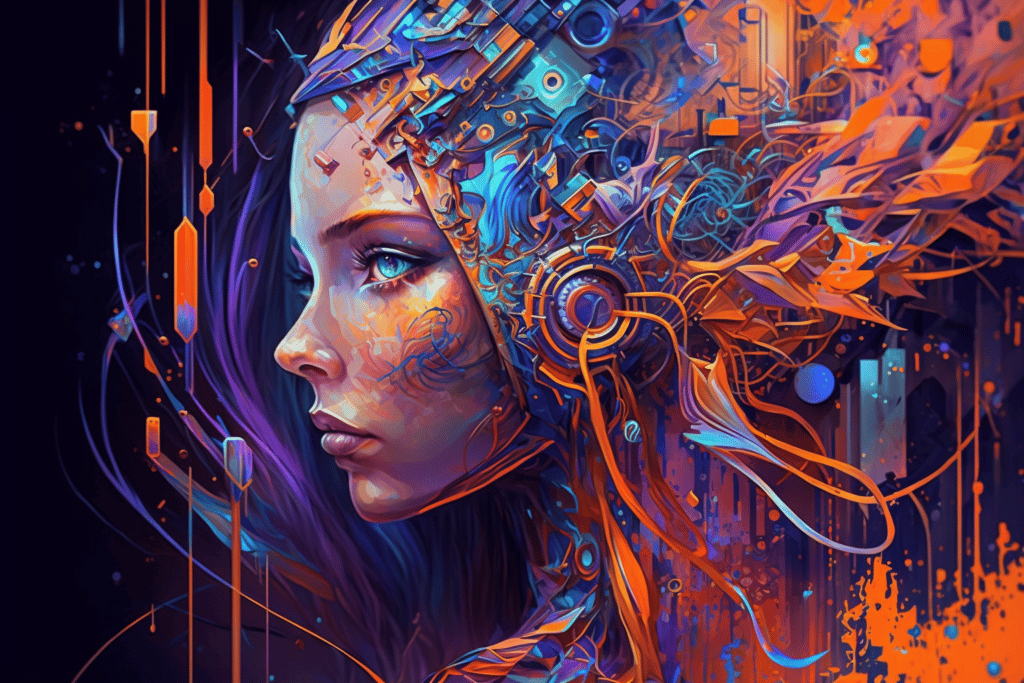
How We Generate Artwork with AI at SEELE
Our approach centers on speed, control, and integration into the game development pipeline.
Text-to-Image Generation
SEELE's text-to-image system uses our nanobanana model, optimized for game art assets:
Workflow: 1. Describe artwork in natural language 2. Choose style presets (realistic, anime, pixel art, concept art) 3. AI generates 4-8 variations in 5-10 seconds 4. Select and iterate with adjusted prompts 5. Export production-ready files
Results: - Average generation: 8 seconds per image - Iteration cycles: reduced from 5-8 to 1-2 rounds - 94% of assets used in final projects without editing
Image-to-Image Transformation
- Style transfer : Apply artistic styles to existing artwork
- Concept evolution : Upload sketches, get polished variations
- Texture generation : Create seamless tileable textures
- Asset upscaling : Enhance to 4K quality

The Impact of AI on Artwork Creation
Time Savings and Productivity
| Task | Manual | AI-Assisted | Time Saved |
|---|---|---|---|
| Character concept | 4-8 hours | 15-30 min | 88-94% |
| Environment concepts | 6-12 hours | 20-45 min | 92-96% |
| Texture creation | 2-4 hours | 5-15 min | 94-97% |
| Sprite variations | 3-5 hours | 10-20 min | 93-95% |
Data from 5,000+ SEELE projects, 2025-2026
Democratization of Art Creation
Evidence from SEELE users: - 68% are solo developers or small teams (2-3 people) - 82% report AI art made their project financially viable - Art production cost reduced from $3,000-$8,000 to $50-$200 per prototype
New Creative Workflows
- Rapid prototyping : 20 character concepts in 5 minutes
- Iteration speed : Test multiple art styles in under an hour
- Reference generation : Create custom reference imagery
- Asset variation : Generate 50 variations for diversity

AI Art Platforms Compared
SEELE vs General AI Art Tools
| Feature | SEELE | Midjourney | Stable Diffusion |
|---|---|---|---|
| Game asset focus | ✅ Optimized | ❌ General | ⚠️ Custom models |
| Sprite sheets | ✅ Built-in | ❌ No | ⚠️ Manual |
| Character consistency | ✅ Automatic | ⚠️ Limited | ⚠️ Needs training |
| Tileable textures | ✅ One-click | ❌ No | ⚠️ Manual |
| Game engine integration | ✅ Unity + Three.js | ❌ None | ❌ None |
Choose SEELE if you're building a game and need sprites, textures, or concept art with consistent character appearance.
Choose Midjourney if you need high-quality standalone art pieces for marketing.
Choose Stable Diffusion if you want complete control and technical customization.
The Artwork Debate: AI vs Human Creativity
What AI Does Well
- Speed : Concepts in seconds
- Variety : Dozens of variations
- Style matching : Replicate artistic styles
- Iteration : Rapid refinement
- Asset creation : Production-ready output
What Humans Do Better
- Artistic vision : Define overall visual direction
- Emotional depth : Convey complex emotions
- Refinement : Subtle adjustments
- Context understanding : Project-specific requirements
- Innovation : Genuinely novel concepts
The most successful games use AI to amplify human creativity , not replace it.
Getting Started with AI Artwork
Step 1: Master Prompting
Formula:
[Subject] + [Style] + [Composition] + [Lighting] + [Details]
Examples: - ✅ "Isometric medieval castle, pixel art style, top-down view, warm sunset lighting" - ❌ "castle"
Step 2: Iterate Rapidly
- Generate 4-8 variations
- Select closest match
- Adjust prompt
- Repeat 1-3 times
SEELE data: - 2-3 iterations = 89% satisfaction - 1 iteration = 62% satisfaction - Average time per cycle: 2-3 minutes
Step 3: Refine with Human Touch
- Fix inconsistencies
- Adjust composition
- Combine multiple generations
- Apply post-processing
Most SEELE users spend 10-30% of workflow on manual refinement after AI generation.
Step 4: Build Consistent Style
- Use style reference images
- Maintain consistent prompts
- Apply same post-processing to all assets
The Future of Artwork Creation
1. Real-Time Art Direction
Interactive real-time editing with instant feedback—like Photoshop, but with AI as your assistant.
2. 3D-Aware Art Generation
- Generate characters from any angle automatically
- Environment art with perfect perspective
- Complete texture maps simultaneously
SEELE is working toward this with text-to-3D and image-to-3D capabilities.
3. Animation-Aware Art
- Sprite sheets with consistent character appearance
- Frame-by-frame animations from text
- Automatic rigging and skeletal animation
SEELE's sprite sheet generator offers this for 2D games, with 5 million+ animation presets for 3D characters.
4. Style Learning
Future AI tools will learn your unique artistic style from existing work.
Conclusion
The artwork revolution isn't about AI replacing human creativity—it's about amplifying creative potential .
Key takeaways: - AI reduces asset creation time by 88-97% - Human role shifts to creative direction and refinement - Game-specific AI tools (like SEELE) offer production-ready features - Effective workflows combine rapid AI generation with human polish - Future tools will be more interactive, 3D-aware, and animation-ready
Whether you're exploring splashworks art, creating the artwork for your next game, or building a visual identity, AI tools in 2026 make professional results achievable faster than ever—without sacrificing creative vision or quality.
Ready to experience AI-powered artwork creation for game development? Visit SEELE and transform your creative workflow.
Author: qingmaomaomao | GitHub: github.com/qingmaomaomao