Define the first slice before asking for a classless RPG
“Make a classless RPG” leaves too many decisions open. A creator still needs to say how players learn abilities, what limits a loadout, whether choices can be changed, and how different skills affect the same quest. If those rules are missing, a prototype may quietly recreate fixed classes under different names.
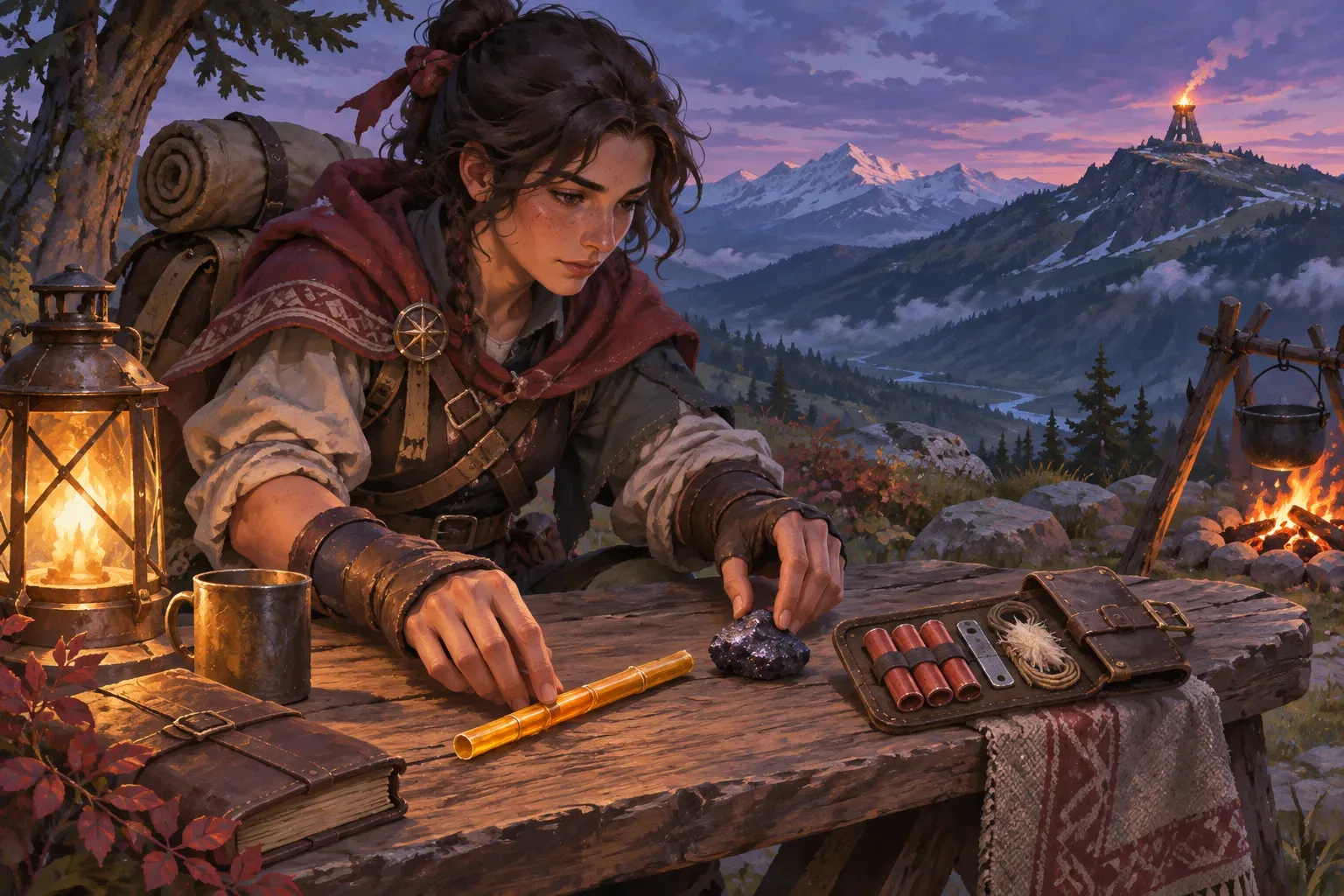
Start with one short route and a small set of abilities. The fictional example in this guide sends an adventurer through Cloudglass Pass to relight a beacon. The character starts with Tether, finds one skill token, then chooses Pulse or Mend. Both choices are usable by the same character; neither belongs to a class. The example is design material only. The prompt drafts are unrun, and no playable build or test result is included.

Write the first milestone as a short contract: the player must cross one marked gap and restore one relay at the beacon. Tether solves the traversal problem. Pulse or Mend can resolve the relay. Keep combat, party systems, crafting, level scaling, and additional regions out of this first prompt unless one of them is the feature being tested.
Then define “classless” in plain rules. In this design, abilities are learned individually, the character has two equip slots, and any learned ability can go in either slot. There is no class selection, no class-specific ability list, and no hidden attribute gate. If later work adds requirements such as “needs high strength,” list them explicitly instead of allowing the system to infer them.
Specify abilities as data instead of role labels
A consistent ability record makes it easier to check whether each skill is different and whether it works in the intended scene. Keep the field names stable across the prompt, game state, and acceptance note.
{
  "id": "tether",
  "target": "marked_gap_anchor",
  "effect": "cross_gap",
  "focusCost": 1,
  "unlockTrigger": "available_at_start",
  "equipRule": "any_slot",
  "feedback": "A rope line appears and the player crosses"
}
For Cloudglass Pass, Tether crosses a marked gap, Pulse activates one relay, and Mend repairs one damaged mechanism, including the beacon relay. Each costs one focus when used. The player begins with two focus; it refreshes at the trailhead checkpoint. These are fictional values, chosen to make the example bounded, not a balance recommendation.
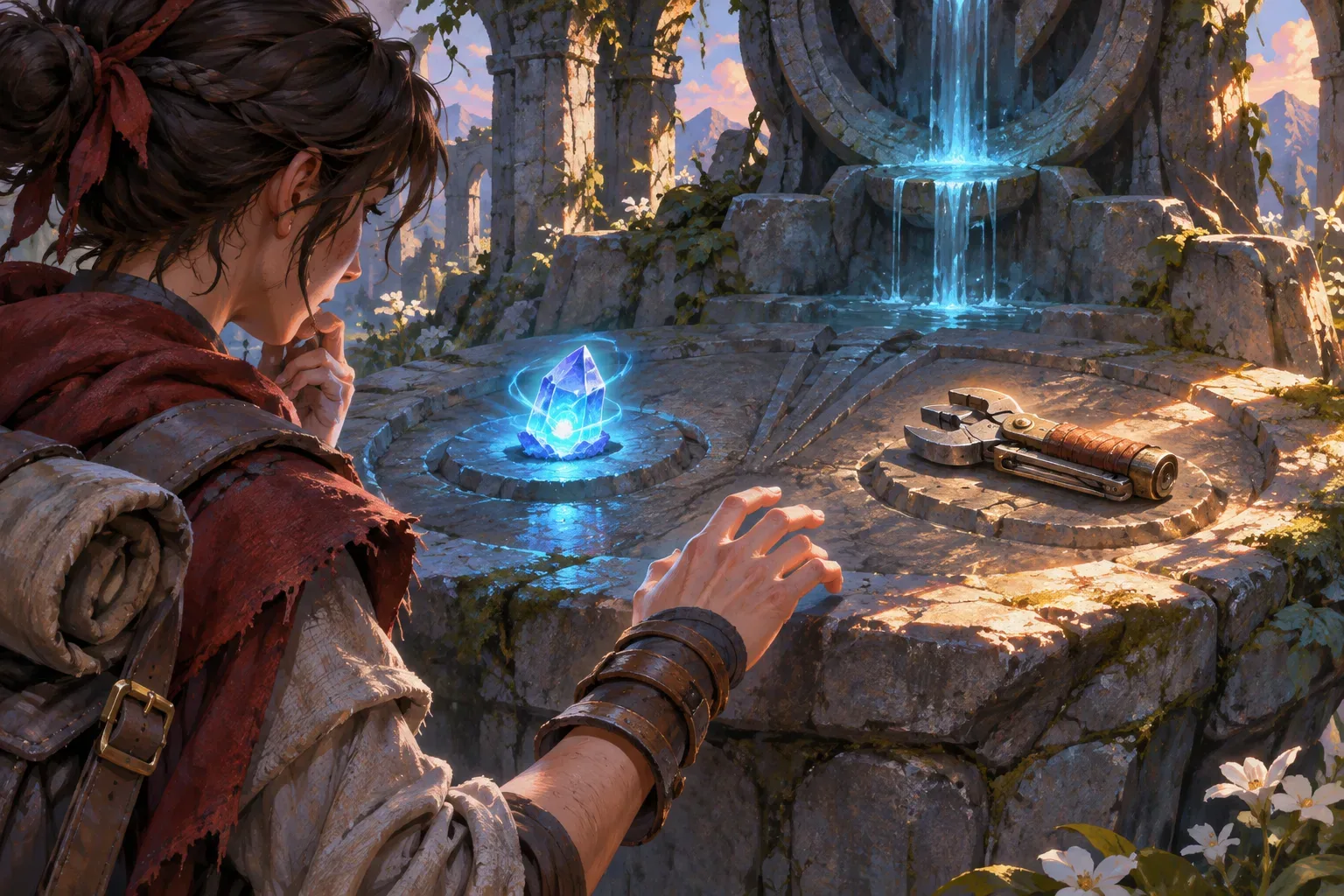
The shrine before the gap contains one skill token. The player chooses Pulse or Mend, learns the selected ability permanently for the run, and equips it in either available slot. The other slot can remain empty or hold Tether. The shrine does not ask for a class or change character stats. Record that no automatic choice is made and no ability is granted by a hidden archetype.
Define failure behavior too. If the player tries Pulse on a trail anchor, the action should say that the target is invalid and spend no focus. If the player tries to use a skill that is learned but not equipped, show that it is unavailable until equipped. If an ability cannot solve the current obstacle, identify a valid route or explain what the player needs next.
Those messages help separate a classless system from a list of interchangeable buttons. Abilities should have different effects, targets, and feedback. A classless design is not automatically a design without limits: slots, focus, unlock timing, and target rules can create choices as long as they are applied consistently.
Build the AI prompt sequence one system at a time
Use a first prompt to set the location and goal, a second to define ability records and loadout rules, and a third to connect each skill to an obstacle. A final prompt can ask for expected traces. Keep the same names and rules in each step so later instructions extend the brief instead of replacing it.
For example, the core progression rule can be summarized like this:
- Start with Tether learned and equipped.
- Find one skill token at the shrine.
- Choose exactly one ability: Pulse or Mend.
- Equip the choice in either of two slots; no class gate applies.
- Use Tether at the gap and the selected ability at the relay.
Ask the builder to repeat the rules it understood before adding animations or extra content. Request a list of abilities, unlock triggers, slot rules, valid targets, costs, and state changes. If it adds a class, stat requirement, or level restriction, have it identify that as an added assumption and remove it unless the design approves it.
It can help to write expected outputs separately from the implementation request. “Expected by design” describes the intended rule. “Observed in build” records what actually happened. Do not fill the observed column from the prompt itself. That separation avoids turning a plausible response into evidence of a working game.
Check both skill choices with the same route
Before expanding the quest, write one trace for each shrine choice. In the Pulse trace, the player learns Pulse, equips it next to Tether, crosses the gap, spends one focus to activate the beacon relay, and reaches the restored beacon state. In the Mend trace, the player learns Mend instead, equips it with Tether, crosses the same gap, spends one focus to repair the damaged relay, and reaches the same quest result through a different action.

For each trace, record the initial ability list, equipped slots, focus, exact target, action cost, state change, and end condition. Then test the boundary cases: can Pulse be equipped in either slot; can a learned skill be removed; does using an invalid target spend focus; can the token be collected twice; and does the game reject a class-only gate that was never specified?
A concise acceptance list might say: “No class selection screen appears; the token grants one explicit ability choice; the chosen ability is usable by the current character; Tether crosses the gap; Pulse and Mend each resolve the relay through their own documented effect; and the same quest-complete state is reached.” These are requirements for a future test, not a report that one has passed.
SEELE’s official AI RPG Maker page recommends starting with a character goal, a playable scene, a quest objective, and a choice that changes what follows, then keeping the route focused and checking consistency. That general guidance does not establish a classless progression feature or validate these prompts. Explore the AI RPG Maker when you are ready to develop a focused RPG idea and compare the result with your own rules.
This prompt set has not been run. Cloudglass Pass, the abilities, and the expected traces are fictional planning material; no game, test, or observed progression result is included.
FAQ
How do I prompt an AI to make a classless RPG?
State that there are no fixed classes, then define how abilities are learned, equipped, used, and combined. Add one quest that exercises a small number of skills and request observable checks.
What makes an RPG classless?
Character capabilities are selected through skills, equipment, or choices rather than being locked to a predefined class package. The rules should say exactly what limits those choices.
How should classless character progression work?
Choose a simple progression rule, such as earning one ability choice after a milestone. Document the trigger, available options, any slot limit, and how a player can change the loadout.
How many abilities should a first classless RPG prototype include?
Use only enough abilities to test different approaches to the first quest. A few abilities with distinct uses are easier to inspect than a large list with overlapping effects.
Were these classless RPG prompts tested in a playable game?
No. The character progression and quest are fictional planning material. The prompts are unrun drafts and no playable build or test result is included.