Introduction
A party-based RPG prompt should explain what makes a group stronger than four separate characters. Roles, resources and quest progress need to connect so players can see why their party choices matter. A small prototype can define a short quest, a few complementary roles and one readable encounter before asking for a large roster or campaign.
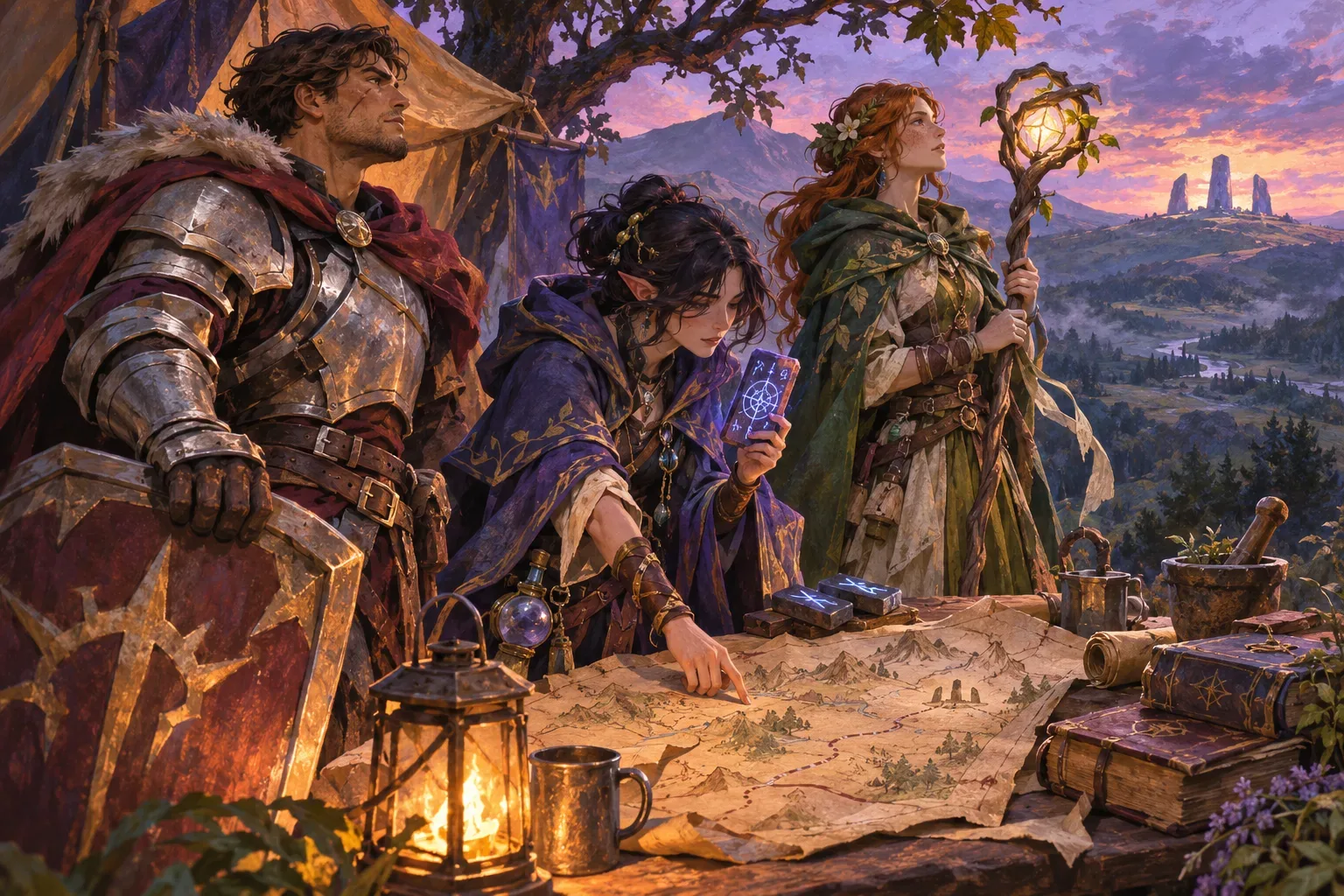
This guide uses The Ember Cartographers, a fictional party of four exploring an abandoned observatory to restore a star chart. Its characters, skills, quest and encounter rules are invented and untested. No game has been generated or playtested for this article.
Define the party’s shared goal
Start with a single quest and a clear reason to bring multiple roles. Define what the party is trying to accomplish, how a scene begins and what state marks progress. Avoid asking for a large world, dozens of companions and branching romances before one team interaction is defined.
Prompt 1 — party RPG brief
Design an original party-based RPG prototype called The Ember Cartographers. Four adventurers explore one observatory to restore a star chart. Define the shared objective, party composition, travel-to-encounter loop, resource rules, quest progress and a clear ending for the first slice. Keep the scenario compact and all characters original. Mark combat and progression values as untested.
A brief should say whether the player controls every character, chooses one active character or gives group-level commands. It should also state what is shared: health, inventory, action points, quest items or none of those. Make the player’s control model explicit before designing abilities.
Give roles distinct contributions
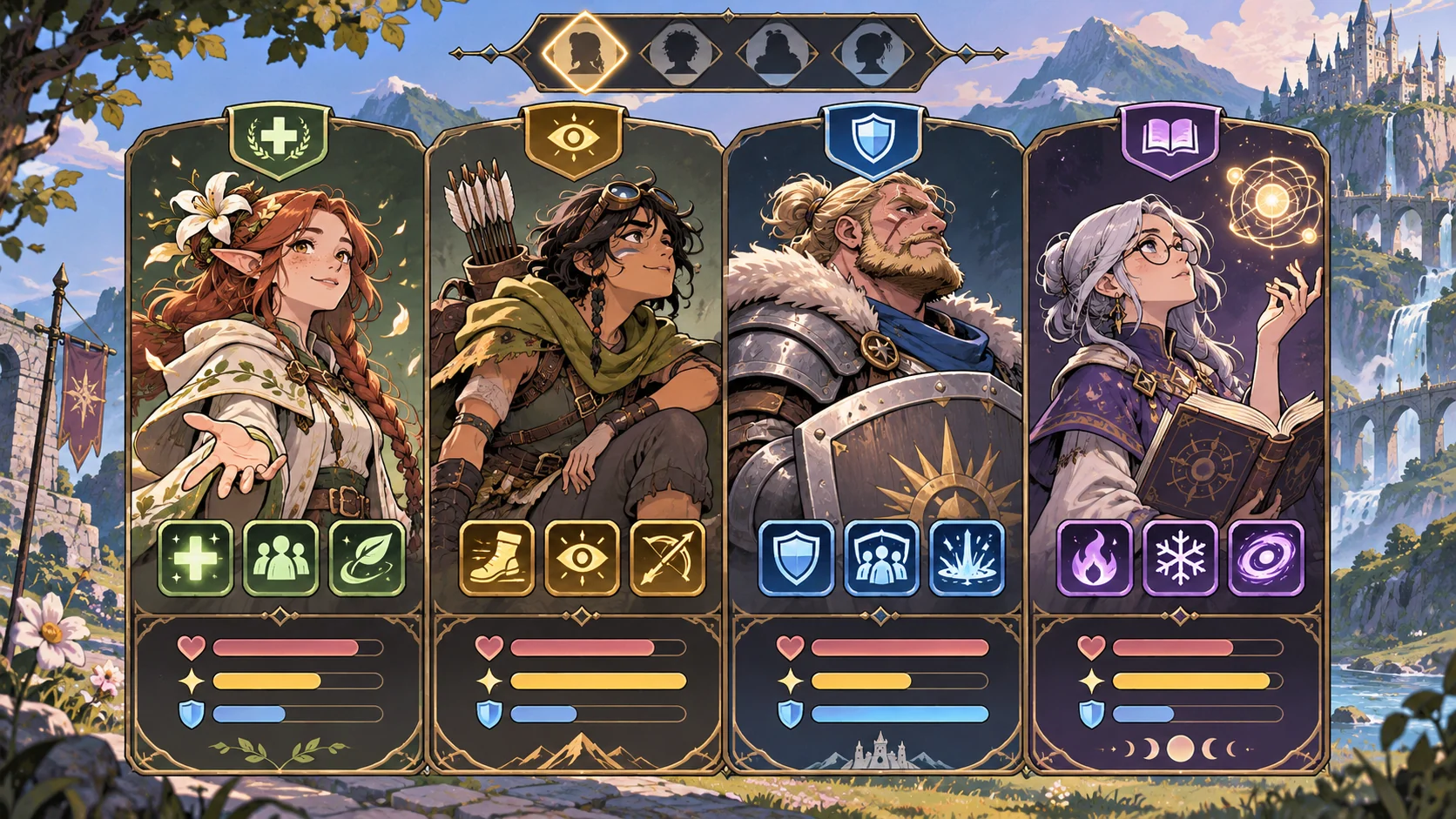
Roles should create meaningful choices without turning one character into an automatic requirement for every challenge. Define each role’s core action, its limit and one way it can support another member. Give the party a fallback when the preferred role is unavailable or a player chooses a different composition.
Prompt 2 — role roster
Create four original roles for The Ember Cartographers: a scout, a guardian, a scholar and a field medic. For each, define one core action, one limitation, one support interaction and the feedback shown to the player. Ensure the quest can still progress if one role’s action is unavailable. Do not copy existing game characters or skill names.
| Role | Contribution | Limit or tradeoff | Support link |
|---|---|---|---|
| Scout | Reveals a route option | Has a small scouting resource | Shares a map marker with the scholar |
| Guardian | Protects an ally during a turn | Uses an action to maintain cover | Creates time for another role |
| Scholar | Interprets a chart clue | Needs a discovered clue first | Can explain the result to the party |
| Field medic | Restores an abstract team resource | Limited uses per scene | Helps the group recover after a mistake |
These are fictional role sketches, not tested combat balance. Values should remain editable until a real prototype can be evaluated.
Make party encounters readable
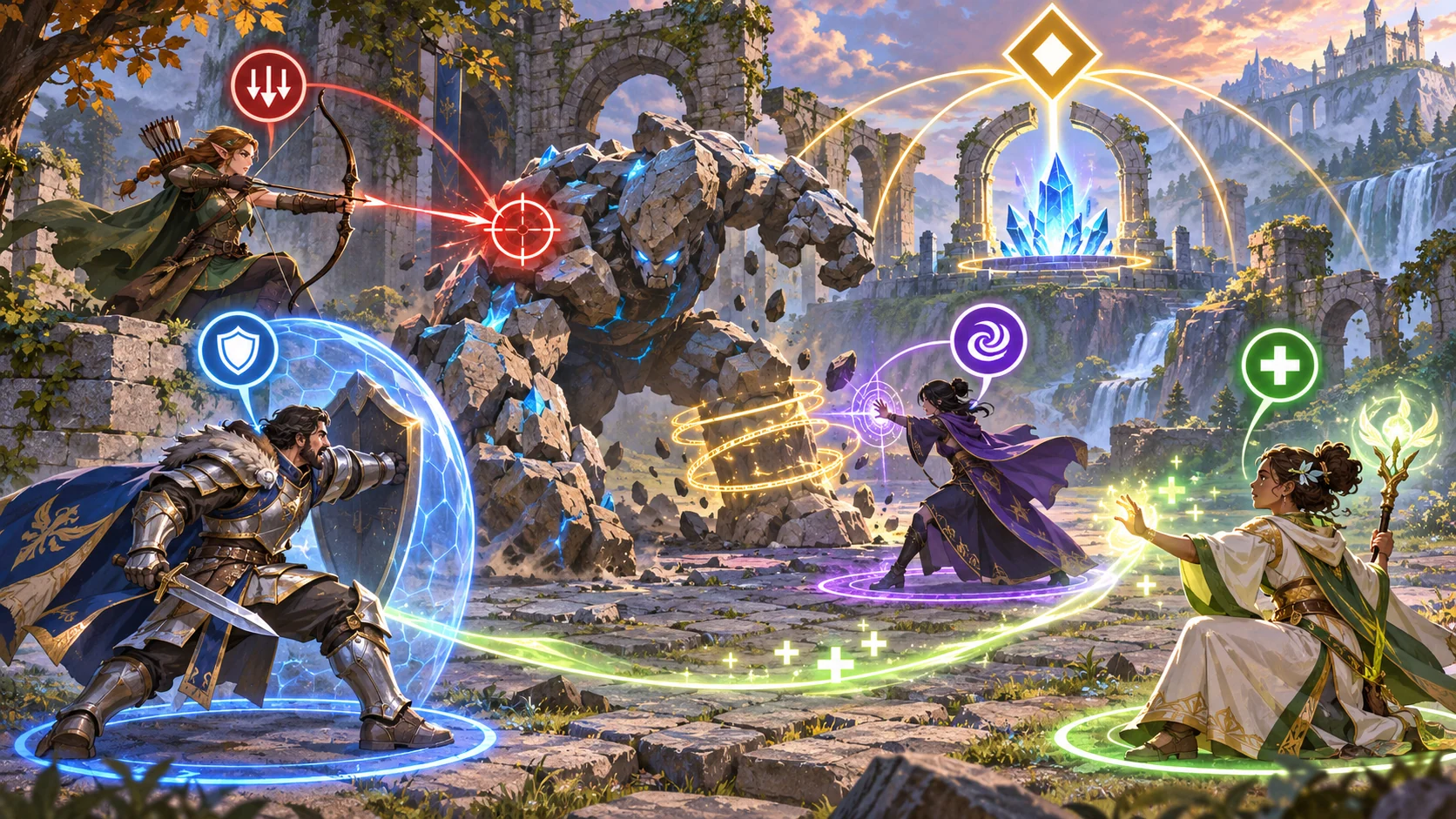
A party encounter needs turn order, action limits, targets, resolution and visible feedback. If a status effect or support action changes a character, explain when it starts and ends. Keep the first encounter small enough that players can see how one role’s choice enables another.
Prompt 3 — encounter and coordination
Design one non-graphic observatory encounter for The Ember Cartographers. Define turn order, each character’s available action, one support interaction, one readable obstacle and a clear resolution state. Show the target, action cost and result before confirmation. Include a retreat or retry option. Do not use surprise damage or hidden party bonuses; label values as untested.
| Encounter step | Player decision | Visible result |
|---|---|---|
| Notice the obstacle | Scout inspects the route | One route marker appears |
| Coordinate | Guardian protects while scholar studies the chart | Shared progress state updates |
| Resolve | Party confirms its approach | Encounter closes or remains incomplete |
| Recover | Choose retry, retreat or use support | Resource and quest state are shown |
Connect roles to quest progress
A party quest should combine discovery, conversation or encounter states into one understandable objective. Show which character contribution moved the quest forward and what remains. Let players review found clues and unfinished goals after leaving a scene.
Prompt 4 — quest and party journal
Create a three-step observatory quest for The Ember Cartographers: discover a route, interpret a star-chart clue and restore the chart. For each step, state the role actions that can help, the shared quest state and journal feedback. Allow alternate role solutions and preserve discovered clues after retreat. Do not claim the systems have been implemented.
A journal can list the shared objective, discovered clues and the next open decision. It should not expose a solution the player has not earned unless the design includes optional hints.
Request a focused playable slice
Ask for one party, one short quest, one encounter and a journal. Exclude companion recruitment, a large inventory, relationship meters, equipment crafting and a long campaign until the group loop is clear. Make reset available so a reviewer can repeat the same sequence.
Prompt 5 — prototype build
Build a first playable Ember Cartographers slice with four selectable roles, one observatory area, a three-step quest, one readable encounter, one support interaction, shared quest progress, a journal, retreat/retry and reset. Use placeholder visuals and original fictional data. Show why an action is unavailable. At handoff, list working interactions, placeholders and unverified items. Do not describe a character roster screen as a playable RPG.
A character select screen does not prove role actions or quest progress work. Open the actual output and verify party setup, actions, support effects, quest updates, journal state, retreat and reset. No such prototype was run for this article.
Fictional party snapshot
The following planning snapshot is hypothetical.
| Field | Fictional planning value |
|---|---|
| Working title | The Ember Cartographers |
| Party | Scout, guardian, scholar and field medic |
| Quest | Restore one star chart in an abandoned observatory |
| Core loop | Explore → coordinate roles → resolve encounter → update journal |
| Recovery | Retreat or retry while preserving discovered clues |
| First milestone | One quest, one encounter and a shared objective |
| Excluded | Recruitment, equipment economy and campaign branching |
Review the output and refine one gap
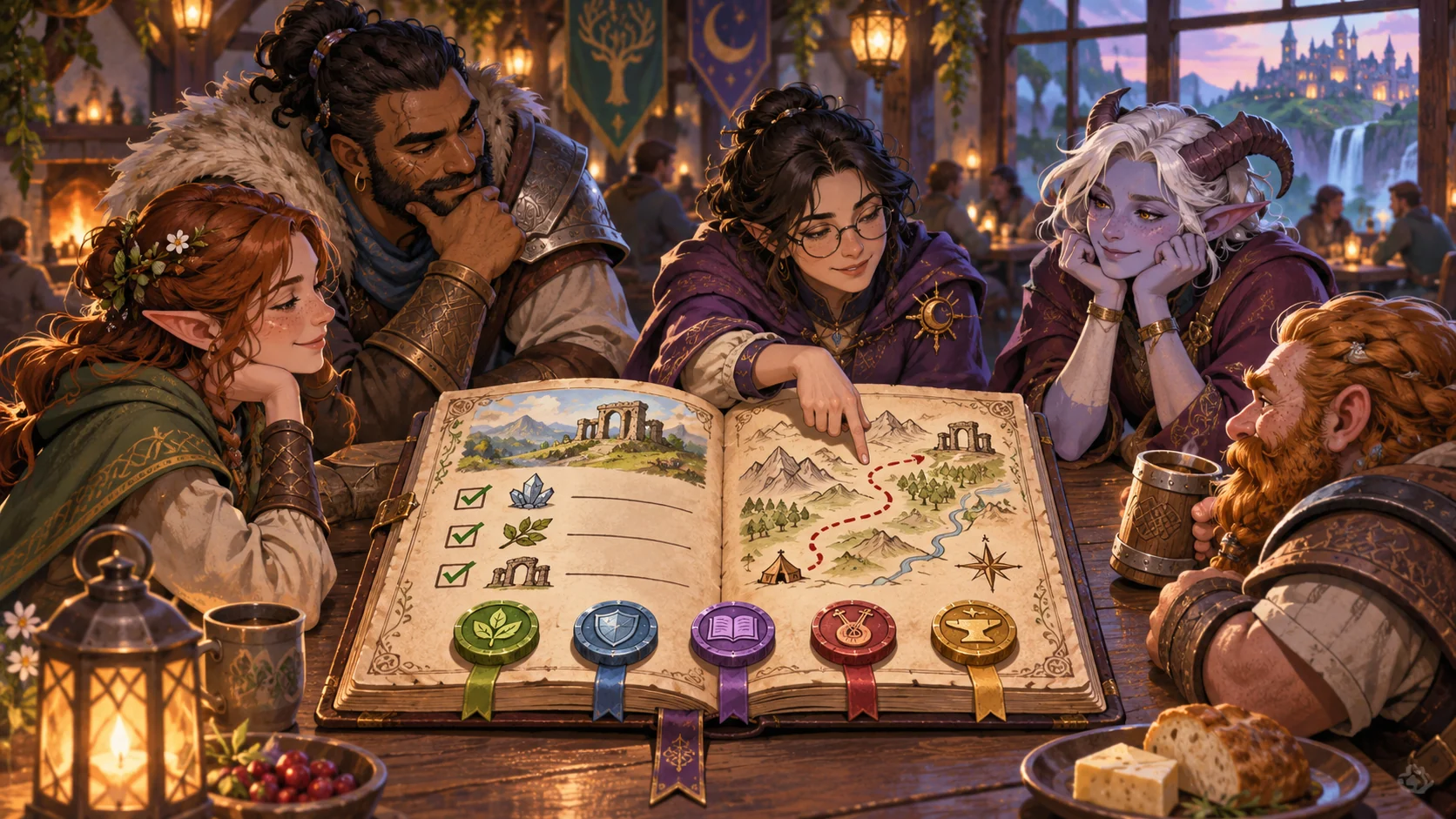
Mark role selection, support, encounter and quest states present, missing or unclear based on actual interactions. If the role roster is visible but one role has no usable action, record that gap. Do not infer that a party system works because its interface looks complete.
Prompt 6 — implementation review
Review the running Ember Cartographers prototype for party setup, role actions, support interaction, encounter resolution, shared quest progress, journal persistence, retreat/retry and reset. Mark each present, missing or unclear based on observed interactions. Quote the evidence and suggest one smallest next change. Do not claim a playtest or balance result unless performed.
Conclusion
Party-based RPG prompts should connect character roles to shared encounters and quest progress. The Ember Cartographers is a fictional example; its rules and role values are untested. Request a small build, check the actual party interactions and label any screen mockup as illustrative.
You can take a defined concept into the Free AI game maker, then compare the output with the review checklist.
FAQ
What should AI prompts for a party-based RPG include?
Define the control model, party roles, shared resources, turn rules, support actions, quest states, recovery and first-build scope.
How do I make party roles feel complementary?
Give roles distinct actions that can support one another, show the resulting state change and allow alternate paths when a preferred role is unavailable.
How many characters should a first party RPG prototype use?
Use only enough roles to demonstrate the core team interaction. Keep the encounter small and add characters after the shared loop is clear.
How can a party RPG avoid role lockouts?
Provide a fallback action, alternate role solution or retreat option so one unavailable ability does not block all progress.
Does a party roster mockup prove the RPG is playable?
No. Verify role actions, support, quest updates and recovery in the actual output before describing it as playable.