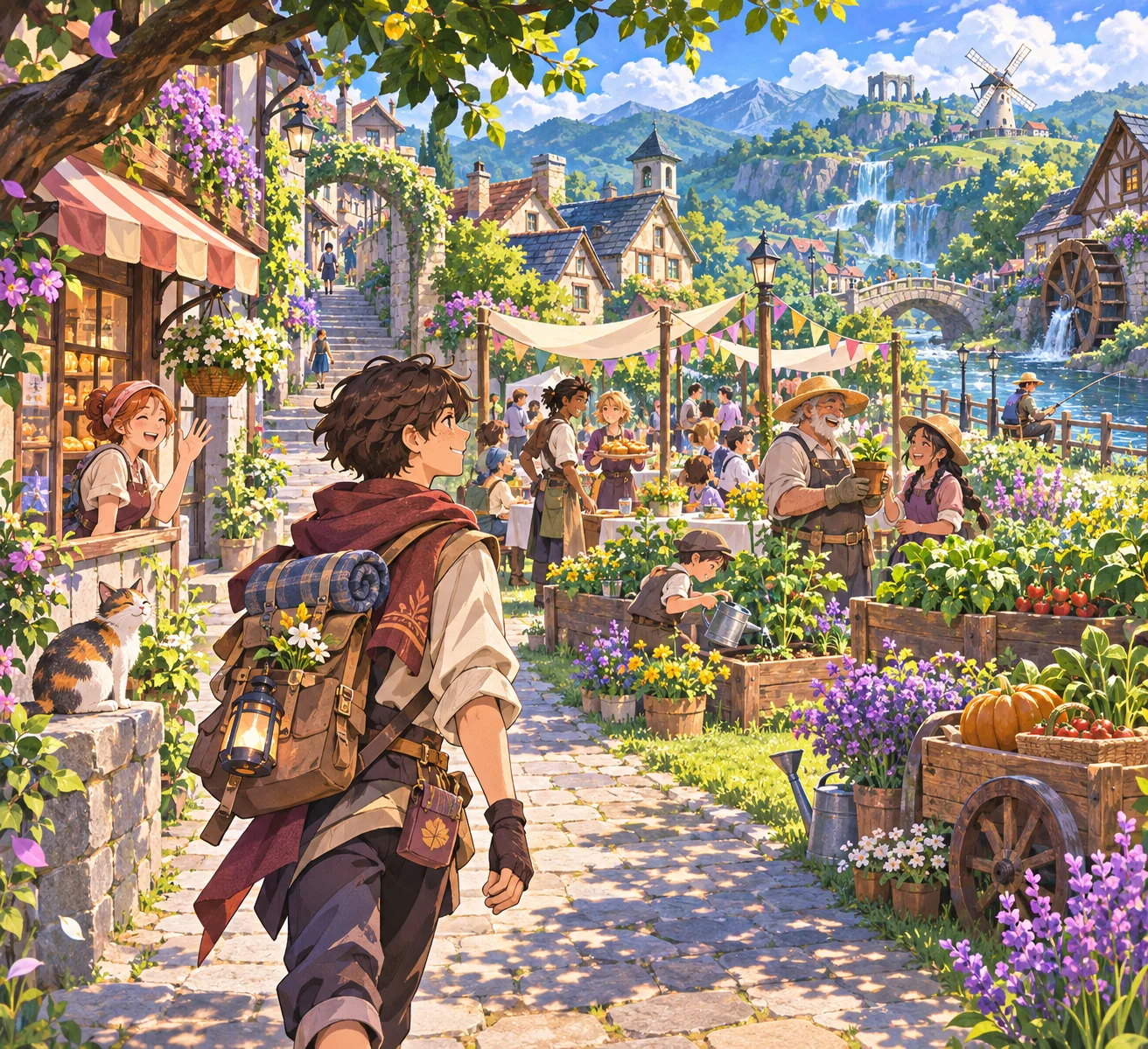
Make exploration change what the character can do, then make that new capability matter in a later encounter. A chapter feels complete when discovery, growth, and a changed route form one readable arc. Prototype one short sequence first and check whether the player can explain the link between exploration, growth, and a later choice. The system here is original design guidance; the linked official source supports only the action-RPG context.
Choose one chapter change to prove
Start with a chapter-sized question, such as whether the hero can cross a flooded ruin after meeting a new guide. Write down the opening state, the obstacle, the discovery, the growth choice, and the changed action that closes the chapter. This keeps exploration from becoming a detour and character growth from becoming an unrelated menu reward. The official Alabaster Dawn listing describes an action RPG built around combat, puzzles, story, and exploration; this is genre context only, while the chapter framework here is original design guidance. See Radical Fish Games for the limited context claim.
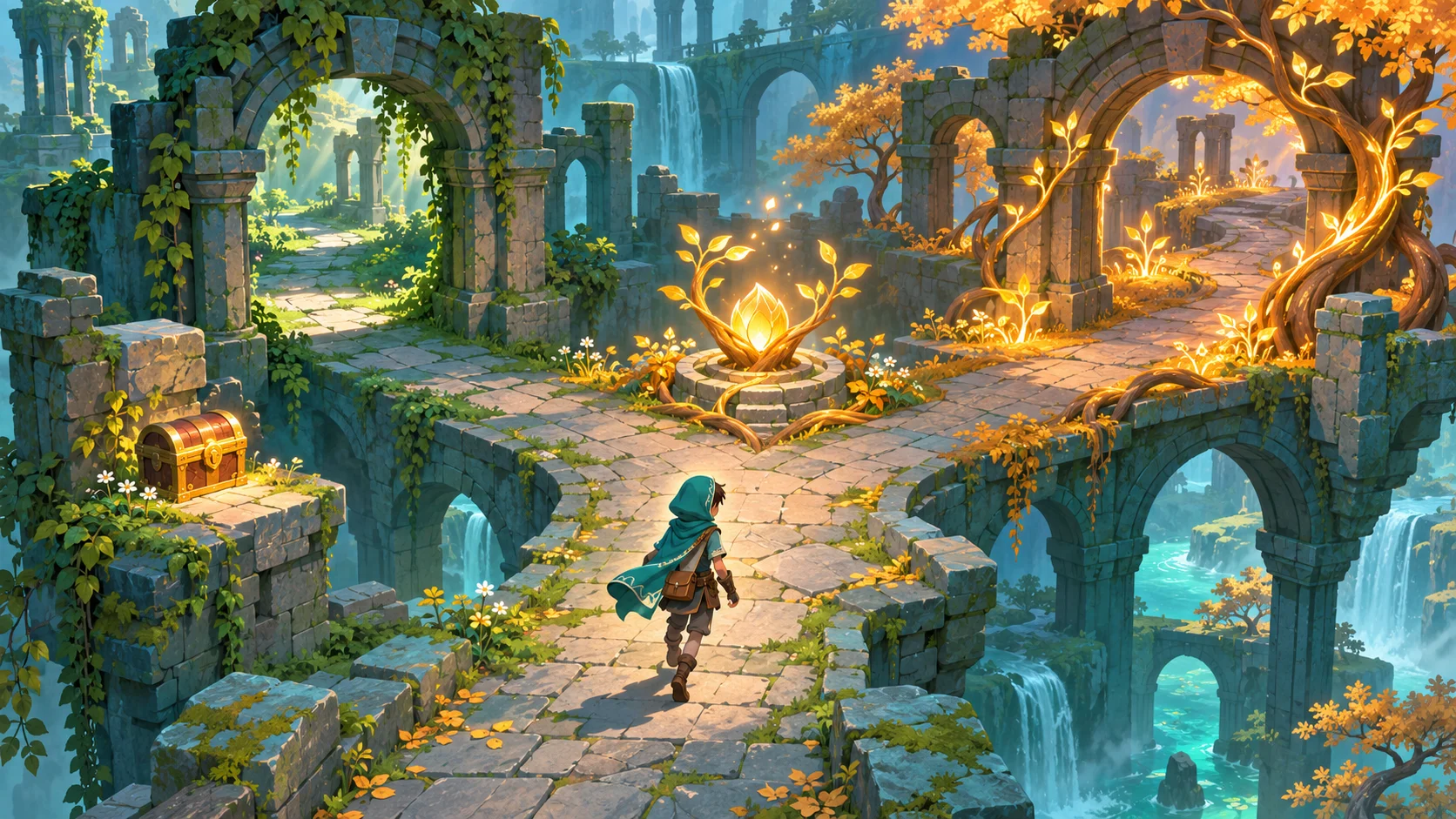
Choose one capability or stat change that the chapter can teach clearly. A mobility skill, a new attack property, or a companion assist can each work, but adding several at once makes it hard to tell which discovery mattered. Set a simple acceptance test: after the chapter, the player should be able to name what changed and point to one place where it changes their options.
Make exploration reveal a useful growth choice
Build an exploratory route with a main path, one optional detour, and a visible hint toward the growth opportunity. Each space should answer a question: what blocks progress, what can be investigated, and what information or resource does that reveal? Avoid making the optional branch contain a mandatory upgrade unless the game clearly signals the return path.
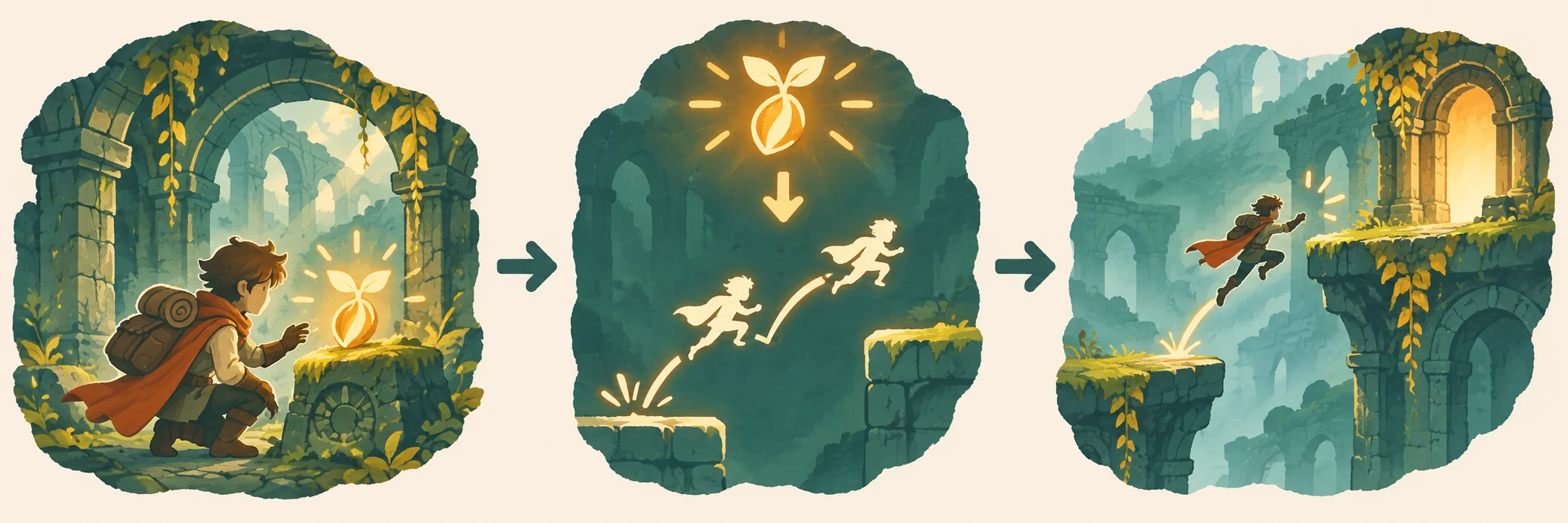
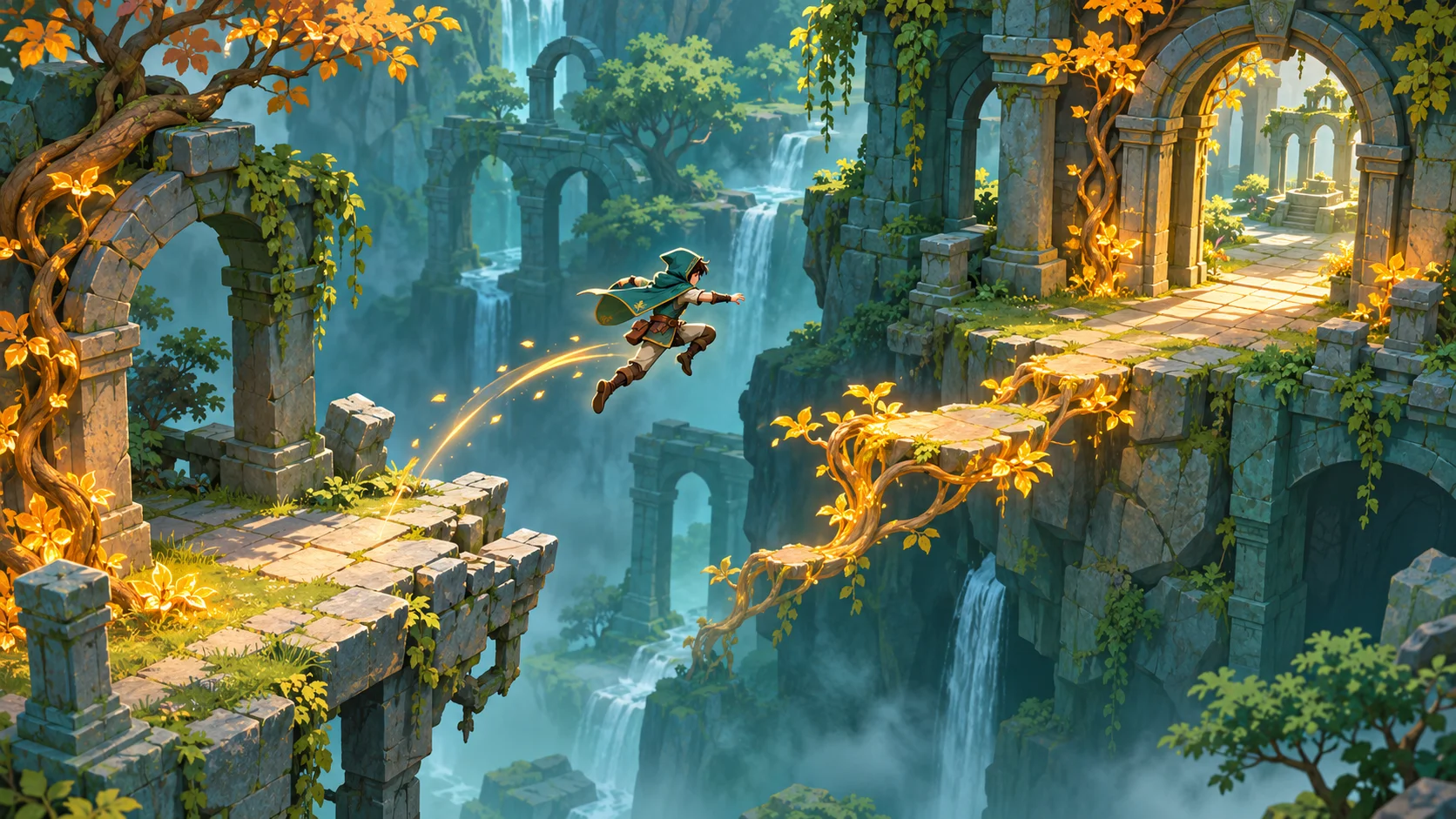
When a player makes the growth choice, show its immediate effect in a safe, low-pressure situation. If the reward is a leap, use a short gap with a broad landing; if it is a new attack, let the player try it on a low-risk target. Keep the original obstacle understandable so players can connect the new ability to the earlier exploration rather than guessing at a hidden rule.
Test the new ability in a later encounter
Return to an earlier route or introduce a later encounter that asks for the new ability in a different context. A movement upgrade might open a raised route and also help evade a slow area attack. These uses should be optional advantages when possible; requiring one exact build can make a growth decision feel like a trap.
Compare the new option with the old one. It may save time, reduce exposure, or create a new combo, but it should not erase every earlier tool. Give enemies and spaces readable cues, then test whether players notice the ability’s value without a tutorial prompt that gives away the answer.
Close the chapter with a persistent consequence
End the chapter with a changed world state: a shortcut, a changed relationship, a newly accessible region, or a resource the next chapter can use. Record this state explicitly so a save, reload, and chapter transition preserve it. Keep one or two persistent flags rather than branching every scene into a separate version.
Prototype the sequence with a small group. Before each discovery, ask what the player expects; after the growth choice, ask what they think changed. Track whether they find the optional route, try the new action, and understand the closing consequence. For another model of a chapter connecting exploration to character progression, read a chapter design guide for exploration and growth. Pass when the chapter demonstrates a clear loop from exploration to growth to a changed future choice.
FAQ
What makes an action RPG chapter feel complete?
A complete chapter has a clear starting problem, a sequence of discoveries or challenges, a meaningful change for the character, and a payoff that points toward what comes next. The player should be able to describe how their options changed. A chapter does not need to resolve the whole story, but it should close one playable arc and preserve any intended state across a save or transition.
How can exploration lead to character growth?
Use exploration to reveal a need, resource, route, or character detail that changes an upcoming growth choice. Signal the optional path and its return route, then let the player test the reward in a safe situation. This makes discovery part of progression and helps players understand why the new capability matters to this character or chapter.
How do you make a new ability matter later?
Revisit a familiar obstacle with a new route or introduce a later encounter that rewards the capability in a different way. Keep the original solution available when balance allows, so the ability expands choice instead of invalidating earlier skills. Test whether players identify the new option without a forced tutorial or a single mandatory build.
What should you test in a chapter prototype?
Play the chapter from its opening state through the closing consequence, then reload the save and verify persistent flags. Ask players to predict what a discovery will do, explain their growth choice, and identify a later moment where it changed their options. Record missed routes, unclear cues, and abilities that never affect play, then adjust the prototype.