Set a chapter goal and everyday context
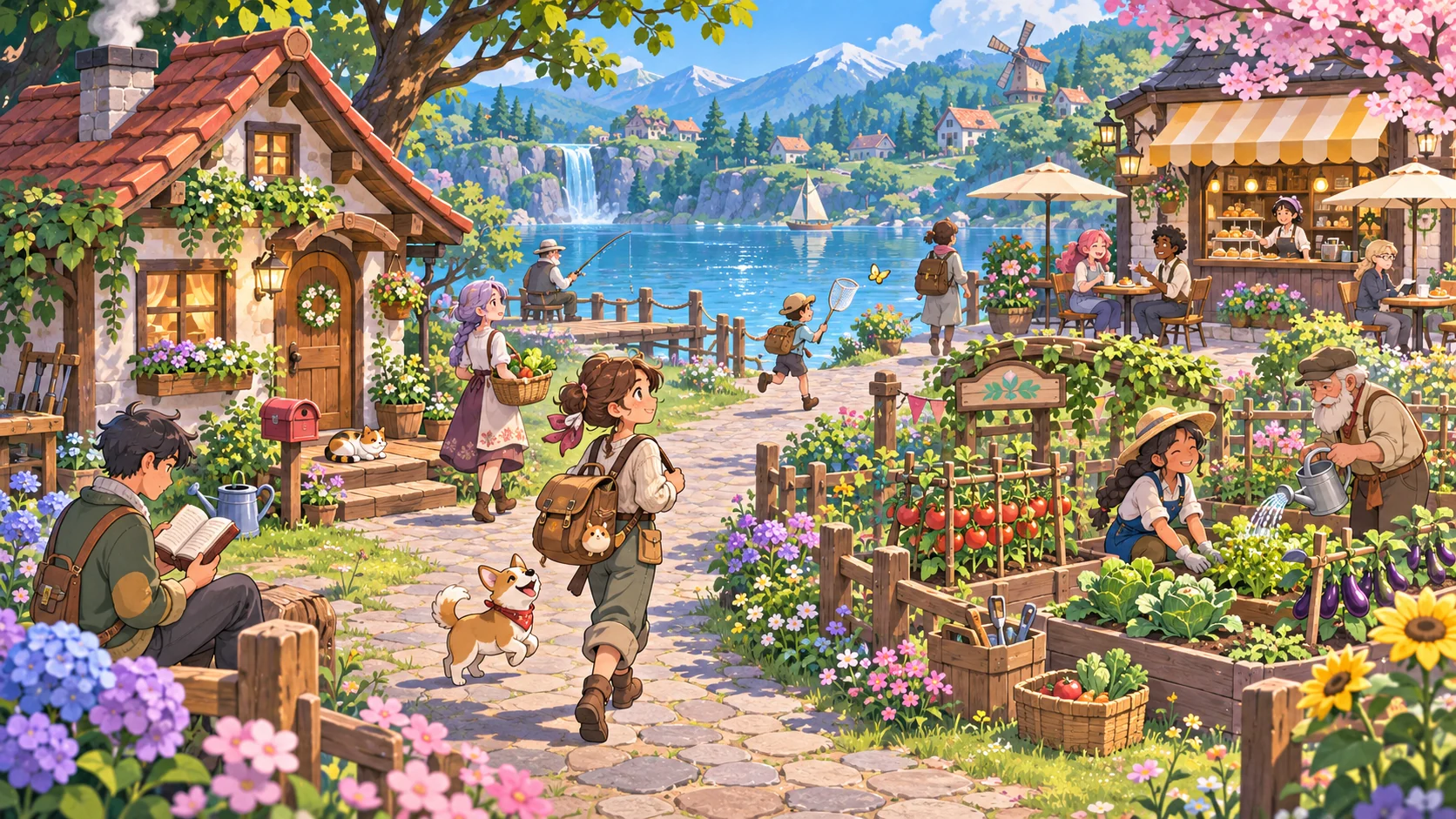
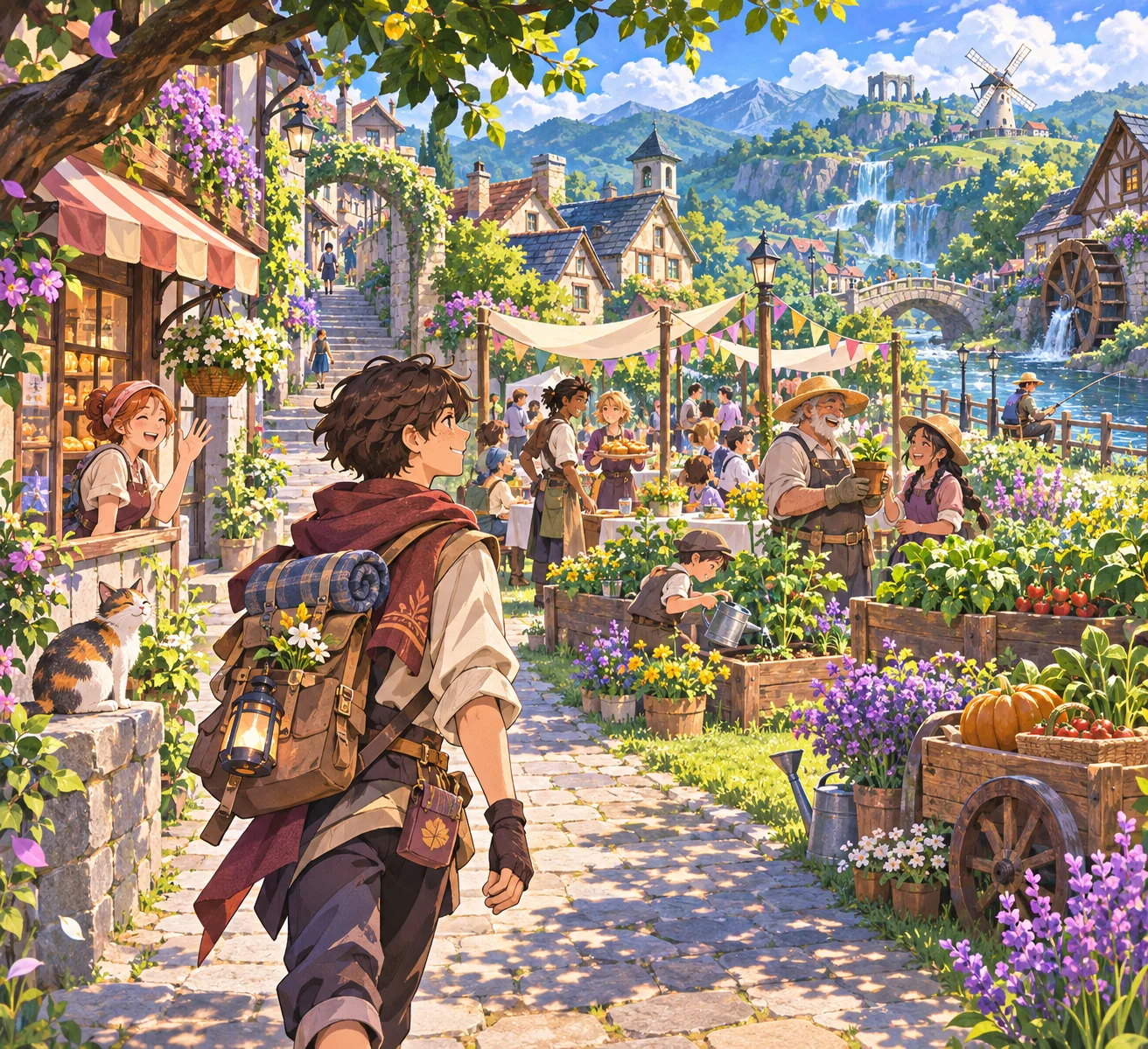
A complete chapter needs a clear change the player can recognize. Begin with an everyday goal such as preparing a shared garden for a seasonal gathering, helping a neighbor reopen a workshop, or learning enough of a local skill to join a community activity. The goal should fit the life-simulation rhythm rather than requiring a crisis or a boss fight.
Define the opening state, the main obstacle, and what is different at the end. If the garden is neglected at first, the closing scene can show it restored and used by the neighborhood. This gives the chapter a beginning and payoff while leaving room for optional conversations, errands, and discoveries.
The official From Misfortune Comes listing describes an open-world life-simulation RPG with skills, relationships, and city exploration. That is broad genre context only; the chapter example here is original and does not claim to describe that game’s chapter structure.
Make exploration reveal useful people and places
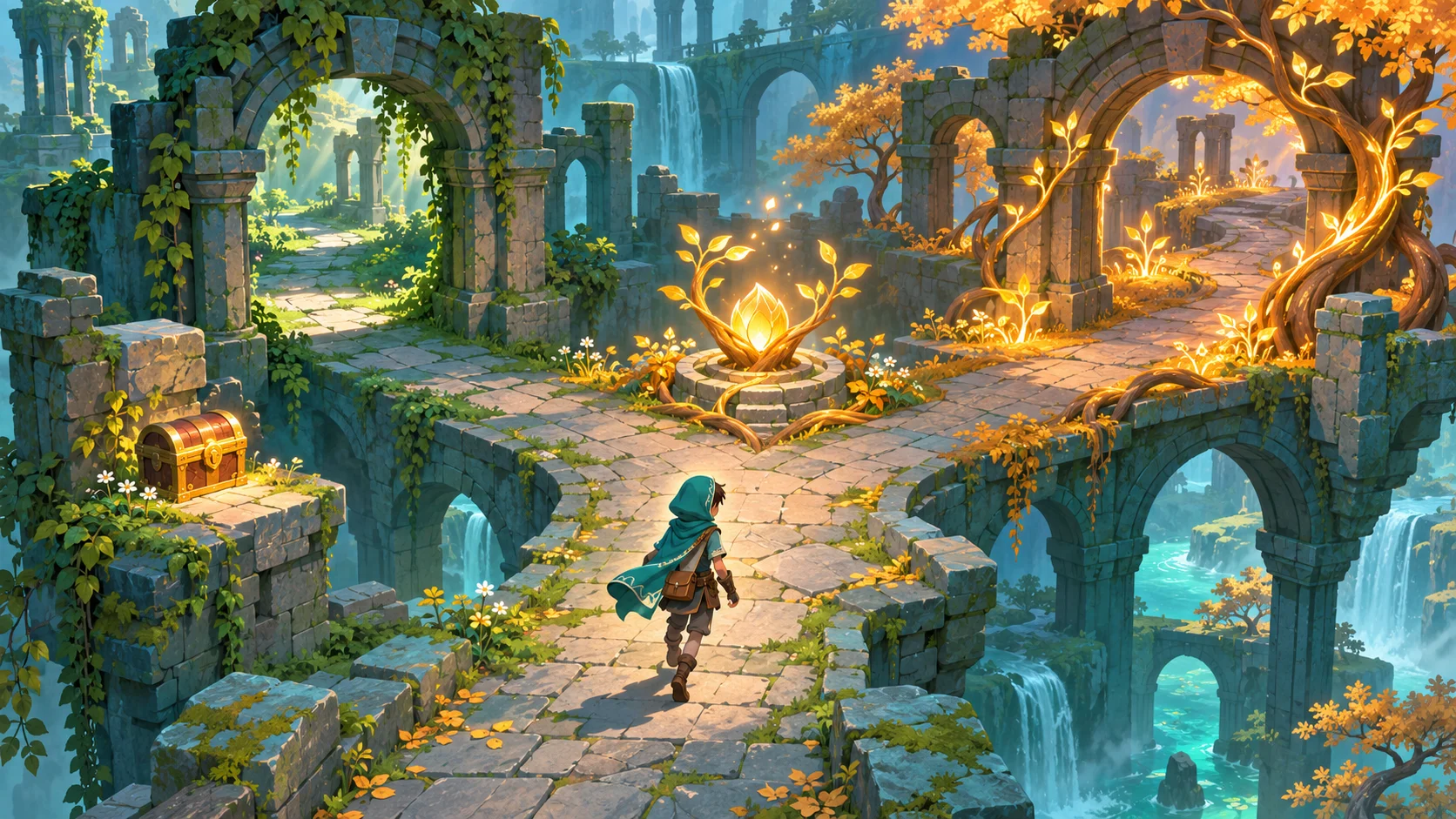
Exploration should reveal more than collectibles. A side street may lead to a neighbor’s workshop, a riverside shortcut, or a forgotten plot that helps the chapter goal. Attach discoveries to local knowledge and relationships so the player learns how this place works. Optional scenes can offer a shortcut, context, or a different way to help without blocking the main chapter.
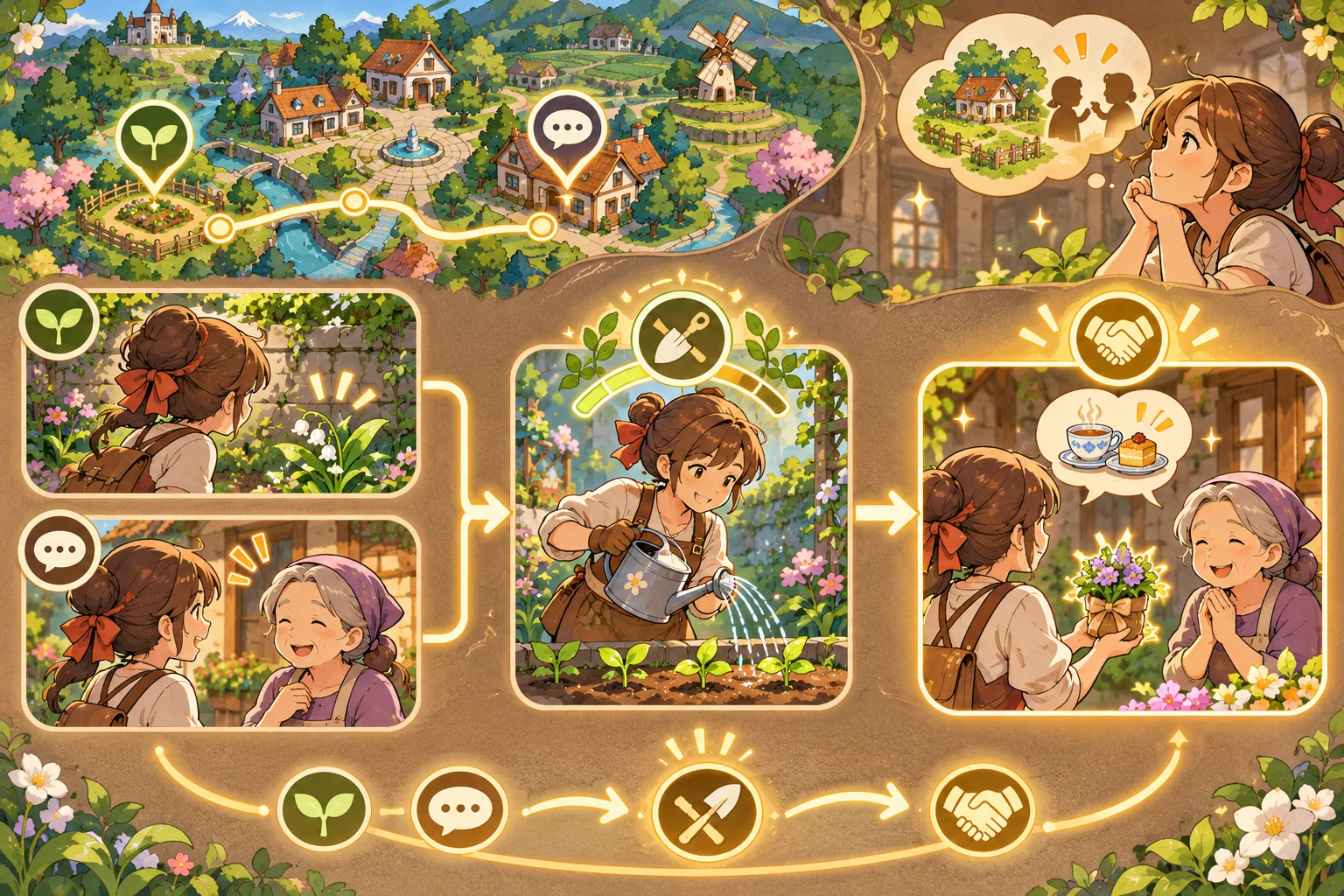
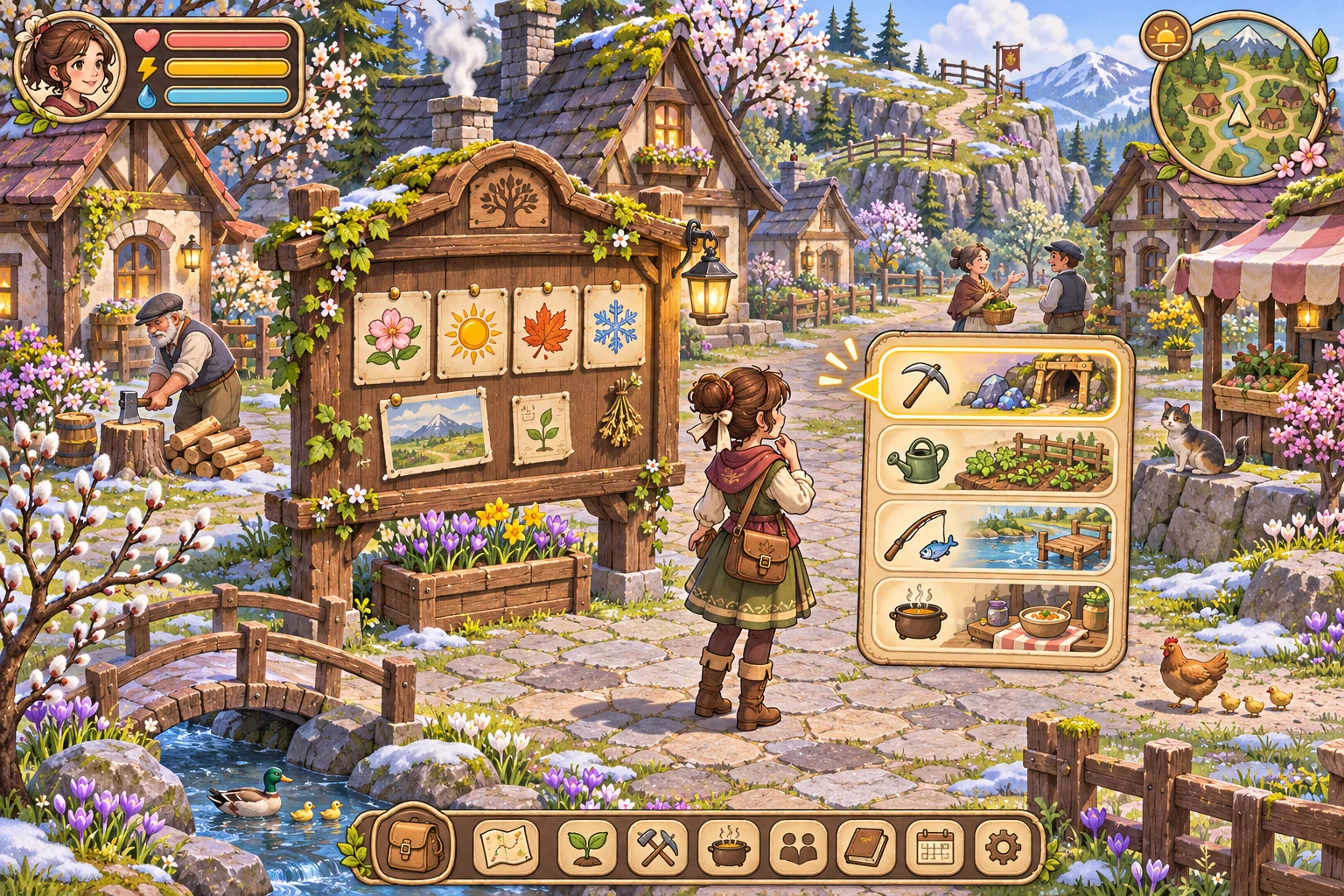
Use landmarks and routines to make the chapter navigable. A person might be at the market in the morning and at a workshop later. Tell the player enough about those patterns to plan, and give a journal summary when a missed time window would otherwise create confusion. Exploration can reward attention while remaining accessible to players who do not search every corner.
Keep optional discoveries connected to the chapter theme. A hidden recipe might help the garden gathering, while a scenic viewpoint can add character context. Avoid unrelated side tasks that make the chapter feel like a checklist. Each activity should deepen the place, support the goal, or offer a meaningful alternative.
Tie character growth to player action
Character growth feels earned when it follows something the player practiced or chose. Completing gardening tasks might unlock a new planting action; helping a neighbor could improve a social skill that opens a conversation. Show the new capability in the world, not only as a number in a menu. A player should have a chance to use it before the chapter closes.
Let growth open options rather than simply improve every outcome. A practiced skill might provide a faster way to prepare the garden, while a relationship might let the player borrow a tool or ask for help. That keeps growth tied to the chapter and gives different players room to solve the same goal in distinct ways.
Be clear about what is required and what is optional. A player who ignores one side character should still be able to finish the chapter, perhaps through a more effortful route. Choices can change scenes or rewards without creating a dead end. That makes the story state easier to test and the chapter less brittle.
Close the chapter with a changed state
A good closing scene pays off the main goal and points toward the next routine. The gathering may restore the garden, introduce a new town activity, or change how a neighbor responds. Record those outcomes as a small set of chapter flags and verify they survive save and reload. If several optional choices can lead to the same next chapter, keep the shared transition clear.
Playtest the chapter with people who have not seen the outline. Ask what they think the goal is, which discoveries mattered, and what changed about the character by the end. Watch for players who miss a required clue or do not realize a skill is usable. Improve the scene, journal, or prompt before adding more content.
Review the optional paths and save continuity, then read the life-simulation RPG prompt guide for the playable foundation. SEELE AI can help outline an original life-sim chapter, but progression and branching need implementation and playtesting.

FAQ
How do you structure a life-simulation RPG chapter?
Give the chapter an everyday goal, a place to explore, a few useful discoveries, a growth choice, and a closing state that changes something in the world. Make the required route clear and keep optional conversations or tasks meaningful without making them mandatory.
How can exploration support character growth?
Use discoveries to introduce people, routines, tools, and opportunities that connect to the chapter goal. Let practiced actions or relationships unlock a new way to help. Show that capability in play so growth feels connected to the place and the player’s choices.
What makes a life-sim chapter feel complete?
A chapter feels complete when its opening goal receives a visible payoff and the character or town state changes. A restored place, new routine, relationship response, or opened path can provide closure. Leave one clear thread pointing into the next chapter.
What should you test before ending a chapter?
Ask new players to explain the goal, discoveries, growth, and ending. Test missed clues, optional routes, skill use, relationship states, and save continuity. If a player cannot finish after skipping an optional scene, clarify the route or provide another solution.